Review of Apartment 16

“1-Adam 12 to  Apartment 16!“  “1-Adam 12 to Apartment 16!”

Are you in the mood for a crossover between a late 60s/early 70s police show and a 2010 horror novel?  You’re saying “no.”  Oh.  Well don’t worry, I’ll lay Adam 12 to rest and just focus on Apartment 16. 

Apartment 16, where were you when I was working on my haunted apartment series? Your presence would have been a most worthy inclusion! 

(Apartment 16: “I was there. You said yourself that my book was published in 2010.  You wrote your article in 2018.  So let me reverse your question – where were you?”

Me: “Shucks. You got me there, Apartment 16!”)

There is something very fishy (not to mention downright eerie) going on at a high-end apartment complex in London, England. It should be no surprise when Apryl is a bit freaked out. After all, she has the new home jitters, having only recently inherited her aunt’s apartment within this complex. She’s not only new to the building and all its idiosyncratic noises, but being an American, she’s brand-spanking new to the city and country as well. We can forgive her for being on edge. But what’s Seth the overnight porter’s excuse? He works there, he shouldn’t be afraid of the clunky lift, the long, tiresome stairways and the shadows that appear on the accompanying walls.  He should just do his job , but at the same time, he should pay no mind to the noises coming from Apartment 16.  It’s an abandoned apartment, so yes, the fact that noises are coming from that location is at best weird. Let weird be weird!  But, no.  You have to get involved, don’t you?  This will be your undoing.

Apryl is morally obligated to get involved. There are mysteries surrounding her late aunt’s mental decline and eventual death.  Some of the clues to the mystery are right there in the apartment complex or in her aunt’s storage room in the basement.

Psst, Apryl!  There are neighbors who might know what’s up.  But these snooty old people don’t want to talk to you.  Same with you, Seth. You know how uptight these rich hermits are. You’ll find ways to piss them off. Or just ways to off them.

Apartment 13 is a story of the occult. Or dream people and the bizarre characters these dreams produce; creepy weirdos that won’t stay confined to dreams. It’s a story of obsession and vengeance from beyond the grave.

This is the second book by Adam Nevill that I have read. The first for me was The Ritual. The reviews for The Ritual fare slightly better than Apartment 13, but I think I like Apartment 13 more.  There is something about Nevill’s writing style that I like and dislike at the same time. He is very detailed.  Sometimes this detail brings me smack dab into the moment of the story. Other times it makes my mind wander.  A “for instance” concerning my wandering mind : A character in Apartment 13 will be approaching a threshold. He or she is thinking things, the description of the hall finds its way into several sentences. Meanwhile the character is still thinking and when finally s/he crosses the threshold, it’s five pages later and I had assumed the character made it into the room several paragraphs back. Things like this seem to happen to me more often in The Ritual, a book about four guys being lost in the woods.  Maybe woodsy environments in general cause more mind wandering than apartment halls or something, I don’t know.

Nevertheless, both are good books. Neville is all about style. His style.  You love it or hate it.  Then there’s me, who likes and/or tolerates his style but loves his overall stories. Except for his endings.  In both books, the story just sort of drifts away at the end, leaving the poor reader behind.  So I am ambivalent about his style, love his stories, hate his endings.  Oh but I love his characters.  Let me repeat –

Ambivalent about style

Love the stories

Love the characters (some withvery unique with interesting peculiarities)

Hate the endings


As for bad endings, I’m guessing you hate the way this article is ending. All these clarifications and repeats. Fine, let’s start over –  “1-Adam 12 to  Apartment 16!“  “1-Adam 12 2 Apartment 16!”


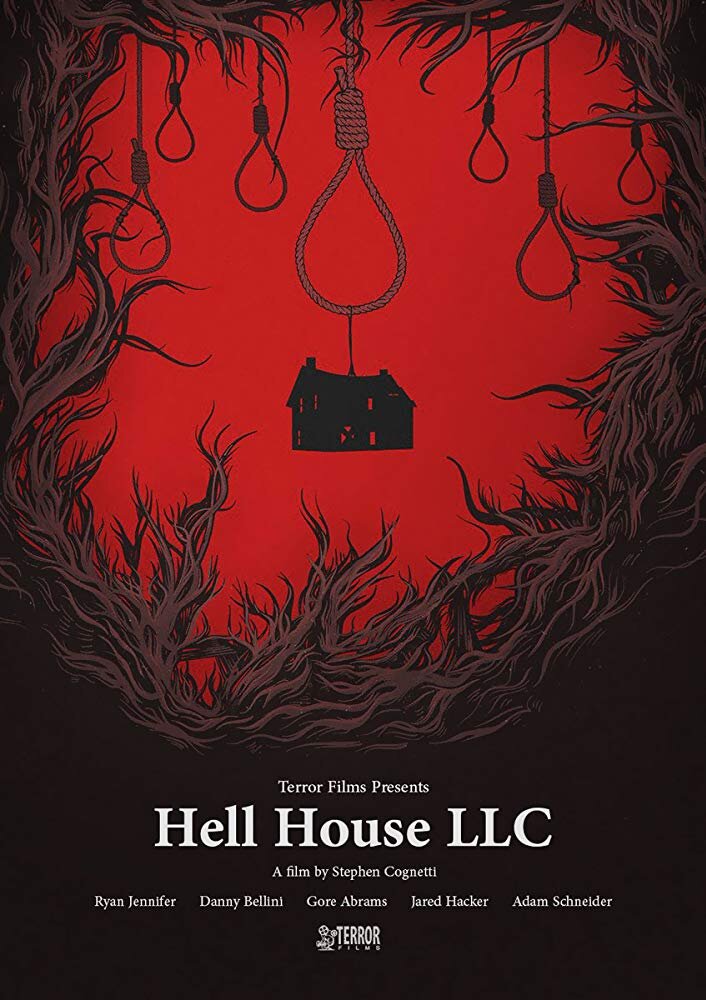
Review of Hell House, LLC

For as long as I remember, I have loved haunted house amusement attractions. (Wait, scratch that! I hated my first couple pass-throughs. I was a little kid and I was scared shitless. So why did I begin with “for as long as I can remember, I have loved…?”  Because, silly, it’s a great phrase for which to begin an article!). Every once in a while, a movie comes along that features  such an attraction. I always try to see these films. There is The Funhouse, for example, directed by the famed Tobe Hooper. Four kids are trapped inside a funhouse overnight.  I seem to recall this film having mixed reviews, but oh well, I love it and will rewatch it from time to time.  Since the setting does not take place in an actual haunted house but rather a carnival ride,  I have not reviewed this film at this blog.  There are no paranormal events in the film either.  Then there is The Houses October Built Great title, good movie. It’s a film consisting of four or five young people who travel  the states in search of the ultimate “haunt” (another term for a haunted house amusement attraction. This makes more sense, because these attractions are not really meant to be haunted houses but a series of horrific displays varying in theme), until a haunt finds them. This time around, I did review the film. Why? I don’t know, I somehow convinced myself this was more closer to a haunted house movie than The Funhouse. Was I wrong in this distinction? Probably.  Sue me, I guess.

Finally, the heavens above sent forth a movie made just for me  (heavens = Shudder.com). It’s a movie about a haunted house amusement attraction that is, in fact, really haunted.   From what I can tell, this film is exclusive to Shudder, and it was one of the reasons I renewed my subscription this past Halloween season, a subscription that hadn’t been active for years.

The premise: ghosts and/or demons cause deadly shenanigans on this haunt’s opening night. Imagine following a line of people through the cramped passageways, only to suddenly have to reverse.  “Go back, go back” people in front of you are shouting. Something terrible has happened at the very last exhibit. An emergency. Carnage.  When all is said and done, police and emergency vehicles are everywhere.  And several people are dead.  WTF happened?  Well, the answer to the question is the crux of the film.

Oh yeah, I forgot to mention; the name of both the haunt and the film is Hell House LLC.

The film begins as a documentary that has been filmed after the events of the story. It starts with interviews of people that have second-hand knowledge of what might have happened on that tragic night, then continues with an interview with Sara Havel, the sole surviving crew member.  

Sara has in her possession a video of the events that lead up to opening-night horrors. It just so happens that one of the crew members documented all the prepping activities with his camera. There’s always some guy or girl in these flicks that do that,  isn’t there?  The rest of the film is pretty much the video itself.  You know what this means, don’t you?  Yep, you guessed it.  Hell House LLC is a found-footage movie.

I have no idea how you the reader of this piece feels about found-footage movies.  For me, it depends on how good the story is and how little the camera operators annoy us with a shaking camera.  But if you’re one of those that has made up your mind that you absolutely hate found-footage films, I implore you to still see this movie.  It’s a great movie and when the camera does shake in enhances the scares (like when the customers are fleeing the haunt.)

The film follows a group of haunters during Halloween season  as they “set-up camp”, if you will, in Rockland County, New York, determined to convert the abandoned Abaddon Hotel into the area’s one and only haunted attraction.  The hotel itself is the subject of dark legends. Supposedly, way back in the ancient days of the 1980s, some cult leader named Andrew Tully tried to open a portal to hell on the premises. Two people went missing when he did this. Oh for Heaven’s sake Mr. Tully, couldn’t you be happy with the amenities the hotel provided?

Back to current time (2015). How are five or six people able to haul thousands of dollars worth of mechanical haunting props in a couple of cars, reconstruct the whole place, hire actors, and market the event in a 30-45 day time period? This doesn’t even include securing the rental contract and obtaining the necessary permits. I guess we the viewers are not supposed to be concerned with those things. These are experienced haunters, having operated in various places in past seasons.  So they know what they are doing and we’ll just have to trust them. Reasons not to trust them? For one thing, they are hosting a public event in a place where supposed demonic activity had taken place. And in the end people will die, so there’s that.

Actually, we the viewers do see the crew preparing for the haunt, day by day. Each new scene opens with the subtitle  “X amount of days until opening night” (I’m sure some days are skipped for the sake of the audience. The movie is supposed to scare us to death, not bore us to death. Maybe those were the days they filed the paperwork and received incoming shipments?) 

There are some genuinely creepy scenes in this film. There’s the clown dummy that just won’t stay in one place. There are these shadow things that just appear out of nowhere. And some members of the crew get possessed from time to time.  For you folks out there that love twists, the film as you covered. 

This film is not to be confused with Richard Matheson’s book  “Hell House”.  The corresponding movie is titled The Legend of Hell House. When I first saw the title “Hell House, LLC”, I immediately thought it was either a sequel or remake of Matheson’s story. Matheson’s story is a great book, and the movie is great too. but it’s an entirely different animal.  It’s the “LLC” that distinguishes the modern film  Gotta love the “LLC!”

Guess what?  There’s a Hell House 2, 3, and an origins film. Many of these have gotten good reviews. Therefore, I really am looking forward to binge watching these sequels, more so than other successful horror films that had follow ups. So much fun! It’s great to be me!

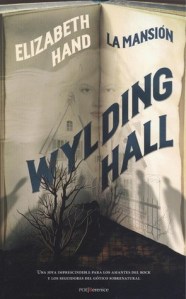
Review of Wylding Hall – A Novel by Elizabeth Hand

Would you like to take a “Wyld” guess as to what Wylding Hall, a novel by Elizabeth Hand, is all about?  Or if “Wylding” is pronounced differently, would you want a description of the novel “wyld” upon you?  My “wyld” guess is that you would want the description “wyld” upon you rather than trying to figure out what the book is about all by yourself.  So, I will tell you what it’s about. 

Wylding Hall a story about mystery. It’s a story about intrigue. It’s a story about companionship and loss. It’s a story that asks the question “what really happened during those final days?”  It’s a story about the supernatural and its strange ways of manifesting. It’s at least trying to be a story about these things.  The effort is there and I give it credit for that. Even so, and I hate to admit it, but I was a tad disappointed with this book.  I had higher hopes after reading Elizabeth Hand’s excellent novel, “A Haunting on the Hill”, which is an  authorized sequel to The Haunting of Hill House.  It was on account of this sequel that I learned of Wylding Hall. Published in 2015 it precedes A Haunting on the Hill  by eight years. I guess it’s more ideal if your books get better as you go along, right?   

There is just too much going on in this relatively short novel for any of the concepts to really shine. So if luminosity is the measure of its greatness, I would say this novel is just above dim. , 

This is a fictional account of an English folk band’s recording of an album in a haunted house. Set in the early 70’s It has many of the staples of rock bios. It details the chemistries and friction between different band members  There are bursts of psychedelia here and there.. And there’s the charming yet mystifying star, which in this case is Julian Blake. It seems Hand is taking a hand (see what I did there?)  at creating a character based on the charismatic, mysterious male rockstar prototype. Real life subjects such as Jim Morrison and Jimmy Page come to mind.   The events in the book, pieced together from varying perspectives, also remind me of the movie Eddie and the Cruisers. Just like with that film,  the mystery surrounding the lead singer’s supposed demise is brought to light by the revealed memories of surviving band members.   

Unlike the average rock bio, there are ghosts in this story. Or, maybe not.  Perhaps this isn’t a haunted house at all. If not, certainly it’s a house of mysticism.  Oh what do I mean by that?  I don’t know, man, guess you have to read the book, ya dig?

I love the material, mind you.  I love bios of young, musical groups and standout personalities within such bands. I love reading about the 60s and 70s music era and I love haunted houses. It’s just that, in the end, something didn’t fully click with me.(Was there a partial “click”?  I think so)  And yet it’s not a bad book by any means. My interest was piqued all the way to the final chapter.  However, once I finished the book, the characters were forgotten, and any feelings of attachment to this story that I might have had fled abruptly. 

While the “stuff” of the story takes place in the 1970s, the narrative takes place in the present time.. The book consists of  fictional interviews of people once associated with the former folk band Windhollow Faire,  including the surviving band members themselves. One former member committed suicide. Or so it’s believed. The other,  Julian Blake, simply disappeared.

During his time with Windhollow Faire  Blake is enigmatic, soft spoken, contemplative, and perhaps sexy in his unique ways. He dabbles in the occult. 

As you might guess, there is plenty of mystery surrounding the demise of Windhollow Faire, which comes to a head on the final days of recording what would end up being their final album.  The album was recorded at Wylding Hall, which is the haunted house of the story.  The band shacked up together for one fateful summer in this house to prepare for the recording. The house and its external surroundings are also the subject of  eerie legends amongst the locals. Ghost stories if you will.

During those days, weeks, and eventually months, the band, besides working out creative musical arrangements, indulge in sex, drugs, and what I will call spiritualism.  During the final recording sessions,  Julian Blake mysteriously vanishes.  He had been seeing a nomadic hippie girl that suddenly appeared in his life. Her appearance was just as mysterious as his disappearance. Perhaps Blake was witched away?

The blending of  an epistolary account of a former folk band with ghostly folklore sounds like an intriguing mixture.  It could be. It should be. But the final result just didn’t intrigue me all that much. Reading the novel was a disjointing experience,  but not in a way that reflects the uncanniness of an eerie haunted house, which for me is a welcoming sense of disconnectivity. Genre blending is great if done correctly. But with Wylding Hall, there lacks a much needed unifying tone to ease together the disparate muses into one unique story. Moreover, too much of my mental energy was devoted to keeping up with all the characters and their varying perspectives, so much so that I wasn’t able to effectively absorb the ghostly elements of the story.  The truth is there weren’t a whole lot of scary moments. Oh there were some, here and there, but several of the haunted house story arcs seemed to have hit a brick wall. 

On another level, I was annoyed at how often  the interviewees incessantly compared modern modes of communication and technology with those of the past.  They would say something like “Remember, back then, it would take longer to contact our manager since there were no cell phones” or “Recording an album in those days was nothing like it is today”.  We get it. The  repetition of these observations was somewhat insulting to me as a reader As readers,  we don’t need to be reminded of the time-lapse variances due to the limitations of technology over and over again, nor the nitty-gritties of certain efforts that would eventually be replaced by the clicks of a few buttons. 

Overall, the book has its faults but it does have the elements of an interesting story. It wants to grab the reader’s attention, though at times it struggles with this. There is something genuinely good about this book  and yet I can’t pinpoint exactly what it is.  All my criticisms might just be an issue of pet peeves on my part that won’t necessarily trouble another reader.  So,  I don’t know, give it a try.  Read it and see for yourself 

A Review of  “A Haunting on the Hill” – Sequel to “The Haunting of Hill House”


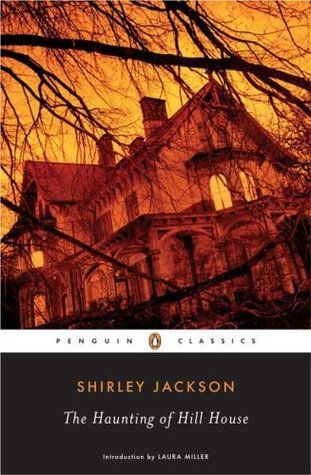
Let’s step back for a moment to recall our first experience reading Shirley Jackson’s The Haunting of Hill House. (If you haven’t read this yet, you will be sooo lost reading this article. Also, there are huge spoilers. So if you haven’t read it yet and you want to, stop being lost and get lost!) . Not only were we impressed with the style, the flow, and  the hidden intricacies within the narrative, but we were delightfully creeped out.  It’s an awesome book, isn’t it? 

Time for some comparison. Let’s imagine a different kind of scare, one that has the same power of fright but leaves one not “delightfully creeped out” but “sickeningly agitated.”  What kind of scare might this be? How about the mere idea to have a sequel to The Haunting of Hill House?  

I remember a CTA bus advertisement promoting the city of Chicago. It was a quote from Chicago film critic Roger Ebert that read, “Living somewhere else makes as much sense as a sequel to Citizen Kane”.  In other words, there are some works of art, whether they are sculptures, books, films, or compositions that are complete in their greatness. To add, subtract, or alter would only weaken the original.

What kind of pitfalls might there be trying to create a sequel to The Haunting of Hill House? First of all, Shirley Jackson passed away some time ago, so some other author would have to step in and fill the role of the late author. This is no easy task as Shirley is a tough act to follow. Second, we consumers of horror already suffered through film remakes of the original 1963 film The Haunting which was based on the book. If 1999’s The Haunting  taught us one thing, it’s  “don’t mess with the classics”

On the other hand, Michael Flannagan’s Netflix series  That Haunting of Hill House 2018  is pretty damn good. It’s a reimagining, not a retelling of Jackson’s story. As such, it is allowed certain liberties regarding plot and character changes.  So long as the tone and mystery of the original are not sacrificed, these changes are welcome.  And wouldn’t you know it, the changes made by Flannagan are not detrimental to the quality of the original.. If anything, they enhance Hill House’s overall eerie impression

Along comes Elizabeth’s Hands novel, A Haunting on the Hill . It is marketed as a sequel to The Haunting of Hill House.  Pretty damn gutsy of you, Elizabeth, to embark upon such a creation. Before writing the book, did you realize how many ways such an endeavor can easily go south?

Were you aware of the potential criticism if your work could not compare to Jackson?  Scathing criticism, mind you; the yuckiest raspberry in a basket filled with the most sour pickings of the crop.   Were you prepared to stand up for yourself against accusations of blasphemy?

Luckily for Elizabeth Hand, she writes a mighty fine story with A Haunting on the Hill. Seriously, it’s the best haunted house book I’ve read in a long time. Certainly it’s at the top of its genre when compared to other haunted house books written this century. Hand took a chance and it paid off. I have to “hand” it to Hand!

Why is Hand successful in her efforts?  I’ll offer an opinion on that. She doesn’t try to explain the mystique of Hill House. In no way does she try to “correct” the original story.  As far as I’m concerned, she doesn’t retcon. While she doesn’t duplicate Jackson’s engrossing writing style, that’s okay, and moreover it would be sinful to try.  Hand effectively pens in her own style but stays true to tone and mystery upon which Jackson “built” Hill House. Hand explores her own creative ideas and does not rehash the same plot. She gives just enough homage to the original story so readers know they are in familiar territory while at the same time uncovers areas previously unexplored.

Similar to the original story (yet not duplicating it), four people set out to stay at Hill House for a significant length of time.  The reasons for their stay are different from the reasons described in the original. The four from Jackson’s story do so in order to observe and document supernatural phenomena.  The quartet in Hand’s novel wish to hole up in the house to rehearse for a play. 

Holly Sherwin, the leader of the group and  playwright of  Witching Night , stumbles upon Hill House accidentally and is drawn to it. (Or is it Hill House that has found her?). She is attracted to its creepy vibe and decides Hill House would be a most inspiring place to rehearse her play, not yet realizing the haunted history of the mansion.  She meets Ainsley Rowan, who is in charge of subletting the mansion. Ainsley warns her that no one ever stays long at Hill House and tells her about rumors of its dark history, including the story of a woman who killed herself by crashing into a tree on the road that leads to the house. (Of course, this is a reference to Eleanor Vance in the original novel. How about that?  Eleanor, once a receiver of tales of the house’s dark past has now become part of its legend!) 

It’s all set. They move in for a one month stay. Will they make it to the end? 

The “they” includes:

  • Nisa, Holly’s girlfriend/partner, the songstress for the play.
  • Stevie, The sound engineer and voice actor
  • Amanda Greer, semi-retired B movie actress
  • And of course, Holly herself 

There are four of what I will call “outsiders”.  They are connected to the house in various ways but aren’t staying there. Certainly not after dark. They wouldn’t dare. These include:

  • Ainsley Rowan (I know; I mentioned her already)
  • Tru and Melissa, husband and wife, the cook and the cleaning lady
  • A Mysterious old woman who lives in a nearby trailer 

Tru and Melissa have a similar arrangement with the house guests as the Dudley’s had with the guests from Jackson’s novel. They do their best to provide the comforts of home for the guests, but in the end there is only so much they can do for the potentially doomed occupants. They are less hostile than the Dudleys (well…Tru is kind of a prick, come to think about it.  And the old woman in the trailer is such a witch! ((literally? Hmmm, could be!)) though they certainly have their misgivings about this whole arrangement.  These four; though I have labeled them “outsiders,”  when it comes to the goings on of Hill House, they are, to some extent, in the know. But they aren’t telling. In that way, they are truly insiders.

So, what happens to the four guests? Hill House works on all of them, that’s what. In certain places in the house, Nisa discovers she can sing like she never before. Her voice is enchanted. At a rehearsal reading, Stevie is ravishing yet startling and his acting seems all too real.  Little by little, the four clash with each other. They become mistrustful, sometimes solitary. All are scared yet they are united in their mad desire to stay at Hill House. Will this desire be their undoing? 

Ghosts of the Past /Phantoms of the Future

I would like to dedicate this section to a sentence from several paragraphs ago.  Here be the sentence:

She gives just enough homage to the original story so readers know they are in familiar territory while at the same time uncovers areas previously unexplored.

Examples are needed, don’t you think?  I’ve got it covered. First, we’ll explore the tropes that are present in both Jackson’s and Hand’s novels, albeit within different circumstances. Then, we’ll dive into certain “hauntifying” situations that are unique to Hand’s sequel novel. (“hauntifying;” I made that word up. I think it’s quite swell!).

Let’s do this!

(PSST. Some will say these next sections contain minor spoilers. I might not think or say that, but some might)

Revisiting the classical hauntings of Hill House in new contexts 

It’s the same Hill House, tucked away among the hills somewhere outside the town of Hillsdale. It has the same winding road that links the house and the gate.

What else is the same?

The spiral stairway in the library 

Clankety clank shakes this flimsy, metal staircase that leads to the top of the tower/library in Jackson’s novel.. It was not safe for Eleanor to climb but she did so anyway, putting herself and her rescuer Luke in danger, resulting in her banishment from Hill House.  Why is this ladder so alluring? The library is off limits to the guests in Hand’s book, yet one makes her way to this stairway, and the result is…..wait a minute!  Aha! Now I see. This relates to the end of the book when she….(she who?  And what does she do? Never mind. I’ve written too much already)

Blood

Seemingly from nowhere, here comes the blood.  Blood mysteriously soaks Theodora’s clothes in Jackson’s novel.  In Hand’s novel, what at first seems like wine spilled from the tipsy Amanda’s glass somehow turns to what could only be blood. It ruins an antique table cloth.

Rabbits

In Jackson’s original novel, these hares, to be more precise, make brief appearances here and there.  Eleanor and Theodora see such a creature outside the house.  If I’m not mistaken, they try to chase it but it disappears.  Luke and  Dr Montague spot one in the house and they follow it and it leads them outside.

In A Haunting on the Hill,  hares are more prominent.  They stand on their hind legs and seem to sneer at trespassers. They are certainly more aggressive.  And they’re not above dropping into the house via the fireplace (well in one sense, they are above if they get in through the roof!) . Fire itself is no obstacle as one of these creatures passes through the blaze, carrying the flames on its soon to be charred, furry, body, only to escape back to the outdoors.

The nursery

As with Jackson’s novel, the nursery room that Hand writes about is quite the enigma.  In both books it is literally chilling; those entering encounter a discomforting cold spot when crossing the threshold. Two grinning decorative heads adorn the doorway and they forever look at the room’s occupants whether they are coming or going or, worse, remaining in the room. They appear to be mocking these poor folks.

Nighttime noises

Perhaps the most memorable disturbance from Jackson’s novel is the wall-pounding noise. Okay, okay –  maybe this is mostly remembered from the film. But it happens in the novel as well, along with the soft whispers. Things that go pound, and things that whisper softly in the night.

In Hand’s novel, the pounding is absent, but someone hears whispers in the dark of night when trying to sleep. I think it’s good that Hand holds back on the pounding. She leaves this Hill House signature trait to Jackson so she can identify and imagine other haunting manifestations

What a great way to segue into Hand’s unique contributions to Hill House!

Discovering new hauntings of Hill House

The Haunting of Hill House is sometimes described as a summer horror novel.  The events in the story take place in the summer as the characters walk the grounds of the house, admiring the brooks and dreaming of picnics.  This all happens in the 1950s.

The events in A Haunting on the Hill take place nearly seventy years later. This would be in our wonderful modern age of texting and vape pens. It is not summer. What goes down in Hand’s novel does so in the cold, dark winter. 

What else is new?


Images within the woodwork  

Nothing to see here. Just your average knolls, knots and swirls ingrained into the wall design. Or are they something more? Do they form images? Do these images reveal scenes of things to come?

Hidden tunnel  

It’s accessible only by crawling. There are strange lights and its end. 

Miscellaneous 

A stray billiard ball rolling across the floor, (there is a billiard room. That’s new…I think) .  Creepy shadows (are they silhouettes?)  are peering in windows. Oh what has the blizzard brought to Hill House?

Conclusion 

While writing this piece, I stumbled upon other books by Elizabeth Hand. Wylding Hall for instance. This caught my eye because the premise seems similar to A Haunting on the Hill: A group of young musicians take up residence in a mansion to rehearse their music.  Actors vs Musicians expressing themselves artistically while living together in a haunted house. Hmm, are Hand’s stories formulaic? 

Sometimes in writing, formulas are good, sometimes not.  Guess it depends on how much the formula dictates the story.  Too strict of an adherence to a reusable,  preconceived plot kills the story. 

I’ll tell ya what!  I’ll read Wylding Hall and report back to you.  Or, you can read and see for yourself: Wylding Hall

Or, skip it for now.  But don’t skip A Haunting on the Hill.  Trust me, it’s good. It’s true to the spirit of Shirley Jackson while allowing for Elizabeth Hand’s creativity to shine.


Review of The Haunted Palace and a Tribute to Roger Corman

Saying Goodbye to Roger Corman 

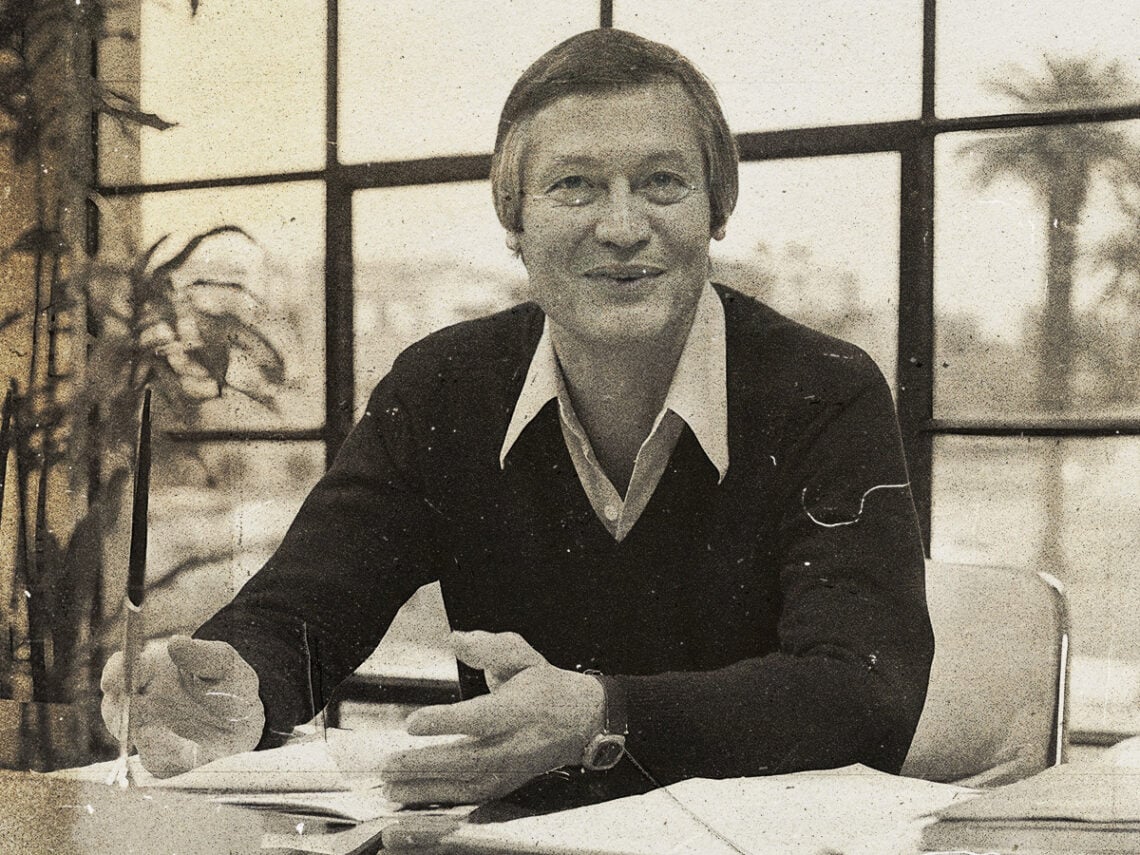
RogerCormanLast week we lost a legend.  Roger Corman died two years shy of his 100th birthday. Known as the B-movie king, Corman’s filmography is extensive. He produced hundreds of films and contributed significantly to the horror genre.  So I thought I would review one of his films as a sort of tribute.
I’ve seen several but still not many Corman films, considering the mammoth list of films credited to his name. Of the ones I’ve seen, they make their markings all over the likeability scale. I didn’t care for The Undead, for instance.  I am most familiar with his films reimagining to stories of Edgar Allan Poe, of which there are eight.  The Raven has very little in common with the themes of Poe’s famous poem for which the film was made.  It is a fun film and just downright silly.

I loved House of Usher and The Masque of the Red Death. Both are somewhat true to their original stories, but in each case, the figurative concepts with these tales morph into literal, tangible phantoms once the camera captures them.  I have reviewed both these Poe tales, and yet, I have not reviewed these corresponding films of Corman. My excuse to myself was they were not “haunted-housey” enough. But that’s a weak excuse. If they were haunted- housey enough in print, wouldn’t they be haunted-housey enough in film?  So I guess in truth I just never got around to it.

Guess what?  I’m still not getting around to reviewing those films.  Instead, the film I am choosing to review is The Haunted Palace.  I figure, you know, it’s got the phrase “haunted (insert the name of a domicile here)” in its title, so…

Some will argue that despite the film’s title, it’s not a haunted house film.  Their views are not without merit. But I suggest it is.  There is a creepy castle with portraits and winding, stone staircases.  There are large fireplaces and secret passages. There is an overall gothic flavor to this film. Within Gothic literature, something that is “haunted” can simply mean being possessed with troubling things that linger.  Linger they do in this film. Finally, the movie’s called “The Haunted Palace” so contrary to what I wrote earlier, I shall not “despite the film’s title!”

THE HAUNTED PALACE

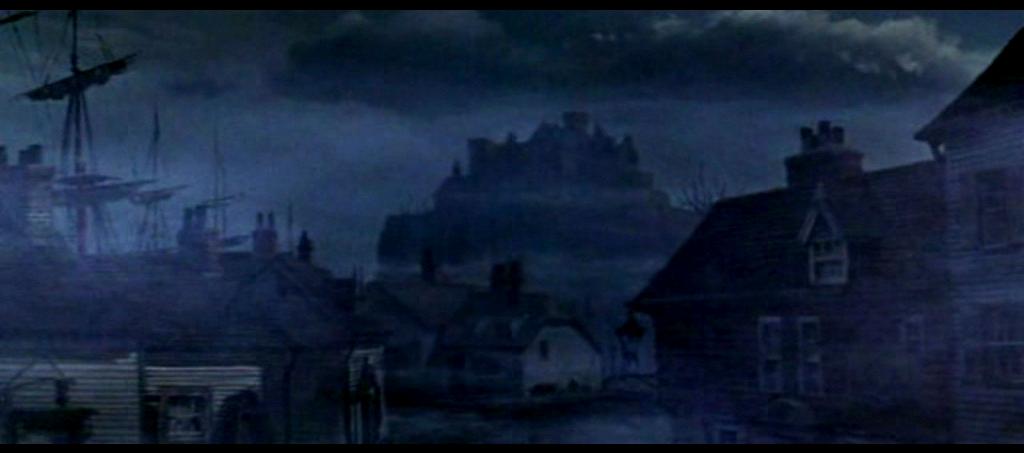
HauntedPalaceScene


“Haunted, not by ghosts. By fear, by guilt, by memory of a particular night”


This line is spoken by the village doctor. Played by Frank Maxwell, he is explaining to a couple that is visiting the town of Arkham why their presence is upsetting the locals.   I don’t know why these two visitors should have been so perplexed by their unwelcoming ways.  After all, the male counterpart of this couple, Charles Dexter Ward, is played by the great Vincent Price and he’s running his mouth off about inheriting the creepy palace that stands at the top of the hill overlooking the town.  Vincent Price in a haunted house overlooking the town! That is never a good thing for characters in a movie.

As it turns out, one hundred years prior, a necromancer named Joseph Curwen lived in that palace.  He had a thing for hypnotically seducing young ladies of the village to the castle where he would force them to mate with the elder gods. The villagers didn’t take too kindly to this, so they tied the Joseph to a tree and burned him alive. Before he succumbed to the flames, Joseph cursed the village. He also vowed to one day return from the dead and have revenge. Necromancers will do that; return from the dead.  Low and behold, one hundred years later, Curwen’s ancestor comes to town. This, of course, is Charles Dexter Ward.  Vincent Price plays both Curwen and Ward.  The portrait of Curwen that hangs in the castle looks exactly like Ward (well of course it does, it’s a drawing of the same actor).  So naturally, the townspeople are freaked out.  They believe in the curse. For proof, they look at their children. So many are born with deformities.

Throughout the movie, we see Price as the congenial Ward slowly surrender to the wretched personality of his late ancestor Curwen.  The omen bares out. Curwen’s soul takes possession of Ward.  Price is brilliant during these personality changes. With slight changes of facial expressions, with fluctuations in vocal inflection, he brings these characters to life. At one point in the film, with his wavering of expressions and tone, we aren’t sure who he is at the moment, which is the whole point of the scene.

This film is based on the works of two classic authors of horror: Edgar Allan Poe and H.P. Lovecraft.  The title, The Haunted Palace, is derived from a poem of Poe’s. It was incorporated into Poe’s story The Fall of the House of Usher.  To be honest, it’s not the easiest poem to comprehend.  It’s not that long and you can read it in its entirety here:

As I do so often, when I’m clueless about the meaning of something, I see what good ol’ Wikipedia has to say on the subject. 

The poem is about a king from the days of yore; content, dignified and wise until the great assault.  Assault of “evil things in robes of sorrow, assails the monarch’s high estate”

It is implied the king has gone mad. The assault, perhaps, are the thoughts, emotions, and perceptions that exist to drive one insane.  Thus, the palace referenced by in the title, is actually the king’s own head.  I find this an intriguing concept. There is no scarier haunted house than the head that houses a troubled mind. I’ve thought of similar analogies but of course, Poe always beats me to these concepts, rendering me a useless plagiarizer. (Of course he had the advantage of living long before I was born.)

The story itself is based on H. P. Lovecraft’s The Case of Charles Dexter Ward.  I have not read it, but according to my friend Wikipedia.

The story is about an escapee of a mental asylum, Charles Dexter Ward. He seeks out the grave of his long dead ancestor Joseph Curwen, a mass-murder and necromancer. Like his forefather, he too wants to resurrect the dead, and there is no better person to resurrect than the master resurrector himself.   

The movie itself, like most Corman movies based on literature, only loosely resembles the originals. Unlike the Poe poem, there are no kings.  Unlike the Lovecraft story, Curwen isn’t kidnapping women.  But –

  1. A story of a man losing his identity within the walls of a stone, gothic castle.   How very Poe!
  2. A tale of a necromancer seeking to mate captured women with the elder gods. How very Lovecraft!

In their own way, Corman and screenwriter Charles Beaumont capture the essence of the works of these two authors.


I must confess: this is not my favorite Corman film.  I like House of Usher and  The Masque of the Red Death more (both with Vincent Price! If I’m not mistaken, all of Corman’s Poe films feature Price).  But it’s an “okayish” kind of film.

Rest in Peace, Roger.  You worked hard down here on earth. All your many productions are a testament to that. So please, rest. You have earned it.

A Review of Julia – by Peter Straub

“Julia Dream. Dreamboat Queen. Queen of all my dreams.” – Pink Floyd


I love “Julia Dream”, a song by Pink Floyd. I don’t, however, love Julia , a novel by Peter Straub. I mean – I like the novel. A little. Somewhat like. I guess.   Okay, okay – I’ll stop dripping out these qualifying phrases and get to the heart of the matter.

Here’s the synopsis – A woman (Julia) fleeing a troubled past finds herself living in a haunted house. She struggles to make sense of her new surroundings. Who is that young mysterious blonde girl that she keeps encountering in the nearby neighborhood? And why does Julia sometimes hear the sounds of someone rummaging around her house while she sleeps at night.

As per the synopsis on Amazon:

Julia’s first purchase upon leaving her husband is a large, old-fashioned house in Kensington, where she plans to live by herself well away from her soon-to-be ex and the home where their young daughter died.

Does the mysterious girl have something to do with her daughter’s death? Is Julia being haunted by ghosts?

Many of the haunted house novels and movies that I have absorbed follow a formula similar to this. Authors Darcy Coates and Blair Shaw, for instance, have published several stories about women who suddenly find themselves living alone in a haunted house. Often they are burdened with the baggage of tragedies past, and this only makes their haunting encounters all the more unbearable. Or maybe, these encounters are one and the same with what has haunted them in the past; maybe these are old phantoms disguised as something new. Jeffery Konvitz abides by this formula in his novel The Sentinel The story within the film Sensoria follows this pattern as well.  Yet Julia, published in 1975, predates all of these. Is it then a first of its kind? Probably not.  Shirley Jackson’s 1959 novel The Haunting of Hill House has a somewhat similar synopsis. The protagonist is not alone in the haunted house, but she does arrive with plenty of emotional baggage, so much so that she becomes an unreliable narrator.  Her sense of reality is in question, and therefore so are her perceptions. This is the same situation readers face with confronting Straub’s central protagonist. Are Julia’s experiences real or are they hallucinations; byproducts of her troubled mind? Thus, the influences of Shirley Jackson are easily recognizable.


I have no objection to an adherence of a formula, so long as it’s not a strict adherence. Julia_PeterStraub_156There needs to be ingredients of originality in the brew somewhere. Julia is not without originality. My criticism with the story has to do with its telling. At times, the events of the tale are ambiguous and vague. I found myself confused; is this event that Straub is describing real, or is it a dream. Or, is it just a section that’s poetically licensed to do whatever the hell it wants to do? I know what you’re thinking  “Well this kind of writing is to be expected in a mysterious novel that features an unreliable narrator.” To a degree I agree (hey that rhymed!). But as my great grandmother would say, “enough is enough of anything.”  When a situation is written so vaguely that comprehension is lost and the flow of the story suffers, then Houston, we have a problem.  Sometimes I wasn’t sure as to which character was  thinking/dreaming up a specific surreal situation.
It is well known that the supernatural is a staple of Peter Straub’s works. He is considered one of the masters of his genre and I in no way wish to challenge this mastery. However I learned from Wikipedia  that Julia is Peter Straub’s third novel, but it’s also his first attempt  at writing about ghosts and the supernatural. Bryant Burnette who writes for the blog Truth Inside the Lie has read Straub’s first two novels, and wasn’t all that impressed with them. He saw a marked improvement in Julia, at least in terms of character development. At the same time, he too finds his vagueness daunting.  He says:

.. failing that understanding, our lack of understanding is a part of the narrative.  Straub isn’t 100% successful at this 100% of the time — he occasionally falls back on the old trope of having a character be vague when it makes much more sense for them to be explicit — but he gets it right way more than he gets it wrong.

I would say he gets a right more than half the time.

 Having not read his first two novels, I can only compare Julia with the one other novel of Straub’s that I have read. A fitting comparison it is, because they are similar in certain ways. But the later novel, Novel # 5, (reminds me of this song, replace “novel” with “mambo”) is superior. I am referring to Ghost Story.

Both Julia and Ghost Story convey the idea of a vengeful, female spirit. Julia is a relatively short novel whereas Ghost Story is a gigantic, ambitious work. To me, Julia is the “practice novel;” an exercise Straub must perform while on the way toward the masterpiece that is Ghost Story. Straub learns from his early works. The fruits of his creative and mechanical maturity bear out symbolically, from the ghost of a young girl (in Julia) to the ghost of a fully grown woman (In Ghost Story). This time, Straub’s vagueness add to the overall eeriness of the story.

I am no expert of the works of Peter Straub. He is a favorite of many, including Stephen King. In both of the works that I have read I see talent. But Ghost Story is where his talent is fully realized.  In Julia, this talent – it’s there, but  it is still struggling to come to fruition. Therefore, alas, I can only give it a half-hearted recommendation.  But at least I put my whole heart into explaining why I  “sort of liked” and did not “love” this book, as I promised I would do way back at the end of the first paragraph. Remember? But of course you do! You rock, but not was well as Pink Floyd.


Review of The Witches of Ravencrest (The Ravencrest Saga Book 2)

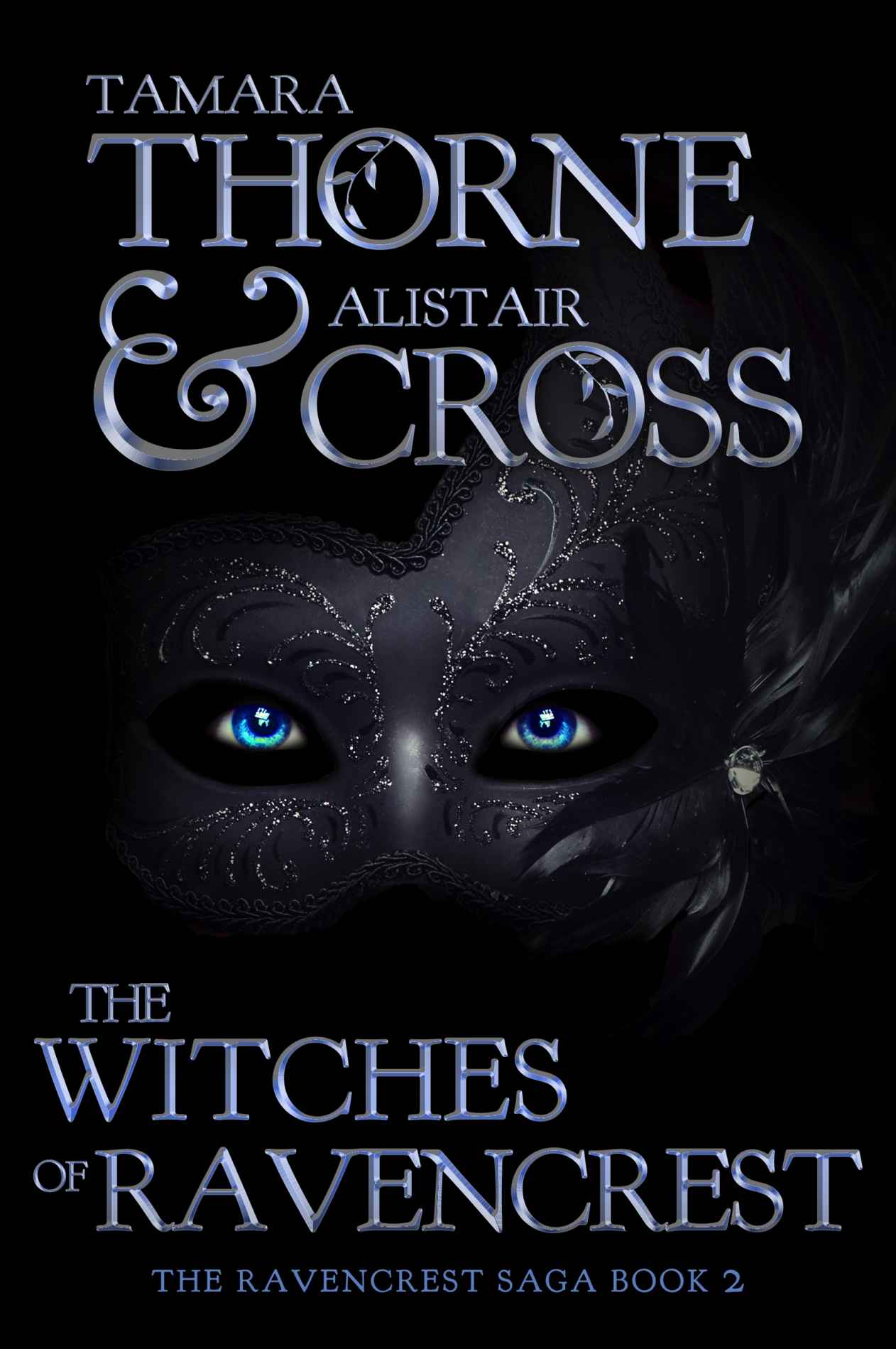
WitchesRavencrestOnce upon a time, I absorbed the “Ghosts of Ravencrest.” Then I needed a break. I had to let these ghosts settle into my consciousness and give them time to digest into my subconscious before moving on. And move on I did,  carrying these ghosts with me, for they were stored in my memory banks. But alas, many of these banks were locked; their contents – irretrievable?  I had hoped not, for any understanding of the book that is under review depended on unobstructed access to these ghosts. Were “The Witches of Ravencrest” able to set them free?   Short answer – yes!

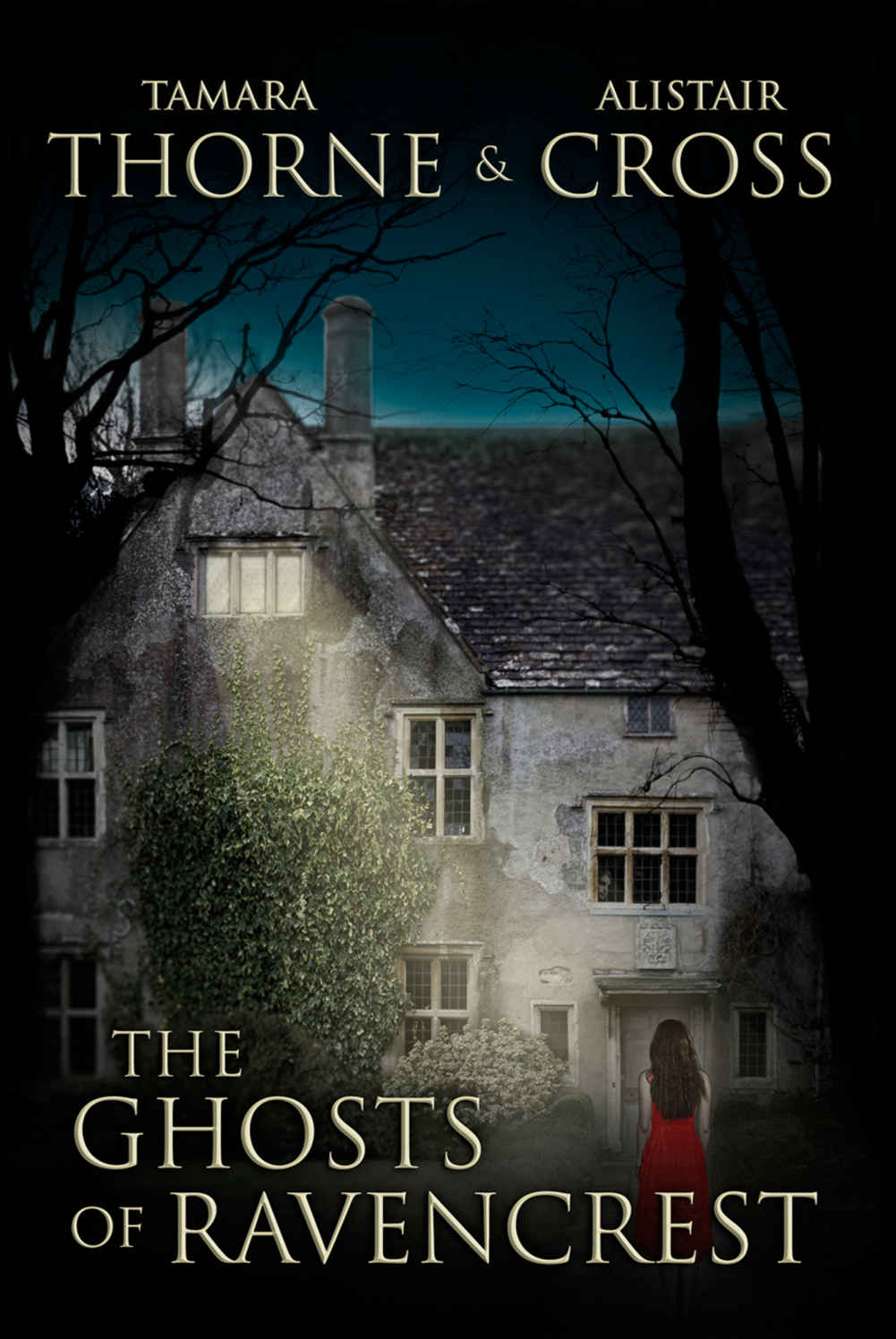
For those that have no clue what I was babbling about in the preceding paragraph, I refer you to this review: The Ghosts of Ravencrest  The Ghosts of Ravencrest is the first book in the Ravencrest saga. The subject of this review is The Witches of Ravencrest, the second book of the series. I finished the first book back in February. When I started the second book in the late summer, I was a bit worried. It had been a while since I visited with the occupants of Ravencrest Manor – the haunted house of the Ravencrest series. These occupants are members of the Manning household; would I remember them?

As far as family goes, the task was easy. The only living family members are Eric Manning and his two children. Check, check, annnnnd check!  But this household includes more than just this trio of living relations – so much more.  First there is the household staff. There is Belinda Moorland, the governess for the Manning children and the aspiring love interest of Eric Manning. Since she is the central protagonist, I had an easy time recalling her as well. Being the newest member of the household, it is through her eyes that readers of the first book come to meet the rest of the staff; a collection of  odd individuals whose idiosyncrasies  range from the charmingly eccentric to the dangerously disturbed.  Then there are those other “entities” that lurk about in the house; abhorrent creatures living in the walls and mysterious spirits that haunt an entire wing of the mansion. Going on memory, it seemed that each household member, living or dead, had a role to play in this somewhat complicated  and continuously unfolding plot. Oh Lordy! How was I ever going to reacquaint myself with all these characters and remap this plot?  Turns out, the task was not that difficult.

With familiar ease, I rediscovered Grant Phister the butler and his husband Riley the gardener. Grant is the eyes and ears of Ravencrest and he seems to be the one tasked with managing the overall affairs of the household. This is no easy feat since part of his job, unofficial though it may be, is to keep the supernatural carnage at a minimum. His ease of character and witty humor make him memorable.   Officially, the untrustworthy Cordelia Heller is the household manager. She is bound to the estate by matters of wills and legality.  It took me very little time to refamiliarize myself with her wicked ways.  For she is an ancient witch that has worn different clothing’s of flesh over her many years. She has it in for Belinda, who is learning, little by little, that she has her own magical abilities that, when fully realized, may rival the skills of Cordelia.  But for now, Cordelia’s power is great! In The Ghosts of Ravencrest, she transformed a man into a crawling abomination that lives inside the walls. This thing, known as The Harlequin, is back in this second novel. He passed out of my conscience for a time, but he crawled back into my brain with the same ease for which he crawls about in the ventilation system.  Cordelia is in charge of the maids who she regularly disciplines down in the dungeon, thereby adding some BDSM flavor to this novel. Ah yes, how could I have forgotten the spicy Dominique, the Latina maid whose obsession with Jesus Christ is taken to an erotic level! Oh and I had forgotten all about Walter Hardwicke, the chauffer, always doing the bidding of Cordelia.  He is also a serial killer. Once reintroduced, I “remembered him fondly” (not really, I just wanted to use that phrase!)

Of all the ghosts that haunt Ravencrest, the three nuns stand out the most. I never forgot them and they are back again, gliding in unison in the haunted wing, forcing anyone they encounter to “Eat, eat, eat!” the cursed persimmons that they have in their possession.  But perhaps of more prominence are the ghosts of Mannings long since dead. To what extent these men and women haunted Ravencrest in the first book I could not remember. But they shine with meaning and revelation in The Witches of Ravencrest.

 The first book introduces us to all these characters and lets us readers know that GhostsRavencrestRavencrest is haunted not only with spirits but also by a strange history of familial drama wrapped in murder and treachery. This second book goes beyond the supernatural manifestations and explores the agents of such phenomena; the summoners of spirits, the casters of spells. In short, we move on from “The Ghosts of Ravencrest” to “The Witches of Ravencrest”.  In the first book we learn what we are dealing with. In the second book, we learn more about the whys and wherefores of the “whats”. We learn of the complex roles of the characters and begin to understand how they fit into the larger story.

For better or worse, The Ravencrest Saga has the makings of a literary soap opera. There is love and eroticism, murder and betrayal, a subplot here, a trail of story over there, here a conflict, there a conflict, everywhere a con-flict – Eric Manning had a house – E-I-E-I-GHOST! Some may not like this style, especially those horror fans that are not into romance sagas. While I am not a follower of such a genre, I did enjoy this book. What I missed, however, were the trips back in time that were prevalent in the first book. There are places in The Ghosts of Ravencrest where the story creeps back to the distant past. The writing style of these sections reflects the style of the period. We go back a century or two and learn about the Manning family of yore. We see how ghosts and witches were a part of the makeup of the family even back then. In The Witches Of Ravencrest, while the ghosts of the old times visit the present, we as readers are rarely allowed back into the past. I miss the old world of the story. Oh well, time marches forward I guess.

So to wrap it all up, The Ravencrest Saga offers interesting characters and a compelling story. It mixes erotica with the gothic. Sometimes this mixture works well. At other times it…I don’t know, it just “works” these other times, minus any supporting adjective. The soap opera style can be daunting, especially if one is not attuned to this style of storytelling, but in the end it pays off with its creativity of content.


J.S. LeFanu and Haunted Houses

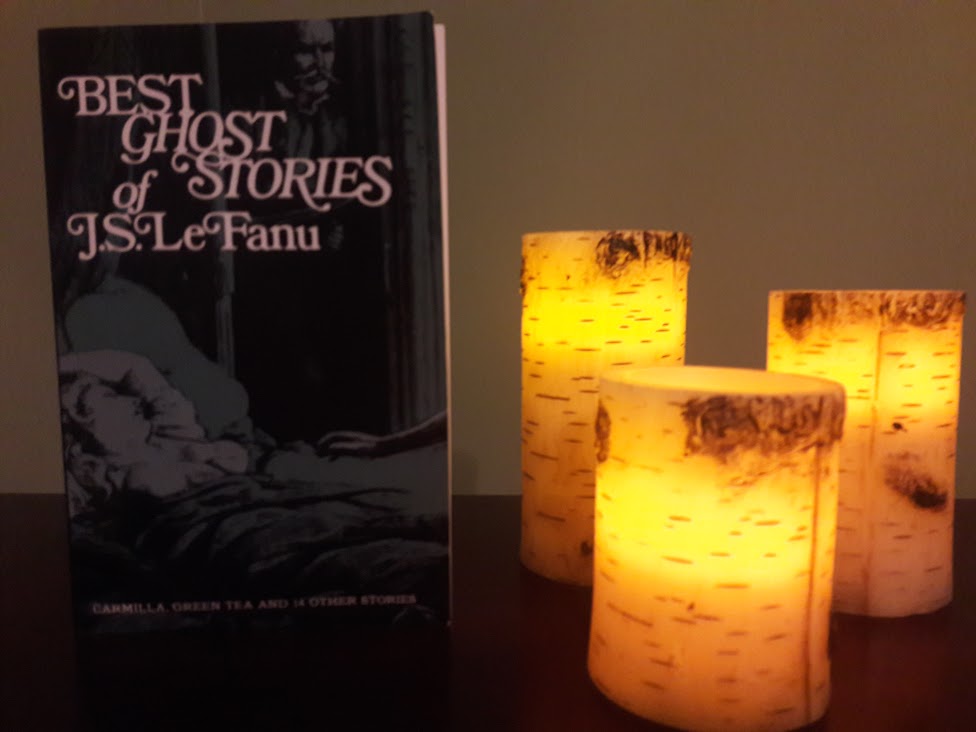
LeFanuBook

LeFanu! I love that name. One can have so much fun with it.  For instance:

LeFanuuuu, This is Gary Gnu (Guh-nuuuu)! How dooo you doooo? Excuse me, ah..ahh…achoooooo!

Oh shucks, I just discovered that his name is pronounced with the short “a”, which is the syllable that is stressed. How disappointing! But his ghost stories are not, which is the important thing.  Far from it! Some consider him to be the best of his craft; the master of the ghost story. His work certainly epitomizes the classic ghost story. By the way, “classic” is always the best!

I first encountered Joseph Thomas Sheridan LeFanu when I read The Mammoth Book of Haunted Houses Stories .  LeFanu’s tale “An Authentic Narrative of a Haunted House” was just one of many stories that was necessary to plow through on the way to the book’s end. While I am proud of my review of the book as a whole, it didn’t do justice to the many authors and stories that made the anthology special.  I’m glad to finally have the opportunity to hone in on this great author and examine some of his delightful haunted house stories.

It was Anne Rice that first recommended J.S LeFanu to me. Well okay, not to me personally, but she dedicated a post to him on her Facebook page. His vampire story “Carmilla” influenced her works tremendously. After reading her post I went to Amazon and bought Best Ghost Stories of J.S. LeFanu . Fourteen chilling tales! I have yet to read them all, but for purposes of this article, I will examine three tales that deal with haunted houses. But first, let us go over some interesting information concerning the master.

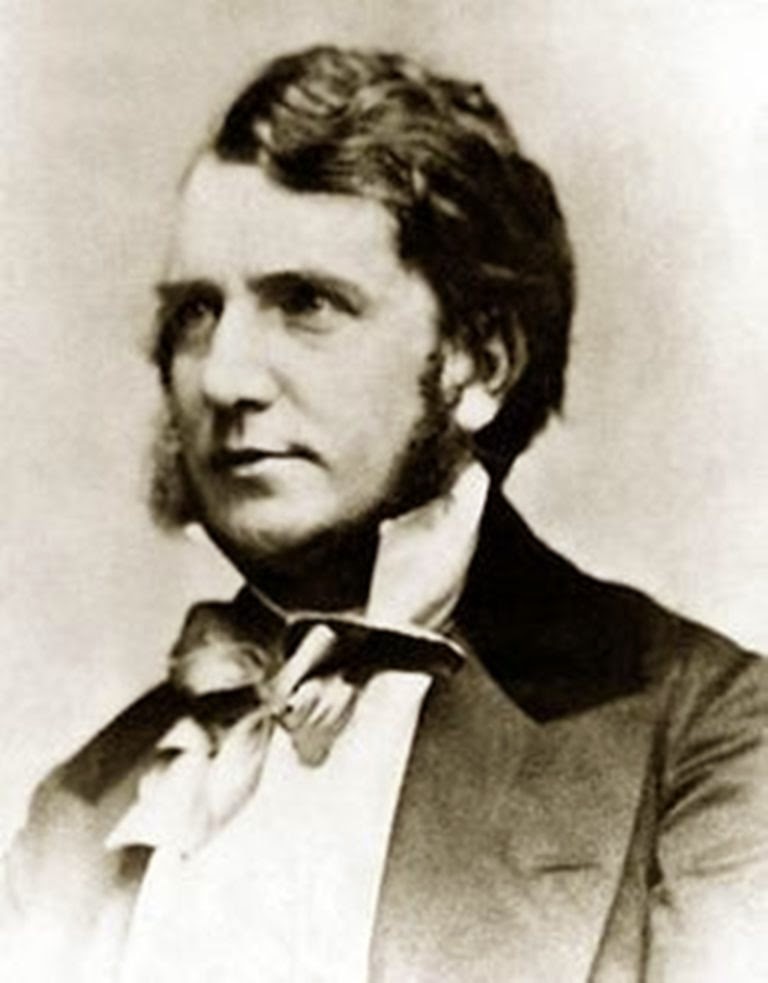
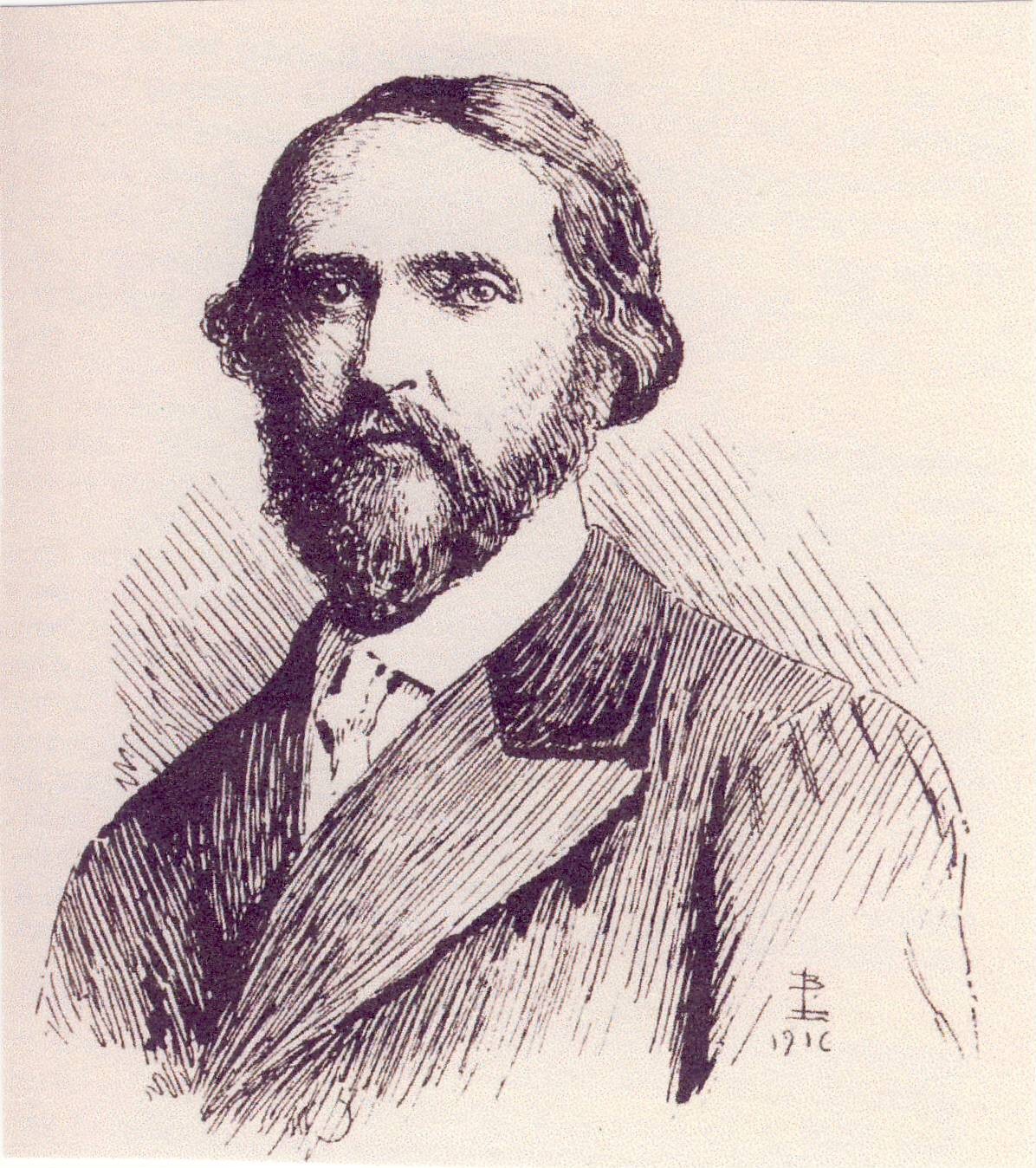
LeFanu was an Irish novelist – born 1814. He is one of the main figures associated with LeFanu2Victorian ghost stories.  He influenced many authors of the supernatural, including M.R James, H.P. Lovecraft, and Anne Rice. His vampire story Carmilla predates Bram Stoker’s novel “Dracula” by twenty-six years. According to Dover Books, the publisher of Best Ghost Stories of J.S. LeFanu, he “achieved depths and dimensions of terror that still remain otherwise unexplored.”  His knack for setting up an atmosphere that all but welcomes a haunting explains his success.
From Wikipedia:

He specialized in tone and effect rather than “shock horror”, and liked to leave important details unexplained and mysterious. He avoided overt supernatural effects: in most of his major works, the supernatural is strongly implied but a “natural” explanation is also possible.

With that said, let’s explore some of LeFanu’s haunted houses. We’ll begin with story synopses and then we shall delve into deeper analysis that will uncover common themes.


(WARNING: Spoilers are lurking below!)

The Stories

Squire Toby’s Will

Two brothers quarrel over the hereditary rights to Gylingden Hall, the house that is at the center of this story. After Squire Toby Marston passes on, the favored son, Charles, takes possession of the house. Scroope Marston contests this and gives it his “legal all” but to no avail.  Inside the house in a secret compartment, Charles discovers documents that prove Scroope’s right to his share of the inheritance.  But Charles isn’t telling!

A stray bulldog comes wandering along and Charles takes a liking to him and takes him in, against Butler Cooper’s wishes. The dog is locked up at night, but somehow, it always finds its way to his master’s bedroom. It climbs upon Charles’s bed. There in the darkened bedroom, its face transforms into the face of his father. Toby Marston then warns his son, through the mouth of the mutt, to give Scroope was he is due.

Time passes and so does Scroope. Scroope is to be buried inside the family graveyard that is out beyond the garden of Gylingden Hall. While the ceremony is in progress, two men in black coats and hats are spotted exiting a stagecoach and entering house. Servants search for these two strangers so that they might inquire about their identities, but they are nowhere to me found.

After the arrival and disappearance of the two figures, the house is never the same. Servants hear whispering at the ends of corridors. Nurses witnesses strange figures passing by the room of Charles, who is now sick and confined to the bed. Poor Charles, his mind is going. He rambles on and on about lawyers, about bulldogs, about his deceased father Toby and his dead brother Scroope.  It does not seem that his remaining moments here on earth will go too well.

Ghost Stories of the Tiled House

Old Sally is the servant of young Lilias, and she just loves to share stories with her mistress. Likewise, Lilias enjoys hearing about the older woman’s experiences. So Sally tells her all that she knows about The Tiled House; a house that Lilias had been hearing vague but foreboding tales about ever since she was a young child.

One evening, Sally says, the servants and the family friend await the arrival of the master of the house, who is due in quite late. They hear the rustle of the stagecoach horses, the howl of the wind, and a knocking on the front door.  The butler springs to his feet and goes to let his master in.  He opens the door. No one is there. But he feels “something” brush past him. Intuitively the family friend, Clinton, solemnly states “The master has died”

Another tale of the Tiled House is told from the perspective of an unnamed narrator. Another family lives at the house; it is another time. Occupants look out the window, only to see a set of hands clenching the windowsill.  There is knocking at the door and when the door is opened, the greeter again sees no one but feels a presence brush against him.  Now hands are seen in the middle of the night, penetrating the valences that surround the beds, reaching out toward the unsuspecting sleepers.

An Authentic Narrative of a Haunted House

The story begins with the comments of a fictional editor, who is presenting this tale, presumably to some kind of made-up publication. He vouches for the characters of the witnesses that have told him the tales for which he is about to present.

It is a tale told from the perspective of yet another unnamed narrator. He has a large household consisting of a wife, three children, and many servants. They move into a large house and strange things begin to happen.

Quite frequently, the occupants awake in the middle of the night to find strangers prowling about their bedrooms. A tall man moves across the room stealthily. And old woman is seen searching for something. They think of these trespassers as ordinary prowlers. The servants examine the coal vaults, searching for a possible secret passage that might allow trespassers entry to the house. They find nothing.

Maids see a pair of human-shaped shadows move across the wall, passing and repassing.

Later, human bones are uncovered from the outside garden. Eventually the family moves out of the house. Their stay was never meant to be permanent. The mysteries of the house remain unsolved.

Common themes

The Unknown

In this section, not only am I working with the premise cited in Wikipedia (specifically that the “supernatural” in Le Fanu’s stories “is strongly implied but a ‘natural’ explanation is also possible.”) but also with notions concerning the lore-like “origins” of these stories. To begin, the creepy things that lurk within these tales blend in well with the “stuff” of imagination; the byproducts of heightened sensitivities brought on by fear. The face-changing dog in Squire Toby’s Will is the stuff of nightmares that bleeds into Charles’s wakefulness as he lies in bed. The disembodied whispers are disturbances that test the already frazzled-nerves of the highly imaginative maids that are hyper-reactive to rumors of spirits and hauntings.  In Ghost Stories of the Tiled House, the strange noises heard upon “the phantom’s” arrival originate from the same place that gives us all those other unknown sounds that occur on a dark and scary night; that unknown location that is usually forgotten come morning time. The passing shadows behave as if they are but tricks of the flickering candlelight; the hands are perhaps made up of the same material that tends to pass out of existence after crossing the corners of our eyes.  The trespassing figures in An Authentic Narrative of a Haunted House are like phantoms freed of the nightmare.

In all these stories, the supernatural occurs within the darkest corners of the natural, and this is what makes them truly scary. Never are the ghosts proven to exist; never is there collective agreement concerning what has supposedly occurred.

Another fascinating aspect of these tales is that they are not first-hand accounts. Squire Toby’s Will begins with a narrator that is intrigued by Gylingden Hall. He describes its dilapidated structure and the “ancient elms” that surround it.  He appears not to have witnessed the events of the story, yet he tells the tale. Ghost Stories of the Tiled House is a mixture of tales from an old maid (Sally) and then later by an unnamed narrator. The unnamed narrator confronts one of the occupants, Mr. Prosser, at the story’s end. In the events of the story Mr. Prosser is a young man. When confronted by the narrator, Mr. Prosser is quite old and minimizes the supernatural elements of which the narrator is inquiring.  While the events that unfold in An Authentic Narrative of a Haunted House do so from the first person perspective of the man of the house, the story is presented to readers via an editor.

As second-hand accounts, these stories rise to the level of folklore, which has staying power. They pass from one person to another like the ghosts that haunt the houses of successive generations of estate owners. Mysterious in content, mysterious is origin. Such is the nature of the ghost.

Outside-In

In all three of these stories, there is this theme – something from the outside wants in. Squire Toby’s Will has two cloaked figures (which some in the story guess to be the father and son spirits of Toby and Scroope) entering the house and then disappearing, perhaps embedding themselves forever into the spiritual fabric of the house.   Ghost Stories of the Tiled House presents a scenario where a man, who is perhaps dead,  is making  noise outside the premises of his former home?  Is he returning from the dead? Then there are the hands hanging from the outside window ledges. In one case a pudgy finger pokes through a bolt hole on the window frame.  In An Authentic Narrative of a Haunted House, the apparitions appear both inside and outside. But there is the lingering fear that these beings, whoever (or whatever) they are, have forced their way in from the outside.

After these mysterious phantoms gain entry, things go awry. Servants from Squire Toby’s Will hear voices. Cooper the Butler sees two shadows dancing in wall, resembling the two cloaked men who had entered the home on the day of funeral.  After the butler in the Ghost Stories of the Tiled House senses a presence brushing past him through the entryway, people begin to report some rather uncanny occurrences. There are strange noises. Indentations appear in the mattresses of beds without sleepers.  The same situation occurs years later in the same house; a man at the door experiences the sensation of something making its way inside.  After this, occupants no longer see hands outside the windows.  They see the hands on the inside! They find handprints inside pools of dust. They see hands coming at them while they sleep in their beds. The mysterious beings of An Authentic Narrative of a Haunted House had already gotten into their home. The question was – how to get them out?

Something is outside. It makes its presence known. It wants in. It gets in. Now what? These are the situations that the unfortunate characters of LeFanu’s stories have to face.

Spine-Chilling Imagery

 LeFanu has a way with words. He finely crafts these mood-alterting scenarios; the tone effectively digresses from ordinary to frightful with just a few strokes of the pen.  It is the imagery that he invokes with this pen that transforms the piece. The things he describes rise up from within the words like the eyes of a gator emerging from the slough.  They take form and come at the reader in almost three-dimensional fashion.  Take for instance the shadow that merges with the wolf-head carving in Squire Toby’s Will. Out of this meeting the contorted face of Scroope comes into being and frightens poor old Cooper. In the Ghost Stories of the Tiled House, a poor maiden awakes to the sight of a strange man beside her bed.  His throat has been cut and blood drips onto the floor. But he is not suffering. He is laughing. The hands that will grip the outer sills seem to be reaching outside of the book and clenching the yet-to-be-turned pages. The strange woman that haunts the house in An Authentic Narrative of a Haunted House is described as a squalid little old woman, covered with small pox and blind in one eye. The way Le Fanu describes her shuffling about and wandering the room – is he looking though the page and describing a woman that he sees in real time standing next to you – the reader?

Throughout these tales, there is yet more captivating imagery. Vanishing stagecoaches, passing shadows, figures ascending staircases, shining eyes, ruffling curtains, and on and on and on.  The things that come to be, they have a way of breaking the serenity. They creep up on their victims when they are at peace; sitting in a soft chair, lying in bed. They interrupt casual conversations. In this way, these image-evoking scenarios are similar to the “outside-in” theme.  Inside, the occupants are going about their normal, peaceful lives. Something wants in. Once in, life is no longer normal. Likewise, once the object of the imagery forms and invades a casual scenario, the situation turns dire.

Summing It Up


LeFanu3Joseph Thomas Sheridan Le Fanu – who are you?
He is THE master of the ghost story. He conjures up frights that take place within the scariest realms of our imagination and then forces us to confront our own understanding of reality. He constructs haunted houses but leaves the ghosts outside. But they always seem to creep on in. He gives the readers the opportunity to “see” the apparitions that exist in the minds of his characters.  He’s quite the ghostly dude.  If you haven’t read any of his works, I suggest you do so soon. Soon = immediately!  Get on it!


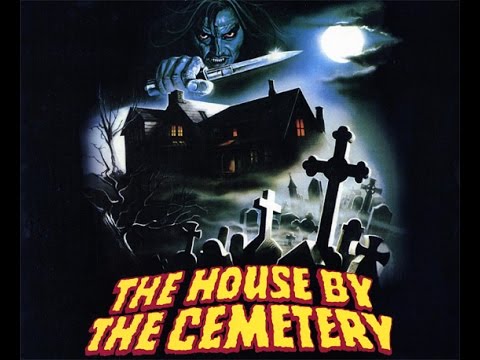
Review of The House By the Cemetery

housecemetaryItalian Horror. How I want to get to know thee!  I have heard some great things about you. You have style, so I’m told.
To be honest,  we have gotten together a couple of times.  Our first date was Suspiria by Dario Argento. Aside from a few minor issues, I thought it was a good film. And I witnessed that “style” that I was told to look for. All in all, it was a good first date.  Our second meeting was Demons by Lamberto Bava but produced by Argento. This date wasn’t as good. Yeah the style was there, but there was a lot missing.

Let’s talk about our most recent date; The House by the Cemetery by Lucia Fulci.  It went horribly, didn’t it?  And I so wanted for us to have a good date.  It didn’t have to be a great date, just good.  But it wasn’t.

I really did want this to like this film. I was hopeful for about 10 minutes.  But on the eleventh minute – down, down down goes the film.

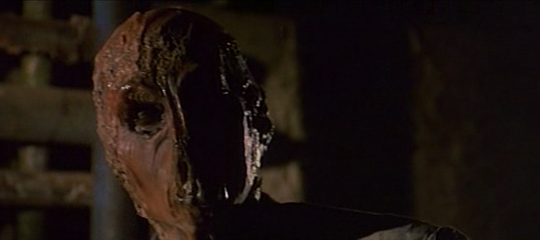
Here’s a quick summation of the plot. Dr. Normal Boyle moves his family into a house in New England. There he will continue the research of his colleague who had committed suicide.  Turns out, this colleague was researching a notorious killer referred to as Dr. Freudstein.  And yes, Dr. Freudstein will do some killing in this film. Meanwhile, the ghost of a little girl appears to little Bobby, Boyle’s son, warning him to stay away from this house.

So what’s wrong with the film?   These things.

  • The language dubbing is terrible. I would rather there have been English subtitles while the characters spoke Italian.  The voices sound canned and unnatural
  • While this house is by a cemetery, the cemetery has very little to do with the plot.
  • The character actors – the characters they play come off as a bit strange.  The thing is, I never knew if they were supposed to be weird in order to arouse suspicion of if they just ended up being odd due to bad acting/overacting. The latter turns out to be the case.
  • There are more plot holes in this film than there are pot holes on Chicago streets.
  • There are all kinds of hints at secrets to come. But these secrets don’t materialize. Maybe the writer, Elisa Briganti, http://www.imdb.com/name/nm0108978/?ref_=tt_ov_wr just forgot that she put these “hints” in there!
  • Poor story continiuity in terms of the most elemental aspects of realism.   The boy is trapped in the basement with the killer, door is locked. He screams, cries, and the killer almost gets him. The next scene he is in his bed upstairs, slightly sad, a little scared. Just a bad day. Meanwhile the killer remains in the basement.
  • This is a terrible incoherent film through and through.


There is a lot of gore in this film. This neither thrills me nor upsets me. It is just there. house-by-the-cemetery-2

Is there anything good about this film? Sure!  The atmospherics are damn good!  The house looks scary on the inside and out.  Establishing shots of the house are excellent. In fact, there is a lot of decent camera work and photography direction. There is a scene of a little girl looking out the house window. The camera zooms and we the viewers realize that we are looking at a painting of the house. They pull off these effects very well.

In sum – good filming in and otherwise bad film. But guess what? I’m still going to court Italian Horror. Maybe I’ll stick with Dario Argento for now. Sadly, I don’t think he has made any haunted house movies (but I could be wrong).  But I’ll just appreciate him for the general thrills and scares.


Review of The Cat and the Canary (1939 film)

The Cat and the Canary features a dead millionaire, greedy relatives, a strange maid, a psychotic killer and…Bob Hope? Yeah its got all “them peoples” along with a creepy old house, a coveted inheritance, murder and mayhem, and a lot of hilarious one-liners from the nervous yet witty house guest Wally Campbell. You guessed it; Campbell is played by Bob Hope. It’s horror mixed with comedy.

Here’s the nuts & bolts of the story. The late Millionaire Cyrus Norman did not trust his heirs. No he did not! So he had these weird ass conditions concerning the distribution of his estate. The reading of the will does not take place until ten years after Cyrus’s death per his wishes. When that ten year anniversary finally comes, the prospective inheritors gather together in his huge home in the Louisiana bayous for the midnight will reading. Along with the lawyer and the maid, there are also three women and three men. The six are the last remaining descendants of Cyrus and candidates for the passed down fortune.  One of the women , Joyce Norman, played by Paulette Goddard  (former wife of Charlie Chaplin) wins the prize. But there is a catch – which brings us to the second cat-and-canary-1939-creepyodd stipulation of the will. If the sole heir, who in this case is Joyce, is proven to be mentally ill within 30 days of the reading of the will, then her claim to the fortune is forfeited and Cyrus’s estate gets passed down to a second heir. The identity of the second heir is withheld; the papers are protectively sealed in an envelope that remains in the possession of the lawyer. Now, we viewers know that there will be a mad rush to drive poor Joyce insane, and that this rush won’t be extended over a thirty day period. The tricks and misdeeds against the woman will all take place within the house over the next several hours by one or more of the scheming others that are desperate to lay claim to the inheritance. See, they are stranded there. They all came via paddle boat on the rivers of the bayou. The boat guy won’t taxi his boat after hours, so they all must spend the night in the creepy house. Spoooooky!

Oh yeah, the creepy maid says there are spirits in the house.

And oh yeah again, there is an escapee from the asylum running around the property.

And oh yeah for the third and final time – wasn’t that funny how I linked the words “ten years after” to the famous rock band of the same name?  Back up there at the beginning of the second paragraph, I linked….oh never mind!  Read on.

This movie is a remake of the 1927 silent film of the same name. Furthermore, both films are based on the 1922 play by John Willard. The play reveals the reasoning for the title of the story. Cyrus West (not “Norman”, in the play his surname is West) says of his relatives, “(They) have watched my wealth as if they were cats, and I — a canary”.

I really don’t have much more to say about this film other than that I enjoyed it. But I must confess – this is the first Bob Hope film that I have seen. His humor might be dated, but to me it is fresh. In the film, the maid says to Wally (Bob Hope) something along the lines of “I sense spirits all around you” to which Wally says, “Can you grab a few them and throw them in glass with ice?” THAT is funny! Yes it is, don’t argue with me! Without Hope, this film would be only be so-so. Sometimes you just have to have “Hope!”

Here’s a side note: I saw this film on Saturday, Oct 17, 2015 on Svengoolie on MeTV. Sven’s the guy that shows me many of these old time haunted house films. I love “Da’ Sven” and you should love him too!

Do you have MeTV in your area? No, it’s not a cable station. It’s a regular station on terrestrial television. You over here, do you have MeTV? You don’t? Aww, I’m sorry. But wait you..over there… do you have access? You do? Great! Turn on Svengoolie on MeTV’s Super Sci-Fi Saturday night!

http://svengoolie.com/

And to those who think that they do not have access to Svengoolie in their area, maybe you do. Check here:

http://www.metv.com/wheretowatch

To those outside the United States, I don’t think you have MeTV. I am sorry. I recommend taking this up with the United Nations.