The House Sitter – The Story of a Man Who Haunts Houses

HouseSitterCoverForHHGroupHello readers!

Are any of you in need of a house sitter? If so, I happen to know just the guy.  His name is Brad Johnson. He is an author.  He likes to be left alone in a roomy house for long periods of time.  Burglars beware, for he will rarely leave the premises. He will look after your possessions. Even though he confines himself to the house, he won’t get bored – don’t worry about that!  He will use his solitary time wisely. He will do a lot of thinking and self-reflecting. He’ll do a great deal of writing.  And that’s about it!

Oh, there is one more thing he might do. He might haunt your house. But you’re ghost lovers, so this should be an extra bonus for you!  See, Brad gets his inspiration from certain household objects that strike his fancy. If he likes what he sees in your antique clock, he might write a ghost story about it. After this, maybe the clock will stop and restart at seemingly random times. Maybe, when the lighting is right, the reflective glare on the glass panel will morph into a specter. Whatever happens, you can count on this: your clock will never be the same again!  Neither will your house.  After returning home, there might be bats in the pantry, footsteps in the attic, howling inside the chimney flue; the possibilities are endless!

Click on the picture above and take your first step into Brad Johnson’s world. Then, if you dare, take the next steps and order yourselves a copy of “The House Sitter: The Brad Johnson Haunting Series Book 1.”  Consider this book as his resume. Read about his previous job as a house sitter. Discover how he haunted a house by turning a laundry chute into a maze of monsters.  Learn how he brought “life” to a corpse that was stashed away on an attic balcony.  Read how he fixed it so that a music box would summons spirits.  All this he did with the almighty pen!

Or did he? Brad Johnson’s stories are filled with metaphors for his life’s struggles.  Is it possible that his overstressed mind caused him to take these vivid story themes far too literally? The neighbor seemed to think that there was something very strange going on in the house. Something unbelievable, yet real.

Now, how about you? Maybe you don’t believe in this house haunting hokum.  Still, you might be wondering what the hell is going on in Brad Johnson’s mind.  Read the book and HOuseSitterUSediscover for yourself what kind of demons lurk in his psyche. And then you can decide if he is truly able to expunge these demons from his brain and onto the canvas that is the house. No matter the outcome, one thing is for sure – this guy can never be accused of being a ho-hum kind of homemaker!

What’s new – 2/2/2016

NewsHello ghosts! Yes that’s you – the readers of my haunted house pieces. That’s how I refer to the people of my haunted house Facebook page so I might as well extend the same courtesy to the readers of my blog.  I thought it might be nice to post a news piece every once in a while with updates on who’s haunting what house, which ghosts are floating around these days – things like that. In other words, it will be a piece on what’s coming around the bend in my world of haunted houses within film and literature.

That said, let’s get to it!

****************************************************

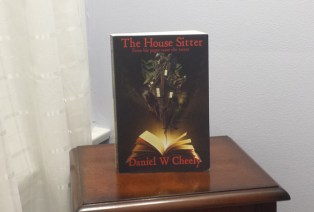
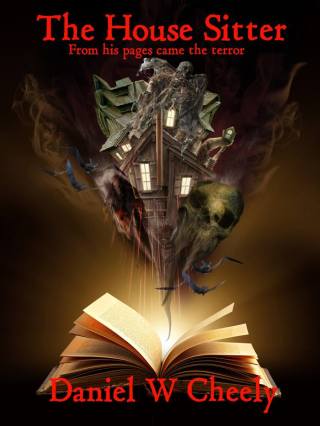
First of all, I have written a haunted house book that will soon be available for purchase. It’s called The House Sitter. Here’s a picture of the cover:

HouseSitter
It’s a story about Brad Johnson, a writer who is tortured with a dark and demented mind. He envisions things that threaten his sanity. In order to dispel these visions, he haunts “things”. He writes horror stories centered on household objects. Although the terrible visions are then expunged from his mind, they end up clinging to the targeted objects and haunting them for real.

Brad Johnson agrees to house sit for a friend. While under his care, the house becomes haunted.

The story will be told from three different perspectives. First there’s the third person narrative which moves the overall action of the story. Second, there are the journals Brad keeps. There are written in the first person.Third, there are the stories that Brad writes. One is about a boy who falls down his grandparents’ laundry chute, only to discover a maze filled with monsters and demons. The second concerns a disturbed young man that rents an attic bedroom. He invites a woman to his room, only to murder her. He locks the body out on the balcony. But his date is not content with being dead. Her animated corpse tries to break in and return to the attic. Finally, there is a wicked old man with a house full of mysterious antiques. One such item is a music box that summons ghosts.

These perspectives often intertwine. What happens in the narrative effects what Brad write’s about in his journal. The sentiments expressed in his journal find their way into his stories. What happens in the stories can, from time to time, spill over into the objective reality of the third person narrative.

This book should be available in the next couple of weeks. I am currently giving updates on its status at my Facebook author page:

*****************************************************

Still with me, ghosts? How’s it ‘Shining’? That cheesy pun is my way of calling attention to a project I am currently working on. I will be reviewing Stephen King’s groundbreaking novel The Shining along with Stanley Kubrick’s film version of the same story. The television mini-series will be included in the review as well. I have read Stephen King’s TheShiningnovel a couple of years ago but I am skimming through it once again. I own the Kubrick film and have seen it several times. But hey, what’s one more viewing? Once more in preparation for this review!   So far I have watched 2/3 of the series. I will certainly finish it up and get to work writing! The piece will include quotes from Stephen King and other interesting tidbits that are directly or indirectly related to the story.


****************************************************

I am currently reading two haunted house novels: Clive Barker’s Coldheart Canyon and Darcy Coates’s The Haunting of Gillespie House. I am really enjoying both books. Expect reviews in the near future!

****************************************************

Soon it will be my birthday! It’s about a month away. I am going to ask my loving wife to buy a special present – a leather bound illustrated haunted house novella by William Meikle – The House on the Moor


Check it out here!

http://darkrenaissance.com/product/the-house-on-the-moor

HouseOnTheMoor

****************************************************

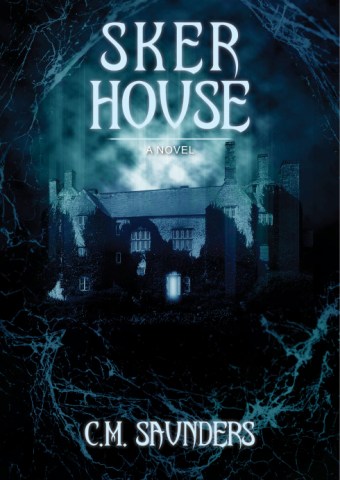
Another author has joined my Facebook page. Welcome C.M Saunders! He has an impressive library of books for sale. His next book, due out March 1st, is a haunted house novel. Yay for that! It’s called Sker House and you can check it out here:

https://cmsaunders.wordpress.com/

SkerHouse


And here again is a link to my Facebook page:

https://www.facebook.com/HauntedHousesMoviesAndBooks

****************************************************

Hope the year so far has been treating everyone well! Bye for now!


~ Daniel W Cheely


Review of The Houses October Built


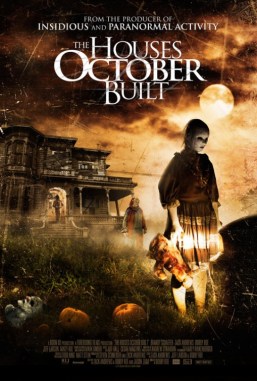
houses_october_builtWe’re still in October, right? Oh yeah, we’ve left that month of Halloween shenanigans long ago. We’ve already said our thanks in November, went a jingling all the way through December and then somehow ended up in a different year – 2016. Being that it is late January, why am I reviewing a movie about five friends on a road trip seeking out the ultimate Halloween attraction – the haunt to end all haunts? Shouldn’t I have reviewed The Houses October Built in, well, October? I suppose so. But perhaps, if anything, this January review of an October based film will help to take your mind back to a warmer season while you momentarily escape the bitter and miserable cold. Plus, there are no holidays on the immediate horizon. Yeah, yeah, there’s Valentine’s Day coming up around the corner, but who wants a pink-tinted day of lovey-dovey when they can be revisiting Halloween?

The Houses October Built is a “found footage” film, modelled after The Blair Witch Project. It’s the same plot formula – a group of kids go on an adventure, seeking to find the location of rumored site of terror, only to get in over their heads. In the Blair Witch Project, the site is a witch’s house in the middle of the woods. In The Houses October Built, the site is a haunted attraction that takes terror to the extreme. While touring the haunted attractions of Texas in their RV, they get wind of an attraction that is by invite only. It operates secretly and is not bound by rules, ethics and regulations. You know, those “killjoys”. But in the end, things other than “joy” might end up dead. Through word of mouth, chat-groups, email and Facebook, they come across clues that hopefully will lead them to their coveted destination. Little do they realize that the extreme haunt has already begun. They are the-house-october-built-headerbeing stalked by masquerading performers from the haunted houses they have frequented. These stalking occurrences happen repeatedly – from town to town, at this festival, at that campground, on this road, inside their RV. What is going on?

My impressions of this movie are perhaps as strange as the film itself. At first, I decided that I didn’t like it. But I kept thinking about the film, revisiting certain scenes in my head. So then I asked myself, “Hey self, if you dislike this film, why do you keep dwelling on it?” To answer the question, I had to reassess my evaluation. I returned for a second viewing and “skim-watched” the film. After this, I decided that I did, in fact, enjoy the film.

I’ll try to make sense of all this. Wish me luck – here I go!

Sometimes these “found footage” films rub me the wrong way, but not always. I loved Paranormal Activity and while I did not have a love affair with The Blair Witch Project, I didn’t hate it either. The filming of The Houses October Built was choppy. Too often the camera just shut down during some tense nighttime scene only for the film to pick up again the next day on a sunny road. But I get it. It’s supposed to mimic the video recordings of your average tourists on a road trip; unprofessional and at times random. But every so often I felt that it was too self-conscious as a “found footage” film. When the five friends converse in their recreational vehicle – sometimes the scene seems natural and sometimes it does not. Now and then I was left with an ever so slight taste of “Reality TV.” Just so you know, I loathe Reality TV as much as I loathe liver. This is partially due to the interspersing of filmed interviews with the proprietors of haunted attractions. During these interviews, they admit to the existence of “shady” goings-on among the backwoods actors. I guess I prefer the old style. I prefer a reel of storytelling film over chopped up “candid” videos that try to portray “real life drama.” For me, when a film makes no attempt to be anything else other than the piece of fiction that it is, the drama seems more real than a pseudo-documentary that tries so hard to “dramatize the reality.”

The Houses October Built does not always succumb to these trappings. But its overall style does become distracting at times. Now, how about I throw an oxymoron at you?This style of moviemaking enhances the scare factor when the friends begin to encounter the costumed haunters afterhours. The amateur video-capturing from these consumer-based cameras brings out more of the “freak” from these freaks. The cameras highlight them in an uncanny way.

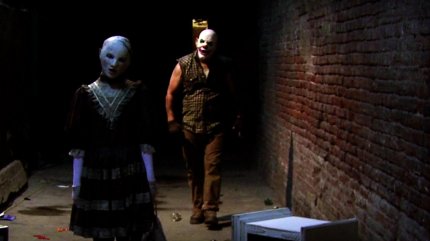
houses-october-built-01What’s scary about these encounters is this – we’re not sure if these costumed stalkers are merely role playing or if they are in fact surrendering to their horror show persona. Then we are left to ask – are the people that are behind the masks scarier than the monsters they are portraying? While the friends sit around the campfire, a man in white makeup appears from the surrounding woods. He says he works at the nearby haunt but he lives in the woods. There’s something creepy about him. He takes offense at one of the friend’s “backwoods” comment. Then there’s the clown who assaults them in a parking lot, claiming that they were improperly videotaping. There’s the girl with a porcelain face mask that wanders into their trailer. She sits, shifts her eyeballs, and does not answer any of their questions. She then screams and quietly leaves the vehicle. Weird stuff and there’s a whole lot more.

These freaks from the haunts – these are the things that stuck with me when the film was over. In this way I am plagued with the same set of circumstances as the five movie-makers. But not exactly – my life isn’t act risk. (Well hopefully not).

Overall this is a scary and very original film. At times the “found footage” format is distracting but at other times it helps to set a bizarre tone.

Now I shall digress into another topic. I ask myself, “Hey self, is this film appropriate for this blog?” And I ask you, “Does this movie qualify as a Haunted House film?”   Definitely not is the usual sense. It is not centered on one huge house. There are no ghosts or paranormal phenomena. It’s a movie about the haunted houses that are the recreational attractions for the thrill seekers. But, a haunted house is a haunted house, right? You say “right.” I knew you would see it my way! So yes, self, this movie fits right into the theme of this blog.

Social Theory and The Haunted House

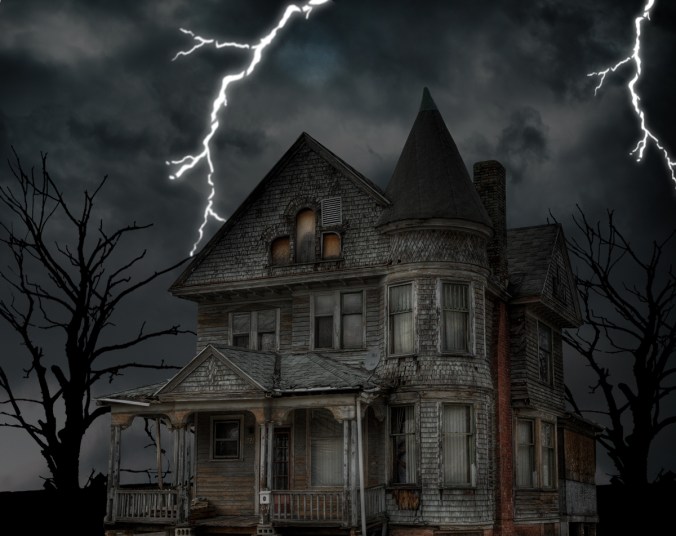
HauntedHouseSociologyOnce upon a time, I graduated college with a degree in sociology. But they weren’t hiring at the sociology factory, so I decided to write about Haunted Houses instead. But this is okay, because a haunted house writer earns about as a much a manufacturer of social thought  – zilch!   But hey – at least I found a similarity between the two “fields” – gotta give me credit for that!  And I have more of that “credit” coming, because I have discovered ways that I can draw on my knowledge of sociology to help me in my study of haunted house films and literature.  It would be selfish to keep this enlightening information to myself, so I am going to share it with you. Get ready while I reconstruct social theory so that it applies to the organization of the haunted house!
Haunted-houseSOC

When it comes to haunted house lore, I have always been interested in the houses that serve a higher purpose than to act as a meeting place for a collection of ghosts. I like it when the house itself has a conscious.  This occurs when somewhere within the walls there exists a force with a will of its own.  The source of this “will” is often vague and mysterious, which leaves readers and viewers to attribute this will to the house itself.  I also like it when, for one reason or another, the house is imbued with the ability to act as conductor of supernatural energy.  Under these circumstances, a house can create the ghosts, or at least hold the ghosts at bay due to its magnetic properties.   Or how about a house with a personality?  A house that’s mean; vindictive – a house that wants to kill you!

There are other haunted house stories that focus mostly on the ghosts that haunt the house. The house is but their stage; a platform that enables these specters to show off their ghostly antics.  This “stage” can provide the prefect atmosphere for their performance if the lighting is gloomy enough, if the props and furnishings give the surroundings the right touch of “haunt”.  But in the end, all this is background for the ghostly performers. If the house is to be a character, it is a supporting character at best; supporting the shining stars of ethereal light.

Now, doesn’t this comparison remind you the various theories regarding the structure of society? You are saying “no.” Oh.  Well then, maybe I should explain this matter a little bit better.
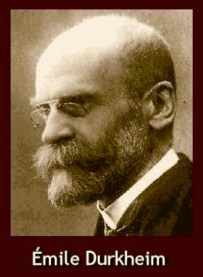
DurkheimEmile Durkheim is considered to be the “father of sociology”. His contributions to this field are huge.  He developed the concept of “social facts”.   Simplistically speaking, these are forces within a society with a scope that is beyond that of the individual.   These social facts, according to Durkheim, are the best predictors and/or facilitators  of other social facts, or social phenomena.   The rituals of a family (i.e. prayers/no prayers at the dinner table) influence the children’s religiosity or lack thereof.   Poverty might be an indicator of crime.  You get the idea.

What’s relevant here is that the role of the individual is downplayed. This is not to say that Durkheim thought of people as mindless automatons enslaved to tradition. He acknowledged that people influence culture and society with their beliefs and behaviors, but when this happens, something else is happening as well.  Here’s a quote from The Internet Encyclopedia on Philosophy  that better illustrates these ideas:

Chief among his claims is that society is a sui generis reality, or a reality unique to itself and irreducible to its composing parts. It is created when individual consciences interact and fuse together to create a synthetic reality that is completely new and greater than the sum of its parts. This reality can only be understood in sociological terms, and cannot be reduced to biological or psychological explanations

Thus, according to Durkheim, society  is an entity in and of itself.

Not all social philosophers thought like Durkheim. There are those that believed that society only comes into being on account of the competing interests of the multitudes of individuals. Society arises as a result of the need for people to get along, to establish rules and laws that allow people to maximize their self-interest without trampling on the rights of others.  From this point of view, society comes second and does not exist independently of the individuals.  This perspective is associated with Utilitarianism
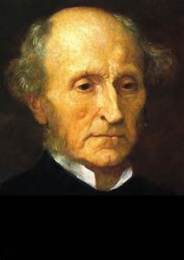
JohnStuartMillHere is what Social Theorist John Stuart Mill has to say about this:

The laws of the phenomena of society are, and can be, nothing but the laws of the actions and passions of human beings united together in the social state. Men, however, in a state of society are still men; their actions and passions are obedient to the laws of individual human nature. Men are not, when brought together, converted into another kind of substance. (System of Logic – Book VI, chap. VII, sect. 1)

For Mill, Individual consciences do not, as Durkheim postulates, fuse together. By nature, individuals are individuals and nothing more.

HauntedHouseSoc2

Now, back to haunted houses, applying the theories of Durkheim. Sort of.  Any professional sociologists reading this are probably laughing their asses off at me for this sophomoric comparison. Ah but what the hell – here I go.  I like haunted houses that exist as an entity, that are greater than the sum of its ghosts.  Or maybe, the ghosts “fuse together to a create a (haunting) reality that is completely new.”  A house of this kind is not haunted because it has ghosts. Rather, this type of house is haunted because it harbors memories that can produce ghosts. It is haunted because it creates energy that leads to supernatural phenomena.  It his haunted because of its very nature.  It’s not a house haunted by ghosts – it’s a haunted house!  See the difference?

Stephen King’s “The Shining” is a prime example of such a house. Okay, it’s a hotel not a house, but the example is still a good one. The Overlook Hotel is haunted because is “shines.”   In the movie by Stanley Kubrick, Dick Hallorann explains to little Danny about “the shining; ” – an extra sensory perception that allows one to read minds, witness residual spirits, etc.  Houses too, he tells him, can have “the shining.”  According to the book, The Overlook Hotel has a goal: to utilize the psychic energy of Danny so that it may trap him and his family inside its conscious forever.  Throughout the book The Haunting of Hill House by Shirley Jackson, there are hints that “Hill House” is sentient.  It attempts to possess one Eleanor Vance.   There are loud pounding noises and other haunting disturbances,  but these occurrences are not really attributed to ghosts. They are only attributed to the house itself.   Then there’s the house in Burnt Offerings by Robert Marasco.  The huge but old and decrepit house in this story rejuvenates when it steals the life force of its occupants.

Okay, now what of the haunted houses of John Stuart Mill? Maybe the house in William Castle’s film Thirteen Ghosts qualifies. The ghosts have been captured and stored in this house. They didn’t even originate there. Sure they materialize now and then to scare the family that lives with them, but it isn’t the house that is causing the haunting. It’s the spirits.  Then there’s the film Paranormal Activity.  Their apartment is haunted by a demon.  This demon latches on to others and travels to their homes, at least according to the sequels. It is not housebound. In the film Evil Dead 2, demons haunt a cabin. They are there on account of a spell read from a book.  They sure have a fun time with the cabin.  Besides possessing the occupants, they inhabit the furniture as well.  They cause a mounted deer head to laugh.  The house (or cabin) is a giant toy box for the demons.  In all these cases, the primary units of the haunting are the ghosts and demons. The house is an afterthought.

Don’t get me wrong. These are good films.  Just because I like the “house as an entity” concept doesn’t mean that the “house as a background” theme lacks quality.  This is just a style preference.

Then there is the book Hell House by Richard Matheson and its corresponding film The Legend of Hell House.  They way I see it the house in this story utilizes both themes.  Hell House is said to store supernatural energy, acting as “a battery” if you will that can charge up some ghostly phenomena. At the same time, “surviving personalities” haunt the house and communicate extensively with some the house’s visitors.

There are other haunted houses that I’m not sure how to categorize. For example, there’s the Amityville House.  In the film Amityville Horror, there’s the line in the beginning of the film uttered by George Lutz about how “houses don’t have memories.”  Of course this is foreshadowing because horrific things had happened at the house and they will again.  However, even though the house is personified, it’s mostly demons that cause the terror. Then again, the house is said to have been built on cursed land.  Hmm…which is it?

Perhaps there are hybrid stories out there. If so, maybe there can be some kind of scale to measure how much a particular story is “haunted house” tale and how much of it is a tale of “ghosts/demons inside a house.”

For instance:

  • Hell House – 50% house, 50% ghosts
  • Amityville House = 70 % house, 30% ghosts/demons
  • Poltergeist = 80% ghosts, 20% house.
  • The Fall of the House of Usher = 100% house
  • Evil Dead = 100% demons.

Of course, these percentages are just made up math from my mind. But maybe,  just maybe, I have developed a quantitative way to analyze haunted house fiction.  Maybe my method will be developed further and be in literary textbooks!  Maybe this sociology major and haunted house connoisseur has finally found a way to use his training for betterment of humanity.

Maybe….I should come out of my cloud. Yeah I should do that.  Sorry!  And a special sorry to two guys, my old pals  Durkheim and Mill. I have summonsed your ghosts and thrown them into my haunted house analysis.  (I think they are pissed about this.)    By haunting the essay with their ghosts, was I invoking the ideas of Durkheim or Mill?  Maybe Mill, because the essay didn’t produce the ghosts; I went and stole them.  Or maybe it’s Durkheim;  because the subject of this essay is haunted houses. As such, the essay in and of itself is bound to conjure up some ghosts.  I’ll let the readers decide.
Review of Burnt Offerings

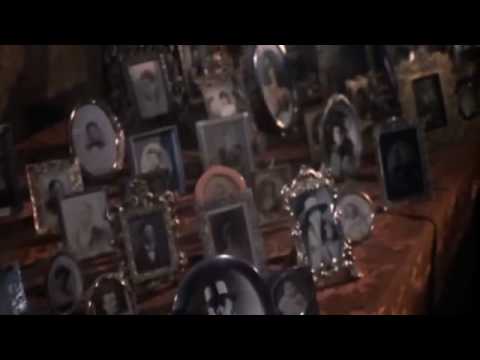
Burnt offerings Hearse DriverI remember seeing Burnt Offerings on television when I was about ten years old. Certain images from the movie stayed with me all these years. One such image is the movie’s prominent haunting figure – a creepy looking hearse driver. His clothes, cap and even his glasses, are black; the appropriate color for a funeral. However, he dons an inappropriate smile, as if death is something delightful. Was he a ghost? Was he death itself? I couldn’t remember. Then there is the long row of photographs in the attic. Some sepia toned, some in modern color. Who were these people in the photos?

Burnt Offerings Photos

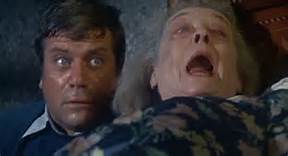
There are also certain scenes that replayed in mind from time to time. Our old friend the hearse driver bangs at the chamber door, frightening a dying old lady. He barges through the door with a coffin and his signature creepy smile.

Burnt offerings Betty


I also remembered layers of bricks breaking away from the house; the house shedding them the way a snake sheds its skin.


Yes sir, I thought it was quite the movie back in 1981. But would I feel the same way about this film as an adult? I wanted to find out. So I watched this on amazon.com last Sunday night. I was not disappointed. It was a good film when I was ten years old and it remains a good film at the ripe, young age of forty-four!

What I like most about the film is the overall theme. My favorite type of haunted house movie involves a house with a mind of its own; a house that acts independently of or in equal collusion with any spirits that may haunt it. Burnt Offerings “offers” viewers such a house. In return it asks for only one simple thing – the life force of the current occupants. Of course, we who sit safely in our homes cry out “it’s a deal!” Because we love such things! And the house benefits as well – it rejuvenates.

Oh don’t get all sour cause I’m treading into spoiler land! Any astute viewer should figure this out within the first thirty minutes of the film.

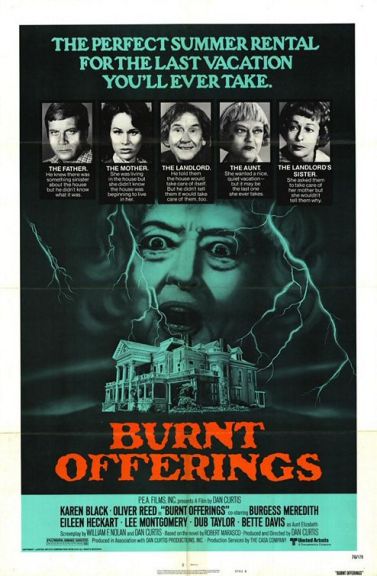
Ben and Marian Rolf (Oliver Reed and Karen Black), along with their twelve year burnt_offeringsold son David (Lee Montgomery – hey, did you know this kid played in a movie about a boy who befriends a pack of killer rats? Well now you do – The movie is Ben) and Ben’s elderly aunt (Bette Davis!) lease a house for the duration of the summer. The rent was just too cheap to pass up. But on the first day, the elderly brother and sister that own the house (played by Eileen Heckart and Burgess Meredith) explain the main catch – they will have to care for their elderly mother that lives in the attic. Oh but she’s not a bother, they say. She never comes out of her room and all that she would need is tray with a meal placed beside her door at the appropriate meal times.

This is one of those films that have many moments that are subject to interpretation. I still don’t know the identity or composition of that scary hearse driver dude. And there is something about that brother and sister, The Allardyces, that will have viewers wondering. Oh and the ending, what did it mean when he opened #$% $*$* and saw &*^^ as the *^ !@#$% and then ended up being &*&*# &  out  the *#%$@# ??   (Yeah, I’m not going to totally spoil this film for ya, so ya have to bear with the font symbols.)

Speaking of the Allardyces, Burgess Meredith has a brief but commanding role. He is awesome!

This film is based on the 1973 novel of the same name, written by Robert Morasco. I haven’t read it, but I’m betting the book is mighty darn good as well. I will read it, but for now, I will just live with the experience of this movie. It’s a pretty good experience after all!


Review of The David Morgan Ghost Series

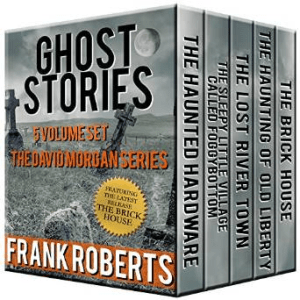
FR 5 Ghost storiesHouses in need of love and renovation – historical tales surrounding such houses and the ghosts that come with them. This is what readers encounter in Frank Robert’s anthology: Ghost Stories: 5-Volume Set (The David Morgan Ghost Series)

David Morgan has a love for old buildings; churches, stores, theaters, houses, inns, etc. He sees the beauty that lies hidden underneath the savagery of time. Being a skilled carpenter and all around handy man, he embarks upon projects to restore these buildings to their original state, preserving the historical value, quirks and all.  Now you can’t go through the process of demolishing and reconstructing such historical buildings without churning out few ghosts! Exhuming spirits is all part of the job; it comes with the territory. And there is no better man for the job than David Morgan.  Ghosts have been visiting him ever since he was a little boy.

I can tell you one thing: Author Frank Roberts had fun writing these stories. I have never met the man and no, I can’t read his mind. But I can (and did) read his work and it is clear that he is at home in these tales. He loves the building restoration business and all that comes with it – the blueprints, the multiple parties that are FMorganinvolved in the planning, the camaraderie of the workers while on the worksite.   Likewise, he enjoys learning about local history. His invented accounts of community life from eras long gone are quite intriguing; readers learn what gave these fictional buildings life.  Finally, he loves a good ghost story, as do I.  And there are plenty of interesting ghosts floating about in his stories.

Sprinkled throughout the pages are themes of Americana. These include customs and traditions, such as Memorial Day parades and Fourth of July picnics.  But when hosting such events, watch out!  You never know if a ghost of a soldier might show up to give salute, or if a ghostly brass band starts to perform deep into the nights preceding the celebration. Then there are accounts of early colonial life and the struggle to forge out an existence in the harsh elements. Harsh times can produce some violent characters, and don’t be surprised is these characters reappear a century or two later.  In one story, David is called upon to restore an old-time theater that, when completed, will be running the classics, such as Laurel and Hardy films. All will go well so long as his restoration efforts are not upstaged by a deceased actor from the days of yore!

As previously mentioned, the ghosts in these stories are alive and colorful! (Well, maybe not “alive” but you know what I mean.) There is a ghost of a little girl that resides in a tree. There are spirits trapped inside mirrors. There are vengeful ghosts that seek to harm the living.  And let’s not forget the spirit of a dog and the ghostly antics of a deceased monkey!

As intriguing as the spirits in these stories are, it is the spirit OF these tales the captures the reader’s interest.  This “spirit” is made up of everything I have written above – local histories, Americana, and a deep seeded love for the material.

There are some drawbacks to this series. It would benefit from another round of editing in all areas: grammar, style and content. In numerous places throughout these tales, the plot derails.  This is especially true when the stories come to completion; some of these stories “end” but do not “conclude.”  Readers are left with loose ends, and in one case in particular my sole reaction was along the line of “WTF??” Too often, the narrative gets bogged down in the nitty-gritty details of building reconstruction.  What is written is fine for readers who are fans of the home remodeling show “This Old House”, but for lay people with little knowledge of carpentry, the narrative can get a bit daunting.  Finally there are frequent instances of typos and awkwardly constructed sentences.

Now get this; I choose not to take off too many points for the grammar errors and occasional dents in the story structure. Being an indie author myself, I know how difficult it is to have a book edited.  I have heard that one should NEVER edit their own work. However, sometimes “one’s own self” is all that a struggling writer can afford when it comes to editing. Hell, I’ll bet those reading this blog entry have stumbled across some typos that I have made.

So I ask prospective readers to give these stories a chance in spite of the imperfections.  They come from the author’s heart and soul, and these are two wonderful places for any story to originate.

These five stories are published both as separate books and as a collection. I have already posted the link for the collection in the first paragraph.  Below are links for each individual story.


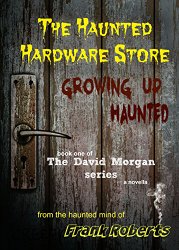
The Haunted Hardware Store: Growing Up Haunted (The David Morgan Series Book 1)

FR Hardware


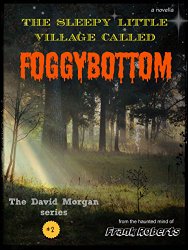
The Sleepy Little Village Called Foggybottom (The David Morgan Series Book 2)

FR Foggybottom


The Lost River Town: Fiona’s Tree (The David Morgan Series Book 3)

FR Rivertown


The Haunting of Old Liberty: Where Not All Performances are Live (The David Morgan Series Book 4)

FR Liberty


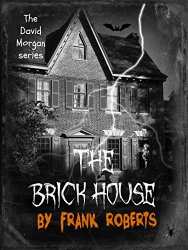
The Brick House: The Curse of Hope Island (The David Morgan Series Book 5)

FR Brick House


Frank Roberts frequently visits and posts at my Haunted House Facebook page. Stop by and say “Hi” to Frank!  (And like my page if you haven’t don so already.)

FacebookHauntedHouse2


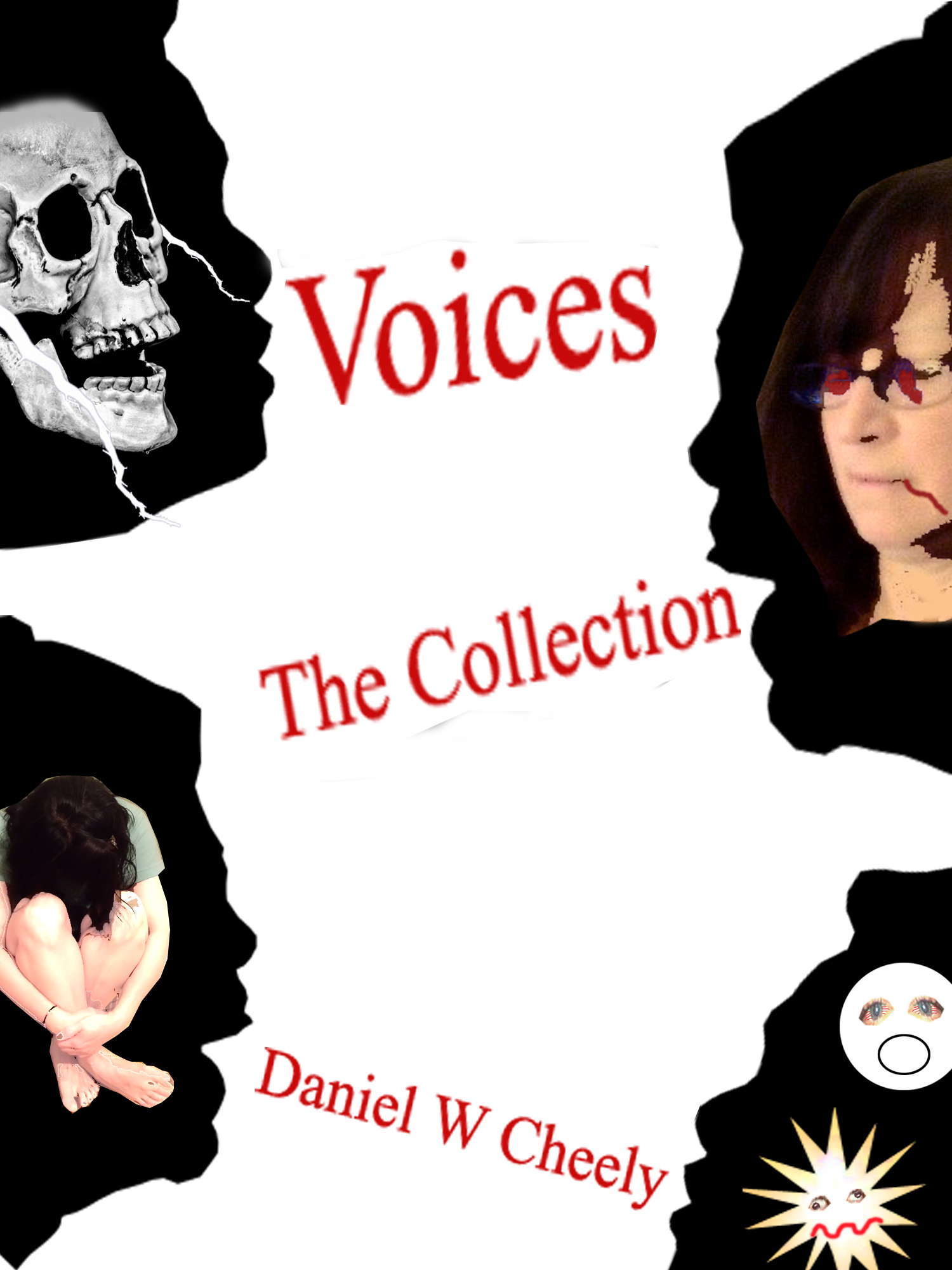
Voices: The Chorus – An Anthology of my “Voices” stories – available electronically AND in print!

Voices Collection CoverI am proud to finally have a book available in print.  It is a collection of the three stories I have published so far, PLUS one additional tale!

Here is the buy link:

http://www.amazon.com/Voices-Chorus-Daniel-W-Cheely/dp/1518622720

Would an ebook be more to your liking? Have no fear, another link in here:

http://www.amazon.com/gp/product/B017MBV7RY

Review of Crimson Peak

crimson-peak houseWhen I heard that the writer and director of Pan’s Labyrinth was writing and directing a haunted house movie, I got excited. I looked forward to seeing the latest film from visionary Guillermo Del Toro. I couldn’t wait to see “his” ghosts; freed from his imagination and set loose on the big screen. To these ends, my wishes came true on Tuesday night, Oct 27.  My visual appetite was satisfied, as was any desire I had concerning flair. It was a stylish film indeed.  But alas, something was missing.

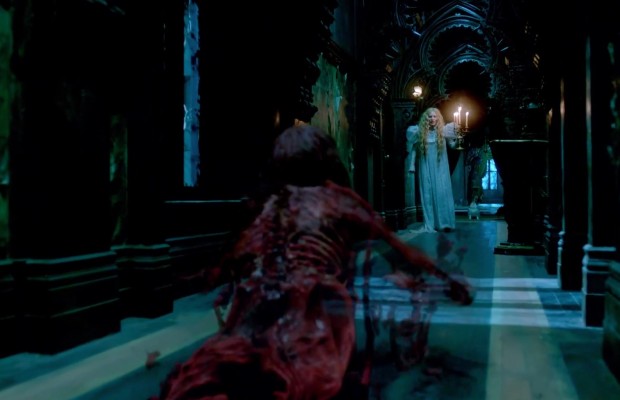
Let me being with what I liked about Crimson Peak. I liked the atmosphere. I liked the gothic manor and all its intricacies, seen and unseen. I liked the winding staircase and cage-like elevator. I like the unfinished roof and the atmospheric snow that flowed continuously into the house like background waterfalls.  I loved all the props – the candelabras, the portraits, the piano. The music is appropriately haunting.  The ghosts are great. Silky and spooky; they are like no ghosts I had ever seen on the screen.

I liked the overall tone – the Victorian/Edwardian formality in dress and speech. The Crimson-peakfilm transported me out of the theater and into a different time period without any turbulence.  It was nice to see a shout out to those glorious horror films of yore.

And the film is rich with symbolism. It’s poetic.

So much is good about the film. So it disheartens me to say that I left the theater feeling slightly underwhelmed.  Why is this? It was the slow and unpromising plot. Actually, cancel that word “unpromising.”  It was promising. The problem was that it made promises but failed to deliver upon them.

It teased out mystery where there was none. It built up false suspense and while the story didn’t leave viewers hanging, in the end it seemed to shrug apologetically for the fact that there was never a reason to hang at all.

It is difficult to provide examples without trudging into the storyline. But I don’t want to reveal too much, although the risk of spoiler contamination is very low. The young and handsome Thomas Sharpe arrives to New York from England with his sister. He is an opportunist and he tries to convince Carter Cushing to invest in technology that he has developed for mining clay. Carter turns him down. So Thomas and his Crimson Peakmysterious sister will go back England, but not until Thomas woos away Carter’s daughter Edith.  Carter does not trust Thomas. He says that there is something unlikable about him but he can’t explain what it is.  But at least Thomas is friendly and charming, unlike his sister who is cold and expressionless.  Thomas marries Edith and the three return to England to live in the spooky old mansion on top of Crimson Peak.

crimson-peak-trailer

Here’s a hint as to how the suspense works in this film: if a character has a hunch (like Carter has with Thomas), he is probably correct. If a person appears evil, the person is evil. If there were a butler in this film, then the quip “the butler did it” would surely play out (There is no butler in this film.)

One might say, “Okay, so it’s a straightforward film. What’s wrong with that?” What’s wrong is that it starts viewers out on arcane paths, only to merge them into a plain old narrative of narrow storytelling.  If you want to tell a straightforward, what-you-see-is what- you-get story, that’s fine. But don’t lead the viewers on with secrets and hidden histories.  There are many examples of this kind of leading, but I won’t mention them, because I guess even a letdown can be a spoiler.

Imagine receiving a present. Not only is the wrapping paper beautiful, but there are bows and bells and pieces of candy attached to the box as well. Peel away all this and you find that the design of the box is appealing too.  Inside the box there are decorative tissues and fluffy coverings that feel soft against your fingertips.  Remove this covering and you find – tube socks.  Happy Birthday.   If this were a terrible movie with absolutely no depth, then my analogy would be a bit different. It would entail dazzling wrappings on a crappy, empty box. But it’s not terrible, it’s just, well, it’s tube socks.

Let’s end on a mostly positive note as I focus in on the ghosts. I’ll call this the “good, the blah, and the good again”

  • The good – The ghosts looked good. The CGI worked to the film’s benefit. The ghosts didn’t come off as cartoonish. They looked genuinely creepy.
  • The blah – We didn’t learn much about the ghosts. They were just sort of “there”, part of the background. Yes they scared the wits out of poor Edith on several occasions. But they didn’t contribute all that much too the overall workings of the story.
  • The good again – Kudos for allowing viewers the time to take in the ghosts! They didn’t flash rudely on the screen as did the ghosts of other modern ghost movies such as The Haunting of Connecticut  and the remake of Amityville Horror. Rather, they traversed slowly and creepily. They peered around walls. They peaked out of closets.  THIS is what “scary” is all about.

crimson-peak-crawl

So that’s about it. I really, really, wanted to like this film. And I guess I did, but I just couldn’t bring myself to love it.

Review of Hold That Ghost

AAAAAAA-BBAHHHHHHET!!!!

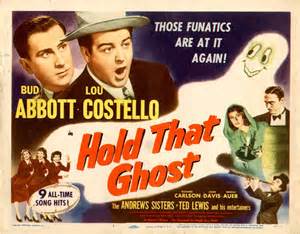
Hold That GhostThat’s how Lou Costello calls out to his friend Bud Abbott whenever he is in trouble. Of course you knew that. I mean, everyone knows about Abbott and Costello, right???

Okay, maybe not. Young readers might not have a clue about these two comedic geniuses. Not quite on par with Laurel and Hardy, but still they held their own. Bud Abbot is usually the straight man while Lou Costello is the butt of the jokes. They first came on the scene as radio entertainers in the late 1930s and thrilled radio audiences with their “Who’s on First?” bit. Soon they were making movies, several of which were horror comedies.

To appreciate the movie Hold That Ghost, one has to appreciate the antics of Abbott and Costello. I do appreciate their humor, but this might be my least favorite of the frightfully funny films that they made.

Here’s a brief synopsis. Through some rather strange circumstances, Chuck Murray (Bud Abbott) and Ferdie Jones (Lou Costello) inherit a rural tavern from a deceased mobster. They get stranded at their new “home”, along with four other people, including Joan Davis who plays a kooky radio actress. Another tag along is gangster and lawyer Charlie Smith. Rumor has it there is money hidden somewhere in the house/tavern and Charlie wants the money.   The tavern hasn’t been used for some twenty odd years; it is dusty and sheets are draped over the furniture. In other words, it looks like the typical inside of a haunted house.

I’m leaving a lot out in this description. But who cares, you get the drift – several people are forced to spend the night in a house that might be haunted, one of whom is criminal with ulterior motives. A familiar plotline, but with Abbott and Costello, it’s done in a humorous way.

Hold That Ghost was their first horror comedy. But for me, it was their last , meaning that I had seen all their other scare-laugh pictures before I got around to seeing this one. I think I have been spoiled by the ones that have come later, mainly the “Abbott and Costello Meet…” movies. This duo has met them all; Frankenstein, The Mummy, Dr. Jeckyl and Mr. Hyde, The Invisible Man, etc. etc. etc.   I like all the “Meet” Movies, and since they came later, maybe Abbot and Costello had the benefit of learning from experience and perfecting their act, a luxury they did not have when making Hold that Ghost. But I don’t know if this adequately explains why I prefer the “Meet”s to Hold that Ghost. All the movies feature the running gag of Costello being at the butt of the jokes. He witnesses something odd and terrifying and by the time his buddy Abbott arrives at the scene, everything is back to normal, so Abbott accuses his pal of “seeing things”.

In Hold That Ghost this happens several times. Costello hangs his jacket on a coat rack in his bedroom, which activates a lever that transforms the room into a speakeasy’s delight. From out of the walls come the roulette tables, bars and other prohibition era delights. Of course, Costello doesn’t see the transformation; he only sees the new set up. Scared out of his wits, he runs to get Abbott. By the time he shows up, it is a bedroom again, because somehow Costello reset it before running to fetch his friend. Later in the movie, Costello sits with Joan Davis. He sees a candelabra slide across the table. Joan is looking away and misses it. It happens again and again and soon Abbott comes in and scolds his panic-stricken friend.

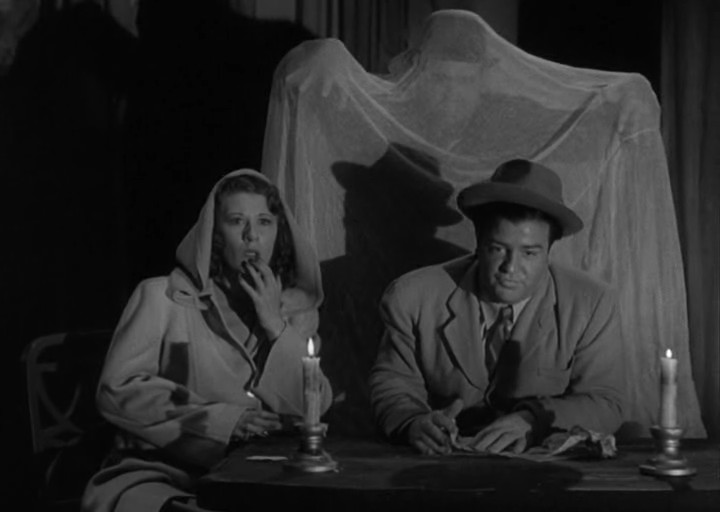
This happens in Abbot and Costello meet Frankenstein. Costello sees Dracula rise from his coffin. When Abbott comes along, the coffin is empty. Costello runs into the Frankenstein monster. Abbott sees him not! So am I saying that this kind of bit was funny in Abbott and Costello Meet Frankenstein but not Hold That Ghost? I hope I am not saying that, because the gags are virtually the same and Hold That Ghost hold-that-ghost-2came first!   Maybe I wanted the house that they inherited to be a little more ghostly and less automated (i.e. the opening of secret passages). Most of the ghosts were men hiding underneath sheets. Yeah, yeah, I get it; this is supposed to be funny. But maybe I wanted more humorous encounters with the supernatural. I…I just don’t know. It’s not a bad film. Maybe it’s even good. Maybe it’s…I don’t know.

Well, since I’m not providing a very thought-provoking review (“Maybe it’s…I don’t know”…yeah, that’s an intelligent analysis for ya!), I’ll fill up some space with little bits of trivia:

    • Since World War II was right around the corner, films about the military were in demand. Abbot and Costello had already come out with Buck Privates in Jan 1941, and Oh Charile (The original title for Hold That Ghost) was due out next. But, they held it back so that they could follow up with another service orientated comedy – In the Navy. I wonder – was this film renamed Hold That Ghost because the film’s release date was postponed for a few weeks? (The film being “held back”.)
    • The film has performances by Ted Lewis and his Orchestra and The Andrew Sisters. Kind of awkward for a haunted house movie, but since the Andrew Sisters performed in both of the preceding service films, maybe the producers thought that these singing sisters were going to be a staple for A & C films. Thus they added in the performances after the film was already shot.
    • I already mentioned that Joan Davis stars in the film. But did you know that Joan Davis is the same Joan in the TV sitcom I Married Joan? What’s that? You’ve never heard of I Married Joan? Let’s move on then.
    • Shemp Howard stars in this film. Please tell me you know who he is. Please?

Most reviewers praise this film. Who am I to go against the grain? I have included a link to the film. I don’t know how long it will be available, but while it’s there, watch the film and decide for yourself whether this is a good film or not.
Hold That Ghost – Abbott and Costello

Review of 13 Ghosts

William Castle – what a fun guy, dontcha’ think? When I first reported on him, he was fixing it so that a skeleton would “emerge from the movie screen” and float over Ghost1  the heads of seated viewers. He called this the “Emergo” effect. The other night I decided to check in on Mr. Castle and see if he had done anything similar since then. Wouldn’t you know it? About a year after his emerging skeleton, he imbued movie goers with the ability to see ghosts. This effect he labelled “Illusion-O.”

The House on Haunted Hill is the second haunted house film that I reviewed. In that review, I describe how Castle, a great mastermind of publicity stunts , had distributed skeletons to movie houses that ran his film, instructing the theater operators to rig them up on downward angled wires so that they would Ghost2appear to float over the heads of movie goers during the pivotal scene where the skeletal remains of Vincent Price rise out of a vat of acid (allegedly!). Cool huh?   But his cool gimmicks did not stop there. They went on, film after film. When movie attendees went to the theater to see his 1960 film 13 Ghosts, they were given a “ghost viewer” which allowed them to see the same ghosts that the film’s main character saw when he put on specially designed glasses. In both Ghost3movies, the audience had a share of the scares that were inflicted upon the characters of the movie. With Castle, film became a platform for participatory art.

Before the film begins, William Castle appears on the screen. He is behind a desk in an office. A skeleton is taking dictation. He speaks to the audience and refers them to   Ghost4their ghost viewers. He explains that at certain times throughout the movie the screen will turn blue (remember, this is a black and white picture). When this happens, the audience is to hold the viewer in front of their face. Castle demonstrates with a ghost viewer of his own. The top of the viewer has a blue-tinted lens and the bottom part has a lens tinted in red.

Castle then says,

“If you believe in ghosts, you look through the red part of the viewer. If you do not believe in ghosts you look through the blue part.”

Ghost5                Ghost6           Ghost7

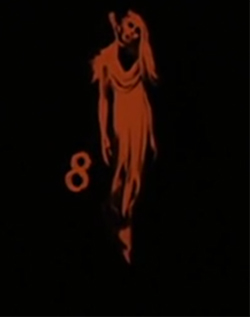
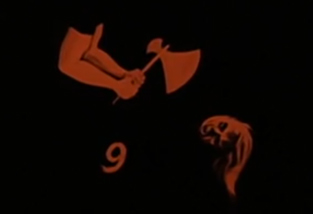
Obviously, the ghosts in the movie only appeared when one was looking through the red lens. Since the screen turned blue whenever the ghosts were featured, the ghosts became camouflaged when viewing the screen through the blue lens. Now, what happened when someone ignored the ghost viewer altogether and looked at the screen with his/her naked eyes? Did the ghosts appear? I have no idea. Being born in 1971 prevented me from witnessing this 1960 theatrical attraction. I can only assume that they did not. However, I can say that a ghost viewer is no longer required to see the ghosts of this film. They materialize in a fiery red tint. The screen Ghost8still turns blue as a caption appears at the bottom of the screen that reads “User Viewer.” But the naked eye is the only tool needed to see these creepy albeit cartoonish phantoms.

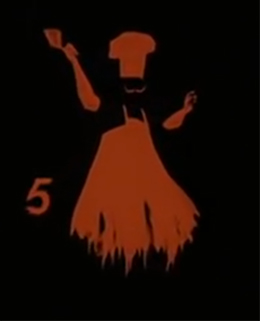
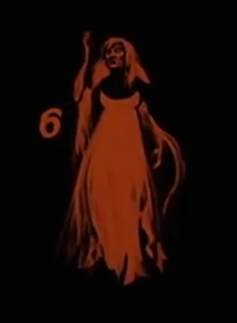
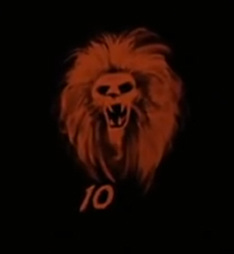
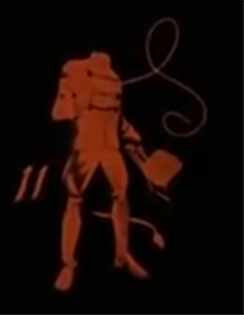
So, what’s this movie about anyway? The Zorba family is having trouble making ends meet. The repo people have come for their furniture. Poor Zorbas – forced to eat dinner on the floor!   Ghost9However their luck suddenly changes. (Or has it?) Patriarch Cyrus Zorba is informed that he has inherited a house (and a furnished house at that!) from his dearly departed uncle. So he moves in with his wife Hilda, his twenty-something daughter Maeda and prepubescent son Arthur. There is a caveat to this deal. The lawyer that handles the transaction warns the family that along with the house and furnishings, they have also inherited eleven ghosts. See, long before the formation of The Ghostbusters, there was good ol Uncle Zorba, who was able to capture ghosts Ghost10from around the world and then “store them” in the house. Uncle Zorba dies, presumably by foul play. His ghost remains behind, so in effect, the family has inherited twelve ghosts. Why then is this film called 13 Ghosts?   Because, legend has it that Uncle Zorba is going to seek revenge on the one who killed him. If he succeeds, this will raise the count to thirteen. Does this vengeful killing occur before the end of the movie? Watch it and find out!

Oh yeah, there is another “thing” of interest the family inherits. Well it’s not really a “thing” but a person (see how I put “thing” in quotes in the previous sentence? See?). They inherit a maid and low and behold, she is played by no other than Margaret Hamilton who is best known for playing the Wicked Witch of the West in The Wizard of Oz. In fact, throughout the movie, little Arthur Zorba refers to her as a witch. Do you think the scriptwriters did this intentionally to pay homage to her famous role? Of course they did!

Let’s see, what else can I say about this movie? I will describe it this way – imagine if Rod Serling became the writer for Leave it to Beaver. 13 Ghosts might be an example of the end product. The father wears his Mr. Rogers sweater over his white Ghost11collared shirt. The mother has an overly rigid hairdo that is very fitting for the June Cleaver type. The little boy who, although he never says it, has “golly gee” written all over his young, curious face. While there is no older brother named Wally, there is the older sister named Maeda. She is prettier than Wally, so I like her better. As they go about behaving like the average 1960 television family, they are accosted by ghosts. A meat cleaver flies into the air and just misses Ward Cleaver Cyrus Zorba. The Beaver Arthur witnesses a ghostly lion-tamer lose his head inside a ghostly lion. Surprisingly, he’s not really freaked out by this. Rather, he seems in awe and he tells his mother. June Cleaver Hilda Zorba responds with a “that’s’ nice, dear” – Ghost12or..something along those lines. In her defense, when Beaver Arthur comes to her with this story, she is preoccupied with making dinner, or doing some kind of kitchen work – you know, the things the mothers of television did back in 1960.

Okay, I’m having too good of a time poking fun at this movie. But the truth is – I love this movie! I love the Zorba family and the haunted house they lived in. I love the cheesy ghosts. And Ghost13even though I did not get to use the “ghost viewer”, I love that whole concept.

And I love you, William Castle. R.I.P. I look forward to one day seeing all the clever antics you have going on up there in the heavens!