 It began harmlessly enough. A gathering at a rumored haunted house livestreamed for a popular horror podcast. A publicity stunt that unleashes a series of harrowing events to eventually force four horror authors to go toe-to-toe with the mysterious evil that manifests from the old Finch House. The danger is very real. They find themselves up shit’s creek. That creek would be “Kill.” Full name = Kill Creek
Aside from my shit’s creek/Kill creek pun, how did that description sound? Engaging? Terrifying? Or the opposite – tired? , hackneyed? Despite the overwhelming positive reviews for this Scott Thomas’s novel, I went into the book expecting the “tired” and “hackneyed.” Four horror authors of different backgrounds meeting at a real haunted house to face certain horrors that their own macabre minds cannot fathom – haven’t we seen this setup many times?
Here at this blog, I reviewed Micheal Robertson Jr.’s Rough Draft. The premise is similar. I wrote:
“A mysterious blackmailer forces three authors to meet at a cabin and write a “rough draft” for a prospective horror novel about the cabin, the surrounding woods and a nearby town. They HAVE to complete this assignment – in one weekend – or face the consequences.”
As it turns out, this is not one of my favorite books. A book I prefer is Scott Nicholson’s Creative Spirit. Of this I wrote:
“Creative Spirit is a story about the coming together of writers, painters, photographers, musicians and sculptors. They are gathering in the picturesque setting of Korban Manor as a means of fostering their creativity in the company of like-minded individuals. Unbeknownst to them, there is more to this gathering. The spirit of Ephram Korban thrives on creativity. He siphons the “creative spirit” of others in the hopes that he may live again.”
Author Jack Kilborne assembles a group of trauma victims and tosses them into a haunted house to see what would happen in Haunted House: A Novel of Terror. They are not authors or artists, mind you, but the theme remains the same – a group of disparate characters must put aside personality differences and overcome the horror that they are subjected to. The personality clashes between Eleanor Lance and Theodora is quite evident in Shirley Jackson’s The Haunting of Hill House yet another book, (A GREAT BOOK!) to gather strangers together in the confines of walls possessed.
Does Scott Thomas’s Kill Creek go into significant detail delineating the personality differences of his characters? Oh yes it does and once again we have a collection of opposites. This applies to not only their personalities but also the genre styles. The writing styles of the four authors are subject to painstaking contrast. There’s Sam McGarver, the flawed but likable central protagonist, writer of mainstream horror novels. Then there’s TC Moore; she’s the brash, headstrong author of splatterpunk novels. Sebastian Cole is the elder of the bunch; the sophisticated author of horror classics. And finally we have Daniel Slaughter, the somewhat naive, Christian horror author of young adult novels in which evil is always conquered by the righteous. When readers first meet TC Moore, they are introduced to a seemingly static, one-dimensional character, obnoxiously brazen. I know when I encountered her I asked myself, “Oh God, am I really about to suffer through a novel where characters that are so tightly packaged into stereotypes are thrown together into the tired trope of ‘we’re all in this (haunted house) together’ without any twists or depth?” The answer came as I progressed further into the novel. I was wrong in my initial assessment. These characters do expand and reveal themselves in unexpected ways. As to the story – there’s more going on here than just a bunch of misfits struggling awkwardly together against the forces that go bump into the night. Scott Thomas touches on a theme that is dear to my heart. This would be the theme I define as Haunted House “Sui Generis” – in the sociological sense.
Sociologist Emile Durkheim believed “that society, as it was there before any living individual was born, is independent of all individuals.” For purposes here, replace “society” with “haunted house” and “individuals” with “ghosts”. Such a house is not haunted on account of its ghosts; it’s haunted in and of itself. It may not even harbor ghosts, yet it is haunted. It has a will of its own that is independent of any trapped spirits that roam about its bowels. Shirley Jackson’s “Hill House” is such a house, as is the Overlook Hotel in The Shining. Any author that not only incorporates this theme but expands upon it earns my respect. And expand Thomas does!
In the tradition of Shirley Jackson, Thomas begins with the assumption that a house can have intrinsic qualities from an unknown origin. “Some houses are born bad,” Shirley Jackson surmises with figurative description, comparing houses, perhaps, to living entities. Thomas agrees but offers a different take. “No Houses are born bad,” he writes. While paying homage to Shirley Jackson with this line, Thomas not only places his story within the context of the “Haunted House Sui Generis” theme, but he also plots the trajectory for the theme’s expansion, though the reader may not know this at this time. The house in question, Finch House, is indeed a bad house. But it was not always this way! It began its “life” rather neutrally. Terrible things happened in or around the house, things that gave the house a reputation and sparked rumors and legends, and this reputation both created and fed the hunger of the house. It is a hunger for more horror, for more evil. It has a craving to be the most horrifically haunted house that it can be.
In an interview conducted by horrorscribes,wordpress.com, Scott Thomas offers:
What if there were just some lonely, empty house in the middle of nowhere that people began to think was haunted. And what if enough people told scary stories about this place that, eventually, it was haunted. Was there always an entity in that house and these people woke it, or was it their belief that created the entity? That “chicken or the egg” haunted house scenario really interested me. I began to see the house as a major character—a structure that was never supposed to be a bad place but became bad, almost against its will.
“I began to see the house as a major character,” To quote again from Thomas. I love when an author sees a house that way!
So yes, Scott Thomas invokes familiar tropes and setups. But authors build on the works of other authors and there is nothing wrong with that! It’s the finer details that matter in the end. If the author builds “cookie-cutter” haunted house stories, all replication and no innovation, then “BAH!” to that author. Thankfully Thomas doesn’t do that, but I must admit that for a while, I thought this was exactly what was going to happen.
Now what would a haunted house that loves to be the subject of stories want with a group of authors? I think you know where this is going. In fact, Thomas offers numerous hints to the direction of his story in the very beginning of the book. I’ve already mentioned the “No house is born bad” hint. But there are others. And it thrills me greatly to examine them because they are found in a lecture that the character Sam McGarver gives to his students. See, he is a part time teacher. He teaches “Introduction to Horror in Popular Culture” at a college (Oh! How come I never encountered such a class when I was in college?) But why am I so “greatly thrilled” to examine this, simply for the hints? No. It is the way the lecture (fictional though it might be) analyzes themes within the fictional haunted house stories of film and literature (and horror in general). That’s what I attempt to do here at this blog! So of course I am excited about it and I want to attend Sam McGarver’s class so bad!
During the lecture McGarver states:
The Gothic tradition is about secrets, dark secrets, awful secrets, hidden just behind the facade of normality. Modern horror is still heavily influenced by this tradition. But it’s not creepy old castles that hold these secrets anymore. The Gothic has invaded our everyday lives. The old farmhouse in The Texas Chainsaw Massacre. The suburban Japanese home in The Grudge. Even a video tape in The Ring. The infectious evil that used to be confined to crumbling ruins in the eighteenth-nineteenth-century literature, like Lewis’s The Monk, Radcliffe’s The Mysteries of Udolpho, and Maturin’s Melmoth the Wanderer has spread to our cities, our small towns, our homes. And that makes it even scarier, doesn’t it?
Note at the end, McGarver speaks of an “infectious evil” that begins in a classical haunted domain but “spreads” into modern daily life. Is there a hint here? Yes. The four authors/characters in Kill Creek will be required to make a second trek to Finch House. Why? Because something from their initial visit has followed them into their personal lives and they revisit the Finch house in an attempt to stop its chase.
McGarver talks about Gothic tradition. I love this. Whereas a complete study of the many elements that make up the Gothic tradition is quite the task (I’ve studied these for a while and I feel that I’ve only scratched the surface), McGarver narrows it down to a few interesting elements. Now, am I including these elements here in this article simply because they strike my fancy? No. I am including them because they foreshadow what will come about in Kill Creek.
And here they are:
-
Emanation from a Single Location
-
A Sense of Forbidden History (Turn of the Screw, Poltergeist)
-
An Atmosphere of Decay or Ruin (The Others, The Woman in Black, Crimson Peak. For mental decay = The Tenant)
-
Corruption of the Innocent (“This is perhaps the most important element of any good Gothic horror story Without it, what do you have? A shitty old dump with a dark history no one remembers.or cares about. You need that one person who ensures that the evil lives on)
To break these down in a way that applies to Kill Creek, Finch House is the single location from which the evil emanates (Element #1). Finch House also has a sense of forbidden history. (element #2) An interracial couple is murdered on its premises, two “Finch” sisters later inhabit the house and succumb to its horrors. Plus, there is a secret and sealed room, another trope within haunted house literature. But this theme is explored quite well. What is behind the brick wall that seals the room off? This is part of the mystery that will haunt the characters after they leave the house. And they better move fast because the house knows about certain secrets that each of the authors harbor and it can use this knowledge against them. It knows their weaknesses; their darkest fears.
Finch house certainly is an atmosphere of decay and ruin, as is true with the many haunted houses of literature (Element #3) Now for that last – the corruption of the innocent (Element #4). What is especially noteworthy is McGarver’s explanation, when he said “you need that one person who ensures the evil lives on.” Pay attention to this – it will point to a most unexpected yet intriguing ending.
Kill Creek is Scott Thomas’s first novel. On the Amazon page for this book under the  heading “About the Author”, it states: “Author, Thomas Scott, a former Marine and State Trooper, resides with his wife, Gwen, and their Soft Coated Wheaten Terrier, Bene, in Brunswick, Georgia.” Quite an interesting background. Thomas wrote a second novel which might also feature a haunted house, but I could be wrong about that. I haven’t read it. Yet. The novel is Violet. What’s interesting is that the description of the author has been expanded. It says:
Scott Thomas is the Stoker-nominated author of Kill Creek, which was selected by the American Library Association’s reader committee as the top horror book of 2017. Originally from Coffeyville, Kansas, Scott attended the University of Kansas where he earned degrees in English and Film. He has written TV movies and teleplays for various networks including Netflix, Syfy, MTV, VH1, the CW, Disney Channel, Nickelodeon, and ABC family. Scott was nominated for a Daytime Emmy for his work on R.L. Stein’s The Haunting Hour. He lives in Sherman Oaks, California with his wife and two daughters. Violet is his second novel.
My question is – Did all his works for TV and movies transpire after his success with Kill Creek? This I don’t know. His success with his initial novel came about when Inkshares discovered his work and set it to publication. According to Wikipedia Inkshares “is a publishing and literary rights-management platform founded in 2013. It is an open platform with a community of over 100,000 authors and readers. Authors post partial manuscripts which are sorted based on reader interest. Selected manuscripts are edited by Inkshares for publishing in North America”
Did Scott Thomas participate in the way wikipedia describes? Did he garner reader interest which then led to a publishing contract? If so, what a great success story. I love when indie authors “win.” I am an indie author myself. Haven’t “won” much, except for the joy of sharing my work. In the end, I guess that is winning also.
I’m anxious to read Thomas’s second novel Violet. If it does indeed feature a haunted house, I will review it and share the review with you. Until then, bye bye!
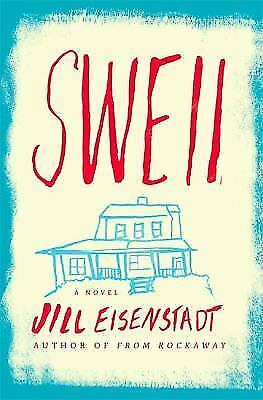 Halves. There are a lot of those in the universe, aren’t there? All those half-ass jobs performed by people with half a brain. Then there’s Half and Half, equal parts milk, equal parts cream, or something like that; maybe this is only half true. Styx has a song on their Paradise Theater album called
 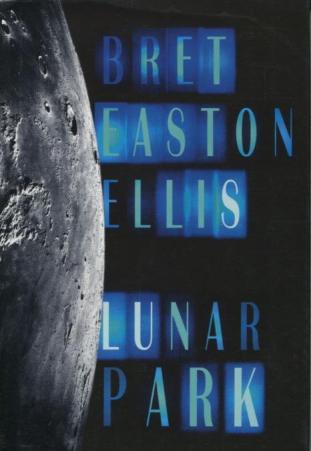 Bret Easton Ellis – What an interesting, albeit eccentric, perhaps downright weird guy. The first few chapters of
 Let’s see, next door to that Wallace’s there is a couple, forgot their names, but the woman is very flirtatious and often her nasty thoughts are broadcasted onto Tom Wallace’s most receptive mind.
 world. She tries, but turning hypnosis, the spirit invades his mind and orders Tom to “DIG!”
 Harwood way back in 1861 for Blackwood’s Edinburgh Magazine, Volume LXXXIX, No 543. (see the accompanying photo for an example of what this magazine looked like). This piece is an example of a traditional Christmas ghost story, so appropriate for this wonderful time of the year!
  Ghost stories go so well with cold, dreary nights. There’s nothing that hits the spot on such an occasion like a classic ghost story. Sorry kids, a story written twenty years ago is hardly a classic. I’m referring to chilling tales that were penned more than a hundred years ago. Yes, these are the classics that we must allow into our warm dens on cold nights, for something about their ancient age prepares our immediate atmosphere for the immortal existence of the very ghosts that we seek to summons from the page.
  The “To-Let” boards hanging lopsided on a wooden fence tell all. The paling surrounds the old red brick building that somehow stands at a distance from the town square, even though through any of the house’s windows the town and its life can be easily taken in. But no one lives in any of the building’s flats. This sets the eerie scene and Paul Oleron stumbles into it, unwittingly casting himself as the soon-to-be-troubled protagonist – the renter of one of these flats.


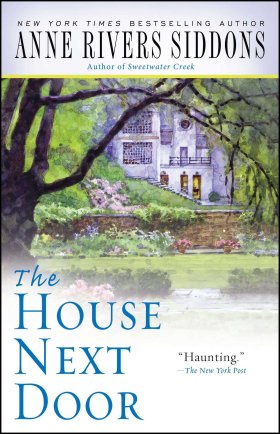 I love a haunted house that does its own thing. Such a house births a kind of haunting that is unique from its predecessors and peers. And yet, it’s willing to learn from them. Within its walls the traditions and motifs established by the great literary haunted houses are respected. However, this house is determined to creak and settle to its own moaning boos. Its foundation is secure in pre-established themes while its structure expands into new, terrifying space. Where, you might ask, might I find such a haunted house? Look no further than the “house next door!”
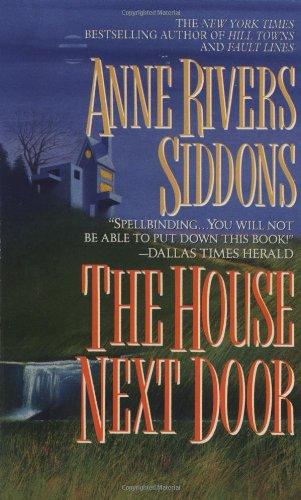 occupants. Or, it knows what its occupants cherish the most, and it rips and tears at the seams all that they hold dear. The malicious intentions of the house are rooted in either the architect, the architectural design or both. The Kennedys guess that the architect is cursed, and this is why the house behaves the way it does. At the book’s end, the architectural plans end up in the hands of a couple that want a newly built home. Readers then know that the “haunting” is embedded in the design. Very creative, Siddons!
 Anne Rivers Siddons – she has many books under her belt. According to wikipedia, Her genre is southern literature, not horror. Perhaps that’s what helps her novel The House Next Door stand out. Horror doused within another genre allows for a wider and more enriching story than a tale with flat characters and things that go bump in the night. Perhaps I’ll read more of her works. I probably won’t find another horror story, but maybe I’ll find another book of hers that touch on that good ol’ Southern Gothic. That would be interesting.
 The House Next Door: A Ghost Story
  works. I have since found interviews (
 but according to some
  know it, the club members are trying to free an imprisoned demon. Bad club members!
 Who could forget that cover? Anyway, Doug is an expert at arcade video games. He becomes obsessed by a game called “Beat the Devil.” This game takes precedence over the important things in his life; his school work, his girlfriend, even his own sanity. And guess who it is that is sucking away at Doug’s life? Why, it’s the Devil himself! So you see kids, even though it may be far-fetched to think that the Devil is controlling you via Pac-Man and Donkey Kong, video games can make your life “Hell” if you become addicted to them.
 The book I remember the most is The Bargain (#5 in the series) by Rex Sparger. I remember the story featured a teenaged (or maybe they were in their early 20s, I don’t know) rock band called The Coastals, or something like that. Anyway, a shady promoter approaches them, m promises them fame and riches, and soon thereafter he is their manager. He convinces them to change their name to Sabbat and change to a heavy metal sound and image. I guess they had a more pop-oriented style before (I hate pop!) If you haven’t already guessed, this manager is secretly an agent of Satan. The band as, in effect, signed a contact with the Devil, but somehow they get out of it and defeat the evil forces. By the book’s end, a pastor helps the band and as it turns out, the pastor can play a mean guitar. Isn’t that precious?
 The Books of Daniel