The time “to shine” has arrived! I’ve been promising this review for quite a while now. Finally it has come. …Heeeeeeeeeeeere’s Johnny!
** Warning: there are spoilers lurking about! They are hiding everywhere. You may encounter a seemingly innocent sentence and then suddenly, out of nowhere – BOO! One will grab you. You have been warned. **
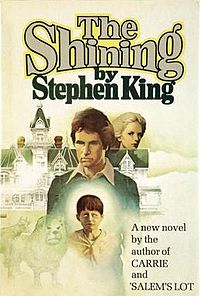 The Book
Let me begin was a story refresher. The Shining is about a five year old boy named Danny Torrance that has special powers which the book calls “The Shining”. He has precognition and extra sensory perception to name a few. His father, Jack Torrance, is an unemployed writer. Formerly a school teacher, he lost his teaching when he pummeled one of his students for taking a knife to his car tires. Jack has anger issues. He is an alcoholic as well. After a heavy night of drinking, he witnesses Danny making a mess out of his papers on his desk. He breaks his arm when pulling him away from the desk. Many of Jack’s issues stem from the abuse he had suffered from his father. Nevertheless, his wife Wendy stays by his side, on the condition that gives up the booze and cleans up his act. Jack complies. Not only does he give up drinking, but he lands himself a job as a caretaker for the swanky yet empty Overlook Hotel for the winter when the Hotel shuts down.. It is up high in the Colorado Mountains. He and his family move in. Soon they will be snowbound. The Overlook Hotel is haunted. It too shines, just like Danny. Jack and Danny will unintentionally awaken the Hotel’s ghosts. Danny does so on account of his ability to shine and Jack on account of his unstable personality; ghosts just love to munch down on disturbed psyches.
In the “spirit” of the book (and the film) (and the television mini-series), I think it’s time to call forth some ghosts as well. These will be the ghosts of reviews past.
Several months ago, I wrote about house divided, brother against sister, and family tensions with the end result being the physical destruction of their house. This occurs in The Fall of The House of Usher. A few weeks later, I presented a house that preys on the psychic abilities of a fragile young woman. You can learn more about this story by visiting Hill House at The Haunting of Hill House/The Haunting: Book Vs. Movie. Months later I introduced a family that rented a big old house for the summer. The wife/mother fell in love with it, so much so that longed to be a part of it. And the house was more than willing to possess her! This is what happens in Burnt Offerings. Then, only about a week or two ago, I informed you of a certain masquerade party. But this party was not all fun and games, was it? In fact it was quite deadly. You can revisit The Masque of Red Death anytime you wish.
Now, how was that trip down the haunting memory lane? It is a nice collection of “ghosts” if I do say so myself. But why resuscitate them at this time? Just for the hell of it? No. I called upon them for a reason. And the reason is: all of these stories influenced Stephen King when it came to writing The Shining. From Wikipedia:
“The Shining was also heavily influenced by Shirley Jackson‘s The Haunting of Hill House,[15]Edgar Allan Poe‘s The Masque of the Red Death and The Fall of the House of Usher,[13] and Robert Marasco‘s Burnt Offerings.[10] The story has been often compared to Guy de Maupassant‘s story “The Inn”.[16]”
(I have not yet read “The Inn” Maybe it’s time to do so.)
I do believe the descriptions as I have written them point to the themes that King borrowed. Just like with The Fall of the House of Usher, The Shining is an account of a dysfunctional family that resides in a building that meets its destruction at the story’s end. As with The Haunting of Hill House, The Overlook Hotel feeds off of the psychic abilities of one of its inhabitants. In the first story, Hill House claims a vulnerable young woman named Elenaor Vance. Not only does the story hint that the house comes into power on account of her special abilities, but the house takes advantage of her emotional instability as well. In The Shining, the Overlook Hotel uses five-year-old Danny Torrance as a battery; siphoning power from his psychic nature in order to bring on a haunting. However, the unstable one of the family is his father, Jack Torrance. As an alcoholic with anger issues, the Hotel takes advantage of his personal demons as it slowly possesses him. Jack ends up being a willing servant of the Hotel; a Hotel that conjures up alcohol, gets him drunk and pressures him to kill his family – all under the guise of caring for The Hotel. Likewise with 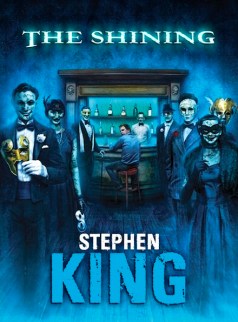 mother in Burnt Offerings that looks after the house obsessively; a mother who gives in to the possessive demands of the house. Finally, the ghosts of The Overlook reenact a hedonistic masquerade party that took place on the property decades beforehand. At midnight on the night of their ghostly appearance, tragedy will be waiting in the same way that Death ready to pounce in The Masque of Red Death.
Yes, Stephen King borrowed from many sources. But this is not a criticism. The final product which he assembled from the various themes was indeed a masterpiece. He is like a chef that uses only the finest ingredients to concoct his stew. One does not bitch that the chef stole from the line cooks that prepped the meat, potatoes and carrots. Rather, one enjoys all the makings of this tasty treat.
I must confess. I like The Shining more than the books that influenced it. But don’t get me wrong – I love all of the preceding works. It’s just that King’s work has that extra “shine” that lures me to his story over the others. It might be the depth of the characters. Maybe it’s because all the story elements fall perfectly into place. Perhaps it’s the trip itself; the scenic drive across the story arc that makes for the best reading experience. Or maybe I just happen to have a special gene that predisposes my taste buds for the flavor of “The King!” I don’t know.
In addition to the aforementioned haunted house literature, there were other factors that influenced King’s “shining” ideas. Real life experience was one such factor. The story goes that King and his family were staying at mountain top hotel. They were the only guests! The hotel was going to shut down for the winter the very next day. It was an empty, spooky experience to be the only occupants in such a grand sized place. At night, he was plagued with nightmares. He dreamed of the corridor’s firehouse. It turned into a snake and chased his three year old son. Drawing on this experience, King began to formulate the ideas that would eventually become The Shining.
Located in Estes Park, Colorado, the name of the Hotel that inspired King’s story is named The Stanley Hotel attracts visitors to this day. Writing workshops are held there annually. (See also my blog post about Scott Nicholson’s Creative Spirit. It is a horror story about a artistic retreat and I refer to The Stanly Hotel. Supposedly, the Hotel has a haunted history in real life. They sponsor ghost tours. However, I cannot find any stories of such hauntings that take place before The Shining was published. Are these tours merely publicity stunts? I wouldn’t know.
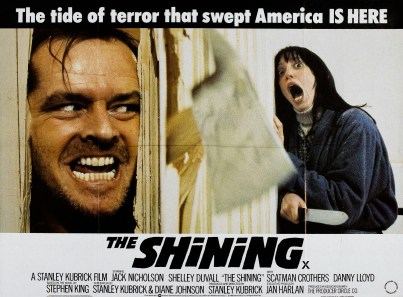 The Movie
Now, what about the movie starring Jack Nicholson and Shelley Duvall? Stephen King is not a fan. Not one bit. In a 2014 interview with Rolling Stone magazine, he complains that the portrayal of Wendy Torrance (played by Shelley Duvall) was nothing short than an exercise in misogyny.
“Wendy Torrance is just presented as this sort of screaming dishrag”
On Jack Torrance (played by Nicholson), he notes that the character was sort of crazy from the onset, contrary to the Jack Torrance of the book.
“In the book, there’s an actual arc where you see this guy, Jack Torrance, trying to be good, and little by little he moves over to this place where he’s crazy. And as far as I was concerned, when I saw the movie, Jack was crazy from the first scene.”
To these ends I agree. Shelley Duvall is annoying in her fragility. Jack Nicholson does seem crazy from the very beginning. One of the first scenes shows Jack interviewing for the position of the Hotel caretaker. During the interview, he smiles and laughs in a way that only Jack Nicholson can. It’s what he does. He’s creepy no matter what. To quote Mad Magazine, “Jack Nicholson doesn’t mean to make horror films. His romantic comedies just turn out that way.” Nevertheless, if I were the Interviewer (Mr. Ullman), I would steer clear of this man.
In general, Stephen King finds fault with the overall lack of character development. Salon.com mentions a quote he gave to BBC.
“We’re looking at the people, but they’re like ants on an anthill, aren’t they doing interesting things, these little insects”
I too have the same impression. But I must say, this “ants on an anthill” perspective is both the weakness as well as the strength of the film. Yes you read that right. Let me explain. What viewers lose in terms of character development they gain in atmosphere. The film has fostered an air of detachment. Quite often, viewers are far away from the happenings, only to slowly zoom in with the camera as it creeps upon scene after scene. This helps to create a larger-than-life environment; The Overlook Hotel is so much larger than life that it includes death in its equation as well. The brilliance of Stanley Kubrick is evident in the jagged angles of his aerial shots of the mountain road that lead to the hotel. From a corridor on the other side of the room, we see the characters walk the length of a corridor further away in the eye the camera; another trick of atmospheric cinematography to create a feeling that is the opposite of intimacy. It is one of remoteness; of being led into a situation that is beyond anyone’s control. One of the film’s famous scenes is of little Danny Torrance riding his big wheel through the lounges and down the corridors. When he rides across the tile floor, the rumbling of his plastic tires is heard echoing against the corners of these chambers, wherever they might be. Every now and then he rides across carpeting. The noise stops – for a few seconds. These are somewhat unsettling seconds, for we know the echoing rumbling will return. And it does. The vastness of the Hotel is juxtaposed with one if the “ants” that resides on its premises – one if its little toys on wheels.
Let me be clear, the book is definitely better than the film. If I was Stephen King and some filmmaker changed key parts to my story, or flattened out my characters, I might be upset at the final result as well. But since this is not my book, I can enjoy Kurbick’s vision of King’s novel, and enjoy it I do. Of course I’m not alone. It seems to make every top ten list of haunted house films (For example, Time and MovieWeb).Kubrick does not fully explore the depth of the characters. It is obvious that his favorite character is the Overlook Hotel itself. But he certainly raises the hotel to frightening heights.
Book Vs. The Movie
Here is a list of some of the differences between the film and the book.
Jack Torrance
- Book – A writer and school teach who struggles with alcoholism and anger issues. His shamed history includes beating up a student, breaking his son’s arm and almost getting into a deadly car accident with his friend at the wheel. Takes job at the overlook to build up his resume and write a play. His character constantly struggles to curb his anger and do the right thing.
- Film – Jack’s history is downplayed. He seems quite unbalanced from the very beginning
Tony
- Book – Little Danny’s imaginary friend. Tony is the one who “reveals things” to the boy, i.e. the past, the future, the thoughts of his parents. Turns out that Tony is a product of the boy’s deepest caverns of the subconscious
- Film – Mostly the same, except toward the end, Tony seems to take possession of Danny. This doesn’t happen in the book.
Mr. Ullman
- Book – The manager of the Overlook. He can’t stand Jack Torrance. He does not want him as the caretaker but his hands are tied. The board of directors (one of which is Jack’s friend) has guaranteed Jack the job. He treats Jack condescendingly. Later in the story, Jack unearths scandal on the hotel. As revenge, Jack phones Ullman and threatens to write a book on all the wrong doings that have occurred at the Overlook.
- Film – The manager takes a liking to Jack from the very start. Even with his rather unsettling posture in the interview. Go figure!
The History of The Overlook Hotel
- Book – There is a lot of history presented in the book. A former caretaker named Grady killed his family then himself. In room 217 (237 in the film), an older woman kills herself. Going back further in years, a mob execution takes place in the presidential suite. The hotel had changed hands often, operating as dummy corporations under the helm of the shady Horace M Derwent. He held a masquerade back in 1945 to celebrate a grand reopening of the hotel. Later in the story, the masquerade returns to life, with every occupant that has died on the premises over the years. The book goes on to describe the party as “a long and nightmarish masquerade party went on here and had gone on for years” and “The parties that were all one went on and on, populated by generations of guests”
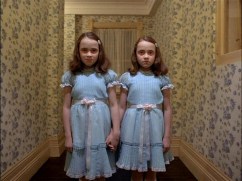
- Film – Very little history. The Grady tragedy is mentioned. Also, the film has it that the Hotel was build over an Indian burial ground. This is not so in the book. Here’s something to note: the two twin daughters of Mr. Grady, their ghosts appear to Danny, inviting him to play in with them forever and ever. This doesn’t occur in the book.
The Boiler
- Book – One of Jack’s duties as the caretaker is to depressurize the boiler in the basement. “It creeps” is what the caretaker of the regular season tells Jack. This boiler is what ends up being Jack’s, and the Hotel’s undoing. The Overlooks blows up with Jack inside. His family escapes safely.
- Film – This plot is left out of the film. Jack meets his demise freezing to death in a
 maze of hedges. Too bad this was left out; it was also symbolic of Jack’s sanity.
Dick Halloran
- Book – Cook at the Hotel, meets with family before all employees vacate the premises for the winter. Shares the gift of “The Shining” with Danny. Tells Danny to call him telepathically if anything goes awry during their stay. In the end, Danny calls him and Dick comes and rescues them
- Film – Much the same. More description of his character in the book. However, in the film, he dies. Jack axes him to death. Halloran is played by Scatman Crothers This is the second time Jack Nicholson bests poor Crothers. In One Flew Over the Cuckoo’s Nest, Nicholson gets him fired as the night watchman at the insane asylum. But I guess that’s better then dying.
Hedges
- Book – The hedges are cut so that they resemble animals; horses, tigers, lions. They come to life at various points. A lion ends up chasing Halloran’s snow mobile.
- Film – Instead of hedge animals, there is a maze of hedges. Jack chases Danny in there. Danny finds his way out ant escapes but Jack doesn’t.
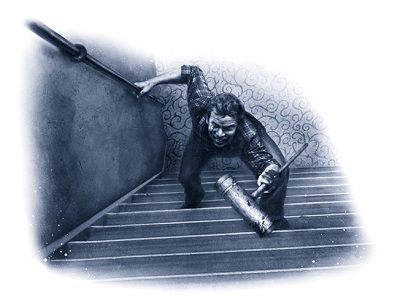
Also of note, Jack does not write “All work and no play make Jack a dull boy” over and over again obsessively in the book, nor does he say “Heeeere’s Johnny!” He does not chase his family with an axe. Rather, he uses a mallet. And those creepy twins – the little girl ghosts – they are not in the book.
The Television Mini-series.
 I knew a guy, big Marvel comics fan, and whenever you asked him about a recent marvel superhero movie, he would say something to the tune of “I liked it! It stuck to the original story of the comics” or “I didn’t like it, it strayed from the original story”. To him, the quality of a film adapted from previous material seems to be solely based upon how well it regurgitates the plot of its predecessor. How well a story re-translates itself from book to film doesn’t seem to be an important factor in his analysis. I mean, if a film based on a book totally sucks, but it sticks to the original story, then by his standards the film isn’t allowed to suck.
Let’s apply his standards to The Shining movie and to The Shining television mini-series.The movie sucked because it strayed heavily from the original plot and the mini-series was fucking awesome because it, for the most part, told the story as per the book. Okay, let us be done with this application, shall we? Because it is this application that sucks. It is this guy’s standards that blows chunks.
The movie strays heavily from the original plot. It is not as good the book but it is still a good film. The television mini-series, on the other hand, closely resembles the book. Does this make it good? No, but it is not terrible either. Well not all of it is terrible.
Here’s what is terrible – the acting. It was typical made-for-TV acting. The man and woman who play Jack and Wendy Torrance seem better suited for a shampoo commercial. The boy that plays Danny has too many lines. He talks way too much and actually makes me cry out for little Jake Lloyd from Star Wars The Phantom Menace.
Elliot Gould plays Ullman and he does so robotically. Seriously, listen to him when he speaks – he sounds like a low-toned Speak n Spell.
Nevertheless, the series has its enjoyable moments. It is scary and it does give viewers more background information than the film. But I still prefer the film. In fact, sometimes  the series tries to imitate the film. When Jack smashes his way into the bathroom, in the book he says nothing. In the film he says “Heeeeeere’s Johnny!” Which will the series choose to emulate, the book, which it had been kept true to all along, or the movie? For some reason, it chose the movie, but instead of the calling out to The Tonight Show host of the 60’s and 70s, Jack says “booo!” followed by “here come’s papa bear!” Corny! The series should have had him remain silent.
************************************
The Shining, as a whole, is a magnificent piece of work. Beginning with King to be retold by Kubrick, it is a story that invokes one of my favorites haunted house themes – a house that is an entity in and of itself – a house that is more than the sum of its ghosts. I love the Shining and may it shine on forever and ever and ever and ever and ever and ever and…..
 to investigate a house that is on the market. Little does Rehan know that the house is haunted. But he soon finds out soon enough. As he settles in to stay and sleep at this house, he witnesses many things. Doors are slamming, books are falling off the shelf, a piano begins to play on its own accord, and ghostly handprints appear on the windows. Then there is the crying and screaming that occurs in the middle of the night. This is what disturbs Rehan the most. Disturbs and…intrigues him. For it is a female voice that cries out in the dark of night. He makes it his job to de-haunt the house. In doing so, he will travel back to the past to make things right. He will help the beautiful Meera deal with the tragic events that took place in her life and in her time – seventy-five years in the past.
 cannot say which scene or set of scenes made me feel one way or another. This ambivalence seems only to exist as a whole and cannot be broken down to the sum of the film’s parts. Despite this ambivalence, I did enjoy the film. It is worth watching but at the same time it is a little long at two hours and twenty minutes. Since I saw this film on the computer screen, I did see it in 3D. There were parts of the film that were crying out for 3D glasses. Alas, I had none. The dialogue is spoken in Hindi, but there are English subtitles. However, the characters speak in English from time to time.
 discover for yourself what kind of demons lurk in his psyche. And then you can decide if he is truly able to expunge these demons from his brain and onto the canvas that is the house. No matter the outcome, one thing is for sure – this guy can never be accused of being a ho-hum kind of homemaker!
 This is the second time I am reviewing a piece from the great horror master Edgar Allan Poe. The first was
 resume their partying once the “death reminder” ceased to hold them hostage. We think of death and then we go on and put it out of our minds. Rarely are we ever fully prepared when death makes its final calling. At the same time, both sources have analyses that I did not mention, nor had I thought out. They are excellent reference pages.
 Hello ghosts! Yes that’s you – the readers of my haunted house pieces. That’s how I refer to the people of my haunted house
 novel a couple of years ago but I am skimming through it once again. I own the Kubrick film and have seen it several times. But hey, what’s one more viewing? Once more in preparation for this review! So far I have watched 2/3 of the series. I will certainly finish it up and get to work writing! The piece will include quotes from Stephen King and other interesting tidbits that are directly or indirectly related to the story.
 On previous occasions I have reviewed Haunted House stories where the house serves as a portal to some other dimension. First on my list are some of the houses in
  Chazen is little bit offbeat himself. The two “lesbian sisters” that live below Alison are not exactly normal either. Nor is the gathering that is being held for all the tenants. Mr. Chazen leads Alison to one of the apartments where – surprise, surprise! A party is going on. The lesbian lovers (sisters) are there, as well as several other tenants. There is dancing and music, all in honor of the birthday celebrant – Charles Chazen’s cat!
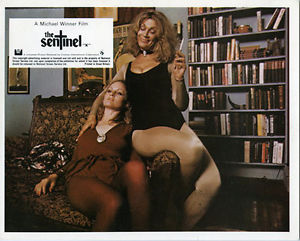 we have
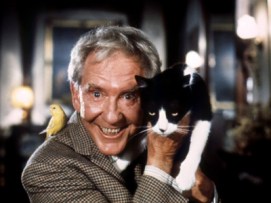 than the film. But I say – give this movie a chance. If nothing else, get a hold of the DVD and watch only the scenes with Burgess Meredith. I love that man!
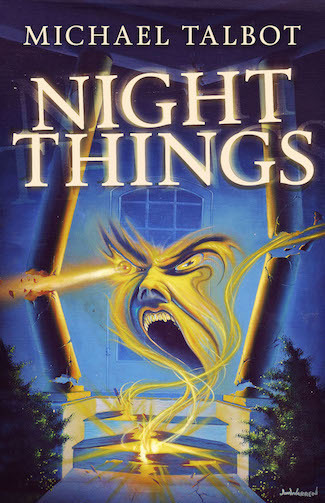 What a noble effort! A publishing company dedicated to reviving rare and out of print books. I am referring to
  How sad. It should be noted that his accomplishments in writing come not from his fiction pieces such as Night Things, but from his works of non-fiction. He was a writer in the fields of science and new age. He wrote several pieces for
 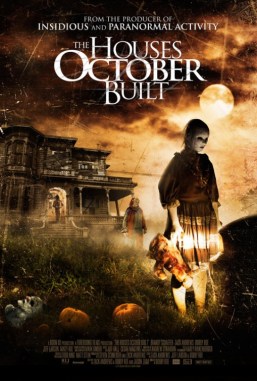 We’re still in October, right? Oh yeah, we’ve left that month of Halloween shenanigans long ago. We’ve already said our thanks in November, went a jingling all the way through December and then somehow ended up in a different year – 2016. Being that it is late January, why am I reviewing a movie about five friends on a road trip seeking out the ultimate Halloween attraction – the haunt to end all haunts? Shouldn’t I have reviewed
  being stalked by masquerading performers from the haunted houses they have frequented. These stalking occurrences happen repeatedly – from town to town, at this festival, at that campground, on this road, inside their RV. What is going on?
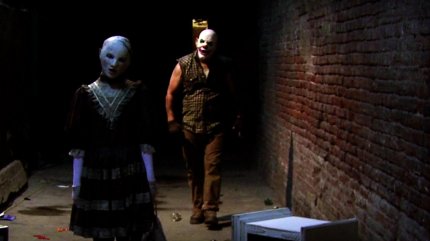 What’s scary about these encounters is this – we’re not sure if these costumed stalkers are merely role playing or if they are in fact surrendering to their horror show persona. Then we are left to ask – are the people that are behind the masks scarier than the monsters they are portraying? While the friends sit around the campfire, a man in white makeup appears from the surrounding woods. He says he works at the nearby haunt but he lives in the woods. There’s something creepy about him. He takes offense at one of the friend’s “backwoods” comment. Then there’s the clown who assaults them in a parking lot, claiming that they were improperly videotaping. There’s the girl with a porcelain face mask that wanders into their trailer. She sits, shifts her eyeballs, and does not answer any of their questions. She then screams and quietly leaves the vehicle. Weird stuff and there’s a whole lot more.
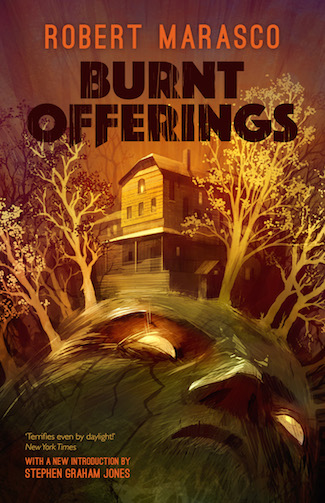 Happy New Year! Gone are our outmoded ways. Fresh on the scene are new beginnings! It’s all part of the cycle of life, with death being an integral part of this eternal succession. How timely it is that I get to review Robert Marasco’s
 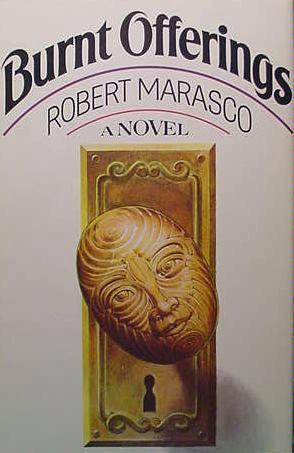 rent. Ben and Marian Rolfe, along with their little boy and elderly aunt, lease the house from these strange siblings. The deal seems too good to be true. The house has more rooms than they can count. There is a swimming pool and beach beside a lake. But they didn’t know about the “extra charges” – their hidden essence pays for these hidden fees! However, they did know about what they presumed to be the one and only catch – the elderly Allardyce mother would remain in the house throughout the Rolfe’s stay. Oh but she would be no trouble at all! She would recluse herself to an attic bedroom in a wing of the house. The Rolfes might never even see her! All they had to do was leave a tray of food outside her closed bedroom door three times a day. They accept these terms and their chilling and suspenseful tale begins. What does this elderly mother look like? The renters never see her. But in the end, Marian Rolfe will “experience” her. Or perhaps the whole Rolfe family will share this experience. I guess this depends on the reader’s interpretation concerning the nature of the old mother.
 The Books of Daniel