 Once upon a time (more specifically, on several occasions back in the fourth and fifth grade), our teacher gave us creative writing assignments. The procedure was as follows: Mrs. Rickman would pass out copies of a drawing that had a written scenario underneath the panel. I remember a drawing of a bowl of soup that had letters rising from underneath the broth. There were question marks hovering over the bowl.
The written out scenario went something like this: “You go into a restaurant and order a bowl of alphabet soup. The waiter places the bowl before you. Suddenly, the letters in the soup form a message. What does the message say?” Our assignment was to answer such a question with a one page, handwritten story. After all the stories were handed in, the teacher would read each of them out loud to the class. It was indeed a very rewarding experience. Among other things, we learned of the different directions to which one could lead a story. We relished in each other’s creativity. At least I did. Some kids dreaded “Creative Writing Time.” Not me. I loved the writing and the listening and I looked forward to hearing the stories written by my fellow peers.
Thank you Nathan Hystad and all the authors that contributed to The Haunting of Lake Manor Hotel for bringing me back to my grammar school creative writing exercise. No, I’m NOT saying that the writing in this book is juvenile. Let me explain. Hystad created something that triggered the creativity of others – similar to the way Mrs. Rickman gave her students the tools to expand our imaginations. For The Haunting of Lake Manor Hotel, Hystad came up with a back-story and scenario. Then he invited thirteen authors to write stories based on his depiction. The results are interesting indeed.
The back-story is as follows: through unscrupulous means, the wealthy Charles Hamblin, owner of Lake Manor, acquired farms and properties from victims of a drought, to later sell for a profit. Meanwhile, most of the swindled suffered another tragedy – they were victims of a plague. Hundreds of bodies were dumped in the nearby lake. The ghosts of the victims began to occupy Lake Manor and haunt Hamblin’s descendents.
Here is the current scenario, set in modern times – , Lake Manor is converted into a hotel. Rumor has it that it is haunted. Is it? If so, by what? By whom? It was the job of the authors to answer such questions. Each author was assigned a room number and instructed to write a story based on the experiences of the guests that stayed in the assigned suite. These authors then got busy haunting this hotel, leaving none of their characters/guests unscathed. All are haunted in one way or another.
Some authors focus on the lake and the woodsy trails that surround it. They write about 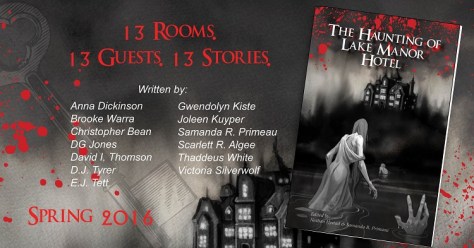 creatures that come out of the waters and prey on their victims. They tell tales of ghosts that arise from the watery depths to lure guests into the deadly lake. They speak of strange things lurking along the trails. Other authors focus in on the ghostly goings on within the walls of the Manor. They unleash bizarre beings of their mind’s creation and let them roam the corridors. They haunt rooms with ghostly children. They install secret panels and passageways for their characters to uncover and explore.
There are several reoccurring characters and themes throughout the book. Members of the hotel staff find themselves in multiple stories. There’s Lissette the desk clerk, Clay the bartender and Hank the bellhop. If I were you (“you” the reader or soon-to-be-reader of this book), I’d watch out for this trio. They can be…suspicious…at times. There are other crossovers as well. There’s an offhand reference to a certain guest in one story. This guest ends up being a main character in another tale. So pay attention, readers! Oh, and watch out for the strange dishware you and the guests will encounter along the wooded trails throughout several stories – they are labeled with the names of different body parts.
All the stories are well written. As an added bonus, they smack of style; each one different, each one delightfully unique. There weren’t any bad stories. Some were better than others. One in particular was both intriguing and puzzling, so I read it twice. I’m still not sure I understood everything even after a second reading. But hot damn, I love this author’s style! (The story is Jumbled-up Jack by Christopher Bean). Alas, there were a couple of stories with non-endings. Seriously, it seemed as if some authors were nearing the climax but then decided to step out and have a smoke, only to forget to finish the story. But overall, this book is an enjoyable read and wonderful exercise in creative collaboration. “Creative Writing Time” lives on at it is beautiful, man!

 AAAAAAA-BBAHHHHHHET!!!!

 well and its surrounding land.
 The tables have turned. Costello, as a ghost, pulls tricks on Abbott and nearly drives him out of his mind. He disturbs his sleep by playing the harpsichord. He lights his cigarette, but Abbott doesn’t see Costello- he only sees a lighter hovering in the air. He gives him a good kick in the ass over a chair! You go Costello!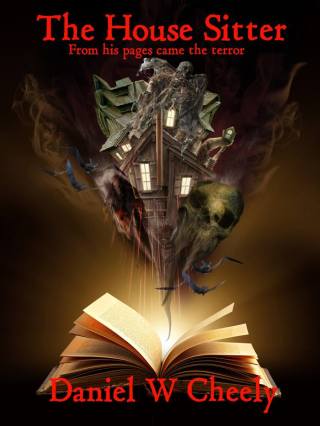
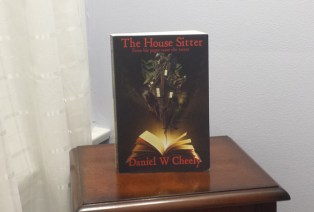 discover for yourself what kind of demons lurk in his psyche. And then you can decide if he is truly able to expunge these demons from his brain and onto the canvas that is the house. No matter the outcome, one thing is for sure – this guy can never be accused of being a ho-hum kind of homemaker!
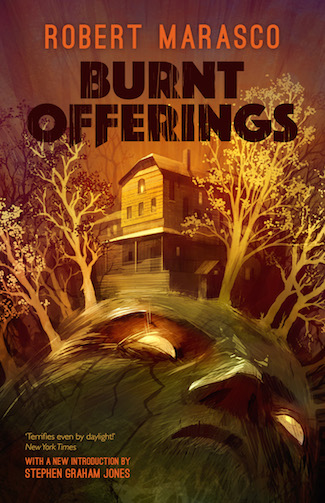 Happy New Year! Gone are our outmoded ways. Fresh on the scene are new beginnings! It’s all part of the cycle of life, with death being an integral part of this eternal succession. How timely it is that I get to review Robert Marasco’s
 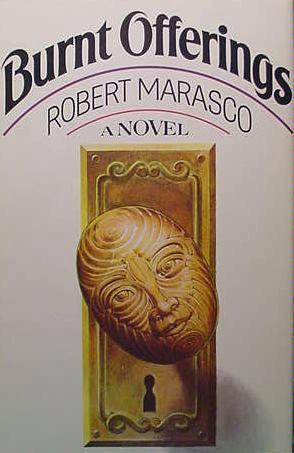 rent. Ben and Marian Rolfe, along with their little boy and elderly aunt, lease the house from these strange siblings. The deal seems too good to be true. The house has more rooms than they can count. There is a swimming pool and beach beside a lake. But they didn’t know about the “extra charges” – their hidden essence pays for these hidden fees! However, they did know about what they presumed to be the one and only catch – the elderly Allardyce mother would remain in the house throughout the Rolfe’s stay. Oh but she would be no trouble at all! She would recluse herself to an attic bedroom in a wing of the house. The Rolfes might never even see her! All they had to do was leave a tray of food outside her closed bedroom door three times a day. They accept these terms and their chilling and suspenseful tale begins. What does this elderly mother look like? The renters never see her. But in the end, Marian Rolfe will “experience” her. Or perhaps the whole Rolfe family will share this experience. I guess this depends on the reader’s interpretation concerning the nature of the old mother.
 Once upon a time, I graduated college with a degree in sociology. But they weren’t hiring at the sociology factory, so I decided to write about Haunted Houses instead. But this is okay, because a haunted house writer earns about as a much a manufacturer of social thought – zilch! But hey – at least I found a similarity between the two “fields” – gotta give me credit for that! And I have more of that “credit” coming, because I have discovered ways that I can draw on my knowledge of sociology to help me in my study of haunted house films and literature. It would be selfish to keep this enlightening information to myself, so I am going to share it with you. Get ready while I reconstruct social theory so that it applies to the organization of the haunted house!
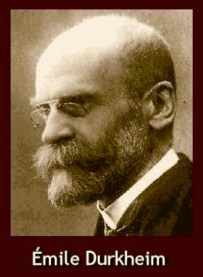
 Here is what Social Theorist
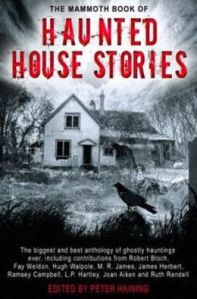 The “tome” that is the subject of this review should sit on the shelf above the fireplace. It should lure the eyes of visitors to its spine and provoke them to call out “What is that?” Then its owner can proudly say, “It’s an anthology of haunted house stories. It is The Mammoth Book of Haunted House Stories.”






 The Books of Daniel