I’m going to the Philippines for a couple of weeks, so no posts for awhile. See ya soon!
Ghost House/Ghost House Revenge – Two Books from that Horror Fiction Paperback Boom of the ’80s.
 One dark and not so stormy night (most nights it doesn’t storm), I found two books on the Internet for which I had been searching for some time. I owned this two-part series when I was a kid. Two paperbacks; both were about haunted houses (what a surprise!). The problem was – I couldn’t remember the titles of these novels nor the name of the author who wrote them . It took many searches before I finally hit the jackpot. Not only did I find the books I was looking for, but I uncovered a phenomenon I didn’t know about. It might be called “the horror paperback boom of the 70s/80s.”
I participated in the later days of this horror paperback boom, and I didn’t even know it! Back then, I only knew it as “reading”. At the age of fourteen, in 1985, I sat at my school desk and read one of the two of these paperbacks that I owned , unaware that I was making history.
Okay, so maybe I’m exaggerating a wee bit here with my “making history” comments. I encourage you to blame the Internet for this. This “Internet” thing forced upon me such articles as Vintage Chillers: ‘80s Horror Novels You Need to Read and ordered me to look into books such Paperbacks from Hell: The Twisted History of ‘70s and ‘80s Horror, all because I innocently typed the words “80s horror novels” into a search engine. From the list of articles and book synopses that the search engine returned, I learned of this horror paperback phenomenon.
After skimming through some of these articles, I learned that there were many successful horror paperback writers in the 70s and 80s. For some reason, horror novels flooded the bookstores, and mainstream publishers were more than happy to churn them out by the millions. The more the merrier. Perhaps it had something to do with the success of the novels by Stephen King, who rose to fame in the early 70s? Were publishers looking for the next King, hoping to find this needle in a haystack by creating the pile of hay? I’d have to read the sources more thoroughly to get these answers. Another takeaway is that many of these books did not withstand the test of time. Best sellers one day, forgotten the next. Expired copyrights, not available for print anymore, never converted to digital format. Sadness.
Somehow, by combing through the various articles and lists, I was able to discover the identities of the two books I sought after. They are, respectively, Ghost House (1980) and Ghost House Revenge (1981) by Clare McNally. These two books seem to fall into the category of “books that history has forgotten”. Thankfully, they were both available in Kindle format on Amazon, both selling for $2.99. Needless to say, I bought and read them. Stripping away my nostalgia-based bias, these might not be the best haunted house books out there, but they are decent enough reads, especially for that low price. I do believe that all print copies are used books
At this time, I would like to share what I remembered about the overall reading experience of these books. I will be going back thirty-four years or so. Here I go!!
I don’t know how I acquired my paperback of Ghost House Revenge. But there it was  inside my lift-top desk, my one desk for the entire school year (same teacher/classroom all year round too). In between lessons, there was free time, where a student could do homework , draw, or read. Do middle schools still offer this kind of free time? Well that’s besides the point. Anyway it was during this free time that I did most of my Ghost House Revenge reading.
I had remembered bits of the story. I mostly recalled a physical therapist guy named Derek and his socially awkward pre-teen daughter, who’s name had escaped me. (Her name is Alicen). Father and daughter lived temporarily in the house of one of his clients who needed therapy on a daily basis. The client had fallen out of a window and needed help learning how to walk again. The client had a family; a spouse and several children. I couldn’t remember whether it was the father or mother that needed therapy (It was the father – Gary). I couldn’t remember his wife’s name (Melanie) or the names and number of children they had (Three – Gina , age 13, Kyle 9 or 10, Nancy 5?).
I remembered that the house was haunted but I didn’t remember the details (the spirit of a vengeful woman terrorizes them). I recalled that Derek wasn’t always nice to Alicen, and I remembered there was something a bit off about her. And then, I remember Steven U. No, he’s not a character from the book, he was my best friend in the 8th Grade. I had put the book aside for awhile and he borrowed it from me. He read faster than I did. In a matter of days, he got further into the book than I did, and he had to go and tell me “So and So got ripped to shreds!” This is what I remembered most! I remembered who it was that got “torn to shreds” (I’m not telling ya!) and I used these words in my searches (*name* torn to shreds). And….nothing came of these searches. Sadness! This is because, I learned, that the book never describes the fate of this character in those exact terms. These were Steven’s word’s, not McNally’s. But it’s obvious that is what had happened to the character.
The book was (and is) a relatively simple read. It served as a welcoming pastime for such a young and blossoming mind, not to mention some blossoming hormones. For instance, the other night, when I got to a part in the book where the ghost woman grabs Derek’s crotch, I suddenly remembered stumbling upon this scene way back when. Another brick in the puberty Wall! Um..let’s move on to another paragraph.
The thing about my initial reading of this book, either I didn’t realize that Ghost House Revenge was a sequel or I simply didn’t care. As an inexperienced reader, I guess it didn’t click that one is supposed to read the original novel first. Throughout the book, there is backstory that pertains to the first novel Ghost House. This happens when Gary tells Derek how he fell out the window (his fall occurs in the first novel), or when both Melanie and Gary explain to Derek about how the house had once been haunted, but isn’t anymore (They are wrong, it still is haunted, but by a different ghost). Once I got into the meat and guts of the story, I must have then known that this was the second of two books. I certainly knew after I acquired Ghost House at a garage sale. This acquisition came months after reading its successor.
Excited, I opened the book and read how the family was moving into a big house. I remembered that Gary was giving Melanie the cold shoulder. She had recently been having an affair, but she broke off the fling. The couple was trying to reconcile. I remember how Gary kept imagining his wife’s legs wrapped around another man’s legs, and this thought bothered him. It didn’t bother the young me, though. This description excited me. That puberty thing again.
So what happens next? I didn’t find out. I put the book down. Summer vacation was at hand and what person brand new to his teenage years wants to spend the summer reading a book? I put it down after the first few pages and never went back….until a few weeks ago. It wasn’t until then that I learned that the ghost of some 1792 dude dwelled in the house and that he would go onto to develop a thing for Melanie. Very powerful this ghost. He had his way with Melanie many times both sexually and mentally.
After all these years bits and pieces of these books stuck with me. I wanted to finally read the first book and then revisit the second. But this task was difficult, since I couldn’t even remember the names of these books or the name of the author. “Torn to shreds” was not a viable query, oh what was I to do? And so, after stumbling onto articles pertaining to the yesteryears phenomenon of “all these horror paperbacks everywhere; good ones, bad ones, ugly ones,” I somehow found these two books once again. I read them and enjoyed them. They aren’t the greatest; there’s some very literal storytelling going on (no symbolism, etc.,). But the books are page turners.
So, this whole post turned out to be more of a piece on the history of my early days of reading and on the horror-themed paperback boom. Not much of a review, is this? Should I describe the “Ghost House” some more? It’s a colonial bay house in New England, built in the 18th century. Should I go into more detail about the ghostly encounters? Both books feature powerful, malicious ghosts. They wreak havoc on this peaceful family. Children are locked up on the roof, locked down in the cellar, tied to posts on the connecting beach. Gary is injured multiple times when going toe-to-toe with these spirits. Certain characters become possessed. Some characters die.
Still not enough details for you? If this is the case, then you should just go ahead and read the books for yourselves. Below are the buy links. Enjoy!
Ghost House
Ghost House Revenge
Tales from the Haunted South: Dark Tourism and Memories of Slavery from the Civil War Era – Fourth Book Review for Black History Month Series
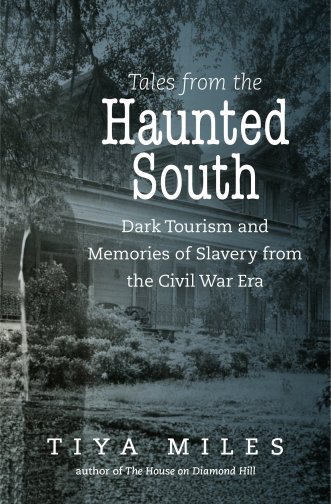 When I tell people about this blog and my love for the haunted houses of film and literature, quite often they say something like, “Cool. So I take it you’re a fan of * Insert – the name of the trendiest cable show that boasts of “real” encounters with the paranormal – here *. When I tell them, “No I don’t find value in those kind of shows” and that for me, ghosts are fictional entities , I get blank stares. I might go on to explain that I view haunted house stories through the same analytical lens that a student might use when assessing feminist themes in classic and modern literature , or that I embark upon a similar path that a historian of cinema might follow when studying the evolution of a certain film technique. And STILL they might reply, “You know, there are several houses here in the U.S. that are supposed to be haunted. Have you ever gone on a ghost tour?” Sigh! These folks just don’t get it.
To answer that last question, no, I’ve never been on a ghost tour, though I’ve been to places where they are offered (Galena, Illinois for instance). I’d like to go on one, just to see what they’re all about. Thankfully, someone has given me a glimpse into what has been coined as “dark tourism”. Her name is Tiya Miles. She has written a book about some of the most popular ghost tours in The American south. And wouldn’t you know it, this book Tales from the Haunted South: Dark Tourism and Memories of Slavery from the Civil War Era is the subject of this review. Imagine that! And it is the fourth and final review of my Black History Month Series.
In her book, Miles seeks out ghosts. Despite what I said above about my skepticism concerning translucent specters that go bump in the night, I believe in the ghosts Miles seeks. Please, read on.
Tiya Miles went on several ghost tours. She toured many “haunted houses” across the south, from former plantation mansions to carriage houses that once served as slaves quarters. But she is not writing as a “survivor” who lived to tell about her frightful experiences. She is not billing herself as an eyewitness to floating specters or poltergeist activity (although one the photos she took at a cemetery picked up a mysterious orb!). But, as I mentioned in the last paragraph , she was indeed searching for “ghosts”. Alas, for the most part, they did not come – and I’m not referring to translucent figures that moan and groan. These kinds of ghosts she was not expecting (though they did “appear”, at the very least, inside the tales that were told by the tour guides, taking the form of “Right where you are standing now, the ghost of such-and-such appeared to one visitor). What kind of ghosts was she hoping to find?
Paraphrasing, Miles defines “ghosts” as a vehicle to the past. In order to come to terms with the past, in order to “see” the events that have transpired long ago, we must have an honest confrontation with the ghosts that history has conjured. Quite the figurative definition, huh? But think – if there is any entity that is made up of figurative elements, it would be “the ghost.”
In particular, Miles took in these ghost tours to see if they would relay the authentic tragedies of real people that experienced the horrors of slavery. True, “dark tourists” want to hear the tales of spirits of former slaves or slave owners haunting the premise on ghost tours. They go in with the expectations of learning about the lives of the deceased, of the tragic circumstances that surrounded their deaths, tragedies that caused their souls to remain here on the earth, searching for some kind of peace before being able to pass on to the other side. Miles expected these kind of tales as well. And she got them. But before embarking upon these ghost tours, she wanted to see if the sponsors of these tours exploited the lives of the deceased in anyway, either with misinformation or exaggerated distortions. And exploit they did. They presented slave ghosts to the customers as caricatures; ghostly voodoo priestesses, promiscuous phantoms, etc. etc. Only now and then did they allow for the true “ghosts” to take form: tales of the true cruelty and oppression that the black enslaved Americans experienced.
Tiya Miles toured several cities in the American South, where dark tourism flourishes. Why does this industry flourish in the American South? Well, to quote from the book:
The US South, with its history of Indian removal, slavery, and bloody Civil War battles, together with its regional particularity, and atmospheric setting of simmering heat and shroud like Spanish moss, is a place easily associated with a dark past and haunted present.
She went on ghost tours in Savannah, Georgia, a city that boasts of being the “ghost tour capital” of the United States, beating out both New Orleans, known for all its Voodoo and other paranormal attraction, and Salem, with its notorious history of burning innocent women on stakes to “eradicate witchcraft”. But Miles also visited “haunted places” in New Orleans and at preserved plantations that stand on the southern end of the Mississippi River, which were known for their “even more horrid conditions” for the enslaved, giving rise to the term “sold down the river.” The eerie tales surrounding these visited sites, Miles argues, sugarcoat the real tragedies and injustices of slavery with romantic stories filled with ghostly hyperbole.
The Sorrel-Weed House in Savannah, Georgia
Miles begins her quest at the Sorrel-Weed House in Savannah, Georgia. Francis Sorrel, original owner, was allegedly having an affair with his slave “Molly”, who lived in the carriage house that is adjoined to the main residence. This carriage house is said to be haunted by Molly’s ghost. Allegedly, she was murdered in this house, probably by Francis Sorrel himself, who needed to terminate any evidence of the affair. His wife, Matilda, does find out about the affair, so the story goes that she committed suicide, throwing herself out the window. It is said that her ghost haunts the Sorrel-Weed House as well.

(Above photo: The Sorrel-Weed House)
Miles does some checking. While she uncovers documents that state that Matilda died “in an accident,” there is no historical record of Molly, at least none pertaining to the property holdings of one Francis Sorrel. Neither are there any documents listing slave names similar to Molly.
Is Molly a “figment of human imagination?” (quote from book as a possible explanation of Molly). If so, she exists as the fabricated ghost, the packaged legend, indeed a ghostly “figment” of some not-so-creative imaginations, (the lack of creativity attributed to her story’s reliance on the typical tropes of found in “real” southern slave ghost stories.) Whether real or not, Molly sets Miles off on a journey to find “her ghost”. Her ghost will represent the untold stories of an enslaved people, their perspectives within the context of an the inhumane institution of slavery.
There were several things wrong with the telling of Molly’s story, Miles believed. These wrongs, these fabrications would materialize again and again throughout her tours of haunted houses. Oh where are the ghosts? And what are these fabrications that stand in place of the ghost and its hauntings? Let’s move on.
The Myrtles Plantation – Louisiana – Ghosts of Chloe and Cleo
Tiya Miles visits the Myrtles Plantation, located off the River Road (this would be the Mississippi River, folks!) in rural Louisiana. The plantation house is supposedly a legendary haunted house. It also serves as a bed and breakfast for your average “dark tourist”, or your simple Southern history enthusiast. Miles stays in a room that was formerly a nursery. Her room, she is told, is the most haunted room in the place. It is haunted by the ghost of Cleo, a former slave that once turned the nursery into a Voodoo sanctuary. Cleo, a Voodoo priestess, tried her best to heal her master’s sick child using her “skills of the craft”. Her master allowed this, so long as the child would heal. All night Cleo worked her magic. In the morning, she proclaimed the child to be healed. Sadly the child died soon after, and Cleo ’ s Master had her hanged for her lies regarding the health of the child.

(Above Photo: The Myrtles Plantation House)
Myrtles is also supposedly haunted by Chloé, a young slave girl in her early teens who was involved in a sexual relationship with her master. Although the master liked having Chloe around for sexual company , he didn’t like it when she listened in on his private affairs. When he found her with her ear to his office door, he cut off that ear. Still, Chloe was devoted to him and she cherished their sexual relationship. But she was jealous of her master’s family so one night she poisoned the kids, killing them. For this crime, her master hanged her from a tree. Tourists who stay overnight are warned to lock up any earrings they might remove from their lobes before going to bed, although only one of the pair is in danger of being stolen. Stolen by whom? That would be the ghost of Chloé. She only needs one earring because she only has one ear.
So, what’s going on with these “phantoms?” A whole lot of stereotyping. Chloé is portrayed as a “Jezebel”, a biblical feminine persona that is amoral, has an insatiable sex drive, and is seen as an evil temptress toward men. Although some sympathy is granted to Chloe, as the story admits that she was treated cruelly (losing her ear, being a slave in general), she plays a key role in her own demise. She is the one in the story that bears the most evil (killing innocent little children!)
The story of Cleo with its imagery of “ primitive rituals” invokes another stereotype – the wild witch woman. Imagine – inside the wholesome confines of a white man’s nursery a black woman is performing ancient witchcraft from the jungle, only to result in the death of an innocent child. Such horrors!
It should be noted that Voodoo was a real religion among various slaves. However as Miles notes, “Voodoo lends an exotic quality to these stories, calling to mind the notion of the African primitive. Voodoo also portends spiritual danger for non-adherents who see the religion as strange and dangerous, thereby enhancing the taboo-breaking, fear-inspiring elements of dark tourism”.
Within the tales of Chloe and Cleo arises what I again call the “figments” of treacherous, exotic, sex-starved, and witchy women that are responsible for deaths of white children. Then there is Chloe as a thief, a prankster that has nothing better to do with her afterlife than to steal earrings. To the author’s dismay, the “ghosts” of Chloé and Cleo do not appear in these tales. These would be the ghosts of two suffering women, suffering through no fault of their own. Victims of horrendous abuse at the hands of controlling men. In all these tales of sexual relationships between black slave women and their white masters, are we do believe that the women had an equal status in the relationship? There were no power dynamics perpetuated by the men? Could many if not all of these “relationships” really be cases of non-consensual sex and perpetual rape? If “ghosts” were conjured from these tales instead of “figments”, then perhaps we might see a clearer image of the truth. Ghosts don’t lie.
Better Uses of the Supernatural in African American Experience
Returning now to Molly, the slave ghost from the Savannah Sorrel-Weed House, we see again a slave complicit in an adulterous act, not the victim of power play and subjugation. Figments abound in this tale. Ghosts do not. What Miles came to realize during her quest to find “Molly’s ghost” was, in her own words:
I also came away with an alarming sense that the representation of slaves as ghosts reproduces intersectional racial and gender norms from the antebellum era, often without context, caution, or critique. As a result, the narratives on these tours reinforce retrograde interpretations of power, race, gender, sexuality, and identity. These stories turn on the abuse of the socially weak, often African American women, but do nothing to contextualize the experiences of black women or hold accountable the perpetrators of violence against them. In short, ghost tours featuring spectral slaves often uphold the ideas of an antebellum social order by replaying antebellum plots that repopularize antiquated race and gender hierarchies.
The goal of Miles’s work is not to discredit the supernatural (She did see that orb on her photo). Rather, it is to allow for ghost stories to capture the true cruelty of slavery while providing dignity to the black slave ghosts. She says:
Black slaves do not fare well in the genre of the southern ghost tour. But we need not rely on ghost tours and haunted sites to gain historical understanding about the supernatural in African American experience.
As an example, Miles refers to a project conducted by the Georgia WPA. In the 1930s, The WPA conducted a series of interviews with former slaves and ancestors of slaves. One woman relayed a story her mother had told her. Her mother, a former slave, saw and heard a phantom machine made up of chains and wheels. It was as big as a house, very loud and extremely terrifying. At this spot, back in history, a slave master would whip his slaves to death. Here in this tale, the evil of slavery is pronounced and takes form, representing the “ugly machinery” of slavery.
Also, Miles mentions Toni Morrison’s book Beloved, where a slave child returns from the dead. She, according to Miles, represents the history of slavery (I mention this in my review of Beloved. )
Beloved is a work of fiction. As for the story about the massive conglomeration of chains, well, supposedly the storyteller believed it to be true. But this doesn’t matter. What matters is that the “ghosts” in both of these tales “speak of truth”. They do their job of communicating with the living as to the reality of our nation’s yesteryears. Often times this truth is ugly. But ghosts do not exist as contestants in a beauty contest. They exist as messengers of the past and don whatever appearance is necessary to relay the spirit of its time.
Madame Lalaurie – Remember “Coven” in American Horror Story?
Are you a fan of the TV series American Horror Story? I can’t say that I have a love affair with this show, but I found some episodes enjoyable. Anyway, there was one season, the third season I believe, which was titled “Coven”. It was a story about modern day witches in New Orleans. However there were several flashback scenes set in the antebellum south, at the house of a cruel mistress named Madame Lalaurie, played by Kathy Bates. She kept slaves in chains in the attic. She branded them, dissected them. Well did you know that Madame Lalaurie was a real person? Tiya Miles visits her “haunted house” in New Orleans (where she really did keep slaves locked in an attic), which is purportedly haunted by the cruel Madame herself.
Miles places the story of Lalaurie within the context of her theories. The stories conveyed by tour guides once again contain figments rather than ghosts. But I won’t get into all that here. For details, buy the book!
And so….
I thank Tiya Miles for writing this book. It taught me a lot about slavery and black history, much of which I did not detail in this review. I believe that I now have the necessary mental tools to prepare myself for a ghost tour, if I should ever decide to go on one. Yes, the romantic in me will hope to see an actual specter (though I won’t expect such a thing). But the analytic side of my personality will now be looking for the “unseen” ghosts. Depending on the historical context, I might never come to now the true nature of the “once-was-a living-person” that is presented to me as a ghost in these tales, but I can step back, think independently, and ask myself questions such as, “Do these tales seem antiquated in nature? Does the business (i.e. the ones hosting the tour) have anything to gain by preserving some kind of preconceived notion of the past? Are these tales haunted by obvious clichés and caricatures? I must go back to Galena ,Illinois, a town where the once many antique shops have been converted to cafes and other trendy kinds of storefronts . Ah but the historical town, home of Ulysses Grant, still has “antiques” to sell, only now, they come in the form of ghosts. This small down boasts several ghost tours and a few haunted houses. I must return and see whether they are peddling figments or trying to tell true “ghost” stories.
Peace Out!
About the Author
 Tiya Miles is a professor of history at Harvard University. She is the author of five books. One of her research specialties is African and Native American comparative histories. She is the winner of several awards including the Frederick Douglass Prize.
*** information above was gathered from the following links:
https://history.fas.harvard.edu/people/tiya-miles
https://en.wikipedia.org/wiki/Tiya_Alicia_Miles
Beloved – Third Book Review for Black History Month Series
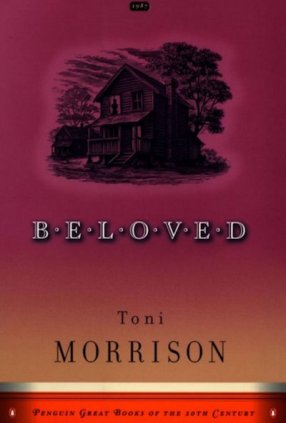 It is 1873. The Civil War is over. Slaves are freed. Sethe, a former slave, lives as a free woman in rural Ohio. She had been a runaway slave, fleeing the South and finding freedom back when such actions were illegal by law. But all that is over now, she is no longer a wanted woman. Nothing left but the best of times…right? No. Not true.
Sethe raises her daughter Denver (age = 11? 12?) in a haunted house. Ghostly handprints appear in a cake. Mirrors shatter, a kettle of chickpeas is tossed on the floor. Sethe has other children besides Denver, but they are gone. Howard and Buglar, in particular, ran away at the young age of thirteen. Two young boys off on their own, never heard from again. They fled the ghost that haunted their home.
Sethe and Denver live a reclusive, dreary life. They are lonely. Along comes Paul D, a former slave from Sweet Home, the plantation to which both he and Sethe were enslaved. He too notices the ghost at Sethe’s place. It shines as a pool of red light.
“Good God. What kind of evil you got here?” Paul D asks.
“It’s not evil, just sad. Come on, Just step through.”
And Paul D listens. He steps through.
Paul D takes up residence at the house. He and Sethe begin a romantic relationship. Whereas Denver has her misgivings about Paul D, Sethe seems happier than she has been in a long time. For you see, Paul D has chased the ghost away. According to Sethe, the ghost = sadness. Has Paul D eradicated sadness from her life? Maybe temporarily.
The past haunts us all. Mostly in stories about the supernatural, the haunting past makes its presence known in the form of a ghost, as it does here in Toni Morrison’s Pulitzer prize winning novel Beloved. But a past such as Sethe’s is so troubling that its haunting demands a far more substantive expression than that of an ethereal phantom. The ghost is gone but the past returns again, this time in flesh and bones. It comes back in the form of a young girl/woman with the brain of a child. This woman appears to Sethe, Denver and Paul D on the road, looking and smelling as if she had just risen from the swamp.
Sethe takes pity on her and invites her into her home and welcomes her into her family. This mystery girl/woman is name is Beloved. Soon Sethe will realize who she is and…what she is. She is both the precious past and the putrid. She is love. She is guilt. She is beautiful. She is the ugliest of realities. She is whole, not minced.
Who is Beloved? I will not answer that question directly. From a very simple and literal perspective, the answer to that question is unveiled very early on in the novel. This “literal” answer might even be found in the book’s synopsis on Amazon or on any other platform that sells the book. Even so, these answers will not explain the depths of Beloved’s identity. Perhaps there is no one true explanation. I will be presenting some of my thoughts about this. But as for the surface explanation concerning her identity and why she comes packaged with a tragedy that eats away at Sethe’s soul, you will have to read the book to understand these things.
Beloved is much more than a ghost story. There are several back stories that serve as case studies for some very interesting characters. Following these characters back in time, the novel transports us to the harsh days before the Civil War came to an end. Toni Morrison gives readers a glimpse into plantation life and it isn’t pretty to say the least. The book details the lives of these characters as slaves and shows us the great lengths to which they go in their quests for freedom. Considering such hardships, it is understandable that authors such as Tiya Miles believe that Beloved represents the physical embodiment of “the history of slavery”. (From her book “Tales of the Haunted South – Dark Tourism and Memories of Slavery from the Civil War Era” This is up next for review!) There is merit to this view. Certainly the inhumane past Sethe and her family endured continues to haunt her and disrupt their daily living. The damage inflicted by slavery does not simply fade upon its cessation. Its takes generations to fully eradicate.
To me, Beloved represents an extension of Sethe. Let me explain. Much of the novel explores the building and destruction of self boundaries. One of the book’s characters, an elderly black woman that goes by the name “Baby Suggs,” preaches to congregants, telling them to “Look at your hands. They are yours. They are beautiful”. Former slaves needed reminders that their bodies no longer belonged to some master or mistress. They needed to know that even when they were in captivity, their thoughts, their feelings, their very “selves” had been theirs all along. This sense of self is not so easily apparent when one is shackled like an animal, sold like livestock, and forcibly separated from family.
At one point in the story, Sethe is violated, held down and robbed of the milk in her breasts by the nephews of the plantation owner. With experiences such as this, it can be difficult to not only feel a sense of self worth but to have a healthy understanding of the concept of “the self” at all. Without this understanding, one’s sense of self can be projected onto others.
In another part of the book, we learn that Sethe herself had committed an unspeakable act. Unable to come to terms with what she had done, her guilt manifests into another person, into Beloved. To quote from Beloved herself , “I am not separate from her. There is no place where I stop…her face is my own.”
Who is Beloved? She is so many things. When all is said and done, she is the genius that is Toni Morrison. Morrison’s book is a patchwork of keen psychological insights, layers upon layers of them. She writes dialogue in the vernacular of her subjects and composes her concepts with thoughtful depth. She uncovers the abstract and makes it real, painfully real.
Beloved may not make my top ten list of favorite haunted house novels. This does not matter, for you see, Beloved has earned its rightful place on my list of top ten novels overall, regardless of genre. The haunted house is but one concept in a sea of themes that Morrison touches upon. Nevertheless, her novel features a haunted house and therefore, Beloved is a most welcomed addition to my collection of reviews. It is a brilliant piece of literature.
About the Author
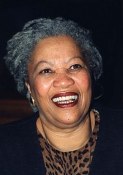 Toni Morrison is a professor emeritus from Princeton University. She is the author of several novels and won the Pulitzer Prize in 1993 for her novel Beloved.
*** The information above was taken from Wikipedia.com
White is for Witching – Second Book Review for Black History Month Series
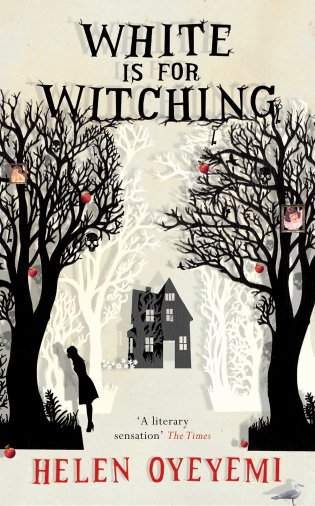
I don’t even know how to begin. This book, White is for Witching, stumps me. For sure this will be one of the more challenging reviews because I really don’t know what to say about it. I’m not certain what the book is getting at it. I still haven’t made my mind up on whether I like this novel or not. So, I guess this is it then. Buy it here if you wish. Good luck with it. Peace out my friends!
.
.
.
.
.
.
.
Fine, I’ll try to do better than that! Maybe a list of the multiple themes would be a good start. If this book is about anything, it’s about several things. It’s about a college-aged young woman named Miranda Silver. The very first chapter leaves readers with the impression that “Miri” (Miranda for short) is either dead and buried, off on her own somewhere, a runaway without any shoes, or just hiding underneath some strands of symbolism that the author has spun. Three competing entities are trying to assess her whereabouts; three different perspectives; perspectives for which we the readers will come to know the story. (I’ll explain why I am using the term “entities” momentarily ) First there is Ore, Miri’s friend from college. She says that Miri is “in the ground underneath her mother’s house”. Eliot , Miri’s brother, states that she just ran off somewhere one dark and windy night. Finally, an entity known as 29 Barton Road insists that Miri is a home, inside its confines someplace. “29 Barton Road” is the haunted house. It’s also the Bed and Breakfast that Miri’s family operates. It too shares is perspective with us. Since it is not human, I refer to the four that share their perspectives as entities. Four? Who is the fourth? That would be Miri herself. She too shares her side of things. A rather skewed perspective it is! Or is it? We learn early on that Miri is not entirely mentally stable. Is this a case of an unreliable narrator? More than that, the whole book is an unreliable narrative – no matter what you think this story is about, it’s probably about something else.
More topics, more things this book is about (or isn’t – you know, that whole “unreliable narrative” thing.) It’s about grieving. The family at center of the story, The Silver family, lost its Matriarch, Lily. She was a journalist who was murdered on assignment in Haiti. Eliot blames his sister Miri for this, for she wouldn’t stay awake over there in England while the murder was happening in Haiti. How does this make sense? I don’t know, some kind of symbolism that’s lost on me I guess. But after the fact, Miri wears her mother’s watch that is always set at Haitian time. Speaking of Miri, she suffers from pica, a psychological disease that causes one to consume non-edible objects. Chalk is her favorite snack. Readers also learn that Miri was institutionalized sometime after her mother’s death. So the book is about battling mental illness as well.
The book is also about the politics of group identity, nativism, and immigration. A group of Kosovan girls have it in for Miri on account of something she said or did to one of the girl’s boyfriends. Miri insists it’s a case of mistaken identity. She never did such a thing! Or did she? Who is “she” anyway? Who are any of us?
Move over Miri, Ore is taking over the story! The novel dedicates several chapters to her perspective. She is of African descent, adopted by a white British family. She is the butt of “good natured (really?)” ridicule from her white, conservative male cousins. She attends Cambridge with Miri. She and Miri will become lovers. She will visit Miri over the holidays, at her home, at the haunted house. Weird things will happen.
Apparently, this haunted house is objectively haunted and not depended on Miri’s warped mind. Early on in the story, the domestic help quits on account of the haunting. The children of the help have a frightful experience on the lift. The replacement maid, an African woman partial to Voodoo, notices the spiritual nature of this house, but she’s not all that freaked out by it. It’s a voodoo thing, you know. Then there’s Miri and her meetings with her deceased mother, grandmother, great grandmother, etc. in a special room of the house. This same house has claimed to have trapped one of these female ancestors within the walls and has kept her hidden for untold years. It’s a weird house. It’s a weird book. There are allusions to vampirism in this book as well. And witchcraft. The Silver family is white. Hey, what do ya know, white is for witching!
White is for Witching is what I might label a postmodern haunted house novel. Others might be House of Leaves and The Grip of It, both of which I have reviewed (click on them to read these reviews). I’ll assign some characteristics of what I perceive is postmodern: lacking a center, non-linear, rich in symbolism, and experimental. Traits such as these can make for a highly intriguing book, but I must say that White is for Witching is too much of these things. Did I like the book? To a certain extent. Helen Oyeyemi is skilled at prose and her sentences flow artfully. In this way it is an interesting read. But overall this novel doesn’t do a whole lot for me.
I include this book in the Black History Month theme solely on account of the author being a black woman. While this book deals with issues that blacks as a race face (social prejudice), there’s not a whole lot of history going on here. But include it I did, and to that I say “Oh well.”
About the Author
 Helen Oyeyemi is a British novelist originally from Nigeria. She is the recipient of numerous literary awards. She has written several books, short stories, and plays.
(The above information is taken from the following sites:
https://en.wikipedia.org/wiki/Helen_Oyeyemi
https://literature.britishcouncil.org/writer/helen-oyeyemi )
The Good House – First Book Review for Black History Month Series
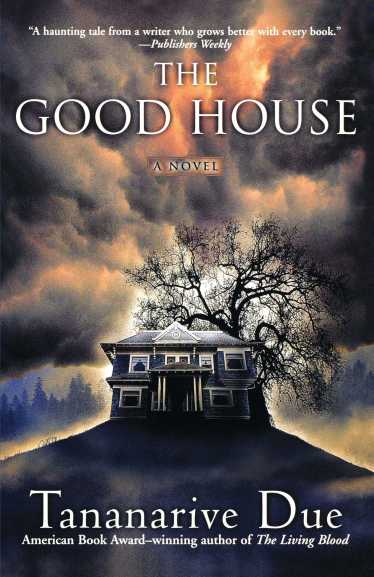 To the house that belongs to the Vodou priestess the locals brought the possessed girl. Hopefully Marie Toussaint would cleanse her.
To the house that once belonged to her grandmother, Angela Toussaint returns. It’s hers now. Here she will jump start her life , take care of her teenaged son and perhaps rekindle her love for her ex-husband . All this falls apart. Things go very wrong.
At this legendary house, Fifteen year old Corey Toussaint, curious by nature, finds magical relics that once belonged to his great grandmother. He uncovers secrets that the house hides, deadly secrets
This is a story of a terror plaguing multiple generations, a story about a stretch of land with strong connections to the spirit world. On this land the “The Good House” stands, home to four recipient generations of horror.
Hi there! In honor of Black History Month, I welcome you to the first review in this series of haunted house novels written by black women. I begin with Tananarive Due’s acclaimed novel The Good House. “Good House” is haunted, but it is not the epicenter of the haunting. The trigger for the haunting lies within the lineage of the Toussaint family and on the spirit-laden lands upon which the house rests. It is the combination of a family sensitive to the magic of Vodou positioned in an environment that is receptive to other-worldly forces that stirs up the ghosts, or more appropriately, the demons. Or most appropriately – the “baka”.
The story unfolds from multiple perspectives. At the heart of the story is Angela Toussaint. I suppose she would be the central character. If this were made into a movie, whoever played Angela would be the actress in a leading role. The year is 2001 (approximately) and Angela, a successful lawyer from California, is temporarily residing in her second home in Sacajawea, Washington for the summer. This is “Good House” (also “Goode House”), her childhood home, where she was raised by her grandmother, Marie Toussaint, now deceased. Angela ’ s own mother was unfit to raise her due to mental health issues (or perhaps her soul was “infected”.)
The townsfolk of Sacajawea warmly welcome Angela’s return. Her family, her house, it’s all part of the town’s history, all woven into the fabric of the community, though the weaving process , from a historical perspective, was quote contentious. She is one of the few black members of the community. Mostly, race is not an issue, although the town has pockets of redneck racists. (Her son Corey will learn this) She is highly respected. But when her grandmother was young woman living in Good House.it was a different story.
Angela is seeking to refresh her life. Having only partial custody of her teenaged son, her experiences with him have been limited as of late and she wishes to change that. Corey seems to favor his father, and so she tries to rebond with him one fateful summer at Good House. At the same time, her relationship with her ex-husband is not lost. He visits the house, and there is a rekindling.
So far I am describing a rebuilding of family and community. But this will not happen. Instead everything falls apart. Neighbors go insane. Some kill their loved ones. Others kill themselves. Her friends suffer horrific calamities Her own family meets tragedy head on. Something unspeakable has been unleashed.
As previously mentioned, Angela’s story is the central narrative. And yet, it is my least favorite of the various perspectives. At times, it gets too bogged down in mundane things such as the tasks involving her career and the details of her exercise routine. Even the attention focused on her love life was too much for me. For my tastes. But then again, I’m a guy and romance dramas don’t do a whole lot for me. However, Angela’s story ties together the stories from the perspectives of other characters, so her tale is an important one. And it is these other perspectives that I will now focus on. For me, they capture the intrigue of the book. These would be the perspectives of Corey the teenager and Marie the grandmother. WARNING: there will be spoilers ahead. I don’t know how else to discuss the themes I’m about to delve into without them.
Spoilers Section
Marie Toussaint
Why is the house at the center of the story a “good house”? Because once upon a time, people came to the house to be healed. Because the former owner, Elijah Goode, a pharmacist in the early 1900s, dispensed medicines, specially brewed with natural herbs and a little bit of magic. The herbs grew on blessed grounds, on land populated with spirits. These special medicines were concocted by his maid Marie Toussaint, later to be his wife, a voodoo priestess. Marie will inherit the house upon Elijah ’ s death, marry an Indian man, be the recipient of much hatred and racism. Still, she will exorcise a demon from one of the daughters of the townsfolk. It is “a good house”. It was a “good” thing for her to do, especially since she was the one to summons the demon in the first place.
What if you were a black woman of Creole descent in the 1920s, and your life was turned upside-down by murderous racists, and you had the power to extract revenge on them with an act that was as simple as snapping your fingers? Would you go in for the kill? Marie Toussaint showed restraint when her first husband was murdered by racists in New Orleans. When she moved across the country to Washington with her young daughter and married a white pharmacist, Elijah Goode (His house = Goode/Good House), racism would rear its ugly head again, even after she helped the nearby communities by using magic to extract the healing power within the herbs that grew on this enchanted land. When she, a black woman, inherited the house of her husband, a white man, people in the nearby town of Sacajawea sought out lawyers to get her out. To further piss-off this community of racists, she took Red John as a common law husband. He was formerly viewed as “the good Indian who knew his place”. Red John had been “the white man’s pet”, but this new arrangement might cause him to step “out of his place”. Both Marie and Red John were stepping out of their places, so the people of the town shot bullets through her windows and front door.
It was all Marie could stand. She gave into anger. A kind of momentary anger that all of us fall victim to now and again. An anger that might elicit a curse word or two from ordinary people. Marie is not an ordinary person. She utters a curse. But the thing is, her words are packed with much more power than your average “God damn you!” Chances are, God won’t sent a person to Hell based upon one person’s idle request. Marie remembered a word that was stolen from the gods. A powerful word. She spoke it, unleashing a powerful baka. Her words, so simple to say, so deadly the consequences. Mudslides ravage the down. A demon is summoned and it does what demons do – it possesses the living.
This is the backstory – the history. But as all of us amateur historians know, history repeats itself. Some eighty years later, the baka will once again be summoned and ravage the community. Who is it that calls upon the baka? Her great grandson Corey.
Corey Toussaint
Corey, fifteen, an aspiring poet and rap artist, is having trouble adjusting to his new environment in the rural northwest. For a whole summer, he must live with his mother Angela at Good House in Sacajawea, Washington. He is used to his urban environment in Los Angeles, where he has many friends and lives under the lax supervision of his father. He had no friends in Sacajawea. His mother is naggy and strict. He is the only black kid in the community.
Eventually, he forms a friendship with a white kid named Sean. They share a love for rap music. However, not all of the kids in this community are friendly to him. Some are downright hostile, such as the town bully Bo Cryer , proud of his confederate flag t-shirts, ready to beat “sense” into this new “gangster kid”. And beat him he does.
Corey is a bright and curious kid. He finds items of his great grandmother hidden away in the house. He finds her diaries, reads her journals. He learns Vodou spells. At first, he uses these spells for innocent things, such as reclaiming lost items. But even this kind of tampering has its costs. And when he speaks the forbidden word to get back at the bully , all hell breaks loose.
Here Ends the Spoilers Sections
So, are there any, shall we say, “Haunted House happenings” in the story? There are some. A piano plays by itself, a presence or two are felt at times, a mysterious ”friend” of Corey’s defies physics by the way she sits on a tree branch and talks to him through his upstairs window. Sometimes the plumbing churns out foul black slush through the faucets. Then there is the night that every room in the house is blanketed with leaves, turning the floors of Good House into a forest’s bed. As previously mentioned, the house is not necessarily the “ epicenter of the haunting.” But the house itself is important to the story, so much so that author Tananarive Due devotes attention to describing the rooms, the attic and cellar, the furnishings and portraits on the wall. The modern day characters that populate the Sacajawea community (Sacajawea is a fictional town, BTW) have great respect for the Goode House. For them it is not only an historical landmark, but it’s a history that continues on. The townsfolk cling to the stories of the past that that focus on the generosity of Angela’s grandmother, Marie Toussaint. She is spoken of as a town healer. When Angela returns to her property and hosts a Fourth of July party at Goode House, many prominent people of the town show up. They have warm affections for Angela and the house and its history of “goodness”.
The people of Sacajawea have either forgotten the darker history of Goode House or have chosen not to confront it. Some still remember, or at least know of the cruel accounts of racism directed toward Marie Toussaint and her house (details of this are in the spoiler section above), but they either don’t speak of these things or do so in a “hush-hush” tone. But such a darkness cannot be extinguished by modern lights. Maybe this is one of the many messages of the book?
Is there anything to say about this book concerning the subject of black history? Well, this is a work of fiction, for sure. Even when it comes to the subject of Vodou, Due admits that while she utilized real concepts associated within that religion (i.e. “lwas”, spirits of Haitian Vodou or “baka”, evil spirits), she creatively improvised when it came to creating the spells, prayers, and magic that take place in story. But Vodou is a real religion and it was practiced by many African slaves
From Britannica.com
“Vodou is a creolized religion forged by descendants of Dahomean, Kongo, Yoruba, and other African ethnic groups who had been enslaved and brought to colonial Saint-Domingue (as Haiti was known then) and Christianized by Roman Catholic missionaries in the 16th and 17th centuries.”
While fictional and fanciful, Good House does point to many historical circumstances on the subject of black history. It teaches the importance of family and the value of heritage, especially for a people that were so cruelly uprooted. It reminds us of the prevalence of racism toward African Americans in the early part of the twentieth century, and lets us not forget the ongoing prejudice and discrimination that still occurs today. On this last note, maybe I should repeat a phrase I used earlier that gets to the heart of this…and more. I will do that. Here I go:
“ But such a darkness cannot be extinguished by modern lights.”
In other words, our country’s racist past cannot be erased. The ghosts of history will not allow for this. Nor should they.
About the Author
 Tananarive Due is a an educator, former journalist and author. She is the daughter of civil rights activist Patricia Stephens Due, who as a member of CORE, (Congress of Racial Equity) and participated in several marches and a jail-in. Tananarive is the author of several books on the subject of black history/speculative fiction. Her novel “Black Rose” is based upon the research of Alex Haley.
***The above information was taken from Wikipedia.com
Honoring Black History Month: Coming Soon: Reviews of Four Haunted House Novels Written By Black Women
This February, I will be honoring black history month here at this blog. I will be reviewing four haunted house novels written by black women. I could use the phrase “African American” women, but that technically would not be correct, because one of the authors is a British woman of African descent. This begs the question: is black history month primarily concerned with the history of people of color as it plays out on the American stage? I don’t know the answer.
I am a Caucasian; a white guy. As such it’s not my place to define what black history month is or isn’t. Likewise, I most certainly cannot claim a shared heritage and realistically identify with the struggles my black brothers and sisters have endured or the triumphs they have celebrated. Therefore, unlike previous reviews and articles that were grouped into a theme (i.e. Christmas Haunted Houses, Haunted Apartments), I do not begin with a central concept. I am not seeking to extract characteristics that define what a haunted house is from the black perspective. Rather, these four works stand alone. Perhaps when all is said and done, when I have completed the readings and written the reviews, I might have more to say about any possible interrelated themes. But I don’t want to get ahead of myself, nor do I wish to engage in any inappropriate analysis for the sake of some sort of self-congratulatory intellectualism. I hope I will not do that anyway.
I guess the question is: Can we learn about authentic black history from mostly fictional novels that delve into the paranormal? I believe we can.
Of the four works, three are fictional stories and one is a factual account. The non-fiction book deals with popular “ghost tour” houses in the American south. This book uncovers a lot of African-American history and sets the record straight about the tourist-magnet fabrications that come at the expense of the “real” ghosts that haunt these places. One of the fictional novels is set in “current” times (post Y2K) but segments of the story go back to the 1920s. Another fictional novel takes place in the years following the American Civil War, although much of the story occurs during the times of slavery. Both books show how history has affected and shaped the lives of the central characters. Though the histories are fictional, they are based on real-life historical circumstances. And, of course, both stories feature haunted houses. The fourth book, also fictional, has very little in the way of history. This book presents quite the quagmire when trying to assign a definition to it. It’s about a haunted house, but it isn’t. It’s about the politics of identity, but it isn’t. It’s…ah, just wait for the review.
I guess I could be more straightforward and just mention ahead of time the titles of the books and their respective authors, but I want there to be some kind of suspense. So..just wait. You will know soon.
Anyway, I hope this will go well, and I hope you will find this subject matter enlightening and educational
See you soon!
Review of Ju-On: The Grudge
Hey all, Happy New Year! A very timely wish if I do say so myself!
(Hypothetical Reader: Um, New Years Day was like, four weeks ago. We are too far into the year for that kind of greeting. You’re late, bro!)
Never too late to fulfill a resolution! Remember that time I reviewed the short two movies from Japanese TV, Ju-On: The Curse and Ju-On: The Curse 2 and I promised to review the full-length film that continued the Ju-On series? Lately, I’ve been getting several hits for those reviews at this blog. Since that is the case, I’m going to review the feature length film that arose from these “Curse” movies. So… resolution fulfilled!
(Hypothetical Reader: Dude, that was two years ago when you wrote those reviews and made that pledge. How long does it take you to make good on your promises?)
It does take me a while , doesn’t it? I hope you don’t hold a “Grudge” on me! (Get it? Ha Ha Ha!) But I’ll tell ya, the kind of grudge at work in the 2002 Japanese film Ju-On the Grudge is not to be trifled with. It is scary and deadly. It affects the innocent – people that had nothing to do with whatever offense it was that spawned such a grudge, those unfortunate ones that happen to be at the wrong place at the wrong time. That “wrong” place is a house in Nerima, Tokyo. 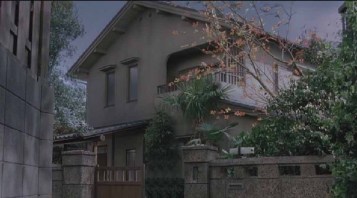 The “wrong” time is anytime after a certain murderous tragedy took place on the premise. See readers, this affliction that haunts and claims the victims of this movie is more of a “curse” than a “grudge”, although I’m told the English translation of “Ju-On” is “Curse/Grudge”. A “grudge” , as per the movie, is negative energy in action; or, in reaction. Let’s assume there are scientific laws governing a body of supernatural physics. There is a steady harmony of body and spirit, life and death. The living go about their business and the dead stay dead, their spirits at peace in whatever plane of afterlife existence there happens to be. A horrific tragedy perpetuated with evil intentions can upset this balance. Evil and horror beget evil and horror. In the film, the negative energy is attached to a house, where a mother, her little boy, and the family cat had been savagely murdered by a jealous husband/father. Those who enter the house are susceptible to the negative energy that exists in the wake of this tragedy. It attaches to them. Can they rid themselves of this negative energy by leaving the house? Fat chance! “The Grudge” is part of them now and it follows them wherever they go. Go to work and it will haunt the office. Go to school and it will be there too. Go home? That home will now be haunted.
How do you know if you’ve been affected by this grudge? Well, if suddenly, there just happens to be this strange, creepy little boy with bluish skin running in the halls of your home, then the grudge is imminent. This creepy boy might open his mouth in a circle and release a disorientating creaking sound. Or he might mew like a cat. You might also encounter a young, undead woman crawling down the stairs, bending her limbs in unnatural ways. The boy would be Toshio, the woman Kayako, the ones murdered by their father/husband. The murdered cat is there too, mewing from Toshio’s mouth, or from the phone. Be careful of the calls you accept. If these crawling, creeping undead things catch you, you are toast. Your body will become theirs and will disappear from mainstream life. You will become such an abomination.


We the viewers of this film witness such an unfortunate scenario play out near the film’s beginning. A family owns/occupies the house that once belonged to the murdered family. The aging mother-in-law is no longer mentally fit to care for herself. She sits on the floor and mostly does nothing but stare vacantly.. This is what “The Grudge” did to her. A woman from social services pays her a visit , checks on her well-bring. Where is the old woman’s son and daughter-in-law? “The Grudge” has already claimed them. And the poor lady from social services, she will be taking a ghost or two home with her.
Ju-On: The Grudge is divided into several segments. Each segment, each story, focuses on a different character; all are victims of “The Grudge”. Every story is named after the character that receives the focus. Ju-On: The Curse 1 & 2 follow the same format but mercifully, Ju-On: The Grudge presents these stories (mostly) in chronological order. “The Curse” movies don’t, and it’s a real pain in the you know what trying to figure out what’s going on. I do admit, however, that this out-of-sequence story telling adds an unsettling element to what are intentionally disturbing films, so in this way they provide a continuity of mood.
Is it necessary to watch Ju-On: The Curse 1 & 2 before watching Ju-On: The Grudge? I say no. Ju-On: The Grudge does a quick rehash of some of the events in the previous two films, enough to keep viewers up to speed. But the earlier films devote more detail to story of the tragedy that began this whole curse/grudge business. They are most certainly worth viewing, but Ju-On: The Grudge is the best of the three. It is the culmination of “The Curse” films. The effects are better, the undead things are creepier, and it just seems the most confident of the three. I believe “The Curse” movies were accidental hits for director/creator Takashi Shimizu. Because of this, perhaps he had more of a budget, studio cooperation, etc. when it came to making Ju-On: The Grudge.
Ju-On: The Grudge makes my list for top 50 horror movies of all time. I believe it’s either in the teens or the twenties, I’d have to recheck. Oh fine, I’ll check right now. I’ll find the link to the list and….here it is – Top 50 horror Films. Oh! I see now that I have it at #32. Well, it makes the list and that’s what’s important. It’s a great film and like other Japanese or Korean Horror films, it achieves scares in a way that Hollywood horror films 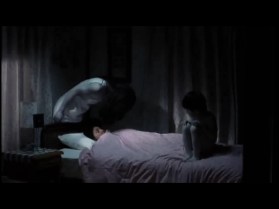 struggle with. This film (like several other Asian horror movies) has a built-in flair for all things creepy. Maybe it’s the detail devoted to the ghosts, or maybe it’s the wise abandonment of cliché plots and over-hyped character types. Perhaps it’s the balance of mood and in-your-face scares. Whatever it is, Ju-On: The Grudge works well.
Ta da! I have finished my review of Ju-On: The Grudge. Did I do good?
(Hypothetical Reader: You do know there are more movies to the series, like Ju-On: The Grudge 2, and several others. Are you going to review them?)
Yes I know of these. I didn’t watch them, so probably no.
(Hypothetical Reader: Also, there is the American version, also directed by Takashi Shimizu, simply called “The Grudge.” Shall we expect a compare and contrast article soon?)
Sigh! I didn’t see the American version. I should watch it and…will I write about it? Oh I don’t know! I really don’t. Oh please, for now, just let me be!
Ghosts of Christmas Past – A Review of a Collection of Christmas Haunted House Stories
 Stop the holiday press! (Is there such a thing?) Put those ornaments back on the tree right now. Return those vines of ivy to the banister. Rehang those stockings and regurgitate some of those “Ho Ho Ho”’s you swallowed on the 25th, cause I got one more Christmas-themed post for you! It is a book of Christmas ghost stories – Ghosts of Christmas Past – A chilling collection of modern and classic Christmas ghost stories.
Published in 2017 in Great Britain, the stories within are from various years. Some date back to the 1800s. The book includes a story from M.R. James, whose name is synonymous with “The Christmas ghost story.” His stories were published in the early part of the 20th Century. Other stories in this collection are as recent as 2014. It is refreshing to see that the traditional Christmas ghost story lives on. I thought it was a thing of the past, as the book’s title suggests. (Not really!)
Telling ghost stories on Christmas Eve – I didn’t know there was such a tradition until 2015 when I saw an article floating around on Facebook (floating like a ghost – Booooooo!) A year later I wrote my own article on the subject. Now in 2018, I see the subject of “The Christmas ghost story” all over social media. Yay Internet! Still, I didn’t know there were modern stories; I thought that “Christmas ghosts” were phantoms of a bygone era. I’m glad that I was wrong.
In my 2016 article Christmas Ghosts and Haunted Houses I briefly describe the evolution of the Christmas ghost story, then go on to make a case for “The Christmas Haunted House”. A Christmas haunted house is usually haunted on Christmas Eve. It is the setting of festivities; friends and family gather there. The haunting takes place after the feasting and frolicking, or in some cases, it interrupts these activities. The haunting is symbolic of the cold and dreary winter that exists outside the window. If it is not symbolic of the cold and darkness, it is at least a reminder of these conditions. End of the year holidays, with all the lights and cheer, are there to counteract the harshness and darkness of winter. This was most certainly true in the ancient yuletide tradition of winter solstice. Winters were harsher, darker, and more deadly. When the lights go out, when the festivities come to an end, the darkness remains. Scary “winter’s tales” emerged from this, and the telling of such tales evolved into the telling of ghost stories on Christmas Eve. Safe inside a house, beside a warm and blazing fireplace, the ghost stories are fun….but…even today, darkness is right outside. So close….so….what if a real ghost joins the party, escaping from its prison inside these fanciful tales?
Much of the literature revolving around Christmas ghosts are stories within stories. A group gathers in a house on Christmas Eve to tell fanciful ghost stories to pass the time on such a cold winter night. Often one of the storytellers relays a “true” ghost story. Fantasy becomes reality. And “reality” has always been there, lurking outside of their protective indoor setting. Now it is inside.
For the record, not all Christmas ghost stories involve haunted houses. But many do and I love it, because if you haven’t noticed , I’m a haunted house kind of guy! Are there any Christmas haunted house stories in the book that is up for review, Ghosts of Christmas Past? Answer: Of course! What a silly question, for this is a haunted house kinda blog! And it is these stories that I will single out , not that they are better than the “houseless” stories but because they fit the theme of this blog. However , do they conform to my criteria of what makes a “Christmas haunted house” story? Sometimes they do.
To my dismay, authors both past and present never said, “Hey, there is or will be this Daniel Cheely guy, and he says Christmas haunted houses have to be written such-and- such a way, and I must write my story accordingly.” In other words, the specific details of my “Christmas haunted house” criteria will not always play out in every story. I know, awww! But I will say this; most of the haunted house stories in this book that I am about describe feature a noticeable dichotomy: the happenings inside the house vs. the happenings outside the house. To go from one to another, from out to in or in to out, is to transcend into the supernatural in someway. Things outside peer in, spirits in the home vanish when exiting the house. To some extent, these observations reflect the themes of 1) warm/cozy inside – 2) cold, dark and scary outside, and the convergence of these two states. Don’t you agree? Maybe you will be able to answer this question when I go into more details about the stories. And I will do that. Right now!
Warning! There will be spoilers!
Dinner for One – by Jenn Ashworth – first published 2014
This story is told from the ghost’s perspective. The ghost haunts his/her wife/partner on Christmas. The gender of the ghost is not revealed and the official status of the relationship is unclear, although it is assumed these two were once lovers, back when the ghost inhabited a living body.
The ghost rearranges things in the house, sets the table for dinner, and gets irate when the former lover fails to acknowledge the ghost’s efforts. The angry spirit throws the plates/glasses on the floor. See, the ghost doesn’t realize that it is dead. The doings of the ghost – this troubles the lady of the house, understandably so.
Meanwhile, the surviving lover spends much time outside the house. She stands over a bed of rocks. It will be revealed that the body of her former partner lies there. She had killed him. Poor ghost, it’s body thrown out of the house, buried under the earth. Poor former person – tossed out of the world of the living. All it wants is to live, to spend Christmas with its former lover. And so, it returns to the house and, unknowingly, haunts it.
The Shadow – by E Nesbit – first published in 1905
Ah, a classic Christmas ghost story! It fits the classic is formula. A group of a young girls, on Christmas Eve, gather in a sleeping chamber in a house they occupy to share fanciful ghost stories. They invite one of the household maids into the room and ask her to tell a ghost story. She is shy, somewhat reluctant to share her story. But she gives in.
The maid’s tale is a true one. She once visited the house of two friends, a married couple. The wife is sick in bed, so she spends most of her time in the company of the male friend. All the while both are haunted by a presence, a shadow. This shadow is symbolic of…something. Something that hides underneath. Underneath what? Just underneath.
By the time the maid finishes the story, the presence is inside the chamber. A tragedy occurs, a tragedy that ties one of the girls to the accounts described by the maid.
In their protective environment on Christmas Eve, the girls had shared made-up stories. Then a horrid, truthful tale penetrates their security. The safe house has been haunted.
This Beautiful House – by Louis De Bernieres – first published 2004
A man returns to his childhood home every Christmas Eve. He always stands on the grounds, observing the outdoor setting, reflecting, taking in the serenity. He likes to remember the past Christmases that took place inside the house and relive all the cherished memories he had with his family. Often, the man can see them in the house, through the windows, he witnesses activity inside.
One by one, various family members come out to greet him. Mother and father, sisters or brothers, uncles. They plead with him, but whether their pleas are for him to come inside or for him to just go away, it is not clear. But the man never enters the house and he doesn’t go away until he is ready.
A tragedy caused all these family members to perish inside the house many years ago on Christmas Eve. Even so, the man knows where to find them, every year on the anniversary of their deaths, he sees their ghosts. Is he a ghost as well? A ghost that is unwilling to join his family in death where he belongs? Is he reluctant to attend an eternal Christmas party inside the house?
Inside. Outside. The meeting of these two sides and what happens or doesn’t happen on the crossroads. This is what this story is about.
The Ghost in the Blue Chamber – by Jerome K. Jerome – first published in 1891
Another classic story adhering to the classic formula. This is somewhat of a humorous tale. A man tells a ghost story to a group of people that are gathered at his house on Christmas Eve night. It is a true story. He claims the blue chamber of his house is haunted by a murderer and his victims. When he was alive, the murderer had a pastime of killing musicians (See, I told you this was humorous . Laugh! Ha ha ha!). He tells the group the details of all the murders.
After the telling, the man’s nephew insists in sleeping in the blue chamber. That night, the ghost of the murderer visits the nephew. Both men, nephew and ghost, pass the night with chitchat and pipe smoking. Soon it is time for the ghost to leave. All ghosts must return to the cosmos before dawn, after all. The nephew walks the ghost out the door and down the sidewalk. Soon he confronts two truths: 1)the ghost is no longer by his side 2) The nephew forgot to put on his pants before going outside.
There is not much more to this story. I can’t find any symbolism within. So, how about my whole “inside/outside” dynamic? Does it play out in this story? Well, the ghost is there in the house. When he leaves the house , when he goes outside , he disappears. So there’s that. And…that’s all I got.
The Lady and the Fox – by Kelly Link – First published in 2014
This is my favorite of the bunch. It is more a story of fantasy and wonder, though it is a little creepy and somewhat ghostly. It is a modern fairy tale. Young Miranda, a little girl, enjoys spending Christmases with The Honeywell family. Elspeth Honeywell is her godmother. Her son Daniel is like a step-brother to Miranda. Over the years he will become more than that, off and on.
Miranda lives with an aunt. Her mother is in prison and probably will be for life. It seems as though the Honeywells have custody of her only at Christmas time. One Christmas Eve, while a large gathering of Honeywells party it up at the house, Miranda sees a strange man peering into the windows from outside. She goes out to meet him. She discovers he is a Honeywell…from a different time period. He dresses in 17th century outfits. No, he is not a ghost, he insists. His name is Fenny, an no, he can’t go inside the house. This isn’t allowed. He wishes the little girl would just go away and leave him alone.
Year after year, Miranda meets Fenny outside the house on Christmas Eve. He eventually warms up to her. He comes with the snow. She ages, he does not. Never does he come inside.
Miranda is a young woman now. She grows to love him. To want him. And he her. She will literally hang on to him to prevent him from disappearing.
Who is Fenny if he’s not a ghost? He is, after all, solid. I failed to mention that before. I am mentioning it now. Perhaps Miranda craves that which is “solid”, a solid relationship , a solid understanding of how she fits into the Honeywell family. Her relationship with her mother is far from solid. The prison system does not allow her to see her. Her relationship with Daniel is confusing. She feels more at home with the Honeywells than she does at her aunt’s place. Is Fenny the physical incarnation of Miranda ’ s desire to belong? And will Fenny ever come inside? Will Miranda ever rid herself of the feeling that she is always on the outside, looking in? Outside. Inside.
Outside the Christmas house. Inside the Christmas house. The places in between the inside and outside, the places that fuel the supernatural. These are the themes I have noticed in these stories. These themes relate to my observations concerning Christmas haunted houses in literature – fragile safety zones that are in no way impermeable to the dark forces that lurk outside in the darkened night of winter.
As a reminder, these are not the only stories in the book. I have covered less than half. But these are the Christmas haunted house stories. I recommend buying the book and reading all the stories. Some are better than others, but this is always the case with anthologies.
Thank you for reading this article about Ghosts of Christmas Past, especially since Christmas has passed (See what I did there?). I wish you a happy post-Christmas. May your home receive the leftovers of the Christmas ghost. May they haunt your house – inside and out.
Christmas, Ghosts, and Haunted Houses – Links to My Articles and Reviews
“Tis the time of Christmas season , FA LA LA LA LA…. and stuff
Deck the page with lovely reruns FA LA LA LA LA…. that’s enough.”
Yes, this piece will be another one of those posts littered with links to some of my past articles and reviews concerning Christmas and Spooky Stuff. Forgive me, but keep in mind, so many established entertainment entities do this. Take SNL, they have their “Christmas Special” where they regurgitate clips from past episodes. So..that’s what this article is – it’s special! As Radiohead so eloquently phrases it, “so fucking special!!”
The truth of the matter is that I’ve been busy, and I’ve faced certain obstacles that have prevented me from writing. I went travelling for a few days, so there’s that. Then there is the holiday season, which always works against ones normal, everyday schedule. And then my computer went on the fritz. It took some time to get things up and working again. But I’m here now, and Christmas is several days away , so here comes a Christmas – themed post for ya- An index of articles and reviews that I have written pertaining to haunted houses and the holidays. Enjoy!
 First on the list is this article – Christmas Ghosts and Haunted Houses. I trace the history of the Christmas ghost story. By the article’s end, I make the case for the Christmas haunted house, a unique set up where such a house can be distinguished from other haunted houses in literature.
Next, a review of A Strange Christmas Game by J H Riddell. This is a story about ghosts  that recreate the events of a deadly game that occurred on a Christmas Eve in the past.
 Next, there is story called Smee. This is a review of a a very popular Christmas ghost (and haunted house) story, at least according to the number of hits this post receives all year long. Written by A. M Burrage, it is a story of a game of hide and seek in a big old house. A ghost joins in the game.
Finally, A Christmas haunted house story written by yours truly (hint: that’s me!). A  frightened old man helplessly tries to ward of all the ghosts that haunt his house on Christmas Eve. Please read my story – Spirits in the Night, Exchanging Chances

