9PM Central time at the FB page – Haunted Houses of Film and Literature
Rose Red Part 1 -Recap of Sunday Night’s Watch Party
We were off to a “rosy” start! Although we the viewers were not yet permitted entrance to the haunted mansion (flashback/backstory scenes not included), we got to take in its enormous exterior. This vine-ridden mansion in Seattle, behind locked gates, has countless rooms. The number of rooms changes by day, for the house is said to expand on its own accord.
Professor Joyce Reardon, over summer break, plans to spend a weekend at Rose Red in the hopes of obtaining verifiable psychic phenomenon. When all is said and done, she hopes to prove, once and for all, the legitimacy of parapsychology. She proves to be quite confident in her pursuits, very determined, if not obsessed, and, perhaps, slightly unbalanced.
Rose Red in its current state is a “dead cell.” It has not been active in over thirty years. Joyce plans on using a team of psychics to help rejuvenate the house. They will be the electricity. She hopes for six team members; she has five – a precog, (see events before they happen) a touch sensitive (picks up information from touching an object), an automatic writer (spirits communicate when the writer writes) a post cog (gets warnings from the past) and a jack-of-all-psychic-trades psychic. Who Joyce really wants is Annie, an autistic teenager girl whose powers are off the charts. She has been known to bring showers of boulders down from the sky upon neighbors’ houses and tear apart her own house by willing plates to shatter, glass to break, shelves to fall. Her father forbids her to be part of the team. He says “Taking Annie to a genuine haunted house is like taking a lighter to see how full your gas tank is.” Perhaps he’s right.
Like Annie’s father, there are others who do not look to kindly upon Joyce’s upcoming Rose Red expedition. One is Professor Carl Miller, the head of the psychology department at the university. He scoffs at the field of parapsychology and thinks that her attraction to Rose Red will harm the reputation of the department. He hires a student journalist Kevin Bollinger to spy on Joyce’s group and bring up dirt on them.
Despite these setbacks, Joyce marches on. Will Part 2 finally show this team in the house? Will Annie be able to join this group after all? Will Carl Miller somehow sabotage this experiment? We shall see.
I hope Joyce knows what she is doing. This is dangerous. Over the years, Rose Red has killed five men and “disappeared” eighteen women. It has a complicated history, and Joyce herself says that is “born bad”. Will her obsession get in the way of the safety of her group? Again I say, we shall see.
Next Sunday – Part 2 at my Facebook page Haunted Houses of Film and Literature
Don’t Forget – Rose Red Watch Party Tonight
I think I got it all worked out!
Tonight at 9:00PM Central Time – a “Rose Red Part 1” Watch Party. (Stephen King’s Made for TV Haunted House Mini-Series)
Like my Haunted House Fiction Facebook Page to join in the fun!
October is Here – Now what?
 It’s October and ’tis the season for the spookies! At the Den of Haunted House Fiction, I deal with the spookies year round. Haunted Houses, Ghosts, Things that go Bump in the Night – these kind of themes have no seasonal boundaries around here as evidenced by my articles on summer ghost stories and Christmas haunted houses. And yet, come October, I feel the need to come up with a theme that is, uh…special? Yeah that’s the word – “special”. Something worthy of Halloween greatness. Something “spookily” out of the ordinary; spookier than spooky! Oh the pressure!
In Octobers past, I’ve featured ghost hunt games, special book reviews, and articles comparing and contrasting classic haunted house films with their modern remakes. What to do this year? Oh what to do, what to do?
Here’s what I thought I would do – host a series of watch parties on my Facebook page and then write about the experience. The plan is to watch the four part series Rose Red (Stephen King’s haunted house mini-series) over the course of the next four Sunday evenings – four Sundays of October (“Four Sundays of October” – that could be a book title!). On Mondays, I could write a recap of the previous night’s experience, and at the end of the month, I might write a review of the series itself.
Of course much of this would depend on technology being on its best behavior, cooperating in certain ways that it just might not be inclined to do. In other words, “total failure” is a possibility. I CAN RUIN HALLOWEEN FOR EVERYONE – OH NO!!
At the risk of failure, I am going to attempt this. Oh yes I am! If you haven’t yet checked out my Facebook page, do so now here – Haunted Houses of Film and Literature.
It will begin this Sunday evening, if all goes according to plan. Be there or be square!
Review of Scary Stories to Tell in the Dark – The Film
 Happy Mid-August to you all!
Sorry I haven’t been posting much lately. Let’s see now, my last post, my review and analysis of Anne Rivers Siddons’ The House Next Door was published…wow…on July 2nd! Has it really been that long? I guess it has. I blame my lack of blogging on the summer. In addition to being an autumn kind of guy, with my love of autumnal colors, Halloween and haunted houses, I’m also a summer guy as well and I try to get in as many outdoor activities as I can in a short period of time.
Some summer rituals do involve The Great Indoors, though. Such a ritual includes seeing a movie on a weekday during the daylight hours. Blame this on those summers of my high school years when going to matinees was a regular, cherished activity. Oh that precious nostalgia! To relive those days of my youth is to reengage in such rituals, and reengage I did. I went to see a seasonally appropriate film if there ever was one, for the days are getting colder, the nights longer, and fall is just around the corner. But for me at 2:35pm on August 14, 2019, autumn was already here, on the big screen, with its wonderful oranges and auburns, with its comfy wool sweaters and letterman jackets, with its Halloween celebrations, and most importantly, with its nightmarish monsters that prey on high school kids. This sneak preview of autumn even featured the small-town haunted house that stands behind the woods! And this house is why this movie gets a review on my page. The movie is Scary Stories to Tell in the Dark.
Before getting into the guts of the story, let’s go back to that season shit again. Aw come on, it’s appropriate and it helps establish the feel of the film. The autumn theme whacks a bit of certainty into today’s Chicago season. Mid-August, soooo uncertain, the weather doesn’t know what to do – be hot? Be cold? At least with Scary Stories to Tell in the Dark, I’m not having the kind of anxiety that is similar to one waiting to depart on a trip – I’m already there! I’m in a small town on October 31st, and seasonal testaments abound! There is the field of fully-grown corn with its stalks turning a golden brown. There are fallen leaves and wind is tossing them around, there are Halloween decorations in the windows. Maybe it was my imagination, but it seemed the insides of the houses were geared up in autumn colors as well. The wallpapers (this is a period piece, 1968 I believe, as a Nixon election victory was shown later in the film) conform to the hues of this magnificent season. Great job to the set designers. The film Halloween (1978) is often cited as the epitomical autumn horror film, for it too took place in a small town with houses decorated for Halloween, with its streets filled with blowing leaves. But Christ, this is supposed to be a fictional town in Illinois (Haddonfield), and there are fucking palm trees everywhere. The leaves are so green, too green. Alas, Halloween was filmed in California, and this is the reason for all this out of place scenery. In Scary Stories to Tell in the Dark, everything is in the right place. School is in session; high school activities are taking place. So if for no other reason, I recommend seeing this film for its knack of instilling the spirit of autumn. Special effects aside, the landscape is beautiful. Oh, and the film’s story isn’t too bad either.
The story? Oh yeah – that. Four teens decide to explore the haunted house at the edge of the woods on Halloween night. It once belonged to the very prominent Bellows family back in the 19th century – a family that built and ran a mill which in effect created the town with the jobs it brought to the area. The family is long gone (later we will learn – most just disappeared from the face of the earth). The daughter of the family, Sarah, is kept in lock and chain and hidden from the outside world, so the rumors go. The legends also have it that Sarah would tell scary stories to children who listened to her through the walls. Upon hearing the stories, the children would vanish. Ah those small-town folktales, pretty silly huh? Well poor Stella, Ramon, Auggie and Chuck get a large helping of this “silliness” and it ain’t too pretty.
While exploring, aspiring horror writer Stella finds a book of stories written by Sarah herself, penned in blood so it appears. She brings it home. Hey Stella! That wasn’t such a good idea. Oh Stella!
By stealing the book, Stella has awakened the vengeful spirit of Sarah Bellows. And she is cranky, having been “dead asleep” for however many years. In both death and life, Sarah utilizes that unique skill she has – what she writes comes true. She writes about scary stories and legends. And, she will write about the teens that roamed about in her haunted house. Words appear on the pages in present time, and she casts the teens as the victims of such monstrous creatures. Could it be that Sarah had caused her family to disappear by writing them into these terrible tales of hers? Could be!
A team of creative individuals are at the helm of this film. It is directed by André Øvredal, director of The Autopsy of Jane Doe. If you haven’t seen this film, treat yourself to it as soon as possible. As for the film currently under review, it is based on a screenplay by none other then Guillermo del Toro (which is loosely based on the books by Alvin Schwartz, more on this later). G del T also helped to produced this film, so if you’re looking for his signature creepy monsters, you’re gonna get them! (although many are replicas of illustrations from the books. Replicated awesomely I might add!)
There are three collections of scary short stories books written by Alvin Schwartz. Published in 1981, 1984 and 1991, they are, respectively, Scary Stories to Tell in the Dark, More Scary Stories to Tell in the Dark, and Scary Stories 3: More Tales to Chill Your Bones. These are children’s stories but apparently some didn’t think so. Too much graphic violence, the naysayers. Here are some illustrations from the talented Stephen Gammell:


I consider myself blessed for not having read the books, for I am sure that I would have found the film unfavorable by comparison. But you see, the film is looooosely based on these stories. The books, from what I gather, have no ghostly author that pens stories that come true. That underlying arc from the film was a device used to reenact these stories on the big screen. See, some of the stories of the first book will be the stories that Sarah will bring to life in the film, such as The Big Toe, where a corpse comes looking for her missing toe, which is inside a pot of stew. Ewww! (“Stew and Ewwww”, they rhyme.) But from what I gather, even the details of these stories within are not exactly the same as they are in Schwartz’s books.
I have to wind down this review with my favorite subject – haunted houses. What is found inside the haunted house (Sarah’s book) serves as the catalyst for the scares in the movie, most of which occur outside the house – in a cornfield (that scarecrow is creepy, and yes, it will come to life and do some killing), in a bedroom (hiding under the bed won’t save you from the corpse woman that is looking for her toe!), in a high school bathroom (where every high school student has faced the horrors of self-insecurity by looking in the mirror. Hey Ruth, there’s something popping out of your pimple!), in the halls of a restricted area in a psychiatric facility (That big bloated “huggy monster” with that curving smile, man she looked weird), inside the jailhouse (through the fireplace comes the Jangly Man, piece by piece, down the chimney and into the fireplace). But it is to the house our heroine and hero must return by the movie’s end in order to restore order. And the house does what a good haunted house always does: it recreates the tragic events that occurred over a hundred years ago and unveils a treachery kept secret up until now.
Is this a great horror movie? I don’t know about “great”. Is it good? Most definitely. It’s entertaining, scary and looks damn good, and I’m not just writing about the stylized monsters. Guillermo del Toro is skilled at making things look good, and though he might not have been the one to make it all happen, his influence was definitely there. The whole atmosphere shines of a storybook autumn and its small-town nostalgia. It pleases the senses of sight. There are some jump scares but thankfully they are used sparingly. It’s more effectively frightening to watch the monsters lumber along, taking their time, giving the audience a fair chance to embed them into their nightmares. Yes, some of the monster travel at CGI speed, but I like the ones that didn’t better. Who needs speed when a confident monster knows that s/he will get you in the end!
The House Next Door – Anne Rivers Siddons – Review and Analysis
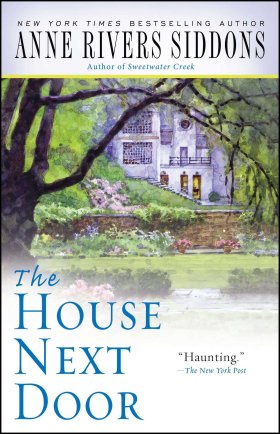 I love a haunted house that does its own thing. Such a house births a kind of haunting that is unique from its predecessors and peers. And yet, it’s willing to learn from them. Within its walls the traditions and motifs established by the great literary haunted houses are respected. However, this house is determined to creak and settle to its own moaning boos. Its foundation is secure in pre-established themes while its structure expands into new, terrifying space. Where, you might ask, might I find such a haunted house? Look no further than the “house next door!”
Hi there, welcome to my article about Anne Rivers Siddons’ critically acclaimed novel The House Next Door. All is fine with Walter and Colquitt Kennedy, the two major characters of this novel. They live in a quiet suburb of Atlanta and admire the empty lot next door with all its greenery and naturesque habitation. But move over nature, for a new house will be built on this lot. With the new house will come new neighbors, a succession of them, for no one will stay in this house for very long. After several mysterious and unfortunate events involving the new house and its different occupants, Walter and Colquitt suspect that the place is haunted. They then will do whatever it takes to steer potential buyers away from this evil house.
This piece is more than a review; it’s an analysis of the various themes that help this novel to both earn it’s rightful place among genre-specific greats while offering readers something unique. Since I will be looking at key plot points in order to achieve my analytical goals, there will be spoilers throughout the article. They are simply unavoidable.
In past articles, I have declared my love for “haunted houses that are more than the sum of their ghosts”. Stories with such houses don’t fit into a logic paradigm that states: there are ghosts in the house. Therefore the house in the story is haunted. These stories feature a house that is haunted in and of itself, with or without ghosts. The House Next Door haunts without ghosts. Ghosts represent the intangible yet powerful images and sentiments from the past. Within Gothic literature, ghosts from a bygone era often return to haunt the contemporary generations. The House Next Door is classified as a Southern Gothic, a subgenre of Gothic Literature. Works within The Southern Gothic often explore contemporary social issues. This is true with Siddons’ novel and in doing so, it inverts the premise of the parent genre – the “haunting present” tears at the characters traditional and comfortable way of life.
Gothic in Brief
I have delved into some of the elements of Gothic Literature in various articles across this Blog but by no means am I an expert on all there is to know about this genre. Gothic Literature, from its roots in the 18th century, brings together romance, fantasy, suspense and horror. Its influence on modern day storytelling is vast. It’s sort of like what The Beatles are to modern day music. My “ghosts from the past” description in the preceding paragraph is but one of its many elements. Ah but what an interesting element it is!
Different time periods are often juxtaposed in Gothic literature. Eras clash with one another. There is the failure of modern science to combat vampirism in Bram Stoker’s Dracula. Modern science has finally achieved the ability to create life in Mary Shelley’s Frankenstein, but the scientist is unable to control his own creation. More apt to what I might call “the gothic haunted house tradition”, characters are forced to atone for the sins of past generations. These characters have to deal with ghosts and other supernatural entities, or even supernatural events, as a form of retribution. This happens in The House of Seven Gables by Nathaniel Hawthorne and to some extent in The Fall of the House of Usher by Edgar Allan Poe. Think about it, another word for “haunt” might be “linger”. To linger is to stay. Whatever is lingering is old, meaning, it was there before. It may no longer be wanted. Yet it lingers, to the horrific detriment of the characters in a horror novel.
Southern Gothic and “Then Vs Now”
The Southern Gothic is a uniquely American expansion of the Gothic tradition. Like with its parent genre, I am by no means an expert on its character. I know by its title that it pertains to settings in the American south. But what else is it? Here are some quotes from Wikipedia to help answer that question:
The Southern Gothic style employs macabre, ironic events to examine the values of the American South .Thus unlike its parent genre, it uses the Gothic tools not solely for the sake of suspense, but to explore social issues and reveal the cultural character of the American South – Gothic elements often taking place in a magic realist context rather than a strictly fantastical one.
Warped rural communities replaced the sinister plantations of an earlier age; and in the works of leading figures such as William Faulkner, Carson McCullers and Flannery O’Connor, the representation of the South blossomed into an absurdist critique of modernity as a whole.
AND
The thematic material was largely a result of the culture existing in the South following the collapse of the Confederacy. It left a vacuum in both values and religion that became filled with poverty due to defeat in the Civil war and reconstruction, racism, excessive violence, and hundreds of different denominations resulting from the theological divide that separated the country over the issue of slavery.
A key takeaway from these quotes points to the subject of time and change. That was the past, this is the now. In some cases, The Southern Gothic conforms to the “ghosts of the past” scenario. Toni Morrison’s Beloved provides such an example as the horrors of slavery return many years later in the form of a young, undead woman. But, according to Wikipedia, stories of the Southern Gothic tradition deal with situations where characters are unable to adjust to modern times. These folks might just prefer some “ghosts of better times”. Don’t get me wrong. I’m not making a case for the descendants of aristocratic plantation owners to return to the “glory days” of “the good life” on the backs of slaves. I’m just pointing out that anytime there is social upheaval, there will be serious adjustment problems, for both the oppressed and the oppressors. .
Not having read much in the way of classic Southern Gothic, I am guessing that what I have described in the above paragraph applies significantly to period pieces immediately post antebellum. But there is contemporary Southern Gothic; stories that take place in the modern day South, where characters are historically far removed from the days of slavery and the “Old South” Still, one element is the same – the theme of larger, outside cultural forces threatening the pre-established ways of insulated communities. Newness “haunts” the old.
Case in point, The House Next Door. From Simon and Schuster, here is an observation on the novel:
An unparalleled picture of that vibrant but dark intersection where the Old and the New South collide.
The characters in The House Next Door are content and cozy in their private suburb of Atlanta. They are all neighbors. They are well-to-do and they enjoy each other’s company at holiday house parties and country clubs. It’s a leisurely life until…a new house is constructed on an empty lot on the block. New house, new neighbors. There goes the neighborhood, brought down by the supernatural elements that come with the new house.
Since this isn’t a story about the past coming back to haunt the present day characters, this house has no need to outsource its terror to a bunch of spectral phantoms. It does the job all by itself, and brilliantly so, thanks to the mind of one Anne Rivers Siddons. This house creates horrific situations that no other house has been able to do, at least not in the haunted house books that I have read. In the next section I detail these situations while examining exactly how outside and modern cultural forces threaten the pre- established ways.
Analyzing The House Next Door – Checking Out the New Neighbors
To begin, the official story of the house is that it preys upon the weaknesses of its  occupants. Or, it knows what its occupants cherish the most, and it rips and tears at the seams all that they hold dear. The malicious intentions of the house are rooted in either the architect, the architectural design or both. The Kennedys guess that the architect is cursed, and this is why the house behaves the way it does. At the book’s end, the architectural plans end up in the hands of a couple that want a newly built home. Readers then know that the “haunting” is embedded in the design. Very creative, Siddons!
There is not a whole lot of description regarding the overall appearance of the house. The key takeaway is that is new, not just “new” to the block, but “new” as in “of modern design”, contemporary, state of the art. The architect himself, Kim, is a young man, fresh out of school, and somewhat of the bohemian type. It’s his first architectural design. Once built, the Kennedys, who weren’t too happy about its construction, had to admit that it was beautiful. The couple that hired Kim to design the house and then have it built for them, The Pie and Buddy Harralson, are young and inexperienced. Pie Harralson is somewhat flighty but as a whole they are nice enough and the Kennedys welcome them warmly. The Harralsons are expecting a baby.
Problems began during the construction process. The dead remains of wild animals and household pets turn up on or around the construction site. They have been brutally mauled, but there are no predatory animals in the area strong and fierce enough to cause such damage.
(Analysis: Suburbanization and modernity are the predators. Land for wildlife destroyed by a modern domicile)
Then there was the accident. Pie falls at the site and loses the baby to miscarriage.Off to a bad start but determined to carry on, the Harralsons settle in once the house is finished. They have a party and invite the neighbors. They are determined to fit into this community and things will work out all right – they hope. Buddy is an up and coming lawyer and Lucas Abbott from the firm is showing him the ropes. Lucas is at the party. So is Pie’s crotchety father and all of the neighbors, including Walter and Colquitt, their brand new best friends.
Then it happened. In a bedroom. Behind closed doors. When the doors opened and the guests peered inside, they saw a disturbing scene. The body of Pie’s ‘s father lay dead on the floor. He was a victim of a stroke. In the bed lay Buddy and Lucas, not dead, very much alive. They are naked. Two men sneak off to have sex, presumably in front of a shocked father-in-law, who died as a result of shock.
(Analysis: in these days, 1978, while the gay rights movement was making strides, the culture at large frowned upon Homosexuality. At best it was scene as an alternative lifestyle, an “alternative” that I’m sure the characters of this story, secluded characters in Southern suburbia, would find very uncomfortable After this Harralsons move away in grief and shame The book suggests that the two men in bed were never gay. The house, perhaps, took control of their wills and forced them into that socially mortifying situation. It allowed the social ills of modern life (from their perspective, Homosexuality = an ill) to spill into its walls and wash its filth upon the occupants, even killing the father in law in the process. The old have no place in this new world.)
A new couple buys the house. The Sheehans are older than the Harralsons. Like the Harralsons, Anita and Buck Sheehan are eager to fit into the community. But for some reason, they are worried about the teenagers that live in the community. The neighbors reassure them, “They are good kids”, they say, referring to the only two teens in the neighborhood. But it’s not the propensity of youthful shenanigans that worries them. Anyone of youthful appearance upsets the mentally unstable Anita. Not too long ago, the Sheehans lost their son in The Vietnam War. The sight of a young male teen triggers within her a crippling grief. But she is trying to get better. The couple as a whole are trying to move on, start over, find happiness. The house will not let them succeed.
The house takes over the television programming. It shows Anita war movies when none are being aired by any network. It also manufacturers long distance phone calls from her son. She hears the sounds of war in the background. This is too much for her. She withdrawals and the marriage is strained. Virgina, another neighbor, married to Charles, assists the couple and looks after Anita while Buck is at work. Virgina sometimes stays behind to help even after Buck gets home. It is Colquitt who walks in on the scene that does the Sheehans in. She observes Anita in her living room sitting and staring blankly into space. Next to her, on the sofa, Virgina and Buck are having sex.. Again it is suggested that the house took over the wills of Buck and Virginia in order to destroy two families. In the wake of this, Virginia and Charles disappear on a long trip. The Sheehans move away.
(Analysis: The plight of the Sheehans represents the then present day crisis that was the aftermath of The Vietnam War. Families grieved for their lost children killed at war. Veterans had a difficult time readjusting to society. The aftermath of this war in particular was dealt with behind closed doors. People grieved privately. Veterans suffered in silence. A community such as the one depicted in this book, of mostly well to do families that didn’t have to send their sons off to war, was Ill -prepared for this kind of brutal reality. But the house magnifies the tragic grief of the Sheehans so that the misfortune would spread to another family on the block, tangling Virginia into an adulterous affair.)
Finally there is the Greenes, the third family to move into the house. Norman Greene is always publicly shaming his wife Susan. He also treats Melissa, the twelve(?)- year-old daughter with utter contempt. As a host at neighborhood party, he wants everything perfect and he blames his wife for any mishap. When the house itself shuts off all the electricity at the height of the party, he blames her. It is Anita who comes from money. Norman thinks he’s entitled to have and manage her money and she lets him do this. Why? Because he did her the favor of marrying her. For you see, she had brought shame on herself and family by having a child out of wedlock. That child would be Melissa, who is not Norman’s biological daughter. In the end, the house will kill them all by manipulating their wills to commit murder/suicide.
(Analysis: Dysfunctional families on a block of “normal” families. Back in 1978, among some populations I’m guessing, having a child out of wedlock was still somewhat of a taboo. The term “baby Daddy” was just not popular parlance. Then on top of this is the abusive husband, his words and actions so caddish as to rub the neighbors the wrong way. Although the house did not create this situation, it certainly brought it to light by humiliating Norman, causing him to lash out, causing, eventually, for their backstory to be made known.)
The House Next Door – Standing Among the Great Haunted Houses in Literature
Inside “the house next door” we the readers encounter a series of families and couples that fall victim to the enigmatic will of the house. It manipulates their mind and forces them to behave in ways they wouldn’t otherwise. They cause scandals with adultery, gay sex, murder and suicide. All this and yet these families aren’t the victims that are at the forefront of the story. It is from the perspective of Walter and Colquitt by which the story unfolds. It’s not the horror of personal experience with the supernatural (with one exception, but I won’t spoil everything) , but the horror of the aftermath of sadness on behalf of the others. Never again will they have normal, happy neighborhood because the world is no longer normal. Abnormality has put its roots down on their block, and their lives will never again be the same. For a modern house has brought the ills of contemporary life into their secluded community. The Old and New South have collided, just as Simon and Schuster said it would, making Siddons’ novel a staple of contemporary Southern Gothic
The House Next Door is no ordinary haunted house. Yet it is very much influenced by the legendary haunted houses from its literary predecessors; books such as The Haunting of Hill House, Burnt Offerings, The Shining come to mind. But it’s paid its debt to them with a style of its own.
How is The House Next Door similar to these epic haunted houses?
All of the houses in these books have their own will. They are much more than a place for ghosts to hang out, if there are any ghosts at all. The source behind the haunting is vague and mysterious. These houses are, in a way, alive and they prey on its occupants in one way or another.
How is The House Next Door different from these epic haunted houses?
The aforementioned haunted houses are all unique in their own ways. The House Next Door stands apart from the rest in the way that it manipulates the will of its occupants and then creates these bizarre scenes for which the occupants become actors and then act out perverse, humiliating, and sometimes deadly scenes. This house is also unique in the way that it is shown from the perspective of not is current owners but the neighbors next door. These neighbors , The Kennedys , are forced into a situation where they become unwilling voyeurs of the scary strangeness that lurks next door.
 Anne Rivers Siddons – she has many books under her belt. According to wikipedia, Her genre is southern literature, not horror. Perhaps that’s what helps her novel The House Next Door stand out. Horror doused within another genre allows for a wider and more enriching story than a tale with flat characters and things that go bump in the night. Perhaps I’ll read more of her works. I probably won’t find another horror story, but maybe I’ll find another book of hers that touch on that good ol’ Southern Gothic. That would be interesting.
The House Next Door: A Ghost Story – Review of a Darcy Coates Novel
 The House Next Door: A Ghost Story – a novel by Darcy Coates. Of course I would have guessed that this was a ghost story even if the last phrase of the title was omitted. This house, the one next door, would it be haunted? Of course it would. For you see, Coates just happens to be the amazon.com queen of modern day haunted house fiction in my opinion. She understands this genre well, knowing when the stairs should creak and the shadows will creep.
It’s been a while since I last visited the works of Coates. I was surprised to see that her bibliography has doubled. I knew her as an author that wrote novellas with repetitive titles such as “The Haunting of (*Insert name of house here*) House” books. A short catalog of short stories. Her bibliography has since expanded and The House Next Door: A Ghost Story is the first full length novel that I have read from her. (It didn’t disappoint) Search engines yield a lot more info on her than when I last researched her and her  works. I have since found interviews (https://redadeptediting.com/darcy-coates/),many positive reviews, and finally, her picture is available! As Virginia Slims once said- “You’ve come a long way, baby!
For those new to Coates, her stories are admittingly formulaic, but they are page-turning. They are modern gothics that feature a mansion-like house, often with an old-world flavor. The atmosphere is what is expected and desired – the layout of the house is creatively detailed and the rooms and corridors have the descriptive power to ensnare readers within their walls. Unsettled spirits roam about these corridors, interacting creepily with certain pieces of furniture or decorative objects. But these are modern tales, so the house might be on the outskirts of the suburbs or the edge of a cosmopolitan town. They feature a female protagonist that is fleeing a former life. It could be a bad marriage, a complicated relationship with her immediate family or any a number of things. Alone, she moves to a new location and buys or rents one of these large , haunted abodes. After several brushes with supernatural phenomena, she finds herself entwined in the mystery that caused the haunting in the first place and it becomes her task to solve such a mystery. In the end she will succeed and live happily ever after with her cats. She will always have cats. Coates loves cats and so do her protagonists.
So, does House Next Door follow this formula? Mostly. After years of living in a strained relationship with her ailing mother, Jo is now on her own. With money she has inherited, she purchases a house in new neighborhood. But guess what? It’s not haunted! However, the house next door is! (Hmm, maybe that’s why the book is called “The House Next Door? Ya think?) Jo has watched residents of the house come and go. One family in particular fled the house in the middle of the night, leaving all their possessions behind. Never had she gotten to know any of these former residents. This changes when Anna moves in. Anna, a maker and seller of dolls, is hiding from her abusive ex, with whom she is keeping her new place of residence a secret. The two women become friends, but – can two women with troubled pasts be together without driving themselves crazy? Scratch that last question, which belongs in the intro for the sitcom The Odd Couple, albeit slightly different wording. The real question is – can these two women work together to thwart the evil spirit that dwells in the house without going crazy? Answer – negative. Both will experience bouts of insanity. But they will carry on. They must.
There aren’t many twists in this book. If there is a slight air of mystery about an unexplained phenomenon in the house that hints at the activity of a spirit, then the spirit is probably to blame. If Jo becomes paranoid that her friend’s ex is driving by her house to stalk her, then he is probably doing just that. There is an exception; the women will do something dark and serious. I didn’t see this coming.
I do not read Darcy Coates’ books for twists. Of these, unfortunately she seems to be in short supply. I do read her books for her writing style, for her flair for immersing me in a haunted house where ghosts might be hiding in any corner; a corner that has already been brought to life by means of descriptive storytelling. In The House Next Door – A Ghost Story, I love the way the ghost makes its presence known, seen by characters who look up the stairwell, past the stairs, then down the upstairs hallway. I love the forms that come into being inside the dancing curtains in the wind-deprived rooms. I love the way she describes the sad music that manifests mysteriously from the living room piano.
Darcy Coates knows how to haunt a house. This is why I read her books. There are so many I haven’t read. And I’m willing to bet her list will only get longer.
Let it be known – There are several other books out their in reading land with the title “The House Next Door.” James Patterson has such a book. Is it about a haunted house? Probably not. I have only read one of his books, but as far as I can tell, he’s a crime thriller kind of author, not a teller of ghost stories. But – the most famous haunted house book with that title is perhaps Anne River Siddons’ 1978 novel. And guess what? I am reading that now. Expect an upcoming review. But I will not compare these two stories, or do any kind of Coates Vs. Siddons. Apples and oranges my friends! The house to my left is an apple, the house to my right is an orange, and I’m just a nut in the middle!
Waiting Spirits – From the Dark Forces Teen Horror Series of the Early ’80s
Here’s to the kids of not too long ago yesterday. Growing up, they had all kinds of options when it came to reading young adult stories about the supernatural. They had books that featured ghosts, witches, vampires and other cool and creepy things. I didn’t have Harry Potter when I was growing up, only Colonel Potter on M*A*S*H reruns.. Being that the early 80s were the dawning of my young adult years, Twilight had not yet set in (And from what I’ve heard about the series, that’s a good thing.), While adolescence was a time of strong emotions, I never got the Goosebumps over the whole thing. In order for me to get my fix of the spookies , I had to turn to – The Dark Forces! Oh no! (Ohhh yes!)
What are the Dark Forces?

The Dark Forces is a series of teen horror novels that was published by Bantam Books in the early 1980s. The series consists of roughly fifteen book written by various authors. Each book is a stand-alone story and to the best of my knowledge there are no overlaps or crossovers between books. All of them consist of supernatural tales that feature teenage protagonists who go toe-to-toe with ghosts, demons and other magical entities. The series averages about 150 pages per book. These are not timeless classics; they are not on par with one Harry Potter. While The Harry Potter novels thrilled fans of all ages, I doubt that the Dark Forces series had any following from adult readers. They just didn’t have the breadth of topics or the simple yet sophisticated kind of storytelling that went into creating the Hogwarts culture. Today these books are largely forgotten. In fact they are hard to come by,, at least when it comes to paperbacks. I’m sure some can be found on Amazon, Ebay, etc. As mediocre as they are in terms of popularity and content, I enjoyed reading them when I was thirteen. They certainly had cool looking covers. I didn’t read them all. Maybe half?
For a few years now, I had been wondering about these books. Alas, I couldn’t remember the title of the series nor any specific book title. But thanks to some references from Paperbacks from Hell: The Twisted History of ‘70s and ‘80s Horror Fiction, I was able to gather enough information to conduct a search for the right, proper, and fitting book from this series. Of course, that would be a haunted house book. Did this series feature any such thing? Gosh, I didn’t know! But if it did, by golly, I was determined to find it, read it and review it. The results of this determination are toward the end of this piece. But for now, read on to learn even more about The Dark Forces series.
Going Deeper into the Dark Forces
Were things really that drastic in the early 80s that I had to succumb to “dark forces” to get my reading kicks? Was there no other reading outlet to save my precious soul? I suppose there was. There were The Hardy Boys and The Nancy Drew Mystery series, but those were already on the way out and besides, from my understanding, they were more mystery than fantasy. Maybe there was some other book series that I simply neglected. No matter because The Dark Forces worked for me. Ha ha ha ha ha! (Go back and read the “ha ha’s” with a sinister sounding laugh).
Truth be told, this series was all about warning impressionable youngsters like myself about the dangers of messing around with dark forces. If memory serves me correctly, the books I read had lessons for us , the misdirected sheep that followed those evil, soul-corrupting trends that struck like a plague back there in the early 80s. Created by evil masterminds, targeted against us – the precious children of America – such trends included role-playing games such as Dungeons and Dragons, heavy metal music, and video games. For you see, demons were liable to take over the games and music, and that’s bad and stuff.
I’m only half joking about the things I wrote in the previous paragraph. I never had to worry about demons infesting my pastimes. And there ain’t nothing wrong with Dungeons and Dragons, video games and heavy metal music! Like anything else, so long as they are used and not misused, it’s all good. But back in them there days (early 80s), adults were worried about these sort of activities and the ill-effects they might have on their sons and daughters.
There were stories , real or fabricated I never knew, about “that one boy” that lost all touch with reality on account of his addiction to Dungeons and Dragons. I remember how freaked out a certain religious fanatic relative became when I was gifted the game at Christmas. Since the game calls for spell casting, even though it’s all make-believe, this person had real concerns about treating magic playfully. In regards to heavy metal music and rock and roll in general, certain religious leaders and politicians reacted quite unfavorably to the explicit lyrics of certain songs. They insisted that albums with such songs have warning labels. Others claimed that certain songs had “backwards, Satanic messages.” The leaders of my Sunday School youth group hauled us all off to a seminar on the Satanic influences of rock and roll. The pastor leading the seminar explained to us that backward messages come though all to clear in our subconscious. Therefore, rock music is, in effect, hypnotizing youth into worshipping Satan. He actually believed this. As far as video games go, a common concern among parents is the graphic violence that is portrayed. But in the early 80s video games were in their infancy and graphics were laughable by today’s standards. Still parents found reasons to get all in an uproar. Video games were stealing time away from homework. They were seen as addictive and, as with Dungeons and Dragons, parents worried that their children would lose touch with reality as they give themselves up to the fantasy worlds portrayed in the games.
Now, what does all this have to do with the Dark Forces series? To refresh, I had written “the books I read had lessons for us , the misdirected sheep that followed those evil, soul-corrupting trends that struck like a plague back there in the early 80s.” How so, you might be asking?
The first book of the series is The Game by Les Logan. I don’t remember reading this one, but according to some Goodreads reviews , it seems to serve as a warning against the use of Ouija boards. So kids, even though such a game is sold on the same shelf as Monopoly and Scrabble, don’t buy it! The Ashton Horror (#12 in the series) by Laurie Bridges ,is another book that I missed. But according to the synopsis on Goodreads, young Dennis gets some attention from the prettiest girl in town. She invites him to join a “fantasy game club”. No, no Dennis, fantasizing is the Devil’s work, don’t do it…Dennis? And wouldn’t you
  know it, the club members are trying to free an imprisoned demon. Bad club members!
I do remember owning Beat the Devil (#10 in the series) by Scott Siegel.  Who could forget that cover? Anyway, Doug is an expert at arcade video games. He becomes obsessed by a game called “Beat the Devil.” This game takes precedence over the important things in his life; his school work, his girlfriend, even his own sanity. And guess who it is that is sucking away at Doug’s life? Why, it’s the Devil himself! So you see kids, even though it may be far-fetched to think that the Devil is controlling you via Pac-Man and Donkey Kong, video games can make your life “Hell” if you become addicted to them.
 The book I remember the most is The Bargain (#5 in the series) by Rex Sparger. I remember the story featured a teenaged (or maybe they were in their early 20s, I don’t know) rock band called The Coastals, or something like that. Anyway, a shady promoter approaches them, m promises them fame and riches, and soon thereafter he is their manager. He convinces them to change their name to Sabbat and change to a heavy metal sound and image. I guess they had a more pop-oriented style before (I hate pop!) If you haven’t already guessed, this manager is secretly an agent of Satan. The band as, in effect, signed a contact with the Devil, but somehow they get out of it and defeat the evil forces. By the book’s end, a pastor helps the band and as it turns out, the pastor can play a mean guitar. Isn’t that precious?
So in sum, with current synopses to backup my memory, I describe these books as simple stories (easy to read) that are warning manuals in disguise. They are saturated with warnings against games and trends that are marketed as harmless pastimes when if fact they are gateways to the dangerous world of “dark forces”. Even as a teen, as I enjoyed reading these books, I became annoyed with the not-too-subtle warnings.
Now here is a question: Was each and every book of the series like this? I don’t know. As I mentioned earlier, I didn’t read the series in its entirety. Alas, my impressions are largely based on memories from thirty-five years ago. Being that it has been such a long time since I had read any of these books, is it possible that my impressions are flawed, my memories imperfect? This is very possible. So I decided that I needed to read one of these books and review the material from a more current mindset. Once again, I wanted to take a trip down memory lane as I did when I reread Ghost House Revenge, as I did when I took in the various book descriptions in Paperbacks from Hell. Were there any books in the Dark Forces series that featured haunted houses? Yes, I found one. Waiting Spirits (#11 in the series) by Bruce Coville. This is not one of the books I had read as a youngster. This would be my first reading.
Would this book serve as yet another lesson about avoiding the lure of “dark forces”?
Would I feel differently reading one of these books as an adult? Are there story elements that anyone, both young and old, could enjoy? I would find out. And I did find out. You can read all about it in the following paragraphs.
Wait No Longer, The Waiting Spirits are Here
A family spends a summer at a house by the beach. It’s a nice summer home, although Lisa doesn’t want to be there. She has her life back home, which includes a chance at dating a guy she likes. Before the summer’s end, she’ll find a boyfriend right there by the beach. See Lisa , now that it’s all over, wasn’t it good for you to spend the summer at that house? You found a boyfriend, You learned a lot of family history. You got possessed and tried to kill your younger sister. Good times!
Who is all in the household? Well there’s Lisa’s ten year old sister Carrie. They get along quite well. There’s mom and dad. Dad is trying to write a book, so everyone just please leave him alone. Mom just does mom stuff . Grandma is there. She is a retired professor and it is her house. She grew up in it. She’ll behave a little mysteriously now and then, so readers should watch out for her. And of course, there are some ghosts inside the house. They always help to make a summer eventful.
For a novel directed at young teens, his book is surprisingly dark. Yes I know, this is from the Dark Forces series, so wouldn’t that be a no-brainer? I guess what I mean is, yeah of course any subject matter concerning ghosts or demons is by definition “dark.” But the story doesn’t just leave the darkness to the mere presence of supernatural entities but this book. Instead it clinches it with a darkness that lurks in the backstory and manifests in the behavior of the spirits and the havoc they cause. In various places in the book, there is the death of a child, the terror of an insane ghost, and the startling repercussions of a teen possessed.
I had serious reservations at the beginning. After the prologue, Author Coville wastes no time “RUSHering” in the story. This rush is was most likely geared at teen readers that are in no mood for prolonged setups. It is raining everyday during the family’s first week at the summer home. The girls are bored out of their minds. The grandma comes to the rescue with an idea to pass the time: they should “play a game” where they can try to communicate with spirits. Grandma is referring to “automatic writing”, the process where the one with the paper and a pencil becomes a medium while the spirit will take control of the pencil and write out a message. So haphazardly Grandma suggests this and with a mere shrug, the girls and their mother agree. One their very first attempt, with Lisa acting as the medium, they make contact with a spirit. All that was needed was some kind of mundane utterance, something like, “Are there any spirits here, please respond”. This did the trick because right away, Lisa becomes temporarily possessed and the spirit uses her hand to write a message. After this, all the “game” participants had an attitude like “huh. That was weird. Oh well, what should we do next?”
Despite that weak beginning, the story does mature a bit. There is some pretty scary ghost stuff going on and the story slows down so that it can take it all in. Mind you, I’m not saying his piece is a candidate for The Pulitzer Prize of haunted house novels. It’s rather juvenile, but it’s better than I thought it would be. And guess what?? It didn’t smack me over the head with lessons and warnings. Coville, thank you for not doing that. Ironically it’s an adult that starts the trouble by initiating the automatic writing game.
Bruce Coville is a prolific children’s author with an extensive bibliography. His books are divided into several series of his own, including Magic Shop Books (five books), My Teacher is an Alien (four books), I Was a Sixth Grade Alien (twelve books), and many more (From Wikipedia). His series Bruce Coville’s Chamber of Horrors (four books) includes Waiting Spirits. Will I read any of these? Probably not. I read Waiting Spirits to experience a quick dive into the sea of Dark Forces nostalgia while adding to my collection of Haunted house book reviews. I have done this. Waiting Spirits is not a bad book, so these other Coville books probably won’t be bad either. But I’m not it’s intended audience. I was once, back when these books were published. I am not anymore. Time to move on. And besides, I’m a haunted house guy and just because these are “horror” books, it doesn’t mean that any of the remaining three feature haunted houses and….oh wait…..I now see that the second book of his “Chamber of Horrors” series Spirits and Spells does feature a haunted house. Ohhh and it seems interesting:
Trying out their new haunted house game, Spirits and Spells, in the creaky old Gulbrandsen place seemed like a cool idea to Travis, Tansy and their friends.
That was before they found out what was in the attic…and the basement…and everywhere in between.
Am I going to be sucked into yet another book meant for a young reader? We’ll see. We shall see
Review of Paperbacks from Hell: The Twisted History of ‘70s and ‘80s Horror Fiction – With Special Attention to Its Chapter on Haunted Houses
In 1936, Bing Crosby introduced Pennies from Heaven to the world. Such an invaluable gift this holy coinage was! Is there anyone else that could gift the world similar treasures? If so, what might these treasures be! How about Paperbacks from Hell, with a gifter by the name of Grady Hendrix (Is he a relative of Jimi?) Okay, so he didn’t write any of these infernal paperbacks, buy hey, Crosby didn’t mint the coins, so there! What Hendrix did do was compile a collection of book titles, authors, and cover artists in a book dedicated to horror novels of the 70s and 80s, which features bios, pictures and a whole lot of fun analysis. The complete title of his work is Paperbacks from Hell: The Twisted History of ‘70s and ‘80s Horror Fiction.
So just what “in the hell” is this book about? Read on and find out. (But first, admire “Pennies from Heaven” please!)
Hi there! I’ve been on a short hiatus. I was vacationing in The Philippines, and then I was sick, and blah blah blah. Well let me pick up where I left off. The last time I wrote was back in mid-March. Let’s see, I was writing about something….something about ghosts…and haunted houses…(Me write about those things? No way!)….hmmmm…Ah ha! The subject/s was Ghost House! And Ghost House Revenge, two books by Clare McNally. I must refer back to this review, because it was these two books that led me to Paperbacks from Hell.. I had remembered these two books from my childhood and I searched the Internet to see if they still existed in some format today. But I couldn’t remember the titles or the name of the author, so I had to comb through the various search results that came from my search words “Haunted house and horror books of the 70s and 80s.” I eventually found what I was looking for, and so much more. Among the search items, I found Hendrix’s book, which had in its title the keywords “70s/80s/horror/” I discovered that these two decades were the heydays for horror paperback novels, that never before had there been so many fictional works on such horrific subjects: Satan, Creepy Kids, When Animals Attack, Real Estate Nightmares, Weird Science, Gothic and Romantic, Inhumanoids, Splatterpunks, Serial Killers And Super Creeps! These are the chapters and category names for Hendrix’s Paperbacks from Hell. The book sounded interesting so I downloaded it and read much of it on the plane to and from the Philippines.. A fitting book for such turbulent times (turbulence shook the plane as I read).
I am including this review in my anthology of haunted house novel reviews on account of one chapter only: Real Estate Nightmares. Yes, this is the section of the book devoted to haunted house paperback novels. Likewise I will be devoting a section of this review to this one chapter. But first, an summary of the book as a whole.
In my review of Ghost House/Ghost House Revenge, I speculate that perhaps it was the works of Stephen King that ignited this horror paperback boom of the 70s and 80s. While his contribution to phenomenon is most certainly great, he did not begin it. How stupid of me, because I knew that works such as Rosemary’s Baby (Ira Levin) and The Exorcist (William Peter Blatty) predate King’s novels. These two, along with The Other (Thomas Tryton), revived the horror literature tradition that had been dormant for a while, Hendrix says. Even in the days or yore, horror mostly came in short stories, novellas, and then later in graphic pulp books and magazines. There were very few novel length books devoted to horror until the three aforementioned books came on the scene. “Satan Sells”, publishers realized, and soon there were hundreds of satan-spawned paperbacks.
After Satan, along came killer animals and insects, demonic toys, possessed robots, medical nightmares. So many books, and so we had The Good, The Bad and The Delightfully Cheesy.
I equate many of these books referenced by Hendrix to “B horror” films. So these are B-books? Some are. Sure, why not? Often they were goofy, but as Hendrix mentions “never boring.” Many of these “gems” are out-of-print. I’m guessing that the advent of digital media have revived some of these books, but unfortunately not all. Hendrix devotes significant attention to the book covers. Resting on the shelves of supermarkets, it was the cover that lured customers to reach for the item. The more vivid the better, much like the days of the video store, with box covers showing an awesome depiction of what just had to be a good, creepy movie – and…often the films failed to live up to the promising pictures on the box. As for the covers of paperbacks, Hendrix shows readers many interesting examples. Colorful, artful, graphic and of course – horrific.


(First Picture – What “The Stuff” appeared to do to is victims, according to the box. Second Picture – How “The Stuff” actually preyed on people, according to the movie)
In Paperbacks From Hell, Hendrix follows the careers of several cover artists, noting the publishing houses they worked for, mentioning that a certain artist went on to design album covers, etc. Interesting stuff.(Better than “The Stuff” of the film).

Hendrix writes humorously about his subject. He is often satirical. In the chapter Creepy Kids, on describing a reoccurring theme, he writes “As long as they belong to someone else, homicidal children can be a joy.” That’s funny! But sometimes his writing style is overbearing. But like his book, and like the books he is writing about, it’s/they’re not boring. At the same time, he possesses keen insight. He ties trends within the horror market to topical events that were occurring in the culture at large. The surge of attacking animal books he attributes to environmental disasters of the early 70s. For the rise in popularity of vampire books, he notes the AIDS scare of the early 80s and the fear of being infected. All in all, a reflective guy that Hendrix is. And what an interesting book!
Haunted Houses – or as Hendrix calls them – “Real Estate Nightmares”
Ahhh! This is MY area! Yeah, Boy!! Here we are! “This” section.
Truthfully I was somewhat disappointed. To be clear, my disappointment is not the fault of Hendrix. He did his job covering this subgenre of horror. It’s just that I was hoping to be introduced to a slew of obscure works. Sadly I already knew about the novels to which he devotes the most attention. He briefly covers The Sentinel, and I have read and reviewed that book. Burnt Offerings and The Amityville Horror both of which I have read/reviewed. I did, however, find his insights on Burnt Offerings rather intriguing and his rants about The Amityville Horror humorous.
While Hendrix correctly acknowledges The Haunting of Hill House and Hell House as its predecessors, he singles our Burnt Offerings as being a first when it comes to the economics of home purchases and the whole buyer beware motif. I…had never thought about this. “Hell” and “Hill” House were gargantuan gothic mansions that had visiting characters investigating the spooky happenings within. The characters of Burnt Offerings leased and lived in the deadly place. They invested their money in it. Therefore, they were trapped.
In true form, Hendrix ties the haunted house paperback phenomenon to the economic issues of the 1970s. High interest rates, inflation, the dawning of the suburbs, the cash-strapped and their search for the best home that they could afford. According to him, these are the reasons “the haunted-house novel reached critical mass.” As a student of haunted houses of fictional literature, I am constantly hungry for information like this. Thank you Hendrix, you feed me well.
Hendrix doesn’t think much of The Amityville Horror book series. I only read the one, and for me it was alright, not the greatest, but enjoyable. But I see his point. “Amityville” became the definitive haunted house book of the 70s, while Burnt Offerings, a much better read, is largely forgotten. He goes on to criticize the series as “crass, commercial-minded, grandiose, ridiculous, this carnival-barker’s idea of a haunted house is a shame-train of stupid.” The carnival barker I guess would be George Lutz, the real life protagonist of what is supposed to be a true story. Suffice it to say, Hendrix doesn’t believe that this is a true story (and neither do !!)
A couple of times, Hendrix mentions The House Next Door by Anne Rivers Siddons and refers to it as a classic. I am well aware of this book but I have yet to read it. I am relishing in this virginity and I’m looking forward to my “wedding night” when I take this book to bed with me. But like a good virgin, I am saving it for the right time. Then there are those book he footnotes here and there, books with creepy covers, that I do not know. Some are The Intruders (Pat Montandon), The Architecture of Fear (Various Authors) and Walls of Fear (various authors again). But for these he has only little tidbits of information.

The rest of the chapter is devoted to horrific towns as a whole, cities as a whole, and strange cultish communities. While this is some interesting stuff, it goes beyond the haunted house, so I am not mentioning these books in this review.
Following the trail of “Haunted Paperbacks” to – What Comes Next?
If you are a fan of old horror novels, this book is for you. If you have ever owned or read an old obscure horror paperback, definitely check out this work by Grady Hendrix. You won’t be disappointed.
I’m glad my search for Ghost House/Ghost House Revenge led me to this book. Too bad he doesn’t mention these books in his Real Estate Nightmares chapter. Oh well. But I continue on – Ghost Houses begot Paperbacks from Hell and Paperbacks from Hell begets….a Dark Forces book. What the heck is a Dark Forces book? I couldn’t remember what the series was called, and this Paperbacks from Hell book had the answer (hint: the series was called Dark Forces). This is yet another nostalgic reading memory from my pre-teen years. Horror books directed at young teens. I read several. Were there any Dark Forces books about haunted houses? Yes! Well at least one. This will be my next review. Stay tuned for more details!
Be Right Back….
I’m going to the Philippines for a couple of weeks, so no posts for awhile. See ya soon!
 The Books of Daniel