Revisiting Hell House (and “The Legend” thereof)

hellhouseBookIt was several months ago that I looked around inside Hell House  through the eyes of director John Hough’s cameramen. I watched The Legend of Hell House and I found the experience engrossingly chilling.  But there was much left to be desired. I decided to go deeper.  I bought and read the novel: Hell House  by Richard Matheson.  The book was like a descending staircase; each page was a stair. Step by step, I went down into the depths of the plot and unearthed the complexity of the characters. I arrived at a place the movie couldn’t or wouldn’t take me.   Upon finishing the novel, I watched the film again.  Did I enjoy it more, less or the same? Let’s find out.  But first, an overview of the plot as per the novel.

A rich, old, dying man is willing to pay big money to a team of scientists and psychics if they could prove, once and for all, if there is life after death – or not. I don’t know how one can prove a negative, but let’s not worry about this logical flaw. They have one week to conduct their study. Their “laboratory” is to be “Hell House”, which is described as “The Mt. Everest of Haunted Houses” (This line is from the movie. Is it also in the book? Gosh, I don’t remember!)

The team includes Dr. Lionel Barret, a physicist who dabbles in parapsychology, his wife/assistant Edith, psychic and “mental” medium Florence Tanner, and Ben Fischer, “physical” medium and sole survivor of a “Hell House” expedition that took place years ago. I’ll explain more about the “mental” vs. “physical” mediums later.
HellHouse4


The history Hell House is one of drunkenness, orgies, murder, and on and on – you get the idea. At the helm of all this debauchery was Emeric Belasco. When the years of partying finally came to a close, all of the inhabitants of Hell House were dead. However, the body of Emeric was never found.


The four-person investigative team – all of them have experienced supernatural phenomena in the past. So when the house starts to act up, none are surprised or overwhelmed with great fright. Not at first anyway. But there is no disagreement – the house is definitely haunted.  However, as to the question concerning the source of this haunting, there is bitter debate.


Dr Barret is a man of science. He theorizes that the human body emits EMR – electromagnetic radiation. This is “psychic” energy – energy created by thoughts and emotions. Due to the rather extreme nature of the house’s former inhabitants, a powerful energy field has remained in the house. Certain people that are sensitive to psychic phenomenon can then tap this energy. These would mediums such Florence Tanner and Ben Fischer.


Here’s a quote from the book. Dr. Lionel Barret is speaking:


Is it any wonder, then, that Hell House is the way it is? Consider the years of violently emotional, destructive – evil, if you will – radiations which have impregnated its interior. Consider the veritable storehouse of noxious power this house became.


Hell House is, in essence, a giant battery, the toxic power of which must, inevitably, be tapped by those who enter it, either intentionally or involuntarily.


While at Hell House, the team experiences many disturbances, including phenomena that is usually attributed to a poltergeist (tables are upturned, dishes go flying, etc.) Barret insists this is on account of Florence Tanner. She is projecting, perhaps unwittingly, her psychic abilities onto the environment. He does not believe in what he terms “surviving personalities”.  In other words, there are no such things as ghosts. So he thinks.


Florence vehemently disagrees and is offended that the doctor is blaming her for the disturbances. Not only does she believe that spirits haunt the house, but she is also convinced that one spirit in particular is trying to communicate with her -Daniel Belasco; the son of the evil and manipulative Emeric.

Is the house really haunted by spirits or is there only one field of energy through which all of the supernatural events occur? Are they both correct or are they both wrong?


I won’t answer these questions but I would like to use this opportunity to point out how this book touches on a certain theme within haunted house lore that really fascinates me, and does so extremely well. It has to due with the nature of haunted houses.


There exists this dichotomy


  • A house is haunted because it has ghosts; the spiritual remains of the deceased. Since the ghosts exist, they have to be someplace, so they might as well shack up at a house. But they could be anywhere – a forest, a bus, etc. But when they’re in a house, the house is haunted. Remove them, and the house is no longer haunted. Case closed.


  •  A house is haunted in and of itself. The haunting is inherent. There may or may not be ghosts. The house itself is in some way causing the paranormal phenomenon.


Some haunted house novels are all about the first scenario while others delve more into the second setup. Hell House presents both and lures its readers on a mysterious journey as they wonder which situation best describes the haunting of Hell House.

*********************
HellHouse3


So what of the film?


I’d say maybe I enjoyed it a bit more the second time around, but this is because I had a better understanding of the story, thanks to the book. Whereas I did see the ideological conflict between Dr. Barret and Florence Tanner on first viewing, it was less obvious and more confusing. While I knew Dr. Barret was a believer in the paranormal (he witnessed the formation of ectoplasm for Christ’s sake!), I didn’t understand his specific viewpoints as they related to the field of science until the near end of the movie.  Also, the book cleared up the differences between a “mental” and “physical” medium. (See readers, I told you I’d get around to explaining this. You thought I’d forgotten!)  Florence Tanner is a mental medium. She can feel the presence of evil. She can understand the thoughts and emotions of spirits (or maybe the thoughts and emotions that were left behind). However, she is surprised when physical objects move after her sittings (when she goes into a spiritual trance).  This shouldn’t happen because that kind of disturbance should only occur with “physical” mediums.

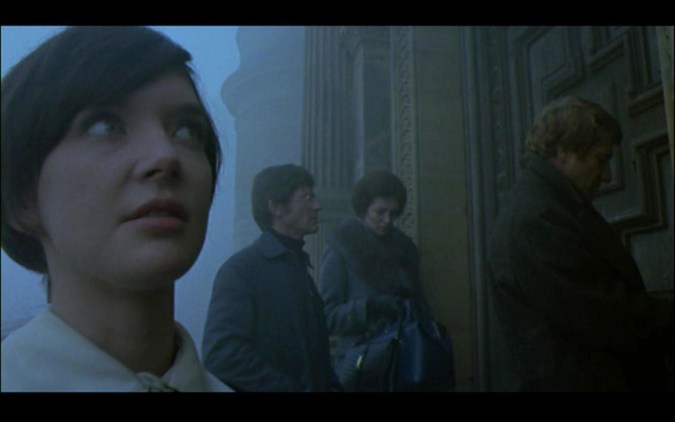
The film fails at explaining the finer points of the plot. And the ending is very abrupt and awkward. The book does a much better job of summarizing the final events and solving the mystery of Hell House. In order to enjoy the film, just forget about nitty-gritty details of the story and just absorb the haunted house atmosphere. Look at it from a more simplistic point of view and think of it only as a story about four people who are trying to survive a stay at a haunted house and leave it at that.  From a visual perspective, including all the props, decorations, furnishings, the film succeeded in creating an eerie, gothic-style haunting.

Now about my original review of the movie –

I wasted too much time comparing The Legend of Hell House to The Haunting.  Admittedly, they are similar in some ways but they each have their own identity. I like The Haunting better than The Legend of Hell House but this should be a “never mind.” I saw both films early on in my Haunted House project, viewing The Haunting before The Legend of Hell House.  Perhaps I was too attached to The Haunting. I treated it as my “first love” and would compare my next relationships to my first haunting embrace.  That is a “no-no” in the world of dating and love, so I guess it should be off limits for enjoying haunted house films as well.


What do you think?


Review of House on the Borderland

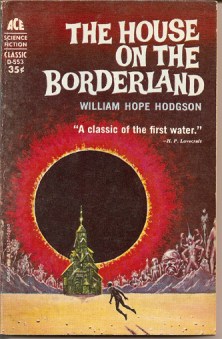
House on the Borderland Graphic NovelAre you ready for some “cosmic horror?” Get ready to confront the insignificance of humanity when compared to the mysteries of the infinite cosmos. Get ready to encounter horrendous creatures with great power and strength to match their unworldly ugliness.   Get ready to confront any fears that you might have of things that originate from the great unknown!

H.P. Lovecraft is said to have coined the term “cosmic horror”  and defined themes that were mentioned in the previous paragraph. Those aforementioned attributes describe Lovecraft’s work to the tee. However, Lovecraft originally used “cosmic horror” to describe the work of an earlier author.  This author is William Hope Hodgson. The novel is House on the Borderland. 

It goes without saying that Hodgson and The House on the Borderland influenced Lovecraft a great deal. In fact, Hodgson’s influence went beyond one man’s fancy to inspire a new movement in horror literature.

From Wikipedia:

“The book was a milestone that signalled a radical departure from the typical Gothic fiction of the late 19th century. Hodgson created a newer more realistic/scientific cosmic horror that left a marked impression on those who would become the great writers of the weird tales of the middle of the 20th century, particularly Clark Ashton Smith, and H. P. Lovecraft.[3]


Okay readers, remember when I wrote about the haunted houses of Lovecraft? You don’t?  Well – here are the links for ya!

I am referring back to these posts because what I have written in those articles ties into this one. The key take away is that though Lovecraft wrote of haunted houses, he did not fill them with your average gothic ghosts. Likewise with Hodgson – Lovecraft’s mentor.

Yet, many tropes of the gothic tradition can be found in House on the Borderland. For instance, there is a gigantic castle-like house with multiple floors, a cellar with a mysterious trap door, a man who lives alone in the house with the exception of his elder sister and his dog; a man who is a recluse and likes to occupy his time reading in the study. However, the house is not haunted by the spirits. For the most part, there are no ghosts, with one possible exception. The narrator meets his former lover on a couple occasions. Presumably she had passed away. But yet, their meeting does not occur within the house on a dark and stormy night.  Her spirit does not traipse the hallways or frighten him out of his sleep with groans and moans.  Their meeting occurs when the narrator crosses over into another dimension,  a dimension which he calls “The Sea of Sleep”.  She hovers over the waters as the two struggle to communicate.  Otherworldly dimensions are a common theme in this book.  This story is as much an exploration of fantasy and science fiction as it is horror, maybe even more so.  However, the fantastic and horrific events are centered inside a house.

The book begins with two men who take a trip to the countryside of Ireland for some camping and fishing. While on their leisurely expedition, they stumble onto a large house that sits on the edge of a cliff.  They venture inside to find the place abandoned, save for a manuscript.  The manuscript gives the account of a recluse, the aforementioned narrator. A bizarre account it is! Makes me wonder if this narrator had tabs of LSD sprinkled inside his shrooms.


The narrator writes in the first person, describing how a gigantic pit HOuse on the borderland swinesuddenly develops in front of his house. The pit produces swine-like creatures that attack the house, forcing the narrator to barricade the doors and windows.  From the top of a tower, with his shotgun, he picks them off one by one.  Later on, while in his study, he gazes out his window only to have a rather strange session in stargazing.  The speed at which the celestial bodies traverse across the sky increases with each rotation. Day and night are soon seconds away from each. In a matter of hours he experiences eons. He witnessed the destruction of the sun.  But he is introduced to a green sun; a fiery jade that perhaps is the sun of all suns; the sun at the center of all universes.

House_on_the_Borderland black sun

Not your average haunted house story, eh? It’s quite a read, although the overuse of commas is burdensome.  Maybe it’s the times; perhaps I am just not used to so many of these phrase separators. Maybe commas are sparse in today’s literature because the limited resources of such punctuation marks were unnecessarily drained back in 1908 when the book was first published. A hypothetical example, of such overuse, just so you might understand, could be, in fact, this very sentence that you are reading, at present time.  Punctuation style notwithstanding, it is a very intriguing book.


So what kind of metaphor would best describe the difference between gothic and cosmic horror? Maybe it’s like the difference between classical and jazz music, where gothic = classical and jazz = cosmic.  Hmmm…..nah!  Jazz is an exercise in testing the limits of a given structure and I don’t think that is what cosmic horror is attempting to do.  How about prog rock vs. punk rock? (gothic = prog/cosmic = punk). Again, nah! Punk is an exercise  in simplicity and getting back to the basics. The cosmic genre is not that either.

I know – how bout I stop with this literature vs. music comparison? How about I cease this fruitless delineation altogether?  Even better!  Goth is goth and cosmic is cosmic.  And that is that.


Review of A God of Hungry Walls

GodOfHungryWallsIf you’re looking for a haunted house novel that strays from tropes and formula, you’ve come to the right place. If you’re looking for a unique style, settle on in, author Garrett Cook’s A God of Hungry Walls will see your quest for distinctive writing and raise you twenty!

But – If you’re looking for a quaint tale of chilling yet delightful specters, go away. These walls don’t want you and you will not want to read about what goes on inside of them. If you are easily offended; if graphic depictions of sexual acts disturb you, if you find vulgar language upsetting, then run like hell. Likewise, if you are unable to digest descriptive accounts of torture, stay away – stay far away. Do not enter the confines where there is a God of Hungry Walls. You will not like this god.

The story is told in the first person – the almighty capital “I”! Who is behind this “I”? Well let me say that the narrative is from the viewpoint of whatever it is that does the haunting. Perhaps it’s the house itself. Its power is great; it exceeds the limited scope of your average ghost or demon. It is the master of all that goes on within its walls. Often It refers to its occupants as ‘toys from the toy box’.

Four college-age students share the house – two young men and two young women. It manipulates them, locks them together in sexual intimacy; often times perverted with a touch of sadism. Okay, there’s more than a touch, more like a hard slap! Then, we see that the house is messing around with other occupants; such as a serial killer doctor and a tortured girl who lived in a cage like a dog. Where do these occupants suddenly come from? They were there since the day they died within the walls of the house (long before the college kids acquired the place). They belong to the house and It can toss them into being whenever it wants.

Admittedly, I didn’t always know where the story was going. At certain parts I was left thinking “what is the author getting at there?” But maybe I wasn’t meant to understand it all. After all, I am following the lead of a mad, mad force. The “mad” have no rhyme or reason. They are insatiable, always “hungry”, hence “The God of Hungry Walls.

A lot of the book is subject to interpretation. Certain names/concepts come up, such as “Closetsong.” What is that? In the end, I think I figured it out. But maybe my understanding will be different than yours, or the authors, or even The God of Hungry Walls.

For those that can pass the tests that I have outlined in the first two paragraphs of this review, I recommend giving this book a read. It certainly won’t be boring, that’s for sure.


Review of The David Morgan Ghost Series

FR 5 Ghost storiesHouses in need of love and renovation – historical tales surrounding such houses and the ghosts that come with them. This is what readers encounter in Frank Robert’s anthology: Ghost Stories: 5-Volume Set (The David Morgan Ghost Series)

David Morgan has a love for old buildings; churches, stores, theaters, houses, inns, etc. He sees the beauty that lies hidden underneath the savagery of time. Being a skilled carpenter and all around handy man, he embarks upon projects to restore these buildings to their original state, preserving the historical value, quirks and all.  Now you can’t go through the process of demolishing and reconstructing such historical buildings without churning out few ghosts! Exhuming spirits is all part of the job; it comes with the territory. And there is no better man for the job than David Morgan.  Ghosts have been visiting him ever since he was a little boy.

I can tell you one thing: Author Frank Roberts had fun writing these stories. I have never met the man and no, I can’t read his mind. But I can (and did) read his work and it is clear that he is at home in these tales. He loves the building restoration business and all that comes with it – the blueprints, the multiple parties that are FMorganinvolved in the planning, the camaraderie of the workers while on the worksite.   Likewise, he enjoys learning about local history. His invented accounts of community life from eras long gone are quite intriguing; readers learn what gave these fictional buildings life.  Finally, he loves a good ghost story, as do I.  And there are plenty of interesting ghosts floating about in his stories.

Sprinkled throughout the pages are themes of Americana. These include customs and traditions, such as Memorial Day parades and Fourth of July picnics.  But when hosting such events, watch out!  You never know if a ghost of a soldier might show up to give salute, or if a ghostly brass band starts to perform deep into the nights preceding the celebration. Then there are accounts of early colonial life and the struggle to forge out an existence in the harsh elements. Harsh times can produce some violent characters, and don’t be surprised is these characters reappear a century or two later.  In one story, David is called upon to restore an old-time theater that, when completed, will be running the classics, such as Laurel and Hardy films. All will go well so long as his restoration efforts are not upstaged by a deceased actor from the days of yore!

As previously mentioned, the ghosts in these stories are alive and colorful! (Well, maybe not “alive” but you know what I mean.) There is a ghost of a little girl that resides in a tree. There are spirits trapped inside mirrors. There are vengeful ghosts that seek to harm the living.  And let’s not forget the spirit of a dog and the ghostly antics of a deceased monkey!

As intriguing as the spirits in these stories are, it is the spirit OF these tales the captures the reader’s interest.  This “spirit” is made up of everything I have written above – local histories, Americana, and a deep seeded love for the material.

There are some drawbacks to this series. It would benefit from another round of editing in all areas: grammar, style and content. In numerous places throughout these tales, the plot derails.  This is especially true when the stories come to completion; some of these stories “end” but do not “conclude.”  Readers are left with loose ends, and in one case in particular my sole reaction was along the line of “WTF??” Too often, the narrative gets bogged down in the nitty-gritty details of building reconstruction.  What is written is fine for readers who are fans of the home remodeling show “This Old House”, but for lay people with little knowledge of carpentry, the narrative can get a bit daunting.  Finally there are frequent instances of typos and awkwardly constructed sentences.

Now get this; I choose not to take off too many points for the grammar errors and occasional dents in the story structure. Being an indie author myself, I know how difficult it is to have a book edited.  I have heard that one should NEVER edit their own work. However, sometimes “one’s own self” is all that a struggling writer can afford when it comes to editing. Hell, I’ll bet those reading this blog entry have stumbled across some typos that I have made.

So I ask prospective readers to give these stories a chance in spite of the imperfections.  They come from the author’s heart and soul, and these are two wonderful places for any story to originate.

These five stories are published both as separate books and as a collection. I have already posted the link for the collection in the first paragraph.  Below are links for each individual story.


The Haunted Hardware Store: Growing Up Haunted (The David Morgan Series Book 1)

FR Hardware


The Sleepy Little Village Called Foggybottom (The David Morgan Series Book 2)

FR Foggybottom


The Lost River Town: Fiona’s Tree (The David Morgan Series Book 3)

FR Rivertown


The Haunting of Old Liberty: Where Not All Performances are Live (The David Morgan Series Book 4)

FR Liberty


The Brick House: The Curse of Hope Island (The David Morgan Series Book 5)

FR Brick House


Frank Roberts frequently visits and posts at my Haunted House Facebook page. Stop by and say “Hi” to Frank!  (And like my page if you haven’t don so already.)

FacebookHauntedHouse2


Review of The Amityville Horror (The book, The 1979 and the 2005 movies)

AVilleHOuseIt seems as if every few weeks, there is a mass shooting. Every news cycle seems to contain some account of a guy who mows down several people with a gun. I have often wondered, “Did mass shootings like we have today occur ten or twenty years ago? Thirty of forty years ago?” I guess the answer is – yes they did occur, but maybe not with such a high frequency.

There was one such shooting in Amityville, NY back in 1974. Twenty-three year old AVilleDeFeoRonald “Butch” DeFeo Jr   slaughtered his family with a .35 Marlin Rifle while they slept in their beds. He killed his parents along with his four siblings, ranging in ages from eighteen to nine. Ronald DeFeo currently resides in Green Haven Correctional Facility in NY where he is serving several life sentences.

What does one make of such a tragedy?   The answer is: Movies, books. In short -The Amityville Franchise. I’m sorry to put it so bluntly, but it is what it is. In one platform or another, millions of people have come to know the haunted house that is the subject of The Amityville Horror. There were several books on the subject and many more movies. Too many movies. There have been fourteen for heaven’s sake!

The tragic tale of the DeFeos is true. It’s what happened afterward that is subject to speculation. What happened in the house a year or so later after the murders varies from source to source. Any understanding of what may or may not have occurred at 112 Ocean Drive is also contingent upon one’s belief in paranormal phenomena. If you believe in ghosts and demons, then it is quite possible you can believe the accounts of George and Kathleen Lutz who lived in the Amityville house several months after the murders took place. If you don’t believe in such entities, then it’s easier to dismiss their story as a hoax.

As far as ghosts and demons are concerned, I remain safely neutral. I’m not saying I disbelieve but, well, there just haven’t been too many occasions where a spirit has gone a floating across my path! Or, as my dad used to say when I asked him if he believed in ghosts, “Nah! I haven’t seen one of them in years!”   In other words, I am not here to verify the accuracy of this tale. What I am going to do is judge the content and scariness of the story and not how well it translates into this thing we call “truth”. However, toward the end of the review, I will bring up various articles that aim at getting at “the truth” because the search for the facts are indeed a tale unto itself and part of the larger story.

The basics of the story are this – George and Kathleen Lutz, along with Kathleen’s three children, move into the DeFeo house. 28 days later, they flee, leaving behind all their possessions. They claim to have fled demonic activity. It is implied that the demonic manifestations that haunted them are the same forces that drove Ronald DeFeo to murder his family. After a while, they had their story published in a book written by Jay Anson. Following this was the 1979 movie.

I will begin with the book, then go on to review both the 1979 and the 2005 movie

Warning: There will be major spoilers ahead

Amityville Horror the book – by Jay Anson and George and Kathleen Lutz

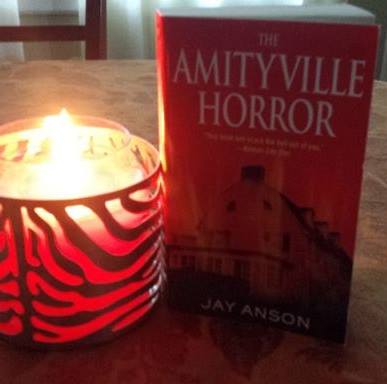
AVilleBookBefore reading the book, I was told that it would be much scarier than the movie. It had been a long time since I had seen the film, maybe thirty years or more. I don’t remember the film being all that frightening. Of course, I had seen it on terrestrial television; it was heavily edited. Finally, two weeks ago, I saw the uncut, original film. It was pretty creepy, but would the book be better?

Answer: yes. I do admit that I wasn’t super impressed with the first few pages. It reads like a logbook polished up with narrative. There are a lot of dates and times, sentences like “They moved in on December 23.” But this is the prologue, and it is necessary in order to summarize the timeframe. The rest of the book captures this timeframe in detail, day by day. It is a diary detailing the supernatural disturbances that haunt the Lutz family for 28 days as they try and fail to make a home out of colonial house on Ocean Drive.

The disturbances increase in both intensity and frequency until they have no choice but to flee.

The book also chronicles the plight of Father Frank Mancuso. He arrives at the Lutz’s early on to bless the house. Upon arrival, he is overcome with a sense of dread. He feels deathly ill. And he hears a voice that told him to “Get out!!” After this, Father Mancuso is plagued with a serious flu. It gets worse whenever George Lutz tries to contact him. When he calls, static often disrupts the conversation and the line goes dead. Then the flu symptoms increase in severity. Blisters appear on his hands.

Some of the disturbances that the Lutz family experienced include:

  • Cold spots
  • Unwarranted psychological stress
  • Windows opening and closing
  • Doors being ripped from their hinges
  • Gelatinous mass dripping from walls
  • Toxic smells
  • Ghostly figures

Here’s a breakdown on how the house affected some of the family members individually:

  • George Lutz – He is cold all the time, even when the house is warm. He is irritable, withdrawn, avoids going into work. He hears things, such as an invisible marching band traipsing through his living room. Prone to nightmares. His body levitates while sleeping.
  • Kathy Lutz – Felt the presence of a woman. On several occasions, felt ghostly arms wrapped around her; hands pressed against her shoulders. Saw her body mutate into that of an old crone. Her body also levitates while sleeping.
  • Missy Lutz – Befriends a demonic pig named Jodie. George catches a glimpse of this pig through the window. Kathy sees its glowing red eyes

The book also has diagrams of each of the three floors of the Amityville house.

All in all, it is an excellent and scary read. And yes it is much scarier than the film, but the movie is pretty scary as well.


Amityville Horror the Movie – 1979 – Directed by Stuart Rosenberg

AVilleMovieOn Rottontomatoes.com, this film only has a 24% approval rating among critics.   This surprises me. The Amityville Horror certainly isn’t the best haunted house film out there, but it’s not so bad. In fact I’ll say it’s “pretty good,” so long as “pretty good” stands for slightly less than “good.” The establishing shots of the house are excellent. Who can forget those creepy attic windows that look like jack-o-lantern eyes! I love the background music. Now-a-days, creepy music is often replaced by the sounds of electronic jolts and thuds. Nothing tops mood setting music such as this:

Who can resist those singing children and their  haunting “la la’s”?

The book is better, but the film stands on its own. There are several differences between the book and the film and I will outline them later in the review. The book is able to cover more ground, but that is to be expected since the book has 300 + pages compared to the film’s 2 hours of footage. What the film is able to capture with its limited amount of time is done reasonably well. The mood is eerie, the characters are mostly well developed, especially Rod Stieger as Father DeLaney. Katherine Lutz’s character could have used a bit more development.


Amityville Horror the Movie – 2005 – Andrew Douglas

Yeah, this film isn’t all that good. I was enjoying it in the beginning and accepting of some of the “modern renovations.” I get it. People don’t have imaginations anymore. If a film is to be about ghosts, people want to see the ghosts, and they want them quick. So unlike the first film, there are a lot of shots of ghosts. Or should I say “flashes of ghosts.” They come and go quickly like a fast food meal. I enjoyed seeing the ghosts. I really did.

But as the film moved along, things went too fast. Too much noise and chaos, too much “in your face.”

Here’s something I have to mention. In the first film, George has an awesome line. In response to how he feels about purchasing a house where a mass murderer occurred, he says, “Houses don’t have memories”. He is proven wrong, but that sentence says a lot. Change the “don’t” to “do” and you have a four letter sentence that compacts so much and describes haunted houses to a tee. In the 2005 film the line is, “Houses don’t kill people. People kill people.” Cringe time! Save that slogan for the NRA.


Here are the different ways each medium deals with some of the story’s main themes:

Psychological Profile of family:

Book – Whole family is on edge, psychological strain. Both George and Kathy hit their children. Kids are restless

1979 film – Mostly focuses on George. House works on him, making viewers think he might kill his wife and children in the same way that Ron Defeo slaughtered his family.

2005 film – George goes insane, becomes psychotic. It is the George Lutz of the 1979 film on steroids. A major rip-off of The Shining if you ask me.

Father Mancuso

Book – Blesses house, hears “get out”, gets violently ill, flu and rashes. When he gets better, he talks to George and gets worse again. Often calls to George are interrupted with static

1979 film – Has a different name. Comes to bless house, attacked by flies (Flies don’t harm him in book). It’s Kathy that reaches out to the Father, not George. Father ends up going blind and left for a shell of a man

2005 film– Very little coverage of the priest. Blesses house, attacked by flies. Won’t come back. Phone calls back and forth are removed from this film.

Jodie

Book and 1979 movie – Imaginary friend of Missy, turns out to be real but only Missy can see her. Jodie is a pig. A demonic pig.

2005 movie – Jodie is a young girl, presumably a young sister of Ron DeFeo. Guess AVilleJodiehaving a pig as a friend is too weird and abstract for the 2000 years, so in comes the little girl. “Bring back the pig.” I say.   Now in the 1979 film, the pig is never shown, accept for the two glowing red eyes. In the 2005 film the little girl Jodie is shown several times. Still I vote for the unseen pig.

Babysitter

 Book – there is no babysitter in the book

1979 film – Brief coverage of babysitter. She wears a dental retainer that covers half of her face. Jodie locks her in closet.

2005 film – Bigger deal of babysitter. She is a trampy stoner, and she teases her 12 year old boy seductively. She too gets locked in closet by Jodie.

Basement

Book and 1979 film – a secret red room is discovered. It emits bad vibes.

2005 film – more than a room. Passageway where George gets experiences flashes from the far back past. Indians were tortured in these hallways –tortured by a satanic priest named Ketchum.

Visual manifestations

Book – Pig and White hooded figure

1979 film – less visual manifestations than book. Mostly just eyes (red dots out window)

2005 film – Many- of Jodie the girl, of tortured Indian souls, of Ketcham.


So, is this a true story?

After the Lutz family fled the house, several paranormal teams investigated the house, including the famous Ed and Lorraine Warren.  All of them claim to have felt some kind of unnatural presence. However, others have doubts. Locksmiths have investigated the house and have determined that the doors did not come off the hinges in the ways that the Lutz family has claimed. Also, in regards to the history of the house, long before the DeFeos – a history that is documented in the book – not true. The book claims that the house rests on a site where Shinnecock Indians had abandoned the mentally ill. But Shinnecock historians say this is false. Testimony from the real Father Mancuso has been sketchy.

It has been suggested by William Weber, lawyer for Ronald DeFeo, that the whole thing was a hoax. He said that he and the Lutzes concocted the story and were going to publish the book, but in the end, the Lutz’z sought Jay Anston to write the book.

On the other hand, Anston believes the story. In an afterword he says that there are just too many intricate details that couldn’t be made up. George Lutz died in 2006, but a year before his death, he stated in an interview that what happened to he and his family in the book was true.

In repsonse to some of the websites seeking to discredit the Lutz’s, George had developed his own sites:

www.amityvillehorror.com

www.amityvillehorrortruth.com

The first leads to a page showing the house. When clicking on the links, there is a white screen with an internal server error. The second site leads to Yahoo – in Japanese!

What’s going on? Is it like with the phone line static – interruptions happening all over again? Are the demons fucking with George once again, preventing him from reaching out?

Whether true or not, the ghost story of Amityville Horror is indeed a good one. If it’s false, it is then a shame that the lives of the DeFeos were so exploited – real victims of murder – their tale being only a back story for a fiction Hollywood tale. When I think about it this way, I feel bad for even giving The Amityville Horror a moment of my time. But then again, tales will arise from tragedy, both real and fictional. There would be no Count Dracula without the real life Vlad the Impaler. So I suppose a good story is simply that – “a good story”, no matter where it comes from.

For further reading:

http://www.amityvillemurders.com/facts.html

Review of The Elementals

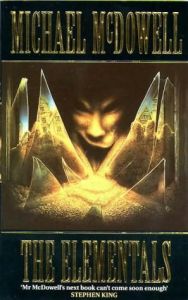
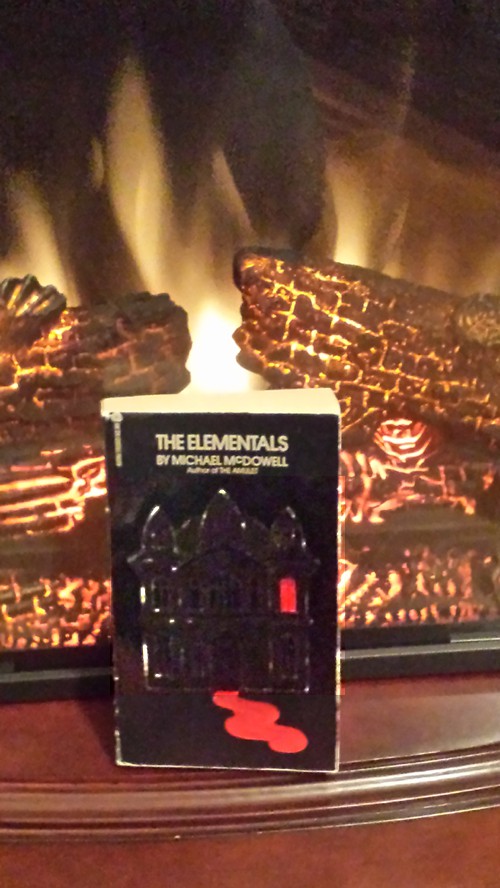
TheElementalsWhere are haunted houses? By this I mean, in what kind of setting is one likely to find a creepy old house with ghostly shenanigans? Usually such houses are found in the countryside. Maybe they are surrounded by woods. Perhaps there is a nearby graveyard or two. Or they rest on the peaks of mountain tops. Heavy thunderstorms add to the eerie environment. Snowstorms trap haunted house inhabitants and seal them away in closed quarters.

How about a haunted house on an ocean beach? Hmm, sounds a little out of place. Beaches have sunrises and sunsets; the beautiful orange ball of light that makes its way across the sky is hardly a magnet for ghosts. They have calming breezes and welcoming waves. They are sandy spas of salt baths and sun tanning. They are – dens of spiritual activity? Really? What’s a scary ghost like you doing at beach paradise such as this?

The panhandle beaches of southern Alabama are the perfect setting for haunted houses; at least the beaches that spill out of the creative and macabre mind of Michael McDowell and into his book The Elementals. Okay, let’s narrow it down to one fictional beach in particular – Beldame. It’s a secluded area on a spit that extends off of the Gulf coast. It harbors three Victorian houses. These houses are reachable only via certain modes of transportation, such as a boat by way of water or a dune buggy by way of sandy terrain. At night it gets very dark. In the pitch black night, sometimes the only sign of activity comes from the sounds of the surf. But there are other things stirring, such as the elementals – spirits that have no form.

Beldame was the host of many summer retreats for two wealthy families linked in marriage and friendship. The grown children of The McCrays and The Savages remember their childhood summers at Beldame with a strange mixture of nostalgia and apprehension. It has been a long time since they have spent significant time at Elementals2this hideaway. After the death and disturbing funeral of matriarch Marian Savage, they decide to revisit Beldame. Dauphin and Leigh Savage occupy one house with their maid Odessa. Luker McCray (brother of Leigh) lodges in the second house with his thirteen-year-old daughter India and his mother Big Barbara. The third house remains unoccupied (or does it?). It is uninhabitable – a large sand dune was swallowed a third of the house.

Out of all the inhabitants, it is Luker that is most apprehensive about the third house. His sharp daughter senses his fear. India soon learns that the third house is a depository of childhood fears and frightful memories for other family members as well. It has its stories. Too curious for her own good, India climbs the third house’s encroaching sand dune and peers into the bedroom window of the second floor. She sees things. Scary things.

This is a very captivating book. There are many things to love about this story. As an analytic reader, I noticed two themes in particular that captured my interest. The first has to do with the constantly shifting terrain. The families are surrounded by sand dunes; their shapes and heights varying depending on whatever forces of nature happen to be at work at a particular time.   There exists the threat, perhaps not always evident to the fictional families but surely apparent to the readers, of being overcome by the dunes; of their homes going the way of that mysterious third house. Then there are the high and low tides that alter the state of the nearby lagoon. During high tide, the lagoon maroons the houses and Beldame becomes an island.

Things are in constant transformation. Nothing is as it appears – not for long anyway. Whatever it is, soon it will be something else. The third house. Things are not always the same with it. The sand drifts, both within and without, change. The furniture appears to change from one viewing to the next. Sometimes bedroom doors are shut and locked. Other times they are unlocked and slightly ajar. And how about those spirits within! Sometimes they are the spitting images of lost loved ones. Other times they are grotesque abominations of things that resemble humans. But in their natural state they are indeterminate in form and structure, their “shape” subject to environmental forces. These forces are the fears, memories and overall personalities of those that come within their lair.

Likewise, Beldame is a place where memories and dreams become blurred. Looking back at summer vacations past, some characters have trouble distinguishing whether certain things they had witnessed actually occurred of if they were only the byproducts of dreams or imagination. The nature of reality is in constant question. Reality seems to shift, change shape, just like the dunes of sand.

The sand, the wind, the storms, the tides…and spirits = elements that play a role in transforming the terrain; elementals.

The second theme concerns the surrealistic nature of Beldame. It is a magical place – a coveted haven. The history of Beldame is a history of tragedy at the expense of the The McCray and Savage families and yet they all seem to share a certain unexplainable nostalgia for their land on the spit. Time seems to stop when they stay in these houses along the ocean side. The have no clocks, they follow no schedule. When the sun is right they lie on the beach. When the sun is to strong they seek shelter in the house. They live day to day following the lead of elements. Their occupational worries disappear. And yet, it seems as if Beldame is a place to go to die. Perhaps it is like an outpost of the netherworld –timeless, tranquil at times, spiritual, and of course, deadly.

On top of all this, The Elementals also serves as an anthropological account of well-to-do southern families. The characters are filled with life and beautifully tarnished with quirks. Their expressions are humorously raw.

According to Vicki Brunson of Examiner, the book had been “out of print for years”. The book I borrowed was a used copy that my friend purchased from Amazon. However, it appears that The Elementals has been re-released through its publisher Valancourtbooks.

Sadly, author Michael McDowell passed away in 1999. He is a favorite of Stephen King and the writer of famous screenplays such as Beetlejuice and The Nightmare Before Christmas.

Review of The Home – (From Author Scott Nicholson)

THeHome“The Home” is a modern day orphanage in rural Appalachia. Disturbing things are occurring within the resident buildings of the compound. There’s the God-fearing, fire and brimstone director who gets off on fantasies of spanking the children. Then you have a mad-scientist of a doctor who performs experiments on children. Let’s see, is there anything else unorthodox about this institution? Oh yeah! Ghosts roam around from time to time.

Some have seen a strange man in an institutional robe wandering the halls inside the buildings or wading into the pond at the far end of the complex. He is the subject of ghost stories – the stuff of institutional legend. All communities have such myths, spread through the overactive imaginations of children. Except the staff begins to see this man as well. People then begin seeing a woman with holes in her head where her eyes used to be. Her eyes are now embedded into the palms of her hands.

One ghost. Two ghosts. More?

By the book’s end there will be too many spirits to handle. While leading up to this plethora of phantoms, the plot peels away the layers of a conspiracy involving The Home’s administration and a mysterious organization called The Trust.

Let’s back track.

Freeman Mills, twelve year old, is Wendover Home’s latest charge. He has been diagnosed with a host of conditions: bipolar disorder, antisocial behavior, and on and on. One day one he meets with Francis Bondurant, the self-righteous director of Wendover, who, in lieu of treatments based on psychiatric “mumbo-jumbo” favors introducing the problematic children to the strong arm of the Lord. Like with all his charges, he believes Freeman just needs to “mend his sinning ways.” From the beginning, readers see this man for the rat that he is and feel for the children in his care. If only this were as bad as it gets. It gets worse.

Bondurant proves to be somewhat of an impotent weasel. The resident psychiatrist is the bigger threat. Dr. Kracowski takes children to Room 13 for “therapy.” His therapy is a bit unorthodox. It involves strapping the children to a chair and administering electrodes to the brain. He calls it Synaptic Synergy Therapy, and believes his treatment will realign and harmonize the neural pathways. He boasts that this SST can cure everything from bipolar disorder to anorexia. But it does more than that. It awakens as extra sensory perception within its subjects.

This is where The Trust comes in. They (whoever “they” are) want to be able to harness the power that comes from ESP. They fund and supervise Kracowski’s treatments. When readers are introduced to members of the Trust, suddenly Dr. Kracowski doesn’t seem so bad anymore. In the end, they unleash more paranormal mayhem than they bargained for. Machines in the basement generate electro-magnetic waves needed for the SST. Are these machines unintentionally breaking down the door between the living and the dead?

Though new to Wendover Home, this procedure is not new to Freeman Mills. His father was a forerunner in developing these experiments. He experimented on his own son. Accused of murdering his wife, Dr. Mills is taken away and Freeman is now a ward of the state. Due to a long history of these treatments, he has the keenest ESP of all the children. All except his friend Vicky. Two cynical kids with hatred for the adult world become the hero and heroine of this tale.

This is a page-turning novel. There are many interesting characters and readers get to know about the strange happenings at The Home from multiple points of view. There are many themes throughout the book, including the age-old war between science and religion. I’m guessing that some thin-skinned religious reader out there will whine about how religion is “negatively portrayed.” Likewise, I’ll bet there’s some hypersensitive secularist reader that will bitch about how this book misrepresents the goals of science. I’m making these assumptions based on some of the reviews of Nicholson’s Red Church. Some complained that the book was too religious while others moaned about how the novel was sacrilegious.   For me, any book that divides in such a way deserves a good reading, for it has enflamed the passions of readers. This is what good art does.

Review of The Mammoth Book of Haunted House Stories

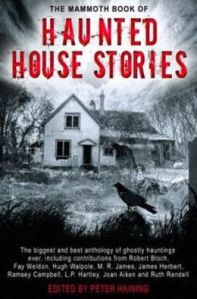
MAmmothThe “tome” that is the subject of this review should sit on the shelf above the fireplace. It should lure the eyes of visitors to its spine and provoke them to call out “What is that?” Then its owner can proudly say, “It’s an anthology of haunted house stories. It is The Mammoth Book of Haunted House Stories.”


The best platform for this anthology is the old-fashioned hard cover book (if that option exists.) It is not a book that needs to be read cover to cover. But it should always be on display in the den or reading room, no Mammoth2more than a few steps away from the easy chair. That way, whoever just happens to be sitting there before the lit fireplace with a snifter of Brandy will have this anthology at his/her beck and call.

Grab the book and pick a story, any story that you think is to your liking. Then read and enjoy.

I did none of those things. I bought it through my Kindle app. I read it from beginning to end, forcing myself to complete the stories I didn’t enjoy. Our house is not set up with a “reading room” or den. Mostly I read this from my bed before going to sleep. We have no fireplace and we have no Brandy. But oh how I prefer my original albeit fictitious scenario!

Despite not having the proper environment for this anthology, I enjoyed it much. Okay, so I didn’t like every story. The components of any given anthology will not satisfy the reader 100% of the time. That’s just the way it goes.

Compiled by British author and anthologist Peter Haining (2 April 1940 – 19 November 2007), The Mammoth Book of Haunted Houses is a collection of short stories and novellas from primarily British authors, many of which stem from the gothic tradition. It includes stories by famous authors such as Bram Stoker, Arthur Conan Doyle, H.G. Wells, Virginia Woolf, and Stephen King. Some of the stories are personal favorites of horror legends of film, such as Boris Karloff Christopher Lee, Peter Cushing and Clive Barker.

Haining himself claimed to have lived in a haunted house, so perhaps there was a certain level of personal significance attached to this project. He certainly had a fun and interesting way of introducing each story. Each tale begins with a page that is meant to resemble log entries in a real-estate transaction book, if such a thing exists. These intros look something like this:

Prospectus

Address: The country, city and sometimes neighborhood where the story takes place are mentioned here.

Property: Structural details are taken from the story and summarized here,

Viewing Date: Year the story was published

Agent: Biographical detail of the author. Sometimes this section contains other details such as a mentioning of famous people who admire the story.

The book is divided into seven sections – seven varying categories of haunted house tales.

Each section is comprised of stories that relate to the specified category. The seven categories are:

Haunted Places: Stories Of Fact And Fiction

Avenging Spirits: Tales Of Dangerous Elementals

Shadowy Corners: Accounts Of Restless Spirits

Phantom Lovers: Sex And The Supernatural

Little Terrors: Ghosts And Children

Psychic Phenomena: Signs From The Other Side

Houses Of Horror: Terror Visions Of The Stars

Finally, there is an appendix of full-length haunted house novels alphabetized by the authors’ last name. From Anson, Jay (The Amityville Horror) to Young, Francis Brett (Cold Harbour) with many greats in between, it provides a paragraph synopsis of each list entry.

All in all, there are forty-two stories in this anthology. (To see a complete list of all the stories, go here!)  I’ll briefly summarize three that I found to be quite enjoyable.


The Haunted and the Haunters          –         Edward Bulwer-Lytton

First is the first. That is, it’s the first story in this collection. Written in 1859 in the gothic tradition, it is a tale about a fellow who has a strong desire to spend a night in a haunted house. He gets his wish and experiences all sorts of phenomena. Walking footprints, furniture and doors moving and opening on their own accord, phantoms of light, dark shadowy substances that invoke a sense of dread, swarming ghostly larvae that the author describes as “…chasing each other, devouring each other” “shapes without symmetry” “movements without order.” The protagonist develops an interesting theory regarding the source of these manifestations.

Edward Bulwer lyttonHere are some interesting bits of trivia concerning that author. Edward Bulwer-Lytton sat in the British parliament and was the Secretary of State for the colonies. He coined the popular quip “The pen is mightier than the sword” and the famous opening line staple, “It was a dark and stormy night.”


Watching Me, Watching You         –    Fay Weldon

I am not familiar with Fay Weldon. According to Wikipedia, she is an “English author, FayWeldonessayist and playwright, whose work has been associated with feminism.” Her work often “portrays contemporary women who find themselves trapped in oppressive situations caused by the patriarchal structure of British society.”

From what I gather, Waldon is not associated with the horror or paranormal genre. However, she has given the genre a rather unique and stylistic contribution with Watching Me, Watching You.

 The ghost of this story is not the traditional apparition. It may not even be literal. It is the ghost that haunts all houses. It is the ghost of sorrow, of longing, of regret. And yet, doors open, knickknacks fall from shelves, and presences are felt. The same ghost haunts two different women, one is the ex-wife of a struggling writer, and one is his current wife. The ghost leaps from one woman’s shoulder to the other. Later, the ghost is able to teleport from house to house. Sometimes it remains in a house but goes to sleep for long periods of time. Other times it causes disturbances, only to be expelled from the premises, thrown out of a window inside a sigh. Finally, the ghost learns to travel outside of time, only to reappear at different crossroads of their lives.

 Watching Me, Watching You is beautifully written. I recommend it highly.


 The Boogeyman       –     Stephen King

stephenkingFirst published in Cavalier magazine in 1973, it was later part of his King’s collection Nightshift. This is an excellent piece. Its allure is due to King’s greatest skill set – character development. The protagonist, Billings, consults with a psychiatrist and tells him the sad and rather strange tale of how all three of his children were murdered by the Boogeyman. Billings displays all the essentials of a multi-dimensional character. What makes this an even greater feat is that King accomplishes this in such a small amount of space. Billings comes alive with all the shortcomings that come with being a human – prejudices, psychoses, and ignorance. All this is subtly and effectively captured in his mannerisms and speech patterns. Hell, remove the boogeyman and leave this tale as a case study of Billings and it would still be a masterpiece.


The Mammoth Book of Haunted House Stories deserves to be sold in a classic-bound edition. This edition should sit proudly on my shelf among my other hardcovers of classic design, including Dante’s Divine Comedy and H.P. Lovecraft’s The Complete Fiction. But I’m not even sure it exists in hardcover. Sadly the book is not on display in my living room. It hides within my e-reader like a shy ghost that’s too frightened to come out from behind the wall and haunt the house.   I have a feeling that the ghosts of these tales will haunt me unless and until I purchase a hard copy. I need to do this. Soon.

Review of Creative Spirit

Creative-Spirit-by-Scott-Nicholson

The Stanley Hotel in Estes Park, Colorado is known for its haunted history. Freenlan Oscar Stanley and his wife Flora opened this lavish resort hotel in 1909. Stanley wanted a luxurious retreat in this otherwise desolate mountain region. It is still around today. In fact, it is rumored that Mr. and Mrs. Stanley still haunt this hotel. Paranormal investigators visit frequently, testifying that this hotel is indeed a hot spot for paranormal activity.

Does this hotel sound familiar? What if I told you a famous writer stayed at this hotel one night in the 1970s. He was so inspired by the environment that he wrote a novel about it. The novel was about a haunted hotel that was isolated from civilization in the snowy mountains. The writer renamed the hotel. He called it The Overlook Hotel. This writer is Stephen King. This book he wrote is called The Shining.

The Stanley Hotel offers all the luxuries of any high-class hotel and a whole lot more. For instance, it hosts night ghost tours and paranormal investigations. It is also the meeting spot for various ghostly conventions including The Stanley Hotel Writer’s Retreat. Horror writers converge for a long weekend. The 2016 retreat is being held in October. It will offer several packages, some if which include a meet and greet with other authors, editing workshops, tickets to a masquerade ball, and ample writing time. There are different packages at different prices.

I looked into the Stanley Hotel Writer’s Retreat of 2016. It is too expensive for me. The packages do not include travel, room and board. But it got me wondering – what would it be like to attend a writer’s retreat in a humongous “ghostly” manor? I think it would be wonderful. Quaint and inspiring.

Maybe author Scott Nicholson has attended such a retreat. If not, then he has done the next best thing- he was written about one. When reality fails the imagination prevails. Whether or not his story about an artist’s retreat in the seclusion of the mountains is inspired by a real life experience, it is a vivid telling nonetheless. It seems similar to the Stanley retreat in some ways. But in his tale it’s goodbye Colorado and hello North Carolina. Both manors are haunted by the ghost of its founder. Whereas the ghosts of FO and Flora Stanley are harmless apparitions that sometimes play the Steinway piano or watch over the billiards room, the spirit of Ephram Korban is calculating and malevolent and his presence is not always as obvious as the hall-roaming ghost. He hides within the many self-portraits that hang on various walls. He comes into being via the authors that write out ancient spells, the painters that capture his presence on the canvas, and the sculptors that bring his form to life.

Creative Spirit is a story about the coming together of writers, painters, photographers, musicians and sculptors. They are gathering in the picturesque setting of Korban Manor as a means of fostering their creativity in the company of like-minded individuals. Unbeknownst to them, there is more to this gathering. The spirit if Ephram Korban thrives on creativity. He siphons the “creative spirit” of others in the hopes that he may live again. He is assisted in his goals by some of the Manor’s staff. Some of them are ghosts. Others have outlived the average life expectancy, kept alive by the powers that lay within the Manor- the powers of Korban himself. Together they will all participate in the ceremony that welcomes in the Blue Moon of October. Hmm, now don’t you get the feeling something else will be welcomed in as well?

This is a chilling ghost story with insightful metaphors and colorful description. This description pays of well in the telling of the season. Autumn – a ghost lover’s favorite season! From the crackling of the fires to the layout of the land (“Nature’s greatest sculptor – Time”), Nicholson settles the readers in as if they were the guests of this retreat. Nicholson even fires up the often-neglected sense of smell as he describes the autumn aromas.   All this in an environment where ghosts haunt the fields and outlying forests, where witches dwell in nearby shacks. How can a lover of ghost stories ask for anything more?

It is a dream of mine to attend a writer’s retreat at a spooky old mansion. If such a dream is never fulfilled, that’s okay. I attended the artist’s retreat at Korban Manor vicariously and it was a fulfilling experience. Best of all, I made it out alive. Not all of the guests can say that!


Review of The Red Church

TheRedChurch

Somewhere within the Blue Ridge Mountains of North Carolina The Red Church stands. A beast of Author Scott Nicholson’s creation haunts its surrounding community. Locals are found dead in the fields; their bodies mauled to pieces. It is tempting to blame mountain lions for such tragedies, but forensics clears these creatures. They just aren’t capable of doing the kind of damage.

There is another explanation. But it is rather farfetched. It is based on an old community ghost story involving the abandoned Red Church.   But ten-year-old Ronnie Day believes the legends. So does Sheriff Frank Littlefield. Both have seen witnessed strange occurrences at this church.

Think for a moment about this archetypal horror scenario: A beast or phantom nests within a hidden compartment of a familiar site. It could be a bat that dwells in the loft of a rundown barn – a bat that haunts the night! Or maybe it’s a raccoon that lives under your porch – watch out for those glowing eyes! More common is the raven that rests on the archway of the front door, or the troll that hides under the bridge.

Here’s a new one for you: how about a dark figure that appears inside a church’s belfry. It has wings and sharp claws. It has livers for eyes. Sometimes the bell rings when this phantom materializes, which is quite a feat since the church no longer has a rope to activate a bell. This is the legendary phantom of The Red Church. It is this phantom Sheriff Littlefield fears is responsible for the killings. Naturally the detective he works with is skeptical of this theory. But Littlefield has lost his younger brother to this beast many years ago when a prank at the Red Church went terribly wrong.

If this isn’t scary enough for you, there is creepy cemetery in front of the church. Also, there is a humongous dogwood tree that hovers beside the church. The ghost of a hanged preacher from long ago is known to materialize on a tree branch from time to time.

This is a chilling book. The reviews are mostly positive. However, you can’t please everybody, especially those who are easily offended. There is a strong religious theme to this book. The novel’s antagonist, Archer McFall, claims to be The Second Son of God. He reopens The Red Church and seeks to preach “his truth” – that Jesus is evil and he, Archer, is the true savior. There are some negative reviews on account of this “sacrilege.”   Strangely enough, there are negative reviews that go in the opposite direction, complaining the book is too “preachy” and that its hidden message is that “Jesus saves”. To both sides of the argument, I shout a loud and droning “Ohhhh please!!!!!”

I enjoyed this novel and I’m going to pay it a rather strange compliment – It’s a fun, cozy read. How, you may ask, can a novel that borders on “sacrilege” (“I thought it bordered on “preachy”. “I thought it…” Shut up! Your thoughts are stupid!)  be “cozy?” Furthermore, how can a novel about a bell tower phantom with wings and liver eyes make me feel “cozy?” For one thing, I’m a bit weird. Let’s get that out of the way. But there are other reasons. It’s a straightforward tale spun in the familiar setting of small town Americana. The characters are folksy but the ghosts are creepy. I can lie out in the summer and read this with a cool glass of lemonade or sit back indoors in the cool winter and take this book in with a warm cup of cocoa. It works on all fronts.

SNicholson

This is Scott Nicholson’s first book. (He now has over twenty novels). It is excellent for a debut novel. The reason for this is that Nicholson is obeying an old rule or writing: write what you know. Nicholson resides in the Blue Ridge Mountains and he is in command of his setting. In the nitty-gritty details of the story we see local politics in action and the god-fearing behaviors of religious folks. We learn of the speaking mannerisms of a chaw chewing farmer. We learn of the family clans. All this Nicholson writes with confidence. It’s his town and he’s welcoming us to it, which is another reason I say the book is “cozy”.

This is also the first novel featuring Sheriff Frank Littlefield. The second is Drummer Boy, which is about ghosts of soldiers that spill out from a cave on the eve of the annual civil war reenactment.  Drummer Boy is a good book as well, but I will not review it as part of this blog since it does not deal with a haunted house. However, I have read other Haunted House novels by Nicholson.  These are The Home and Creative Spirit.  I hope to write about these soon.