In 1936, Bing Crosby introduced Pennies from Heaven to the world. Such an invaluable gift this holy coinage was! Is there anyone else that could gift the world similar treasures? If so, what might these treasures be! How about Paperbacks from Hell, with a gifter by the name of Grady Hendrix (Is he a relative of Jimi?) Okay, so he didn’t write any of these infernal paperbacks, buy hey, Crosby didn’t mint the coins, so there! What Hendrix did do was compile a collection of book titles, authors, and cover artists in a book dedicated to horror novels of the 70s and 80s, which features bios, pictures and a whole lot of fun analysis. The complete title of his work is Paperbacks from Hell: The Twisted History of ‘70s and ‘80s Horror Fiction.
So just what “in the hell” is this book about? Read on and find out. (But first, admire “Pennies from Heaven” please!)
Hi there! I’ve been on a short hiatus. I was vacationing in The Philippines, and then I was sick, and blah blah blah. Well let me pick up where I left off. The last time I wrote was back in mid-March. Let’s see, I was writing about something….something about ghosts…and haunted houses…(Me write about those things? No way!)….hmmmm…Ah ha! The subject/s was Ghost House! And Ghost House Revenge, two books by Clare McNally. I must refer back to this review, because it was these two books that led me to Paperbacks from Hell.. I had remembered these two books from my childhood and I searched the Internet to see if they still existed in some format today. But I couldn’t remember the titles or the name of the author, so I had to comb through the various search results that came from my search words “Haunted house and horror books of the 70s and 80s.” I eventually found what I was looking for, and so much more. Among the search items, I found Hendrix’s book, which had in its title the keywords “70s/80s/horror/” I discovered that these two decades were the heydays for horror paperback novels, that never before had there been so many fictional works on such horrific subjects: Satan, Creepy Kids, When Animals Attack, Real Estate Nightmares, Weird Science, Gothic and Romantic, Inhumanoids, Splatterpunks, Serial Killers And Super Creeps! These are the chapters and category names for Hendrix’s Paperbacks from Hell. The book sounded interesting so I downloaded it and read much of it on the plane to and from the Philippines.. A fitting book for such turbulent times (turbulence shook the plane as I read).
I am including this review in my anthology of haunted house novel reviews on account of one chapter only: Real Estate Nightmares. Yes, this is the section of the book devoted to haunted house paperback novels. Likewise I will be devoting a section of this review to this one chapter. But first, an summary of the book as a whole.
In my review of Ghost House/Ghost House Revenge, I speculate that perhaps it was the works of Stephen King that ignited this horror paperback boom of the 70s and 80s. While his contribution to phenomenon is most certainly great, he did not begin it. How stupid of me, because I knew that works such as Rosemary’s Baby (Ira Levin) and The Exorcist (William Peter Blatty) predate King’s novels. These two, along with The Other (Thomas Tryton), revived the horror literature tradition that had been dormant for a while, Hendrix says. Even in the days or yore, horror mostly came in short stories, novellas, and then later in graphic pulp books and magazines. There were very few novel length books devoted to horror until the three aforementioned books came on the scene. “Satan Sells”, publishers realized, and soon there were hundreds of satan-spawned paperbacks.
After Satan, along came killer animals and insects, demonic toys, possessed robots, medical nightmares. So many books, and so we had The Good, The Bad and The Delightfully Cheesy.
I equate many of these books referenced by Hendrix to “B horror” films. So these are B-books? Some are. Sure, why not? Often they were goofy, but as Hendrix mentions “never boring.” Many of these “gems” are out-of-print. I’m guessing that the advent of digital media have revived some of these books, but unfortunately not all. Hendrix devotes significant attention to the book covers. Resting on the shelves of supermarkets, it was the cover that lured customers to reach for the item. The more vivid the better, much like the days of the video store, with box covers showing an awesome depiction of what just had to be a good, creepy movie – and…often the films failed to live up to the promising pictures on the box. As for the covers of paperbacks, Hendrix shows readers many interesting examples. Colorful, artful, graphic and of course – horrific.


(First Picture – What “The Stuff” appeared to do to is victims, according to the box. Second Picture – How “The Stuff” actually preyed on people, according to the movie)
In Paperbacks From Hell, Hendrix follows the careers of several cover artists, noting the publishing houses they worked for, mentioning that a certain artist went on to design album covers, etc. Interesting stuff.(Better than “The Stuff” of the film).

Hendrix writes humorously about his subject. He is often satirical. In the chapter Creepy Kids, on describing a reoccurring theme, he writes “As long as they belong to someone else, homicidal children can be a joy.” That’s funny! But sometimes his writing style is overbearing. But like his book, and like the books he is writing about, it’s/they’re not boring. At the same time, he possesses keen insight. He ties trends within the horror market to topical events that were occurring in the culture at large. The surge of attacking animal books he attributes to environmental disasters of the early 70s. For the rise in popularity of vampire books, he notes the AIDS scare of the early 80s and the fear of being infected. All in all, a reflective guy that Hendrix is. And what an interesting book!
Haunted Houses – or as Hendrix calls them – “Real Estate Nightmares”
Ahhh! This is MY area! Yeah, Boy!! Here we are! “This” section.
Truthfully I was somewhat disappointed. To be clear, my disappointment is not the fault of Hendrix. He did his job covering this subgenre of horror. It’s just that I was hoping to be introduced to a slew of obscure works. Sadly I already knew about the novels to which he devotes the most attention. He briefly covers The Sentinel, and I have read and reviewed that book. Burnt Offerings and The Amityville Horror both of which I have read/reviewed. I did, however, find his insights on Burnt Offerings rather intriguing and his rants about The Amityville Horror humorous.
While Hendrix correctly acknowledges The Haunting of Hill House and Hell House as its predecessors, he singles our Burnt Offerings as being a first when it comes to the economics of home purchases and the whole buyer beware motif. I…had never thought about this. “Hell” and “Hill” House were gargantuan gothic mansions that had visiting characters investigating the spooky happenings within. The characters of Burnt Offerings leased and lived in the deadly place. They invested their money in it. Therefore, they were trapped.
In true form, Hendrix ties the haunted house paperback phenomenon to the economic issues of the 1970s. High interest rates, inflation, the dawning of the suburbs, the cash-strapped and their search for the best home that they could afford. According to him, these are the reasons “the haunted-house novel reached critical mass.” As a student of haunted houses of fictional literature, I am constantly hungry for information like this. Thank you Hendrix, you feed me well.
Hendrix doesn’t think much of The Amityville Horror book series. I only read the one, and for me it was alright, not the greatest, but enjoyable. But I see his point. “Amityville” became the definitive haunted house book of the 70s, while Burnt Offerings, a much better read, is largely forgotten. He goes on to criticize the series as “crass, commercial-minded, grandiose, ridiculous, this carnival-barker’s idea of a haunted house is a shame-train of stupid.” The carnival barker I guess would be George Lutz, the real life protagonist of what is supposed to be a true story. Suffice it to say, Hendrix doesn’t believe that this is a true story (and neither do !!)
A couple of times, Hendrix mentions The House Next Door by Anne Rivers Siddons and refers to it as a classic. I am well aware of this book but I have yet to read it. I am relishing in this virginity and I’m looking forward to my “wedding night” when I take this book to bed with me. But like a good virgin, I am saving it for the right time. Then there are those book he footnotes here and there, books with creepy covers, that I do not know. Some are The Intruders (Pat Montandon), The Architecture of Fear (Various Authors) and Walls of Fear (various authors again). But for these he has only little tidbits of information.

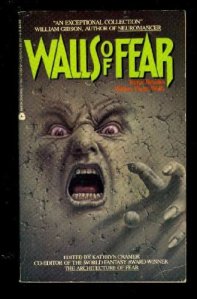
The rest of the chapter is devoted to horrific towns as a whole, cities as a whole, and strange cultish communities. While this is some interesting stuff, it goes beyond the haunted house, so I am not mentioning these books in this review.
Following the trail of “Haunted Paperbacks” to – What Comes Next?
If you are a fan of old horror novels, this book is for you. If you have ever owned or read an old obscure horror paperback, definitely check out this work by Grady Hendrix. You won’t be disappointed.
I’m glad my search for Ghost House/Ghost House Revenge led me to this book. Too bad he doesn’t mention these books in his Real Estate Nightmares chapter. Oh well. But I continue on – Ghost Houses begot Paperbacks from Hell and Paperbacks from Hell begets….a Dark Forces book. What the heck is a Dark Forces book? I couldn’t remember what the series was called, and this Paperbacks from Hell book had the answer (hint: the series was called Dark Forces). This is yet another nostalgic reading memory from my pre-teen years. Horror books directed at young teens. I read several. Were there any Dark Forces books about haunted houses? Yes! Well at least one. This will be my next review. Stay tuned for more details!
 One dark and not so stormy night (most nights it doesn’t storm), I found two books on the Internet for which I had been searching for some time. I owned this two-part series when I was a kid. Two paperbacks; both were about haunted houses (what a surprise!). The problem was – I couldn’t remember the titles of these novels nor the name of the author who wrote them . It took many searches before I finally hit the jackpot. Not only did I find the books I was looking for, but I uncovered a phenomenon I didn’t know about. It might be called “the horror paperback boom of the 70s/80s.”
 inside my lift-top desk, my one desk for the entire school year (same teacher/classroom all year round too). In between lessons, there was free time, where a student could do homework , draw, or read. Do middle schools still offer this kind of free time? Well that’s besides the point. Anyway it was during this free time that I did most of my Ghost House Revenge reading.
 When I tell people about this blog and my love for the haunted houses of film and literature, quite often they say something like, “Cool. So I take it you’re a fan of

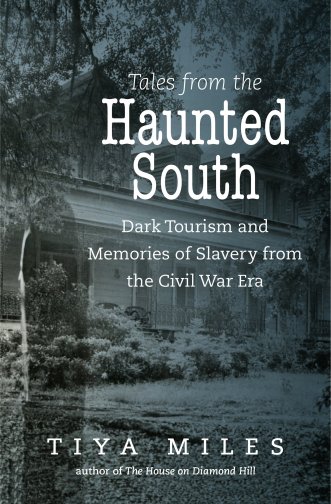
 Tiya Miles is a professor of history at Harvard University. She is the author of five books. One of her research specialties is African and Native American comparative histories. She is the winner of several awards including the Frederick Douglass Prize.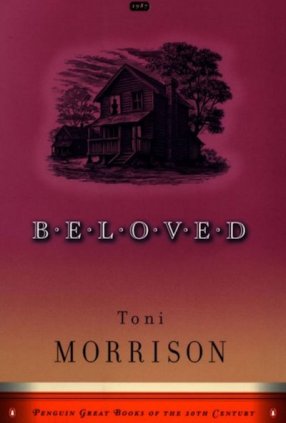
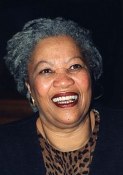 Toni Morrison is a professor emeritus from Princeton University. She is the author of several novels and won the Pulitzer Prize in 1993 for her novel Beloved.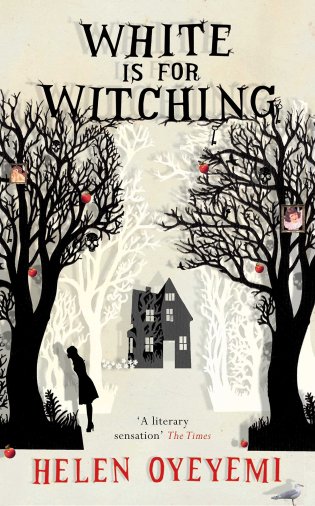
 Helen Oyeyemi is a British novelist originally from Nigeria. She is the recipient of numerous literary awards. She has written several books, short stories, and plays.
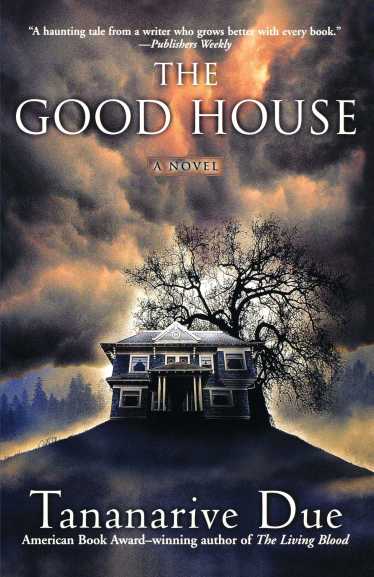 To the house that belongs to the Vodou priestess the locals brought the possessed girl. Hopefully Marie Toussaint would cleanse her.
 Tananarive Due is a an educator, former journalist and author. She is the daughter of civil rights activist Patricia Stephens Due, who as a member of CORE, (Congress of Racial Equity) and participated in several marches and a jail-in. Tananarive is the author of several books on the subject of black history/speculative fiction. Her novel “Black Rose” is based upon the research of Alex Haley.
 Stop the holiday press! (Is there such a thing?) Put those ornaments back on the tree right now. Return those vines of ivy to the banister. Rehang those stockings and regurgitate some of those “Ho Ho Ho”’s you swallowed on the 25th, cause I got one more Christmas-themed post for you! It is a book of Christmas ghost stories –
 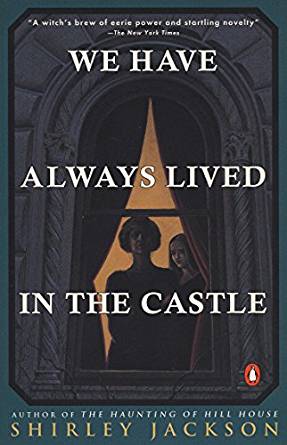 What is the most definitive haunted house of fictional literature? Many might say that it is “Hill House”, that mysterious mansion that haunts poor Eleanor Vance in Shirley Jackson’s novel “The Haunting of Hill House.” Certainly, Hill House is worthy of such a title. After all, the novel that spawned it went on to influence many if not most of the haunted house novels of the later part of the twentieth century, including Stephen King’s “The Shining” and Robert Morasco’s “Burnt Offerings”. Jackson has another story in her catalog of works that centers around a gothic style house. The story is dark and disturbing; the stuff of nightmarish fairy-tales in their original form before Disney waters them down with singing birds and colorful princesses. It is also charming (though there are no singing birds, there is a very observant cat!), funny, and quite absurd. It’s sort of a Poe-Meets-Kafka kind of piece. This novella I refer to is
 As summer winds down, so does this season’s theme; this blog will no longer be “subletting” haunted apartments. For the time being, you’ll just have to go directly to the story creators in order to vicariously reside inside their suites of terror. But don’t be so down in the mouth; I still have one more apartment complex for you to check out! Are you feeling adventurous? I hope so, for we are going to the other side of the world. Off to Japan we go, into a suburb of Tokyo. (For those Blog readers already residing in Japan, look on the bright side – travel expenses will be minimal!) We will also travel through time back to the 1980s and visit an apartment building that is situated beside a cemetery. Get ready readers as I review Japanese author Mariko Koike’s book,
  kind of scare. She writes about the things that make a trip down into a basement a terrifying experience. I refer to the shared basement in that exists in the story’s apartment complex – the storage center. . Down there the air currents are possessed. Down below there are hidden tunnels. From deep within their cavernous mouths, taunting voices call out to tenants that happen to be in the basement, beckoning them inside. Beware of the elevator that takes you down there! It often loses operational control to the things that haunt this complex! But the basement isn’t the only place in the facility plagued with supernatural terror. Sometimes ghostly hands press against the lobby windows. Oh my!
 I’ve been writing about haunted apartments lately. I will continue to do so, but for right now, it’s time to step out of those oppressive flats and enjoy the summer – before it’s gone. (It’s already late July, folks! Yikes!) Yes I know, apartments are my theme for this summer, but doggone it, summer is a time to read and write about topics that directly relate to this fun and sunny season. Topics such as bike riding, movies in the park…and ghostly forces. Ghostly forces? Yes you read that right. Summer is no time to “give up the ghost” (I used the same expression in a wintertime ghost article. Hee hee! Here it is, for further reading:
 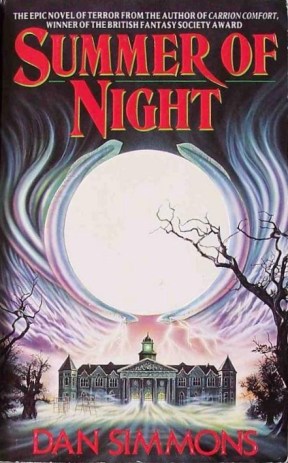 work in this context -I think!) of his school building after classes have been dismissed for the summer! But the boys of Elm Haven, Illinois have no choice. Living in a small town, they can’t escape its looming presence. But there is more to fear here than its symbol – an oppressive environment of rules and structure; the antithesis of summer vacation and everything those two and a half months of freedom represent. On the very last day of classes, a boy wanders down into the lowest floors of the building to a sequestered part of the school. Classrooms go unused here and the halls are empty. The boy goes to use the bathroom. Inside the bathroom, he witnesses something terrifying. And he’s never heard from again! The teachers, the townsfolk search for him to no avail.
 The events in this story take place in the summer of 1960.
  The Books of Daniel