Review of A Strange Christmas Game

strangechristmasgame2

Folks, we have approached a milestone.   This will be the first piece of ghostly literature for which I have listened to a narrator speak the story to me.  I followed along with the text on a website as an audio file played on.  The story is “A Strange Christmas Game” by J.H. Riddell, (a.k.a. Charlotte Riddell) 1863. You too can read and/or listen to this story.  Just click on the link below and listen and listen as famed author and storyteller Michael Whitehouse narrates the story narrates the story.

http://www.vaultofghastlytales.com/2015/12/a-strange-christmas-games-by-j-h-riddell.html

I found several versions of the telling on the internet, each varying in wording. I wasn’t sure which was the best, most true to the original source, etc. But in the end I paid it no mind and just settled on a version that is hosted by www.vaultofghastlytales.com

Followers of my blog, surely by now you have read my recent article Christmas Ghosts and Haunted Houses? Here is in excerpt from that article:

“Let’s say, perhaps, that our frolicking friends are feeling “warmly vulnerable” during a ghost story session at a Christmas Eve gathering. Let’s remove the last visages of safety and allow winter’s symbolic doom to come inside. It’s warm. Festive. Have a drink. Merry Christmas! Fires. Games. Ghost stories. And then – real ghosts haunt the house. Frightful! This is what I would call A Christmas Haunted House.

People of days past used to tell ghosts during the cold winter. Winter was perceived as dark, dreary and scary. At Christmas Eve gatherings, celebrants would eat, drink and be merry. They would play games. And… they would tell ghost stories. Ghost stories are fun when one is beside a warm fire and in the accompaniment of family and friends; feeling all warm and cozy, while the threat of winter rages outside their windows.  A story of a Christmas Haunted House takes advantage of the characters’ fragile coziness. They are feeling festive and carefree, just like the real life folks that gather around a fire to hill a grisly take. But the doom and gloom of winter invades their celebration in the form of ghosts. Their gathering is soon invaded my scary phantoms.

Does “A Strange Christmas Game” meet these criteria? I say – Mostly.

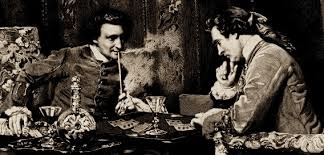
In the tale, brother and sister inherit a manor, Martingdale, which is supposedly haunted. strangechristmasgameMany years ago, original owner Jeremy Lester is playing cards with his friend on Christmas Eve. The clock strikes midnight, Lester’s guest leaves to go home. Out against the brutal elements of winter he wanders, but it is Jeremy that is never heard from again!

Has the winter doom invaded Lester’s home and whooshed him away?  Not exactly. When one reads further into the story, a different situation arises. But at this point, the story teases us with the “wintertime ghostly home-invader” scenario. However, it does address the Christmas ghost story theme of “game time gone ghostly.”

For sure, the dreariness of winter plays out symbolically within the story – within the house.  For instance, here is an excerpt from the book that points to this:

Altogether, Martingdale seemed dreary enough, and the ghost stories we had laughed at while sunshine flooded the rooms became less unreal when we had nothing but blazing fires and wax candles to dispel the gloom.

When summer ends and winter begins, brother and sister hear footsteps in the night, along with other strange noises. Is this the doings of the spirit of Jeremy Lester?  Read or listen to the story and find out for yourself. But one thing for certain – their home is haunted by ghosts that invade on Christmas Eve. However, the ghosts are not interrupting any Christmas festivities. Brother and Sister have been a wee bit too scared to be concentrating on Christmas.

Another thing to note; at the story’s climax, a snowstorm breaks out.  There hasn’t been such a storm for forty one years. –The last winter storm occurrs on the same night that Jeremy Lester disappears – on Christmas Eve.

This is a fun story. And it mostly meets my Christmas Haunted House criteria. Now, by all means, J. H. Riddell was under no obligation to adhere to the dictates of my half-baked analysis of Christmas haunted houses in literature. Afterall, I came up with them one hundred and fifty years or more after this story was published (with the help of others of course!)

I hope you give this tale a listen, a read, or both.  It’s a perfect story to ingest on a cold, winter’s evening.

FORAY at the HAUNTED HOUSE

This is a very good haunted house story. Therefore, I reblog. Please read and enjoy!

GrannyMoon's avatarGrannyMoon's Morning Feast

FORAY at the HAUNTED HOUSE

33HAUNTED MAGICK

Everyone was terrified

As they turned as white as a Ghost!

A Spirit had been summoned who lived in the time of yesterday to come back from the Shadows into the light of today

We called out to the Spirit

Show yourself…

As a feeling of cold filled the room we saw the presence of a Woman
◼
The invited Guests arrived right on time to the Haunted House at the stroke of Midnight

As they well knew that any late arrivals would not be able to enter in for just as the clock finished its strokes the sound of locking bolts began to seal them into the Haunted House

A light night supper was served in the parlour with lots of fresh fruit ~ an assortment of cheeses ~ chilled shrimp ~ and of course 100 year…

View original post 727 more words

Christmas Ghosts and Haunted Houses

christmas-ghost-story-3December is no time to give up the ghost! Quite the contrary! Rather, it is time to embrace the Christmas “spirit.”  This would be not the spirit of peace and good will toward men (although that spirit is kind of sweet, you have to admit!). Instead, I’m referring to you average, run of the mill specter that haunts the Christmas ghost story. Yes there are such ghostly tales. Surely you’ve heard the Christmas song sung by Andy Williams, “The Most Wonderful Time of the Year?”  Well check out this verse:

There’ll be parties for hosting Marshmallows for toasting And caroling out in the snow There’ll be scary ghost stories And tales of the glories of Christmases long, long ago.

Yes, Christmas is the season for ghost stories. At least it was back in them olden days. Colin Fleming in his article Ghosts on the Nog  goes so far as to call such a tale “The classic English Christmas ghost story”. Perhaps the most famous of them all is Charles Dickens’ 1943 classic novella A Christmas Carol, with Scrooge and the ghosts of Christmas past, present and future.

Well, now that I’ve established that the Christmas ghost not only exists but is also, in fact traditional, I’m going to go a step further. I’m going to make a case for the literary existence of “The Christmas Haunted House”.  I have not yet seen that term coined in any articles or literature, but I argue that certain traditions and ghost story telling rituals have given way to such a concept.  What is a Christmas haunted house?  I’ll try to answer that question. To do so, I must first delve into an historical analysis of ghosts, stories, Christmases and dark winters. So a delving I will go, laughing all the way, HA HA HA HA!

In the article Ghost Stories for Christmas at hypnogoira.com, Jim Moon reminds us of the various rituals that took place during the Germanic Yule and Roman Saturnalia festivals, and how some of the rituals of the ancient winter solstice later became associated with Christmas celebrations. There were fires and festivals to commemorate the shortest day of the year. Shortest day = darkest day.   Dark day? Hmm. Maybe “commemorate” is not the most appropriate word to use in this context.  Perhaps “offset” it a better choice. Yes.  The idea was to combat the darkness with lights. They would even go so far as to bring trees inside their homes and light them up. (Later to be known as the Christmas/Holiday Tree).  Although there is no evidence for the postulates put forth in the upcoming quote from the article, Moon presents the idea that winter stories of the supernatural originated during these ancient winter holidays.

Now it is assumed that during such ancient festivities, stories were told of gods and monsters which explained why the days would grow so dark, and our telling of ghost stories is an echo of these spiritual and religious recitations and rituals

Think about this. In the days before electricity, in the days of agrarian homesteads, resources aimed at warding off the cold and darkness were limited (at least when compared to today’s standards). Thus, “the dark” and “the cold” were pretty ominous things. Even during the festive solstice celebrations, the lingering darkness and the bitter cold continued to exert their powers.  These forces surrounded their fragile, festival fires, where the celebrants sought warmth and light.

Soon the fires would be extinguished. But the darkness and the cold temperatures would remain. (These are my words. Remember them – for I will come back to them later when I discuss The Christmas Haunted House.)


Thus, it seems only natural that these environmental conditions would extract some scary stories from the imaginations of the people of that day. Hence we have the term “winter’s tale.”

Keith Lee Moris mentions Shakespeare’s “The Winter’s Tale” in his 2014 article from the Independent.  Written in 1611, one of Shakespeare’s characters says, “A sad tale’s best for winter. I have one / of sprites and goblins.” Also of note is the book Saducismus Triumphatus . Referring back to Moon’s article, this book, written in 1681,  argues that  witches and spirits do in fact exist. That’s nice and stuff, but the reason I bring it up has to do with a fitting quote from the book. The quote is also referenced in Moon’s article. “These are not winter’s tales!”

In defending the legitimacy of magical witchcraft, the author uses the term “winter’s tales” to differentiate between fiction and what he proposes to be fact ( the witches). Thus, “winter’s tales” are similar to “Old wives’s tales”, or stories made up to explain a certain set of phenomenon. So what we learn from these two sources is that by the 17th century, the idea of a “Winter’s Tale” was common parlance, and it can be defined as a made-up story about dark, dismal and horrific topics.

By the Victorian Era, The ancient Yule traditions had merged with the Christian holiday customs, and “winter’s tales” evolved into Christmas ghost stories. Whereas societies of the 19th century were in a better position than ancient pagan societies to alleviate some of the harshness of dark winters, Victorian winters were still problematic. Moris mentions in his article that winter was the season that claimed the most lives. Antibiotics were not yet available and winters were very deadly.  Counteracting this wintertime misfortune was the joyous celebrations of Christmas. Gifts, dinners, drinks, games and….ghost stories!

Returning to the Ghosts on the Nog article, Fleming implies that author M. R James is the christmas-ghost-story-6-m-r-jamesmaster of the Christmas Ghost story. His ghost stories were published in the early to mid 1900s.  Though the stories were not about Christmas, they were written to be read on Christmas Eve. In fact, James read these stories to his colleagues and favored students by candlelight on the eve of Christmas. He even went so far as to describe the proper Christmas Eve ghost story-telling environment.  Guests should be well fed, full of eggnog, perhaps a little drunk.  It will be cold outside, but it will be warm beside the fireplace. Participants should be releasing their inner child. They should be ready to have fun and dispense with disbelief. They should try to scare one another with their ghost stories.

Let’s throw another “James” into the Frey. A few months ago, I reviewed Henry James’s The Turn of the Screw.  This is actually a story within a story. It begins in a setting similar to what M.R James described. (It’s tough “keeping up with the Jameses”) Friends are partying on Christmas Eve. They settle down, and one of the partiers begins the ghost story. The story is The “Turn of the Screw”.

Moris has an interesting observation in his article. He states:

“Winter’s ability to capture our imagination is at its strongest precisely when we are the farthest removed from its more harmful elements”

christmas-ghost-story4He goes on to cite examples, such as being “curled up” on a soft chair, besides a fire, all warm and cozy, while reading a ghost story. This protective environment is much like the setting of the Christmas Eve party that offers the activity of telling ghost stories. I’ll even go further and say this example applies to the pagan days of yore with their fireside tales.

BUT, (now this is a “big but” here) can you recall what I had asked for you to remember, further back in the article? In case you have forgotten, here it is again:

Soon the fires would be extinguished. But the darkness and the cold temperatures would remain.

I disagree slightly with Moris’s winter tale observation, and this disagreement is reflected in those sentences I had asked you to commit to memory. I might change Moris’s wording a bit. Here I go.

“Winter’s ability to capture our imagination is at its strongest precisely when we are the farthest slightly removed from its more harmful elements.”

I believe that winter’s effect on our imaginations is enhanced when its harmful elements are still near us. Imagine reading a scary book or hearing a ghost story while the dark night can be seen just outside the window, or the howling winds are to be heard underneath the crackle of the fire. Nature’s brutal elements are right there on the other side of the house’s walls. So close!  That, for me, makes for a creatively frightful situation. The recipients of the ghost story are safe – temporarily.  The fact that winter’s mighty roar is happening just outside adds to the “fun” tension. Perhaps the term “warmly vulnerable” is appropriate. The darkness and the cold temperatures are always there, just like they had remained with our pagan friends from a long time ago, with or without the fire.

One can expand on this situation and make it all the scarier. I shall be “the one” and expand I will! Let’s say, perhaps, that our frolicking friends are feeling “warmly vulnerable” during a ghost story session at a Christmas Eve gathering. Let’s remove the last visages of safety and allow winter’s symbolic doom to come inside. It’s warm. Festive. Have a drink. Merry Christmas! Fires. Games. Ghost stories. And then – real ghosts haunt the house. Frightful! This is what I would call A Christmas Haunted House.

Edgar Allen Poe’s poem The Raven hints at this. Though not a Christmas tale, the events of the poem occur on a dreary December evening. The protagonist is safe inside his chamber, except…(he asks) “Who’s that knocking at my chamber door?”  Death is wanting in!

Before this season is over, I will be reviewing two Christmas ghost stories that may contain these house haunting story elements, both of which are listed in Fleming’s article. The first is J. H. Riddell’s story “A Strange Christmas Game” – 1863. From the article:

 “…we have that idea of play again, only now it is the ghosts who are trying their hands at sport. Cards, as it were. A brother and sister have recently taken possession of a house willed to them, and the demise of their benefactor plays out like some horrible, woebegone mummer’s act.”

The second is “Smee” by A.M. Burrage – 1931. Again, from the article:

At this party, we’re playing a form of hide-and-seek in which the seeker advances upon the hider and says, “It’s me,” which, uttered quickly and breathlessly enough, becomes smee. It’s Christmas Eve, this is a big old rambling house, but one tiny problem: there’s an extra player who does not number among the guests.

 Finally, I will be offering a Christmas Eve ghost story of my own. I believe it meets my critera for a Chistmas Haunted House tale. It surely contains a threat from the outside that wants in. However, there will be a twist. I will post this story here at the blog.

Well, Happy Holiday’s everyone! As you prepare your homes for Christmas, don’t forget to invite the ghosts inside. They are definitely part of the Christmas tradition, and your homes will be ever so delightfully haunted during this “most wonderful time of the year.”


Review of The Haunting of Ashburn House

ashburn

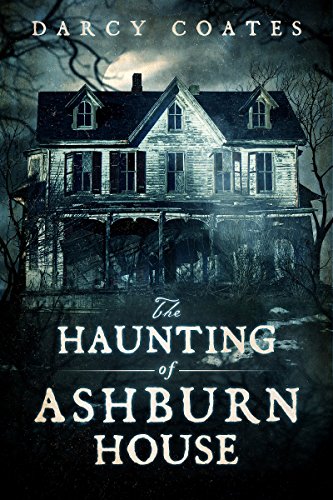
The Haunting of Ashburn House is the third book I am reviewing from the talented Darcy Coates.  I am now officially up-to-date with the “Haunting of” series. (The other two, in   order of publication, are The Haunting of Gillespie House and  The Haunting of Blackwood House.) Perhaps I shouldn’t use the word “series.”  Each book is a stand-alone story. However, there is a formula that persists in all the stories – a young female protagonist either rents or takes ownership of multi-floor house that ends up being haunted. In each case, she is not only new to the house but also to the community at large. In each house, there are mysterious items that pique the curiosity of the new occupants’. These items are related to the haunting that is to take place.

To clarify, I am not using the term “formula” in a bad way. The scenarios are the same, but the specific plot points vary from book to book with different facts and outcomes.  They are not without twists.  The Haunting of Ashburn House in particular does have an interesting turn of events.

Here’s a short synopsis.  Adrienne has inherited an enormous and ancient manor from her Great Aunt Edith, who has recently passed away. Little does she know that she has also inherited several odd duties that are necessary if she is to live safely at Ashburn House. What do I mean by “safely?” I mean – guarding against the paranormal dangers that will threaten her. Little my little, she comes to understand that the house is not normal. After experiencing a succession of terrifying happenings, she must make sense of the clues that surround her in order to stop the terror.  Some of these clues include messages that have been carved into walls and tables, an odd collection of candles, cautionary notes regarding the use of mirrors, old newspaper clippings of a tragedy that took place in the Ashburn House many years ago, and a mysterious grave on the property that has the most unusual inscription on the gravestone.

Coates excels at establishing mystery. The predicaments that Adrienne finds herself in captured my intrigue.  I kept turning the pages, all while encountering new clues and developments, which in turn caused me yet more page-turning anxiety. This built-in anticipation worked well at helping me to look past some occasional dull moments. There are several interactions between Adrienne and townsfolk, Adrienne and her cat, etc. that sort of halt the story rather than move it along.  There is unnecessary attention to certain details in several places; details that do not relate to the overall mysterious tone of the story.  Conversely, I would have liked there to have been more of a background story on Adrienne.  This would help readers to get better acquainted with the protagonist, thereby allowing for further empathy as she struggles through her terrifying situation.

But, as I have mentioned, there is much in this tale that holds the reader’s interest. Coates effectively casts her “foreshadows”; the dark mysteries that surround key items within and around the house. They lurk in between the lackluster elements of the plot and effectively beckon the reader to continue; to journey on until the mystery’s end.

Of the three books in “The Haunting of..” series, I like The Haunting of Gillespie House darcy-coates-300x206the best. It also happens to be the shortest of the three.  Perhaps I prefer Coates as a novella writer?  I would need read more of her works to be sure, and read more I will. (She has several other books about ghosts and haunted houses.  Check out her websiteThe Haunting of Ashburn House comes next on my list, followed by The Haunting of Blackwood House. However, all three are decent reads and I recommend them all.


Review of The Innkeepers

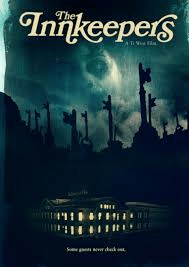
innkeepers2 Who are the keepers of the inn? Why, that would be Claire and Luke of course – two quirky twenty-somethings who like to gab at the front desk and browse the internet.  The Innkeepers are also two amateur paranormal investigators.

What inn do Clair and Luke keep?  It is called the Yankee Pedlar Inn. It is an historical hotel in New England that is supposedly haunted.  It has long creepy corridors, a spooky basement, a wide, square spiral staircase – all the workings of a good haunted house flick. The limited number of guests highlights an atmosphere of eerie abandon. It is the weekend before the inn is to close for good.  This is the last chance for Clair and Luke to capture supernatural activity on their specialized recording equipment.  So during their last days as employees of the Yankee Pedlar Inn, they are hoping for a ghost or two pop out and say “Boo!”


Normally, I am cautious about posting spoilers.  But for this review I don’t think it will be a concern.  There really is nothing to spoil!  This story has no twists, no hidden meanings, no symbolism.  What you see is what you get.  What does one see?  A haunted hotel that has ghosts that do stuff.  That’s it. When all was said and done, I thought that for sure I had missed something. I went to Wikipedia, IMDB, rottentomatoes, searching for a missed clue that would tie everything together and make me say “oh wow! I didn’t realize THAT was going on!” There is no such clue. There is no “THAT” there.

For me, the somewhat empty plot drags the film downward on the likeability scale.  But this does not mean it’s a bad film. The characters are interesting, especially Claire and Luke.  Their idiosyncrasies seem fit for one another, making for some interesting character chemistry. In this way, the film plays out like a crossover between Clerks and your average haunted house movie.  There are little snippets of comedic realism here and there. For instance, there is a moment where Clair is frightened. There is foreboding silence. Tension is building. And then we hear Luke flushing the toilet. The side characters (the hotel guests) are interesting as well. They have limited screen time, but their moments in from of the camera are worthwhile.

Ti West directs this film.  He is also the director of The House of the Devil. The aforementioned film seems to be superior to The Innkeepers, at least according to critics on IMDB, rottontomatoes.  I will have to check out The House of the Devil. It seems as if it’s a haunted house film.  And while I do not dislike The Innkeepers, I was hoping for something a little bit better.  Maybe this “better” will be found inside The House of Devil?  Who knows?


Review of Ju-On: The Curse

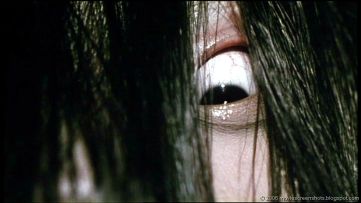
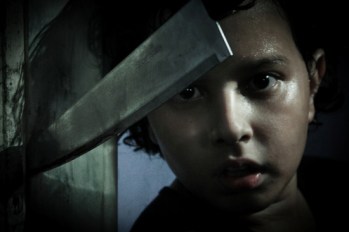
ju-on-the-curseJu-On: The Curse is one of those movies you watch, you enjoy, and when it’s over, you then read about the plot on wikipedia and try to figure out what the hell you just watched!

I have seen, but have yet to write about, The Grudge, the most familiar film of the Ju-On series. (The original Japanese film, not the American)  Ju-On: The Grudge is decent but confusing. I was going to write up a review right after seeing it, but I decided to wait until I had seen the lesser-known prequels. Perhaps then, I would have more to say about The Grudge.  With a solid knowledge of the back-story, I would be armed with experience and more able to write a decent review. The Movie Doctor inside my brain agreed and he prescribed for me initial viewings of Ju-On: The Curse and Ju-On: The Curse 2, along with a second viewing of Ju-On: The Grudge.  So I have swallowed the first pill (The Curse), and…… I am less confused.  Hooray! Still…I don’t know. I feel I am missing something.  But the doctor is ordering me to complete my therapy, so this I will do.  Also, he suggested I read up on the subject.  Yes Doc, will do.

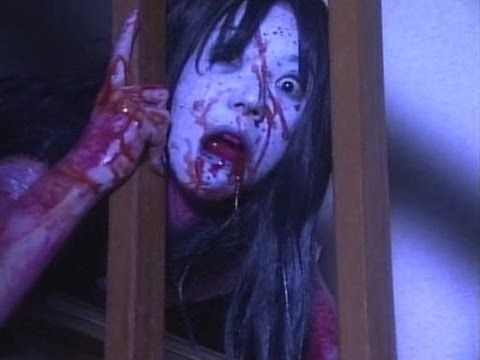
Ju-On: The Curse is a Japanese film that is available with English subtitles. It is about a house and a little boy, who at first comes off as disturbed, perhaps sad, but is otherwise normal.  Then his face contorts and he meows like a cat in agony.  There is also this young, bluish-faced woman who pops out of cubbyholes. Then there’s this girl who is missing a lower-jaw – yikes!  These are the ghosts, and there are several more.  They are all connected, in some way, to this house that is at the center of the story.  Did I say story? Perhaps it’s better to say stories!   There are six tales, each named after an important character within each story.  The stories are all connected; some take place within the haunted house; which is a modern home in a suburb of Tokyo. The tales that take place elsewhere feature characters that have been inside the house. But just because they are outside the terrifying confines it does not mean they are safe. No siree Bob!   The terror follows them!

ju-on-jaw

Now, here’s the kicker! The stories are not shown in sequence. Story 1 might be take place after Story 4.  Perhaps Story 4 takes place after Story 2, or maybe Story 6 sets it all in motion, or is that story 5?  Some films succeed with this kind of non-linear storytelling. Pulp Fiction is one example of such a success. Ju-On is not.  The tone of this film is effectively eerie, but I was forced to come down from my “creepy high” in order to figure out what is what, only to fail at this pursuit of understanding.  Hence, I was forced to go elsewhere to learn the modus operandi of the story.

According to wikipedia:

The title of the films translates roughly to “Curse Grudge”, which means putting up a curse while bearing a grudge against someone or something. The first two films in the series were so-called V-Cinema, or direct-to-video releases, but became surprise hits as the result of favorable word of mouth. Both films were shot in nine days and feature a story that is a variation on the classic haunted house theme, as well as a popular Japanese horror trope, the “vengeful ghost” (onryō). The titular curse, ju-on, is one which takes on a life of its own and seeks new victims. Anyone who encounters a ghost killed by the curse is killed themselves and the curse is able to be spread to other areas.”


Some of my confusion is no fault of the film and can be attributed to my ignorance of Japanese language and culture. Perhaps I would feel more at home with the film had I known the definition of “Ju-On;” or if I had the concept of the onryō engrained in my cultural psyche.  But how does this “curse” play out?  The film understates this, if it states it at all.

From the same wikipedia page:

According to Ju-On, when a person dies with a deep and powerful rage, a curse is born. The curse gathers in the place where that person has died or where they were frequently at, and repeats itself there.

Yeah, I didn’t get this. Without the above description, I would be at a loss to the whys and wherefores.  Basically, a family is brutally murdered inside their home (the house that is central to the story) and the ghosts of the victims come back and kill others that enter the home. Or, the ghosts will follow people that have entered the home and kill them elsewhere. The curse spreads and lives on.

ju-on-blue-ghost-girl

I am always appreciating fresh approaches to haunted house tales. And fresh this is! A tragedy within the walls creates a curse that spreads to those that enter the house. It attaches itself to them, so that they just might happen to take a couple of ghosts home with them.  I like it! It fits in nicely with the “Houses that exist as entities” theme that I have come to love

But for me, this series would be so much more effective it the film makers would just stick to good old fashion linear storytelling. I would be able to trace the deadly path of the curse had stories been shown from beginning to end.  The ghosts in this film, they are so darn creepy! Their faces are horrific, their movements uncanny. And the sounds they make when moving along? Unnerving, but in a “gotta love it, it’s horror” kind of way! Alas, the out-of-sequence storytelling is a trademark of the series. Fine! I will bear with it. I just wish this series didn’t have to make me work so much in order to appreciate it!

October Reflections

It’s November, and time to remember.

It’s time to remember the days of early autumn and all the happenings of October.  These happenings pretty much left me exhausted by the first weekend of November.  On that weekend, I was too tired to do much of anything.  I slept, rested and reflected on an October well spent.

My “October” stretched beyond the numerical boundaries of 1-31.  A friend once told me that for him, the 1960’s began with the assassination of President John F Kennedy (November 22, 1963) and ended with the resignation of President Ricahrd M Nixon (August 8, 1974).  He defined the “60”s not by the decade but by the chain of social and cultural events that coincided in and around these years.  Likewise, My October is not restricted to the days that fall within the calendar month that begins with the letter “O.”  My October began in late September at an art house movie theater and ended in early November at an attic lounge of live entertainment.  These two “bookend” events, along with the many things that occurred in between, fit together in one common category – the commemoration of autumn.  Within this commemoration, I had my own personal harvest, not of farm produce but of the “crops” related to my craft; writings, books, a revamped blog.  I also took great pleasure in celebrating the month-long season of Halloween, while joyfully taking part in other several other autumn customs.  The best part was that I was able to celebrate autumn with my family, friends and loved ones.  And with you, the readers of this blog!  I love you all!

Any goal worth achieving takes planning and preparation.  I made it a goal to have a productive and eventful fall, and I set this goal all the way back in June!  I came up with contests and offered one of my paperback books as a prize. I had new and exciting ideas about how to redesign my website.  I made charts and timelines.  I took pictures that would be used in the blog. I set sale dates for my books.  Things were going to happen. And of course, I would have fun! That was important.  (You can see a post about my October plans here: )

Beginning in August, I started to watch horror movies. These included movies that were new to me and movies that I had not seen in a long time. I did this in anticipation of a list I was going to compile – a list of my Top 50 Horror films.  I looked forward to sharing this list with everybody.

sept-24This brings me to Sept 24, 2016, a fine Saturday evening that began my “October.”  I had not yet seen the classic horror film “Phantasm.”  However, it was unavailable at all the sites where I rent movies (iTunes, Amazon, etc.)  This was because it was in the process of being digitally remastered for the first time.  The Music Box Theater in Chicago would be showing this remastered version. Not only had I not seen Phantasm, but I had never been to this famous art house theater. It was a win-win situation.  So on that Saturday, I arrived early.  I went to a bar that was a couple blocks away.  When it was time, I left the bar and walked down a dark street toward the theater while taking in some of “nature’s greenery” (ahhhh!).  I saw the film, it was good, and oh what a great night!

The following weekend (Sept 29, Sept 30, Oct 1, and Oct 2) was blog time.  I took off work that Thursday and Friday, allowing myself a 4-day weekend to upgrade and redesign my website. It was challenging but fun.  I even learned how to incorporate an image map into my blog. An image map allows you to map-out clickable areas on an image that will lead to links of your choosing.   You can see the results of my labors here (scroll to the image of the house and cemetery at the bottom of the page) and here .

In order to advertise my redesigned website, I featured a ghost hunting contest. I hid several cartoonish ghosts across my blog. Whoever was to find the most ghosts would win a copy of my book “The House Sitter” . Contestants would have to the end of the month to find these ghosts.

My nose wasn’t at the grindstone all weekend long, mind you. On Sunday Oct 2, my wife and I went to Sonny Acres Fall Festival.  There we bought our pumpkins, went through a haunted barn, took a haunted hayride, and had cider, doughnuts, and ears of corn.  Yummy!

As October kept rolling along, I listed my favorite horror films on my personal facebook page post by post. Meanwhile, I hosted another contest, one for of my Haunted House Facebook page. I would show a picture of a haunted house and the contestant was to name the movie that featured this house.  Like with the Ghost Hunt, the winner was to receive an autographed copy of my book “The House Sitter.”

The second weekend of October was mostly dedicated to “taking down the summer”.  I  like summer, but all things must come to an end. Away went the patio furniture, the outside summer lights, and other yard décor.  One of these years, I will have an assortment of autumn and Halloween yard decorations to replace those that get put away for the summer. Cornstalks, grave stones, zombies, oh my!  They were selling corn stalks at Sonny Acres.  But we didn’t buy any L.   But we put our pumpkins outside! That’s something!

oct-15On October 15 (Saturday), my wife and two of our friends went to a German bar/restaurant (Edelweiss) and watched The Cubs win a play-off game. I call this event OCubstoberfest!  I danced to the music performed by a live ompah band, drank Weiss beer, ate German food, and cheered on the Cubbies!

Sometime during the month, we bought Halloween toys for our nephews.  They live in Seattle and my wife was going to go visit them at the end of the month.  One such “toy” was a “Spooky House” book, with flaps that unveil ghosts, spiders and other creepy things!  I decided to read this book to my nephews – in a video – and upload it to my blog. I hoped the kids would like it.

The weekend of Oct 21, 22 and 23 was a biggie.  That Friday, my wife and I attended my niece’s wedding.  It was a lovely, autumnal, outdoor wedding.  Cider and kettle corn were some of the treats. There was squash soup as an appetizer. And a tasty meatloaf dinner. Of course, there were drinks and dancing!  All this at an enchanting bed and breakfast house in the southern suburbs of Chicago! There was even a bonfire.  No autumn is complete without a fire.

The day following the wedding wasn’t for rest.  No siree Bob! To the Haunted House at Saint Pascal’s we did go, and then it was off to a Halloween/Birthday/CubsEnterTheWorld Series party! The night was scary, the night was wild – the night was filled with victory!

oct-31 Then along came Halloween Weekend!  My wife was in Seattle. She sent me pictures of our little nephew enjoying the video of me reading The Spooky House Book. He loved it and I was so happy!  Saturday Night I watched Abbot & Costello Meet Frankenstein on Svengoolie.
On Halloween night, Monday, after dishing out candy to trick or treaters, I watched the movie that made it to the #1 spot on my Top 50 Horror Film list – “Halloween” by John Carpenter.

On the days following Halloween, I had my contest winners. I sent a book to a fan who won the haunted house contest. Then I met an old classmate after work. He was the winner of the Ghost Hunt contest. I gave him the book. It was a nice reunion. Then the Cubs went and won The World Series. Holy Cow!  The following evening I attended a performance at Mary’s Attic in Chicago.  “Skooby Don’t!”  My nephew had the role of Fred, the leader of the Skooby gang!.  A very interesting play it was.

So on the weekend that just passed (nov 5 and 6), I rested.  I believe I earned this rest.  I had planned for an active October and my wishes came true. True, autumn marches onto until the end of December, but my favorite part of the fall season has come to a close. It’s a short time and it comes and goes so quickly! Thus, planning is required in order get the most out of these fleeting days.  Many people pre-plan their summers, me included.  So why not pre-plan your autumn?  Autumn is just as good as summer, maybe even better!  Plan it and good things will happen. Plant it, grow it, harvest it, and then enjoy it as it comes to fruition.

And then there is the stuff that just happens. Not everything can be planned. Enjoy those unplanned moments as well. But sometimes you have to push the ball to get things rolling. And the rolling ball will tread across uncharted grounds.  But this is part of the fun. Just shout “Wheeeeee!!!!” as the rolling ball unearths wonderful surprises!

Top 50 Horror Films

This is NOT a list of my favorite haunted house films.  This is a list of my favorite films from the horror genre in general.

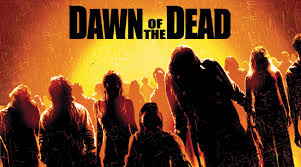
#50 Friday the 13th, Part III  topmovies50fridaythe13thpart3 #49 Dawn of the Dead   topmovies49dawnofthedead

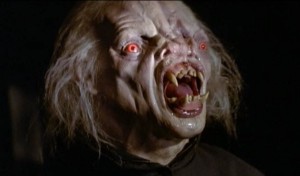
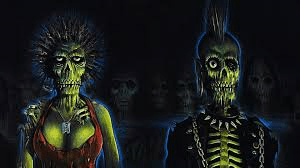
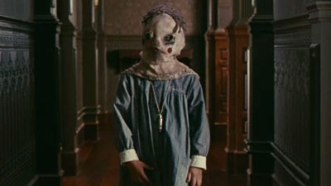
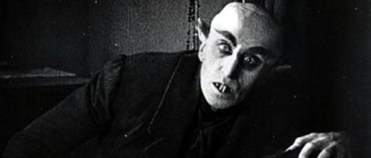
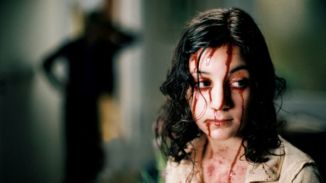
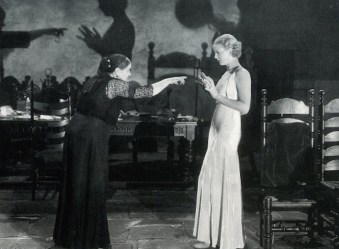
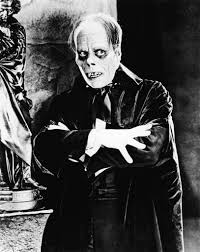
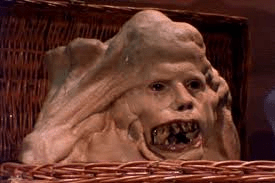
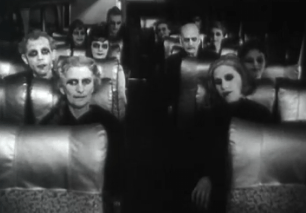
#48 Fun House  topmovies48funhouse#47 Return of the Living Deadtopmovies47returnofthelivingdead#46 The Orphanage topmovies46theorphanage#45 Nosferatu topmovies45nosferatu#44 Let the Right One In topmovies44lettherightonein#43 The Old Dark House topmovies43theolddarkhouse#42 The Phantom of the Opera topmovies42phantomoftheopera#41 The Houses October Built topmovies41thehousesoctoberbuilt#40 Hellraiser topmovies40hellraiser#39 Basket Case topmovies39basketcase

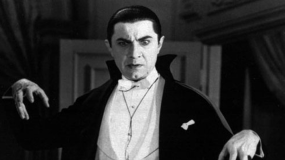
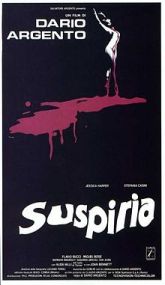
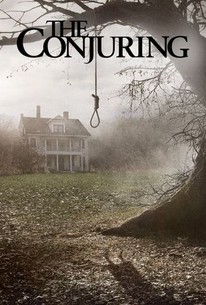
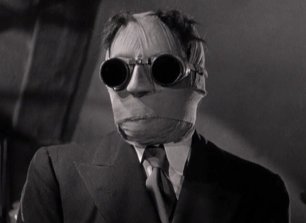
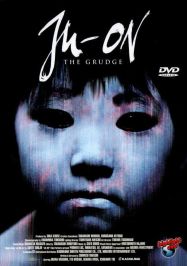
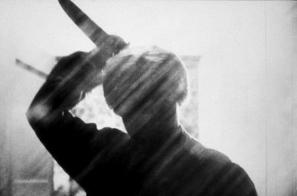
#38 Dracula topmovies38dracula#37 Suspiria topmovies37suspiria#36 The Mist topmovies36themist#35 The Conjuring topmovies35theconjuring#34  The Innocents topmovies34theinnocents#33 The Invisible Man topmovies33theinvisibleman#32 Ju-On: The Grudge topmovies32juonthegrudge#31 Psycho topmovies31psycho#30 1408 06714CMX01B

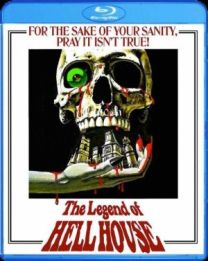
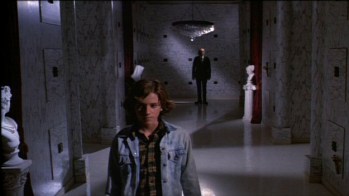
#29 The Legend of Hell House topmovies29thelegendofhellhouse#28 The Cabinet of Dr. Caligari topmovies28thecabinetofdrcaligari#27 The Babadook topmovies27thebabadook#26 Ringu topmovies26ringu#25 The Conjuring 2 topmovies25conjuring2#24 Saw topmovies24saw#23 Rosemary’s Baby topmovies23rosemarysbaby#22 The House at the End of Time topmovies22thehouseattheendoftime#21 The Bride of Frankenstein topmovies21brideoffrankenstein#20 The Sixth Sense Frightened By His Paranormal Powers 8 Year Old Cole Sear (Haley Joel Osment Is Too Young To Unders#19 The Others topmovies19theothers#18 Phantasm topmovies18phantasm

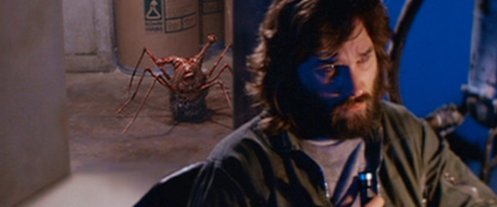
 #17 The Thing topmovies17thething

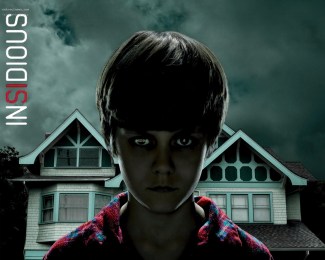
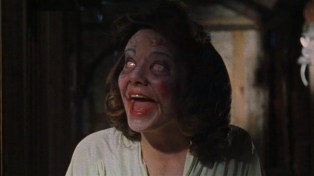
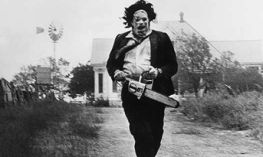
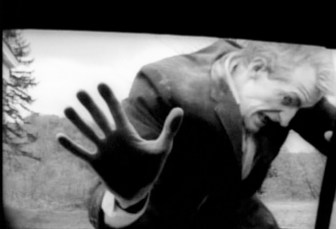
 #16 The Shining topmovies16theshining#15 The Exorcist topmovies15theexorcist#14 Nightmare on Elm Street topmovies14nightmareonelmstreet#13 Re-Animator topmovies13reanimator#12 Paranormal Activity topmovies12paranormalactivity#11 The Haunting topmovies11thehaunting#10 The Witch topmovies10thewitch#9 Evil Dead 2topmovies9evildead2#8 Insidious topmovies8insidious#7 A Carnival of Souls topmovies7carnivalofsouls#6 Evil Dead topmovies6evildead#5 The Texas Chainsaw Massacre topmovies5texaschainsawmassacre#4 Night of the Living Dead topmovies4nightofthelivingdead#3 Frankenstein topmovies3frankenstein #2 Carrie topmovies2carrie#1 Halloween topmovies1halloween

Children’s Story Time – A Reading of “Spooky House”

I thought I would try something different.  I bought a “Spooky House” book for my young nephews for Halloween.  I decided to read it to them – online – in a video!  They can watch the video and follow along with the book!

But I am sharing my video with everyone! If you have little children, show them the video!

I hope you will like it!


Review of The Turn of the Screw (Book) and The Innocents (Film)

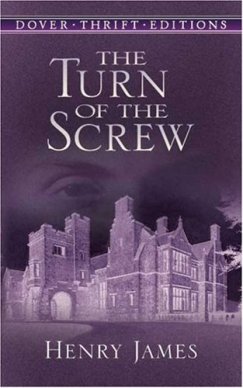
turnofthescrewThe story that is the subject of this review concerns a worrisome governess, her two enchanting little charges, an agreeable maid, a haunted mansion, and two “evil” spirits. The determined Miss Giddens will stop at nothing to save sweet little Flora and dear Miles from the “evil” that haunts Bly, the country estate in which they dwell.  This “evil” incarnates as the ghosts of the children’s former custodians, the late Peter Quint and Miss Jessel. While alive, these two had a sordid affair, often engaging in sexual acts openly, possibly in front of the children. It is up to Miss Giddens to put an end to their “corruptible ways” that continue after death.  But in order to do so, she must convince the children to confront that which haunts them. And the first step in this process is to get them to overcome their denial: Miss Giddens needs to be able to get the children to  admit that they are indeed haunted.  For they carry on as if nothing bothers them.  For they are “The Innocents”.  Meanwhile, the “screw continues to turn”.   
innocents


The preceding paragraph presents a concise synopsis (I hope so anyway), and yet it is only the skin of the story. There is much more going on below the surface. Notice how I have placed the word “evil” in quotation marks on three occasions. Likewise, I have placed “corruptible ways” inside these protective, overhanging symbols that defend these words from a single-sided perspective. Do these spirits really represent evil and corruption?  Maybe. Or maybe not. Maybe there are no ghosts at all.

There has been much argument and analysis over this Henry James masterpiece: The Turn of the Screw. Likewise, there has been much praise for Jack Clayton’s The Innocents, a film interpretation of the famous novella. I will get into the analysis in a bit. But first, let’s deal with the basics of each medium.

The Turn of the Screw begins with a group of friends that gather on Christmas Eve and listen listen as someone recites a ghost story.  Ghost stories were part of the Christmas tradition in the days of yore. Think Charles Dickens and “A Christmas Carol” – with the ghosts of Christmas past, present and future.  Anyway, the story that is told is “The Turn of the Screw”.  The title is based on an expression that means “an action which makes a bad situation worse, especially in order to force someone to do something.”

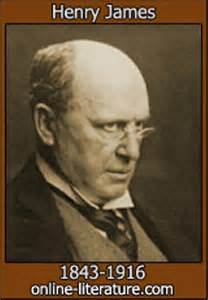
The person doing the forcing is Miss Giddens. She is forcing her charges to admit to being haunted by the ghosts of their former caretakers. Does her insistent broaching of the subject make things worse? Yes indeed! But she realizes this, and so she treads cautiously.  Through hints and subtle coaxing, she addresses the children.  One of the more noteworthy aspects of James’s writing has to do with the dialogue. When speaking to each other, the characters engage in art of circumlocution – communicating in a vague way, being indirect. When the governess gets very close to approaching the children about the henryjamesghosts, the children suddenly stop answering her questions. Or they change the subject. Miles, the cleverer one of the two children, will throw his questioner off as he rebuts with questions of his own, questions that make Miss Giddens rethink this whole ghost business and cause her to have doubts.  Admittedly, the book is a tedious read. In the end, I was able to find enjoyment with it, but the enjoyment has its costs. I paid for it with much rereading and contemplation.
The film The Innocents is easier to comprehend, and thankfully the mystery and ambiguity of Henry James’s story remains.  It is based on a play by the same name (The Innocents by William Archibald), which in turn is based on Turn of the Screw. The famous Truman Capote pens the screenplay for the film.

More so than the book, the film is a haunted house movie. The film making style is chilling and haunting. The soundtrack features a child humming a tune, an effect that comes off as innocently creepy.  The camera successfully captures symbolic imagery; the sky and clouds are reflected in the pond, the rays of sun streak into the house.  There are good closeups of facial expressions; kudos to the actors who communicate so much with a simple twist of their facial muscles.  Then there is the camera and sound styling that make for a compelling haunted house movie; effective uses of shadows, camera pans across long hallways, background creaks, and laughter – echoing, reverberating laughter.

The differences between the film and the novella can be summed up this way:

The Turn of the Screw – a complex psychological drama that features ghosts.

The Innocents – A ghost/haunted house story with psychological underpinnings.

As far as analysis is concerned, I will base most of it on the film. The main question that arises has to do with the ghosts. Are they real, or are they figments of Miss Gidden’s imagination? If they are imaginary, why on earth would she dream up such horrors!

Let’s assume they are imaginary (Actually, I’m going to assume they are both real and imaginary. I will explain this later). To what mental processes are we the reader/viewer to attribute these imaginary products?  Let’s examine what others say about this.

From the New Yorker, with quotes from David Bromwich:

He (David Bromwich) concludes, flat out, that the evil that threatens the children “is channeled and communicated by the governess,” who presents us with “an unforgettable image of psychological projection—the inward fears of the governess transfigured by imagination into a palpable menace.” He effectively offers us a ghost story without ghosts.

Then there is this from sparknotes:

With the publication of a 1934 essay by the influential critic Edmund Wilson, a revised view of the story began to gain currency. Wilson’s Freudian interpretation, that the governess is a sexually repressed hysteric and the ghosts mere figments of her overly excitable imagination, echoed what other critics like Henry Beers, Harold Goddard, and Edna Kenton had previously suggested in the 1920s.

Ahh those Freudian, psychological innards; the ID and the Superego duking it out before us. The New Yorker quote mentions projection; another psychological term. Oh how I love it that such a term is associated with a haunted house story, for it adds a whole new dimension of analysis to us people of the page – us students of haunted house lore.  Some time ago, I wrote an article about haunted house lore from a sociological point of view. (You can read it here.) Now, we at the page can examine haunted houses from a psychological point of view. The “ghost conjurer” in our story is Miss Giddens. Her mind churns out the spirits, and her eyes act as the projectors. The house is the screen on which she sets her spirits free. It accepts these spirits and reflects them back to us, the viewers of the film (or us as the readers of the novella). In this way, the spirits can be both imaginary (projected from her mind) and real, (or existing as “observable entities” to us the viewer/reader.) As ghost story fans, we can relish in the thrill of encountering ghosts while at the same time understand them for what they are – psychological manifestaions.  OR – the ghosts might still be real, even to the other characters of the story that deny seeing them. Nevertheless, they still exist as symbolic entities. Maybe it can then be said that they are made of “ethereal symbolism.”  Is that such a thing? Well it is now, cause I just coined the phrase!

Let’s see how this plays out in the film, shall we? Yes we shall! Oh and beware! There are spoilers lurking below!

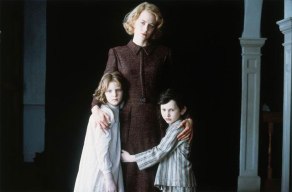
Here’s a recap. Miss Giddens takes charge of two children at Bly Estate. They are so mannered, so bright beyond their years.  They seem so pure as to be uncanny; unreal. When she learns that ghosts are haunting them and intent on possessing them, she does everything she can to protect the purity. Notice I said “the” purity and not “their” purity. Yes on the surface, it is their innocence she wants to protect. But there in another “purity” she seeks to salvage. That purity is her own. Miss Giddens sees herself in the children. Each child represents a competing side of her inner conflict. Flora is the most innocent. She is the sponge that is ready to soak up experience.  She is the one to be corrupted. She represents Miss Gidden’s lack of experience, her virginity. Miles, the slightly older brother, represents the darker side of Miss Gidden’s explorations of her own psyche, the guilt that comes with the “sinfulness” of sexual awakening. Thus, he is the corrupter.

the-innocents-the-childrenHow dare I place such moral weight on children? Who am I to equate the ways of children with adult-like offenses? To place such burdens entirely on the children is unthinkable, and this is why the spirits of adults exist as their ghostly counterparts. Flora is (supposedly) haunted by Miss Jessel, the former governess that was “corrupted” by the servant Peter Quint. Miles is haunted (supposedly) by Quint, the corrupter, the one who “touches” Miss Jessel.  And Miss Jessel, shamefully, allows such “touching.” In a way, Miss Jessel and Quint are familiars, if we go by this definition of offered by Pierre A. Riffard.

From Wikipedia:

A familiar spirit (alter ego, doppelgänger, personal demon, personal totem, spirit companion) is the double, the alter-ego, of an individual. It does not look like the individual concerned. Even though it may have an independent life of its own, it remains closely linked to the individual.

Thus, Quint and Miss Jessel represent the darker side of the children’s innocence while at the same time serve to epitomize the Freudian conflicts within Miss Giddens.

Let us go now to certain scenes and lines of dialogue in order to obtain evidence for my analysis.

In describing the house, it his mentioned that there are many rooms that are locked and empty. This symbolizes areas of the psyche that have yet to be explored. But due to barriers such as “guilt”, entry is forbidden. Flora comments on the rooms and says “Big rooms get bigger at night.”  I take this to mean that in darkness (in the unknown areas of the psyche) psychological tasks seem huge. But Flora also says “I wish I could sleep in many rooms all at once,” showing how she craves experience. Like Miss Giddens herself.

On the other hand, it is revealed that Miss Giddens is raised by her father, a strict minister, in a house with several brothers and sisters. She says her house was small, “too small for secrets.” She had no room for discovery. There was little personal growth.

Flora prays the “Now I Lay Me” prayer. She comments on the “if I die before I wake” part of the prayer. She says about dying, “If I don’t go to Heaven, my soul will roam.” This is the searching for self, perhaps even barred from Heaven on account of guilt.

Miles is not yet on the screen. He is away at school. But soon he comes home, having been expelled. The letter explaining the expulsion doesn’t go into any details. It will be revealed that he is a bad influence on the other students, but still the specifics remain unknown. Later he lies in bed and Miss Giddens stands outside his bedroom door. Strangely, he knows she is there. The unconscious mind knows all. He is on the other side, where her desires exist. Miss Giddens wants to cross over to them but is afraid to do so.

Miss Giddens plays hide-and-seek with the children (What will she see when she finds them? Will she find evil hiding inside sweetness?) In the attic Miles jumps out from his hiding place and grabs his governess’s head. His grip is strong.  This occurs in front of a picture of Quint. He is her sexual desire. This urge takes a hold of her and won’t let go.

In another scene, the kids play “dress up”. They wish to surprise Miss Giddens with their costumes. This activity is similar to the hide/seek metaphors. Who are these children underneath the surface, beyond the costume?

One evening, Miles misbehaves. He goes outside in middle of night. Flora watches him from the window as he stands eerily in the moonlight in the courtyard below. All this is a set up to prove to Miss Giddens that he can be bad.  Later, when explaining his behavior, Miles says, “A well-behaved child is boring.” So Miles does something wrong and Flora enables it.  Miss Giddens, like Flora, looks down upon him. She is aware of her desires, her impulses of the ID, and she seems them clearly, but from afar.  After ushering Miles back to bed, there are implications of a pedophilic encounter.  But of course this is all symbolic so we need not worry. But Miles kisses his governess. The kiss is long and passionate and Miss Giddens allows it to happen.

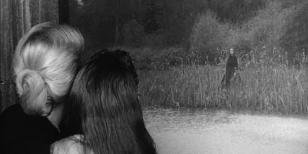
In a climactic scene, Miles distracts Miss Giddens while Flora runs out of the house. (Innocence if fleeing!) Miss Giddens finds the young girl at the edge of the pond. She is theinnocentsdancing (the last attempt at retaining innocence) Miss Giddens sees the ghost of Miss Jessel on the other side of the pond. She insists that Flora sees her too. Somewhat hysterically, she demands that Flora confess to seeing her. Flora screams and has a breakdown. Later, along with the maid, Mrs. Gross, she departs from the premises, never wanting to see Miss Giddens again.  To this, Mrs. Gross says, “Waking a child can be worse than any bad dream”.  This line pretty much sums up what has happened. Flora (and Miss Giddens) is forced to “wake up” and confront the loss of innocence. No longer is she pure. No longer is she protected. With such revelations, heartbreak is only natural.
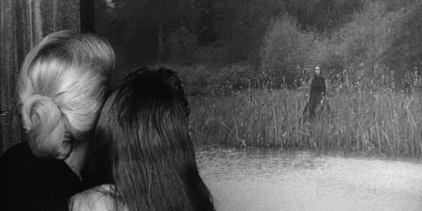
After confronting the loss of innocence, the next step is to confront those “sinful,” lustful desires. Miss Giddens is now alone with Miles. They sit at a table and drink tea like they are two adults on a date. She confronts him.  She asks him about why he was kicked out of school. At some point during their conversation, Miles lashes out, “You dirty minded hussie!”  While this happens, the ghost of Quint looks in through the window. Miss Giddens says “Those are not your words!”  She insists that they are coming from the spirit which possesses him.  She forces him to put a name to the evil. Finally he does. He says “Quint!”  Then, Miles dies. This is the final step. Once the demon is acknowledged, once it has a name (is easily identifiable), all notions of innocence and any pretense for purity is gone. Dead.

So, wrapping this up, Miles calls out the name of the spirit on his own accord. Miss Giddens, though coaxing him to call out the name, does not tell him which name to say. This leads credence to the theory that there really are spirits floating about in this story. But they might not exist independently outside of Miss Gidden’s perspective. The children may be conduits through which the spirits come to be; the current which powers up the projector that operates inside the governess.

Overall, I prefer the film to the book. The film is much more of a haunted house story than the book. And you know me – I just love me some good ol’ fashion house haunting tales.  But please, don’t discredit the book. It is indeed a brilliant piece of work. It has stumped academics for years and it will do so for many years to come.