Have you ever ordered a sampler at a restaurant? Let’s take the seafood sampler for example. There might be a couple of crab legs on your plate, some fried shrimp and tartar sauce. Throw in some garlicky scallops, a lobster tail and you’re all set.
I read a sampler a couple years back. I’m just getting around to writing about it now. Don’t worry, I’m refreshed. Try refreshing two year old scallops though, that may not turn out so well.
I reread and/or skimmed through the stories of M L Bullock’s Haunting Paranormal Ghost Story Collection, which is a collection of firsts from various series. I saw this book advertised on Facebook at a very generous price. Of course I can’t remember what I paid; perhaps a few dollars? It was a kindle book. Also, I can’t recall if it was an advert or if I was already following Bullock. Whatever the case may be, the promotion worked on me (that rhymed) and I bought the book.
Need I say each story contains a haunted house? Mostly these are manors and each one has a story to tell, having hosted successive generations within their walls. Whether plantation manors or mansions unassociated with a spread of land, they are houses of the American South. Hence, M. L Bullock is known as “The Queen of Southern Gothic”. Don’t believe me? Check out her website and see for yourself! You’ll have to scroll down a bit. She shows off this title in bold, colorful print. Guess I can be the King of the Houses of the Haunted if I just get my fonts right.
Bullock’s writing style is, well, it’s her style. Some will love it, others no. I’m somewhere in between. She’s overly descriptive when detailing the heroine’s daily apparel or hairstyle choices. At least for my tastes. She is quite prolific, being the author of several long series. How does she pump out so much material? For one thing, the books within the series are not very long (at least not the books that begin each series). Second, her works are very formulaic.
Nevertheless, Bullock is a good story teller, skilled at wrapping the reader in her worlds, both modern and historical. Had this not been the case, I wouldn’t have made it through these five stories (although with one of them I was tempted to quit). They are:
Seven Sisters
The Haunting of Joanna Storm
The Belles of Desire, Mississippi
Wife of the Left Hand
The Ghosts of Kali Oka Road
This article will touch on each story in brief, examining plot, and offering opinions. As to this last point, I will finish each succession with a “Yes”, “No”, or “Maybe”. What are these? Well, they are answers, you see. This implies the preexistence of some kind of question, doesn’t it? The question is: Does this introductory book entice me to read other books in the series?
First, let’s get the formula out of the way. This applies to most of the five stories, if not all.
A female protagonist finds herself in a new house or city in the American South. Things in the new place are not exactly normal. They are, shall we say, “para” normal. Ghostly goings-ons are afoot. Sometimes the event is subtle, causing the heroine to dismiss it. Other times the event is striking, leaving no doubt the house is haunted.
A large chunk of the story will take place in historical times. Sometimes it’s half of the story, and in other cases only snippets of the past leak onto the page. In all cases, the protagonist experiences the past as if she were there as an eyewitness watching a haunting history unfold. Hence, there are two timelines, the present and the past, and the workings of the paranormal to connect the two. The means to this time bridge she crosses differ slightly from story to story.
In most of these stories, there is mystery surrounding the fate of a woman from the past who once resided in the haunted house. Either she disappeared during her lifetime or the final fate of the woman (who is a victim of some tragedy or loss) is lost to history. It is the duty of the protagonist to solve the mystery.
The protagonist’s appearance is described in great detail. Hair color or style, manner of dress, from blue jeans and t-shirts to grand dresses or yore. This description applies to her male love interest as well. In every story, there is romance or hints at romance, earning these stories the genre badge of “Southern Gothic Romance.”
Finally, all these stories end abruptly. It’s as if there is a built-in alarm that rudely blares, catching the reader off guard. Content with the story pacing, enthusiastic to complete the last stretches of the journey, then all of a sudden, a hidden voice comes out of nowhere and shouts, “Last call for alcohol! Drink ’em up, we’re closing in 10 minutes!” Conclusions are fast, unsatisfactory, and forced, with many questions left unanswered. I guess this is where the reader is supposed to grasp quickly at the next book of the series. Hurry! Go to Amazon, buy and download. Damn! Slow wifi. OMG, does my device have enough charge? (As I write this, I am reminded to charge my tablet. Seriously, I might have gone to bed with no power to read anything before sleep. The horrors!)
Obviously, I didn’t rush to buy any sequels, for as I stated, I’m going to reveal my yes-maybe-no answers concerning the prospects of continuing any of the series. However, I did finish this entire book, which means, despite how much I seem to be bashing these stories, I did discover things I liked. I like the worlds Bullock creates, both past and present. The characters are interesting. Bullock does take the time to build idiosyncrasies into their makeup. And the stuff of ghosts and haunted houses are spooky and fun!
Okay, enough of all that. Let’s explore each story in more detail, shall we?
Seven Sisters
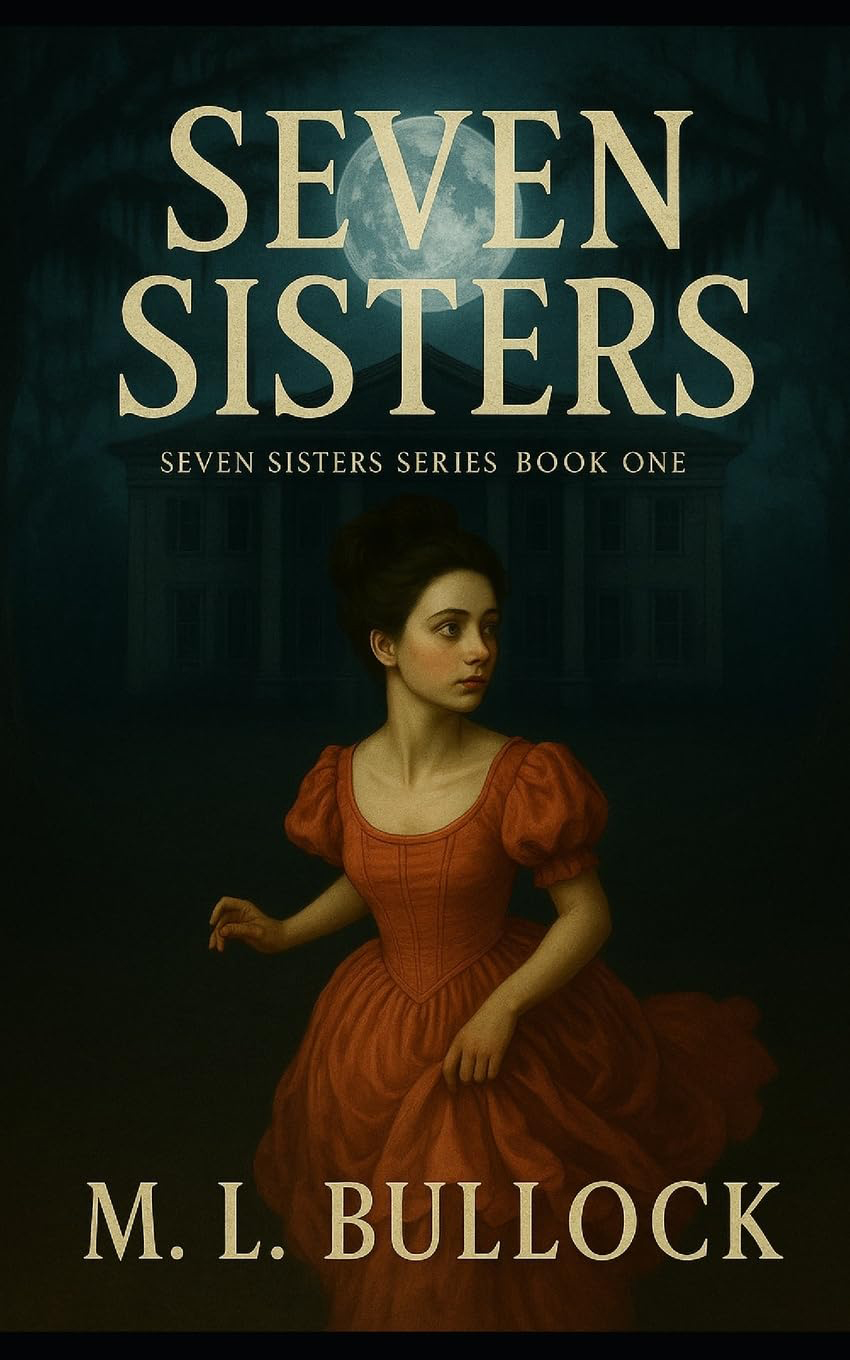 Carrie Jo, just out of a relationship, is hired to assess the inventory of antiques inside Mobile, Alabama’s Seven Sisters Manor (former plantation), with the end goal being to convert the premises into a museum. She is well qualified. She is a historian and has a team at her disposal to assist in renovation and research. She falls in love with Ashland, her boss, and the current owner of the estate.
She also has a special ability when it comes to dreams. When she sleeps in the presence of artifacts, or inside an old house, her dream transports her back in time, where she can witness the happenings from a long time ago.
In her dream state, she is transported from the twenty-teens to the eighteen-forties, where she witnesses the life of Calpurnia Cottonwood, the teen daughter of the former owner of Seven Sisters. Poor Calpurnia went missing sometime in the 1850s. Readers, through Carrie’s dreaming eyes, learn how she fell in love with a sailor who happened to be passing through Mobile. We feel for her when she is abused by her drunken father. The dreams tell us of other relationships from the past. How slaves interact with their masters, how slaves interact with each other.
Carrie Joe, when exploring the manor in modern times, witnesses doors opening and closing. Could this be the activities of a Calpurnia’s ghost?
All in all, a very interesting piece of historical fiction with fine, ghostly elements.
Will I read on?
Let me show you what I would be up against if I took on this task.
Will you look at this loooooong list? Oh Good Lord!
SEVEN SISTERS
#1 Seven Sisters
#2 Moonlight Falls on Seven Sisters
#3 Shadows Stir at Seven Sisters
#4 The Stars That Fell
#5 The Stars We Walked Upon
#6 The Sun Rises Over Seven Sisters
#7 Beyond Seven Sisters
#8 Silent Night, Haunted Night
#9 Haunted Halls of Rosegate Manor
#10 Terror at Mossy Oak
#11 Dark Angel of Selma
#12 Silent Chapel
#13 Angel Terrible
#14 Tangled Garden
The Ultimate Seven Sisters Collection
Seven Sisters Collection Vol. 1
Seven Sisters Collection Vol. 2
Seven Sisters Collection Vol. 3
Seven Sisters Collection Vol. 4
Bonus Christmas at Seven Sisters
Bonus The Ghost on the Swing
I think it would be a more worthwhile experience if I just simply read War and Peace or Moby Dick. As interesting as this story is, the answer is No, I shall not trudge in this field of overgrown weeds.
The Haunting of Joanna Storm (Book 1 of 3 in the Morgan’s Rock series)
It’s a house on the rock, overlooking the ocean, somewhere in Florida. Meagan, a writer, has leased the big, old house. There, she will work on her latest book. It has several floors and a clocktower. Gotta love a house with a clock tower!
 Oh, guess what? It’s haunted. Meagan sees ghosts in mirrors, hears disembodied shuffling. A mysterious maid shows up at her door one day, claiming to have been hired by Meagan’s agent. Be wary of mysterious maids in haunted house stories.
Once upon a time, Joanna Storm lived at Morgan’s Rock. A Hollywood starlet , Joannna lost her parents at a young age. Her father “accidentally” fell off the rock and into the ocean. In her time at Morgan’s Rock, she too heard disembodied shuffling, along with whispers. She had friends, colleagues, enemies and lovers who died tragically. The strange thing is, no one in modern times seems to know what happened to Joanna Storm. History itself shrugs its shoulders and mutters, “Beats me.”
Meagan, as per Bullock’s formula, will visit Joanna’s timeline. This usually happens when she encounters an item in the house that once belonged to her, such as a scarab necklace. In fact, when she dons Joanna’s dress, she becomes her!
This story doesn’t grab me as much as Seven Sisters, but it is a mercifully short trilogy. So, will I read on?My answer is Maybe
The Belles of Desire, Mississippi
This story is from The Ghosts of Summerleigh, a four book series. It takes place in Mississippi.
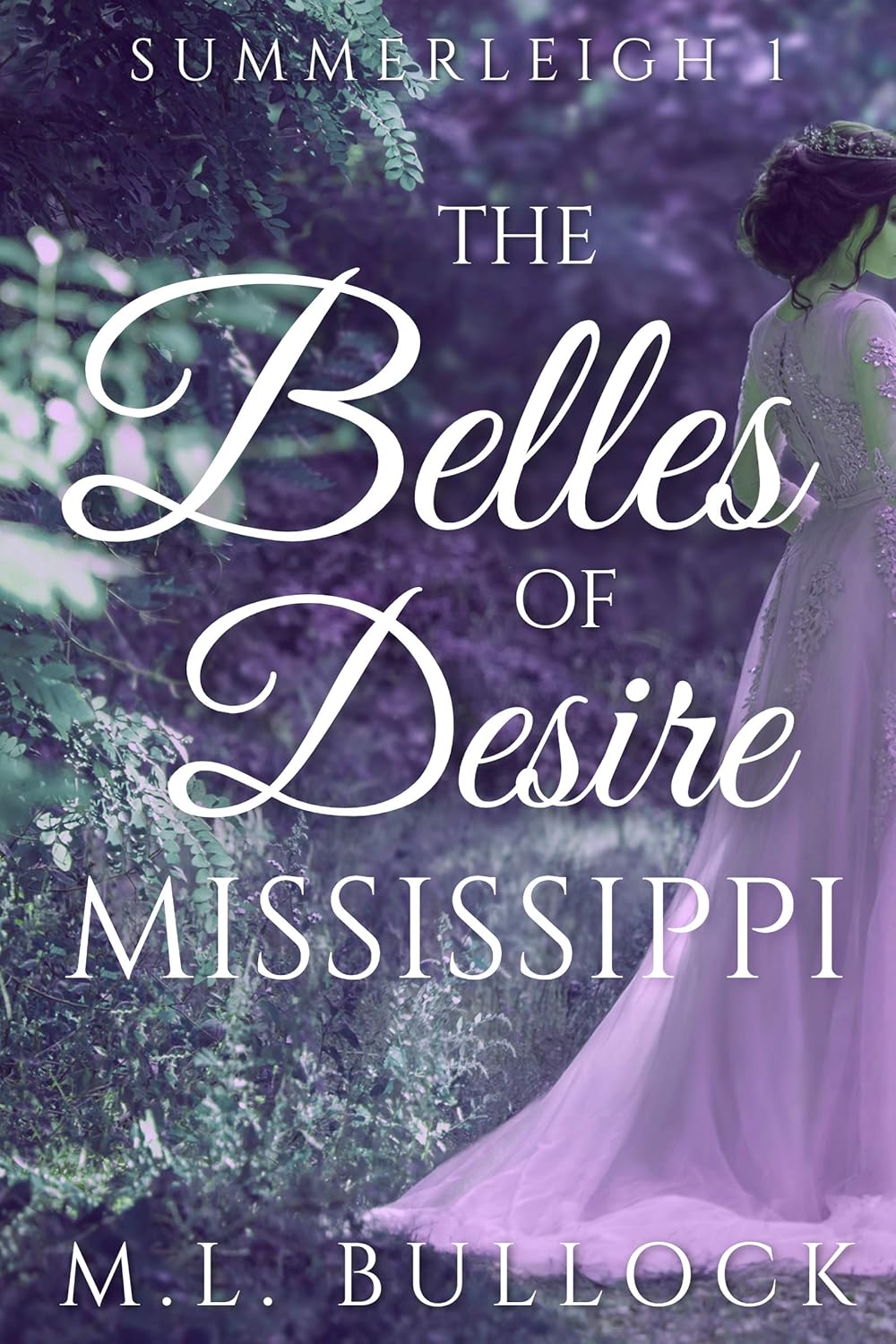 Harper Lee, a dying patient at a resident care home, forms an attachment to Jerica, one of the employees of the care home. When Harper passes, she bequeaths her family home to Jerica. Jerica is now the owner of the Summerleigh estate, which includes a grand ol’ house with multiple floors, a large chunk of land, on which a small cottage stands.
There is a catch – Lee has tasked Jerica with uncovering the mystery of what happened to Jeopardy Belle, Jerica’s older sister, who went missing in her early teens. It is more of a plea rather than a clause within the will. However, Jerica is sensitive to Harper’s wishes and will do what she can to solve the mystery.
Jerica moves in, but stays in the cottage, not the main house. Why? Too many ghosts are floating about in there (don’t know if they are actually “floating”, my words, not Bullocks, not Jericas) Who are these ghosts? Turns out, there are layers of ghosts, just like layers on a cake. Ghosts of Belles, ghosts of family/residents before the Belles. And even Jerica’s own baby boy, who she lost in a car accident, appears (although his is drawn to his mother, not the house)
Like with the other books in this review, there are two timelines. First, there’s the modern day, which includes the whole Jerica storyline. This takes place in the twenty teens. And oh, how can I forget, Jerica has a love interest. He helps out at a restaurant in the nearby town and happens to be a handy maintenance man and Jerica could sure use a man like that to help restore the house. I’m sure he satisfies her in other ways too. Okay – Love interest plot covered. Let’s go back to the good ol’ days.,
The second timeline takes place in the 1940s. The four Belle sisters (or is it five? I’m forgetting) live with their mother. Father is away a lot. When he is gone, mother is mean, especially to the oldest girl Jeopardy. Jeopardy rebels by hanging with the wild crowd, smoking, drinking and skinny dipping. One night she goes out and never returns.
How are these timelines connected? Through Jerica’s dreams, she learns of the past, much like the Carrie Jo character in the Seven Sisters story. The difference – Carrie Jo possessed this dream time-travel ability before the events of the story. Jerica has no such superpower. But after Harper’s passing, she dreams of the life of the Belle sisters as seen through Harper’s eyes. I guess Harper’s spirit is passing the info along to her in her dreams. Perhaps Bullock, knowing she already had a story about a “dream sensitive”, didn’t feel like using a clone character, so she decided Jerica would dream of the past in such a way to miraculously plot itself out like chapters in a book.
The book’s ending is not as sudden as Bullock’s other novels. This is the best of the five books. I really appreciate the different character traits of the Belles sisters. The mother, father, Jeopardy’s sort-of boyfriend, all fit into the story well. There was enough depth to convince me this was a real family (of course it’s fictional).
So, will I read on? There is only three books total, so My answer is Yes.
Wife of the Left Hand
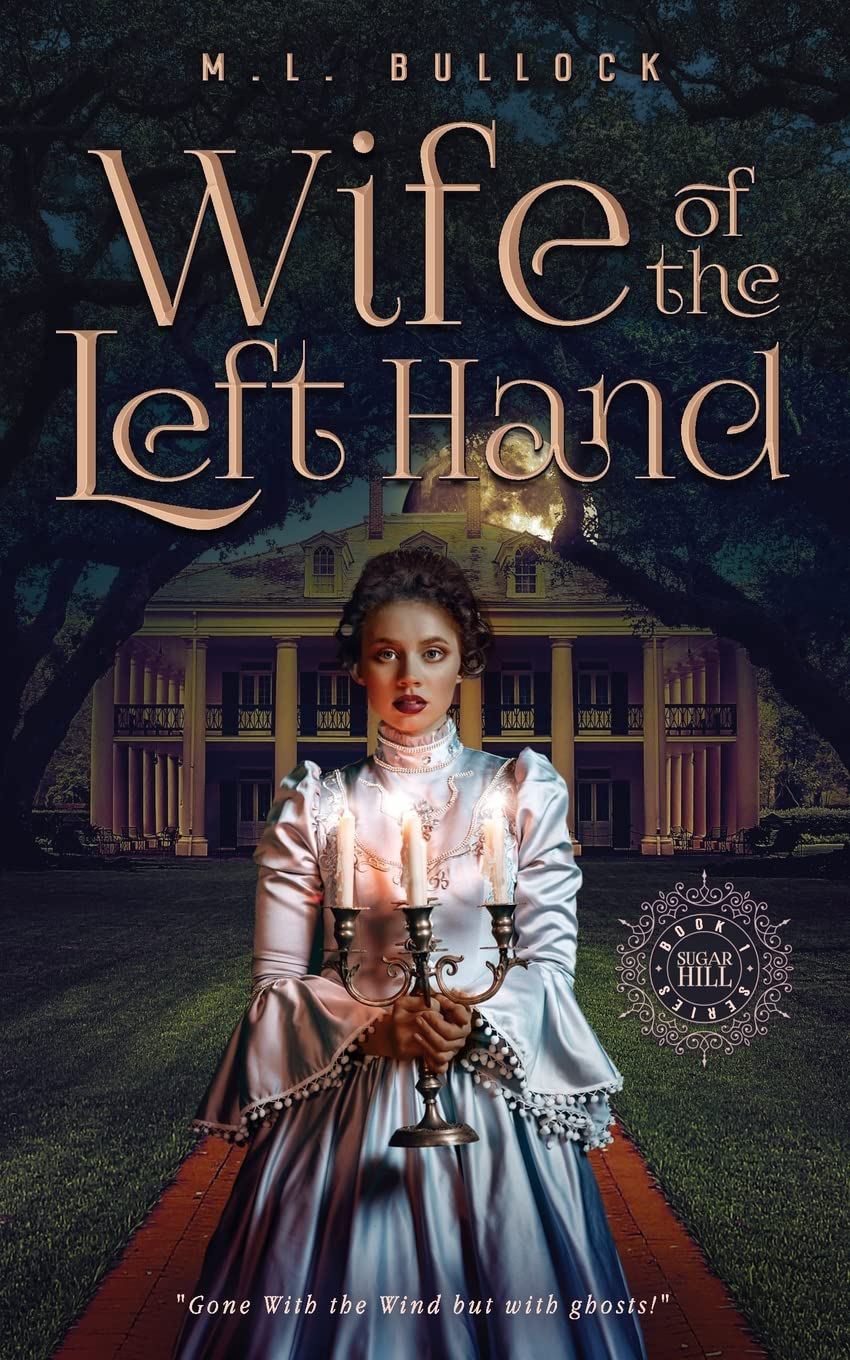 This is book 1 of 4 of the Sugar Hill Series. For a change, let’s begin with the past. A wealthy son of a plantation owner takes Susana to be his wife. This is a morganatic marriage, also called a left-hand marriage. Simply stated, it’s the pairing of two people of unequal social class. In this case, Susana is from the lower social ranks. It falls on her to earn the privilege of being the wife of one of the most promising young rich men in the area. But when she is accused of adultery because of a situation that is not her fault, she is ostracized by not only her husband’s family but by her own mother as well. However, the mother will do what is necessary to secure this marriage. In the end, they will use witchcraft to bind Susana to her husband. But this comes at a great cost.
All this takes place in Fontaine, Alabama somewhere in the mid 1800s. Fast forward 150-160 years, we meet Avery Dufresne, a famous newscaster who is nearly murdered by an unknown assailant. He is still on the loose and she needs to hide. Coincidentally, she is invited to take refuge out of state and live in her family’s mansion. She was unaware that she had an extended family, not to mention a mansion to go along with them. This is the same mansion that Susana lived in with her husband. Her great aunt, the family matrone, places a ring on Avery’s finger, which signifies she is to be the new family head with powers to control the finances.
There are plenty of ghosts around the mansion creeping about and waking Avery up at night. Some ghosts disguise themselves in the skin of the living. She encounters people and has long conversations with them only to find out they have long since passed.
Through video tapes, her deceased great-great grandmother “interviews” Avery. Somehow, even before Avery was born, this grandmother knew Avery was destined to be the matrone. These tapes reveal family history; history that even this great-great grandmother would have been too young to have experienced. This would be the history of Susana. Could Susana be haunting this mansion?
Did I forget to mention Avery is dating a rock star? I did. Now it is mentioned. There – the love story is covered.
So, will I read on? There is much substance to this layered story, and the mystery surrounding this huge and complicated family is intriguing. Why do they need an appointed matrone every generation?
But it doesn’t grab me as much as The Belles of Desire, Mississippi. That series has a total of three books and this one has four, so my answer is Maybe.
The Ghosts of Kali Oka Road
 Last and least, The Ghosts of Kali Oka Road is book 1 of 15 of Golf Coast Paranormal Series. Unlike the other books in this review, this story takes place mostly in the present day (yadda-yadda 2012? 2013? 2014?). However, there are two events relevant to the current-day story that happened in the past. Back in the awesome 80s (when little ol’ me was a teen), a jock takes a popular girl from school out to the woods, hoping for some hanky-panky (not an 80’s phrase, oh well). Needless to say, things don’t go his way. Her refusal was not totally unexpected. What was shocking and downright terrifying was the thing from the sky that flew down and whisked his date away. It looked like a giant owl. She was never seen again.
Jock dude was the last person to see her so he was the prime suspect in her disappearance . However, there was no evidence to charge him with anything.
About one hundred and forty years before this, a woman escapes from her abusive husband with the help of their male slave. The slave is also her secret lover. While on Kali Oka Road, she disappears. I do believe that owl-thing is involved in her vanishing.
Now for the present. Cassidy is blessed/cursed with a paranormal skill – she can paint things that happened many years ago. She paints events with amazing detail. She captures things which only someone at the scene would know. She paints a depiction of the aforementioned woman fleeing down the road. When she touches the painting, she goes into a trance and is transported back in time.
Cassidy joins the Gulf Coast Paranormal group to investigate the ghostly phenomena on Kali Road. They explore the mansion the woman lived in, which is connected to the road via a wooded trail.
Oh yeah, the house is haunted.
Oh yeah 2, Cassidy has a love interest, some dude from the paranormal group.
Most of the pages in this story focus on the young men and women in this paranormal group. I don’t really care for these characters. Seems like this group of people was just mashed together with the hopes that something intriguing would arise from this mashing. Hint: this doesn’t happen. This whole story, in fact, seems rushed and rough.
If the Seven Sisters series seems long, check out the list for The Gulf Coast Paranormal Series:
GULF COAST PARANORMAL Season One (featuring Midas, Cassidy and Sierra)
#1 The Ghosts of Kali Oka Road
#2 The Ghosts of the Crescent Theater
#3 A Haunting on Bloodgood Row
#4 The Legend of the Ghost Queen
#5 A Haunting at Dixie House
#6 The Ghost Lights of Forrest Field
#7 The Ghost of Gabrielle Bonet
#8 The Ghost of Harrington Farm
#9 The Creature on Crenshaw Road
#10 A Ghostly Ride in Gulfport
#11 The Maelstrom of the Leaf Academy
#12 The Ghosts of Phoenix No 7
#13 The Ghosts of Oakleigh House
#14 The Spirits of Brady Hall
#15 The Gray Lady of Wilmer
Bonus The October People (A Gulf Coast Paranormal Extra)
GULF COAST PARANORMAL TRILOGY
#1 Ghosted
#2 Haunted
#3 Spooked
#4 Dead
#5 Paranormal
Gulf Coast Paranormal Season One Boxed Set
GULF COAST PARANORMAL SEASON TWO (featuring Sierra and Joshua)
#1 The Wayland Manor Haunting
#2 The Beast of Limerick House
#3 The Haunting at Goliath Cave
#4 The Skeleton’s Key
#5 Death Among the Roses
#6 The Spiritus Mirror
Bonus Horror Ever After (A Gulf Coast Paranormal Extra)
What an insane list! So, will I read on? My answer is NO. Put more crudely, No fucking way!
My final thoughts
M.L. Bullock has plenty of fans. Just check out her Amazon reviews. She has found her niche within the Southern gothic and romance genre. I prefer authors that don’t restrict themselves to a certain sub-genre the way Bullock does. By doing so, it can come to a point where the genre itself dictates the story. Bullock’s books come close to this example. They rely heavily on formulas and overserialize the story, falling prey to the sterile ratio “quantity over quality”. (That’s my “q-tip” for the day. Ain’t I funny?) That said, the author has a knack for good story telling, character writing, and world building.
I promised to go forward, at least with the The Ghosts of Summerleigh series. This doesn’t mean I’m pushing aside other books on my reading list and diving straight into “Summerleigh”.
Summer is ending, folks, at least here in Chicago. So give me some time, will ya?
One more thing – the author’s name is Monica Bullock. Such a pretty yet distinguished name! I prefer that to M.L. Bullock. Easier to remember and somehow more authorlike than the pretentious two initials/one last name bit. That’s only my opinion. Others will disagree. Fair enough.
Get ready, readers, Halloween will be here soon, and I will wanna do cool, spooky things here at this blog!
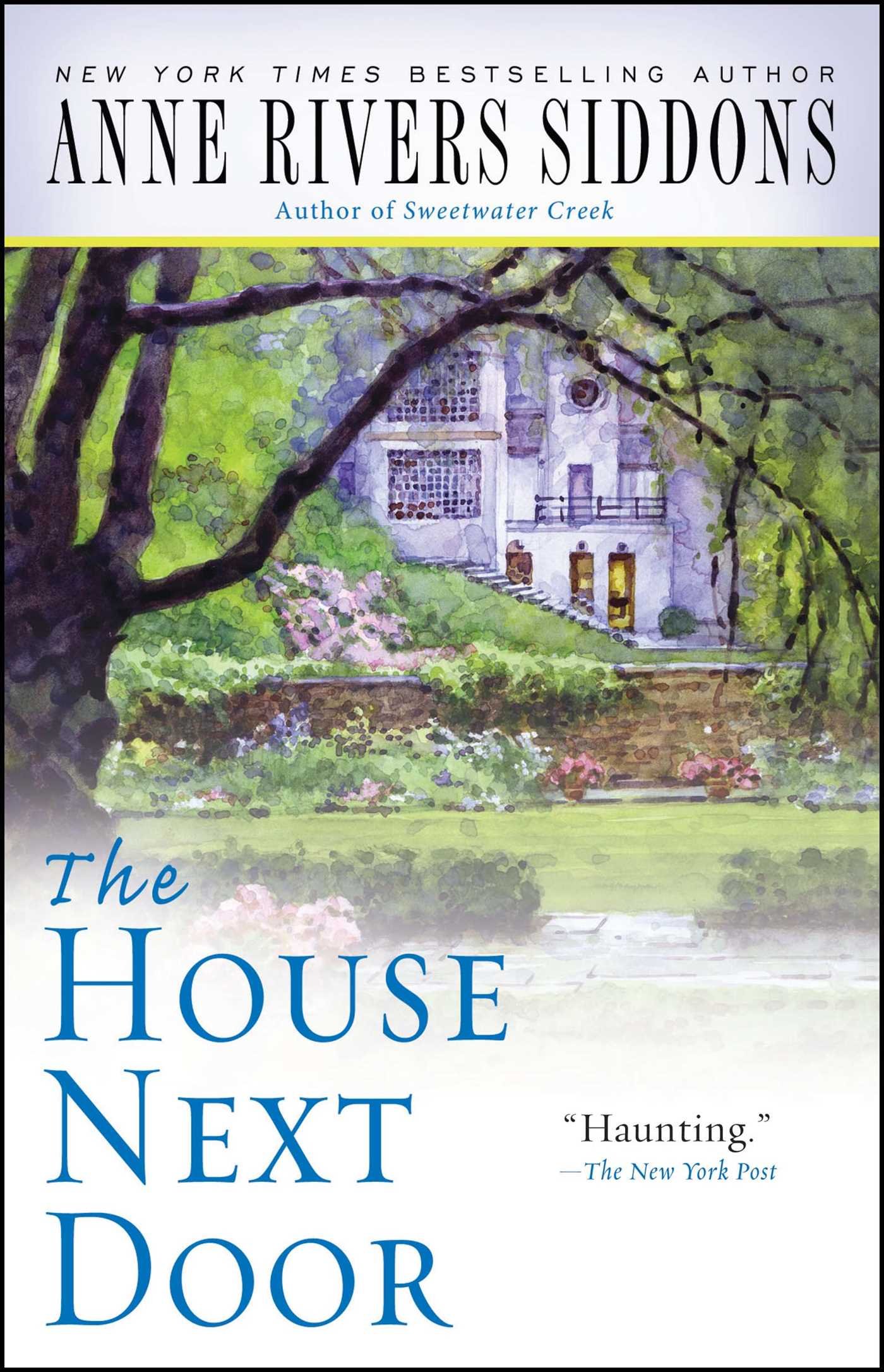 I love a haunted house that does its own thing. Such a house births a kind of haunting that is unique from its predecessors and peers. And yet, it’s willing to learn from them. Within its walls the traditions and motifs established by the great literary haunted houses are respected. However, this house is determined to creak and settle to its own moaning boos. Its foundation is secure in pre-established themes while its structure expands into new, terrifying space. Where, you might ask, might I find such a haunted house? Look no further than the “house next door!”
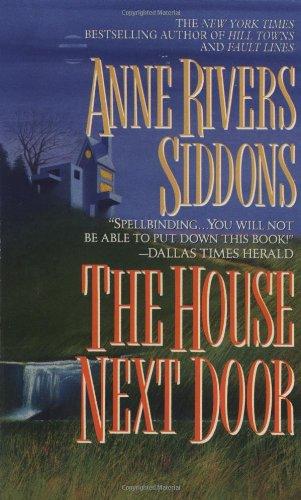 occupants. Or, it knows what its occupants cherish the most, and it rips and tears at the seams all that they hold dear. The malicious intentions of the house are rooted in either the architect, the architectural design or both. The Kennedys guess that the architect is cursed, and this is why the house behaves the way it does. At the book’s end, the architectural plans end up in the hands of a couple that want a newly built home. Readers then know that the “haunting” is embedded in the design. Very creative, Siddons!
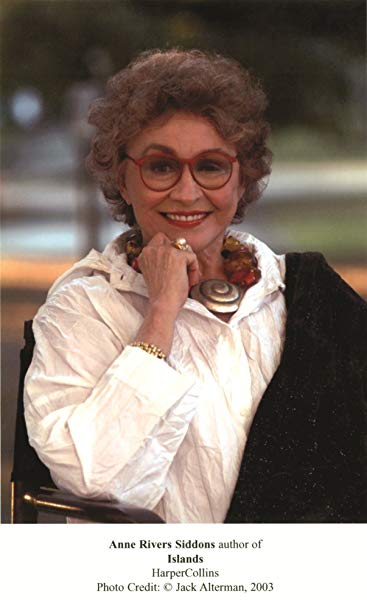 Anne Rivers Siddons – she has many books under her belt. According to wikipedia, Her genre is southern literature, not horror. Perhaps that’s what helps her novel The House Next Door stand out. Horror doused within another genre allows for a wider and more enriching story than a tale with flat characters and things that go bump in the night. Perhaps I’ll read more of her works. I probably won’t find another horror story, but maybe I’ll find another book of hers that touch on that good ol’ Southern Gothic. That would be interesting.
 The Books of Daniel