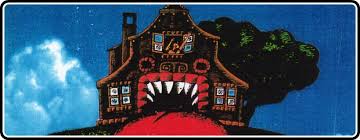
 My first post of the new year! We all know that 2020 was a whirlwind of chaos on so many fronts. Then Dec 31 came and at midnight we all said, “Happy New Year!” and like magic, we reset our lives, wiped the slate clean and WHOOPIE – peace and sanity came knocking at our doors once again. NOT! The chaos continues.
I wanted to watch a movie that was fit for these times. By this I mean, I wanted to see a chaotic yet fun film. I know, 2020 was not fun. It was deadly for many. In film we can escape reality. We can watch carnage erupt on our screens knowing that it’s all fantasy. I found a film that was capable of providing such an escape while reflecting the wackiness of recent times and its offbeat volatility. It’s horror gone looney. Terror turned topsy-turvy. And best yet, it doesn’t take this “horror” and “terror” seriously. Oh there is bloodshed and decapitations, and yet it’s fun, fun, fun. And funny! All this in Nobuhiko Obayashi’s Japanese film Hausu. The English title is House.
Think about the past year. The Pandemic. Shelter-in-place. Lockdowns and the shutting down of public events. Some relief. Covid cases drop. Things reopen. Summer time! Uh oh, cases spiking again. Shutdowns.
Then there was the social unrest. Protests. Riots. Things ease. Ahh. Oh wait, here comes some more! An election year in the United States. Much passion and anger on all sides. 2021 comes along and here comes more social unrest.
My point to all this is that these eleven months have been unpredictable to say the least. Up then down. Up. Down. Turn Around (Please don’t let me touch the ground, tonight I think I’ll walk alone, I’ll find my soul as I go home – sorry, got off track quoting New Order lyrics. But hey, that was “offbeat” of me, like the year.) Well, Hausu is like that. A scene with a sweet, corny melody of young girls walking, followed by scenes of the bombing of Hiroshima, followed by comedic scenes of a goofball guy doing goofy things, followed by a human-eating piano. Is that unpredictable enough for ya? Okay, those scenes don’t occur in the order I lay out, but I challenge you to watch the film only once and have a grasp of the order of things. You can’t. It’s not that kind of film.
All you really need to know about the plot is this: a girl invites several of her friends to her aunt’s house for summer vacation. The house is haunted and the aunt is creepy. After this, who cares? Just enjoy the amusement park ride filled with demonic cats, floating heads, severed fingers playing the piano, trippy 1970s-style animation, fountains of blood, dancing skeletons, and psychedelic montages.


It’s hard to describe the film. The Criterion Collection calls it “an episode of Scooby-Doo directed by Mario Bava.” That’s good. Maybe throw in some Monty Python? Quentin Tarantino (way before his time, but…)? Ahh, here’s a way to relate this to Tarantino. Roger Ebert describes Tarantino in his review of Pulp Fiction as follows:
…he’s in love with every shot- intoxicated with the very act of making a movie.
…Here’s a director who’s been let loose inside the toy store, and wants to play all night.
I imagine Nobuhiko Obayashi used all kinds of film toys to create this film; he must have had a gigantic toy box. If he wasn’t intoxicated with making the movie, certainly his viewers were after watching it. I certainly was. Every technique available in 1977 seems to have found its way into the film. Sometimes these techniques hit all at once, and that can be unnerving to the eyes and ears. Oh well, these sensory devices attached to our bodies do recover and when they do, they will be ready for more!
If Hausu was a rock band, maybe it would be some kind of combination of Rush and King Crimson. Or have you ever heard of Mr. Bungle? Yeah that’s it, Hausu is Mr. Bungle!
I first heard of the existence of this film about a year and a half ago, during calmer, saner times. I’m glad I waited to see it, for insane times welcomes insane tastes. Is that a saying? I don’t know. But the film is “fun insanity.” And THAT is what is needed. Good ol’ silly insanity over the crap that reality spewed on us over these past many months. Fuck reality. Bring on the surreal. Oh, and this film goes great with a big ol’ fat blunt.
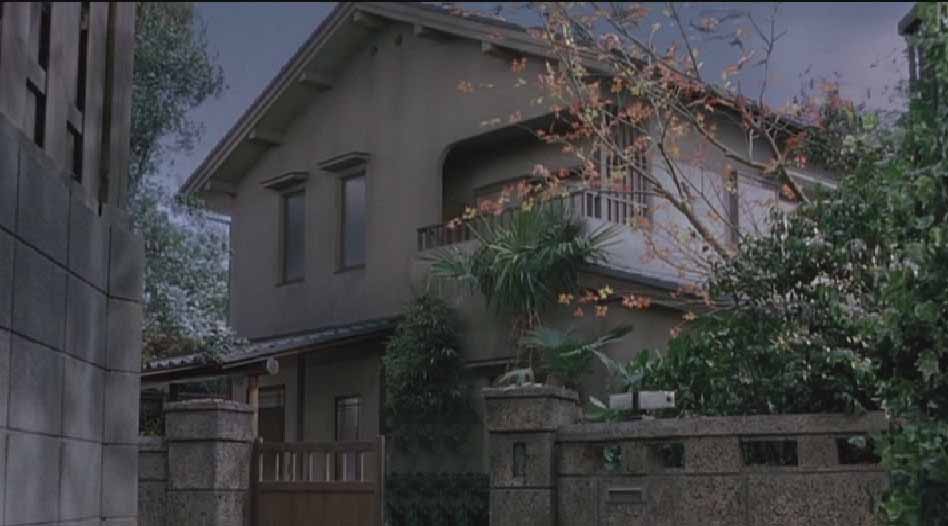 The “wrong” time is anytime after a certain murderous tragedy took place on the premise. See readers, this affliction that haunts and claims the victims of this movie is more of a “curse” than a “grudge”, although I’m told the English translation of “Ju-On” is “Curse/Grudge”. A “grudge” , as per the movie, is negative energy in action; or, in reaction. Let’s assume there are scientific laws governing a body of supernatural physics. There is a steady harmony of body and spirit, life and death. The living go about their business and the dead stay dead, their spirits at peace in whatever plane of afterlife existence there happens to be. A horrific tragedy perpetuated with evil intentions can upset this balance. Evil and horror beget evil and horror. In the film, the negative energy is attached to a house, where a mother, her little boy, and the family cat had been savagely murdered by a jealous husband/father. Those who enter the house are susceptible to the negative energy that exists in the wake of this tragedy. It attaches to them. Can they rid themselves of this negative energy by leaving the house? Fat chance! “The Grudge” is part of them now and it follows them wherever they go. Go to work and it will haunt the office. Go to school and it will be there too. Go home? That home will now be haunted.

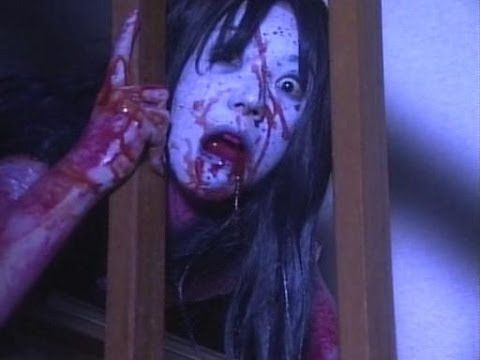
 struggle with. This film (like several other Asian horror movies) has a built-in flair for all things creepy. Maybe it’s the detail devoted to the ghosts, or maybe it’s the wise abandonment of cliché plots and over-hyped character types. Perhaps it’s the balance of mood and in-your-face scares. Whatever it is, Ju-On: The Grudge works well.
 Ju-On: The Curse
 The Books of Daniel