Review of A Strange Christmas Game

strangechristmasgame2

Folks, we have approached a milestone.   This will be the first piece of ghostly literature for which I have listened to a narrator speak the story to me.  I followed along with the text on a website as an audio file played on.  The story is “A Strange Christmas Game” by J.H. Riddell, (a.k.a. Charlotte Riddell) 1863. You too can read and/or listen to this story.  Just click on the link below and listen and listen as famed author and storyteller Michael Whitehouse narrates the story narrates the story.

http://www.vaultofghastlytales.com/2015/12/a-strange-christmas-games-by-j-h-riddell.html

I found several versions of the telling on the internet, each varying in wording. I wasn’t sure which was the best, most true to the original source, etc. But in the end I paid it no mind and just settled on a version that is hosted by www.vaultofghastlytales.com

Followers of my blog, surely by now you have read my recent article Christmas Ghosts and Haunted Houses? Here is in excerpt from that article:

“Let’s say, perhaps, that our frolicking friends are feeling “warmly vulnerable” during a ghost story session at a Christmas Eve gathering. Let’s remove the last visages of safety and allow winter’s symbolic doom to come inside. It’s warm. Festive. Have a drink. Merry Christmas! Fires. Games. Ghost stories. And then – real ghosts haunt the house. Frightful! This is what I would call A Christmas Haunted House.

People of days past used to tell ghosts during the cold winter. Winter was perceived as dark, dreary and scary. At Christmas Eve gatherings, celebrants would eat, drink and be merry. They would play games. And… they would tell ghost stories. Ghost stories are fun when one is beside a warm fire and in the accompaniment of family and friends; feeling all warm and cozy, while the threat of winter rages outside their windows.  A story of a Christmas Haunted House takes advantage of the characters’ fragile coziness. They are feeling festive and carefree, just like the real life folks that gather around a fire to hill a grisly take. But the doom and gloom of winter invades their celebration in the form of ghosts. Their gathering is soon invaded my scary phantoms.

Does “A Strange Christmas Game” meet these criteria? I say – Mostly.

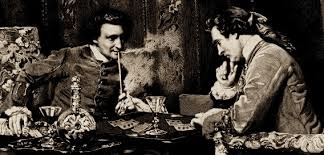
In the tale, brother and sister inherit a manor, Martingdale, which is supposedly haunted. strangechristmasgameMany years ago, original owner Jeremy Lester is playing cards with his friend on Christmas Eve. The clock strikes midnight, Lester’s guest leaves to go home. Out against the brutal elements of winter he wanders, but it is Jeremy that is never heard from again!

Has the winter doom invaded Lester’s home and whooshed him away?  Not exactly. When one reads further into the story, a different situation arises. But at this point, the story teases us with the “wintertime ghostly home-invader” scenario. However, it does address the Christmas ghost story theme of “game time gone ghostly.”

For sure, the dreariness of winter plays out symbolically within the story – within the house.  For instance, here is an excerpt from the book that points to this:

Altogether, Martingdale seemed dreary enough, and the ghost stories we had laughed at while sunshine flooded the rooms became less unreal when we had nothing but blazing fires and wax candles to dispel the gloom.

When summer ends and winter begins, brother and sister hear footsteps in the night, along with other strange noises. Is this the doings of the spirit of Jeremy Lester?  Read or listen to the story and find out for yourself. But one thing for certain – their home is haunted by ghosts that invade on Christmas Eve. However, the ghosts are not interrupting any Christmas festivities. Brother and Sister have been a wee bit too scared to be concentrating on Christmas.

Another thing to note; at the story’s climax, a snowstorm breaks out.  There hasn’t been such a storm for forty one years. –The last winter storm occurrs on the same night that Jeremy Lester disappears – on Christmas Eve.

This is a fun story. And it mostly meets my Christmas Haunted House criteria. Now, by all means, J. H. Riddell was under no obligation to adhere to the dictates of my half-baked analysis of Christmas haunted houses in literature. Afterall, I came up with them one hundred and fifty years or more after this story was published (with the help of others of course!)

I hope you give this tale a listen, a read, or both.  It’s a perfect story to ingest on a cold, winter’s evening.

Review of The Haunting of Ashburn House

ashburn

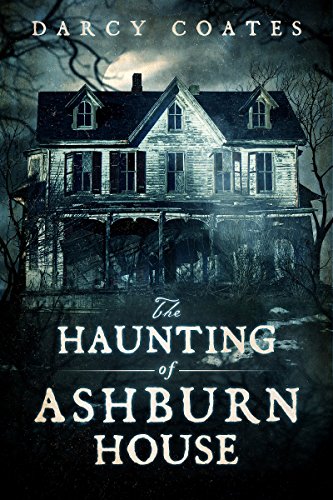
The Haunting of Ashburn House is the third book I am reviewing from the talented Darcy Coates.  I am now officially up-to-date with the “Haunting of” series. (The other two, in   order of publication, are The Haunting of Gillespie House and  The Haunting of Blackwood House.) Perhaps I shouldn’t use the word “series.”  Each book is a stand-alone story. However, there is a formula that persists in all the stories – a young female protagonist either rents or takes ownership of multi-floor house that ends up being haunted. In each case, she is not only new to the house but also to the community at large. In each house, there are mysterious items that pique the curiosity of the new occupants’. These items are related to the haunting that is to take place.

To clarify, I am not using the term “formula” in a bad way. The scenarios are the same, but the specific plot points vary from book to book with different facts and outcomes.  They are not without twists.  The Haunting of Ashburn House in particular does have an interesting turn of events.

Here’s a short synopsis.  Adrienne has inherited an enormous and ancient manor from her Great Aunt Edith, who has recently passed away. Little does she know that she has also inherited several odd duties that are necessary if she is to live safely at Ashburn House. What do I mean by “safely?” I mean – guarding against the paranormal dangers that will threaten her. Little my little, she comes to understand that the house is not normal. After experiencing a succession of terrifying happenings, she must make sense of the clues that surround her in order to stop the terror.  Some of these clues include messages that have been carved into walls and tables, an odd collection of candles, cautionary notes regarding the use of mirrors, old newspaper clippings of a tragedy that took place in the Ashburn House many years ago, and a mysterious grave on the property that has the most unusual inscription on the gravestone.

Coates excels at establishing mystery. The predicaments that Adrienne finds herself in captured my intrigue.  I kept turning the pages, all while encountering new clues and developments, which in turn caused me yet more page-turning anxiety. This built-in anticipation worked well at helping me to look past some occasional dull moments. There are several interactions between Adrienne and townsfolk, Adrienne and her cat, etc. that sort of halt the story rather than move it along.  There is unnecessary attention to certain details in several places; details that do not relate to the overall mysterious tone of the story.  Conversely, I would have liked there to have been more of a background story on Adrienne.  This would help readers to get better acquainted with the protagonist, thereby allowing for further empathy as she struggles through her terrifying situation.

But, as I have mentioned, there is much in this tale that holds the reader’s interest. Coates effectively casts her “foreshadows”; the dark mysteries that surround key items within and around the house. They lurk in between the lackluster elements of the plot and effectively beckon the reader to continue; to journey on until the mystery’s end.

Of the three books in “The Haunting of..” series, I like The Haunting of Gillespie House darcy-coates-300x206the best. It also happens to be the shortest of the three.  Perhaps I prefer Coates as a novella writer?  I would need read more of her works to be sure, and read more I will. (She has several other books about ghosts and haunted houses.  Check out her websiteThe Haunting of Ashburn House comes next on my list, followed by The Haunting of Blackwood House. However, all three are decent reads and I recommend them all.


Review of The Innkeepers

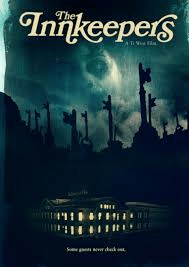
innkeepers2 Who are the keepers of the inn? Why, that would be Claire and Luke of course – two quirky twenty-somethings who like to gab at the front desk and browse the internet.  The Innkeepers are also two amateur paranormal investigators.

What inn do Clair and Luke keep?  It is called the Yankee Pedlar Inn. It is an historical hotel in New England that is supposedly haunted.  It has long creepy corridors, a spooky basement, a wide, square spiral staircase – all the workings of a good haunted house flick. The limited number of guests highlights an atmosphere of eerie abandon. It is the weekend before the inn is to close for good.  This is the last chance for Clair and Luke to capture supernatural activity on their specialized recording equipment.  So during their last days as employees of the Yankee Pedlar Inn, they are hoping for a ghost or two pop out and say “Boo!”


Normally, I am cautious about posting spoilers.  But for this review I don’t think it will be a concern.  There really is nothing to spoil!  This story has no twists, no hidden meanings, no symbolism.  What you see is what you get.  What does one see?  A haunted hotel that has ghosts that do stuff.  That’s it. When all was said and done, I thought that for sure I had missed something. I went to Wikipedia, IMDB, rottentomatoes, searching for a missed clue that would tie everything together and make me say “oh wow! I didn’t realize THAT was going on!” There is no such clue. There is no “THAT” there.

For me, the somewhat empty plot drags the film downward on the likeability scale.  But this does not mean it’s a bad film. The characters are interesting, especially Claire and Luke.  Their idiosyncrasies seem fit for one another, making for some interesting character chemistry. In this way, the film plays out like a crossover between Clerks and your average haunted house movie.  There are little snippets of comedic realism here and there. For instance, there is a moment where Clair is frightened. There is foreboding silence. Tension is building. And then we hear Luke flushing the toilet. The side characters (the hotel guests) are interesting as well. They have limited screen time, but their moments in from of the camera are worthwhile.

Ti West directs this film.  He is also the director of The House of the Devil. The aforementioned film seems to be superior to The Innkeepers, at least according to critics on IMDB, rottontomatoes.  I will have to check out The House of the Devil. It seems as if it’s a haunted house film.  And while I do not dislike The Innkeepers, I was hoping for something a little bit better.  Maybe this “better” will be found inside The House of Devil?  Who knows?


Children’s Story Time – A Reading of “Spooky House”

I thought I would try something different.  I bought a “Spooky House” book for my young nephews for Halloween.  I decided to read it to them – online – in a video!  They can watch the video and follow along with the book!

But I am sharing my video with everyone! If you have little children, show them the video!

I hope you will like it!


Review of The Turn of the Screw (Book) and The Innocents (Film)

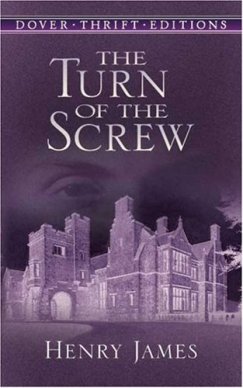
turnofthescrewThe story that is the subject of this review concerns a worrisome governess, her two enchanting little charges, an agreeable maid, a haunted mansion, and two “evil” spirits. The determined Miss Giddens will stop at nothing to save sweet little Flora and dear Miles from the “evil” that haunts Bly, the country estate in which they dwell.  This “evil” incarnates as the ghosts of the children’s former custodians, the late Peter Quint and Miss Jessel. While alive, these two had a sordid affair, often engaging in sexual acts openly, possibly in front of the children. It is up to Miss Giddens to put an end to their “corruptible ways” that continue after death.  But in order to do so, she must convince the children to confront that which haunts them. And the first step in this process is to get them to overcome their denial: Miss Giddens needs to be able to get the children to  admit that they are indeed haunted.  For they carry on as if nothing bothers them.  For they are “The Innocents”.  Meanwhile, the “screw continues to turn”.   
innocents


The preceding paragraph presents a concise synopsis (I hope so anyway), and yet it is only the skin of the story. There is much more going on below the surface. Notice how I have placed the word “evil” in quotation marks on three occasions. Likewise, I have placed “corruptible ways” inside these protective, overhanging symbols that defend these words from a single-sided perspective. Do these spirits really represent evil and corruption?  Maybe. Or maybe not. Maybe there are no ghosts at all.

There has been much argument and analysis over this Henry James masterpiece: The Turn of the Screw. Likewise, there has been much praise for Jack Clayton’s The Innocents, a film interpretation of the famous novella. I will get into the analysis in a bit. But first, let’s deal with the basics of each medium.

The Turn of the Screw begins with a group of friends that gather on Christmas Eve and listen listen as someone recites a ghost story.  Ghost stories were part of the Christmas tradition in the days of yore. Think Charles Dickens and “A Christmas Carol” – with the ghosts of Christmas past, present and future.  Anyway, the story that is told is “The Turn of the Screw”.  The title is based on an expression that means “an action which makes a bad situation worse, especially in order to force someone to do something.”

The person doing the forcing is Miss Giddens. She is forcing her charges to admit to being haunted by the ghosts of their former caretakers. Does her insistent broaching of the subject make things worse? Yes indeed! But she realizes this, and so she treads cautiously.  Through hints and subtle coaxing, she addresses the children.  One of the more noteworthy aspects of James’s writing has to do with the dialogue. When speaking to each other, the characters engage in art of circumlocution – communicating in a vague way, being indirect. When the governess gets very close to approaching the children about the henryjamesghosts, the children suddenly stop answering her questions. Or they change the subject. Miles, the cleverer one of the two children, will throw his questioner off as he rebuts with questions of his own, questions that make Miss Giddens rethink this whole ghost business and cause her to have doubts.  Admittedly, the book is a tedious read. In the end, I was able to find enjoyment with it, but the enjoyment has its costs. I paid for it with much rereading and contemplation.
The film The Innocents is easier to comprehend, and thankfully the mystery and ambiguity of Henry James’s story remains.  It is based on a play by the same name (The Innocents by William Archibald), which in turn is based on Turn of the Screw. The famous Truman Capote pens the screenplay for the film.

More so than the book, the film is a haunted house movie. The film making style is chilling and haunting. The soundtrack features a child humming a tune, an effect that comes off as innocently creepy.  The camera successfully captures symbolic imagery; the sky and clouds are reflected in the pond, the rays of sun streak into the house.  There are good closeups of facial expressions; kudos to the actors who communicate so much with a simple twist of their facial muscles.  Then there is the camera and sound styling that make for a compelling haunted house movie; effective uses of shadows, camera pans across long hallways, background creaks, and laughter – echoing, reverberating laughter.

The differences between the film and the novella can be summed up this way:

The Turn of the Screw – a complex psychological drama that features ghosts.

The Innocents – A ghost/haunted house story with psychological underpinnings.

As far as analysis is concerned, I will base most of it on the film. The main question that arises has to do with the ghosts. Are they real, or are they figments of Miss Gidden’s imagination? If they are imaginary, why on earth would she dream up such horrors!

Let’s assume they are imaginary (Actually, I’m going to assume they are both real and imaginary. I will explain this later). To what mental processes are we the reader/viewer to attribute these imaginary products?  Let’s examine what others say about this.

From the New Yorker, with quotes from David Bromwich:

He (David Bromwich) concludes, flat out, that the evil that threatens the children “is channeled and communicated by the governess,” who presents us with “an unforgettable image of psychological projection—the inward fears of the governess transfigured by imagination into a palpable menace.” He effectively offers us a ghost story without ghosts.

Then there is this from sparknotes:

With the publication of a 1934 essay by the influential critic Edmund Wilson, a revised view of the story began to gain currency. Wilson’s Freudian interpretation, that the governess is a sexually repressed hysteric and the ghosts mere figments of her overly excitable imagination, echoed what other critics like Henry Beers, Harold Goddard, and Edna Kenton had previously suggested in the 1920s.

Ahh those Freudian, psychological innards; the ID and the Superego duking it out before us. The New Yorker quote mentions projection; another psychological term. Oh how I love it that such a term is associated with a haunted house story, for it adds a whole new dimension of analysis to us people of the page – us students of haunted house lore.  Some time ago, I wrote an article about haunted house lore from a sociological point of view. (You can read it here.) Now, we at the page can examine haunted houses from a psychological point of view. The “ghost conjurer” in our story is Miss Giddens. Her mind churns out the spirits, and her eyes act as the projectors. The house is the screen on which she sets her spirits free. It accepts these spirits and reflects them back to us, the viewers of the film (or us as the readers of the novella). In this way, the spirits can be both imaginary (projected from her mind) and real, (or existing as “observable entities” to us the viewer/reader.) As ghost story fans, we can relish in the thrill of encountering ghosts while at the same time understand them for what they are – psychological manifestaions.  OR – the ghosts might still be real, even to the other characters of the story that deny seeing them. Nevertheless, they still exist as symbolic entities. Maybe it can then be said that they are made of “ethereal symbolism.”  Is that such a thing? Well it is now, cause I just coined the phrase!

Let’s see how this plays out in the film, shall we? Yes we shall! Oh and beware! There are spoilers lurking below!

Here’s a recap. Miss Giddens takes charge of two children at Bly Estate. They are so mannered, so bright beyond their years.  They seem so pure as to be uncanny; unreal. When she learns that ghosts are haunting them and intent on possessing them, she does everything she can to protect the purity. Notice I said “the” purity and not “their” purity. Yes on the surface, it is their innocence she wants to protect. But there in another “purity” she seeks to salvage. That purity is her own. Miss Giddens sees herself in the children. Each child represents a competing side of her inner conflict. Flora is the most innocent. She is the sponge that is ready to soak up experience.  She is the one to be corrupted. She represents Miss Gidden’s lack of experience, her virginity. Miles, the slightly older brother, represents the darker side of Miss Gidden’s explorations of her own psyche, the guilt that comes with the “sinfulness” of sexual awakening. Thus, he is the corrupter.

the-innocents-the-childrenHow dare I place such moral weight on children? Who am I to equate the ways of children with adult-like offenses? To place such burdens entirely on the children is unthinkable, and this is why the spirits of adults exist as their ghostly counterparts. Flora is (supposedly) haunted by Miss Jessel, the former governess that was “corrupted” by the servant Peter Quint. Miles is haunted (supposedly) by Quint, the corrupter, the one who “touches” Miss Jessel.  And Miss Jessel, shamefully, allows such “touching.” In a way, Miss Jessel and Quint are familiars, if we go by this definition of offered by Pierre A. Riffard.

From Wikipedia:

A familiar spirit (alter ego, doppelgänger, personal demon, personal totem, spirit companion) is the double, the alter-ego, of an individual. It does not look like the individual concerned. Even though it may have an independent life of its own, it remains closely linked to the individual.

Thus, Quint and Miss Jessel represent the darker side of the children’s innocence while at the same time serve to epitomize the Freudian conflicts within Miss Giddens.

Let us go now to certain scenes and lines of dialogue in order to obtain evidence for my analysis.

In describing the house, it his mentioned that there are many rooms that are locked and empty. This symbolizes areas of the psyche that have yet to be explored. But due to barriers such as “guilt”, entry is forbidden. Flora comments on the rooms and says “Big rooms get bigger at night.”  I take this to mean that in darkness (in the unknown areas of the psyche) psychological tasks seem huge. But Flora also says “I wish I could sleep in many rooms all at once,” showing how she craves experience. Like Miss Giddens herself.

On the other hand, it is revealed that Miss Giddens is raised by her father, a strict minister, in a house with several brothers and sisters. She says her house was small, “too small for secrets.” She had no room for discovery. There was little personal growth.

Flora prays the “Now I Lay Me” prayer. She comments on the “if I die before I wake” part of the prayer. She says about dying, “If I don’t go to Heaven, my soul will roam.” This is the searching for self, perhaps even barred from Heaven on account of guilt.

Miles is not yet on the screen. He is away at school. But soon he comes home, having been expelled. The letter explaining the expulsion doesn’t go into any details. It will be revealed that he is a bad influence on the other students, but still the specifics remain unknown. Later he lies in bed and Miss Giddens stands outside his bedroom door. Strangely, he knows she is there. The unconscious mind knows all. He is on the other side, where her desires exist. Miss Giddens wants to cross over to them but is afraid to do so.

Miss Giddens plays hide-and-seek with the children (What will she see when she finds them? Will she find evil hiding inside sweetness?) In the attic Miles jumps out from his hiding place and grabs his governess’s head. His grip is strong.  This occurs in front of a picture of Quint. He is her sexual desire. This urge takes a hold of her and won’t let go.

In another scene, the kids play “dress up”. They wish to surprise Miss Giddens with their costumes. This activity is similar to the hide/seek metaphors. Who are these children underneath the surface, beyond the costume?

One evening, Miles misbehaves. He goes outside in middle of night. Flora watches him from the window as he stands eerily in the moonlight in the courtyard below. All this is a set up to prove to Miss Giddens that he can be bad.  Later, when explaining his behavior, Miles says, “A well-behaved child is boring.” So Miles does something wrong and Flora enables it.  Miss Giddens, like Flora, looks down upon him. She is aware of her desires, her impulses of the ID, and she seems them clearly, but from afar.  After ushering Miles back to bed, there are implications of a pedophilic encounter.  But of course this is all symbolic so we need not worry. But Miles kisses his governess. The kiss is long and passionate and Miss Giddens allows it to happen.

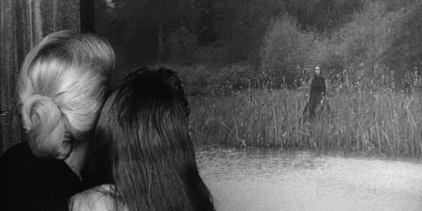
In a climactic scene, Miles distracts Miss Giddens while Flora runs out of the house. (Innocence if fleeing!) Miss Giddens finds the young girl at the edge of the pond. She is theinnocentsdancing (the last attempt at retaining innocence) Miss Giddens sees the ghost of Miss Jessel on the other side of the pond. She insists that Flora sees her too. Somewhat hysterically, she demands that Flora confess to seeing her. Flora screams and has a breakdown. Later, along with the maid, Mrs. Gross, she departs from the premises, never wanting to see Miss Giddens again.  To this, Mrs. Gross says, “Waking a child can be worse than any bad dream”.  This line pretty much sums up what has happened. Flora (and Miss Giddens) is forced to “wake up” and confront the loss of innocence. No longer is she pure. No longer is she protected. With such revelations, heartbreak is only natural.
After confronting the loss of innocence, the next step is to confront those “sinful,” lustful desires. Miss Giddens is now alone with Miles. They sit at a table and drink tea like they are two adults on a date. She confronts him.  She asks him about why he was kicked out of school. At some point during their conversation, Miles lashes out, “You dirty minded hussie!”  While this happens, the ghost of Quint looks in through the window. Miss Giddens says “Those are not your words!”  She insists that they are coming from the spirit which possesses him.  She forces him to put a name to the evil. Finally he does. He says “Quint!”  Then, Miles dies. This is the final step. Once the demon is acknowledged, once it has a name (is easily identifiable), all notions of innocence and any pretense for purity is gone. Dead.

So, wrapping this up, Miles calls out the name of the spirit on his own accord. Miss Giddens, though coaxing him to call out the name, does not tell him which name to say. This leads credence to the theory that there really are spirits floating about in this story. But they might not exist independently outside of Miss Gidden’s perspective. The children may be conduits through which the spirits come to be; the current which powers up the projector that operates inside the governess.

Overall, I prefer the film to the book. The film is much more of a haunted house story than the book. And you know me – I just love me some good ol’ fashion house haunting tales.  But please, don’t discredit the book. It is indeed a brilliant piece of work. It has stumped academics for years and it will do so for many years to come.



Review of Haunted: Houses: A Collection of 12 Ghost Stories

haunted-houses-twelveTwelve stories. Twelve authors – Twelve tiptoeing excursions through the haunted houses of their minds’ creations. Twelve haunted house tales; of course I would want to read this.  I bought it the moment I saw the ad. And then I read it. Funny how that works out!

This is the fourth time that I am reviewing an anthology. Authors and editors often take different approaches when compiling a collection of stories. It is interesting to take note of the unique perspectives and varying methods that go into this undertaking.  The first anthology I reviewed is called The Mammoth Book of Haunted Houses by editor Peter Haining. It is a tome of cherished haunted house tales from gothic to modern. Each tale begins with a page that is meant to resemble log entries in a real-estate transaction book and the stories themselves are divided into themed sections, such as “restless spirits”, “ghost children” and even “sex and the supernatural”. Gathering and compiling such classic tales, while organizing them so creatively, had to be a Herculean task.  Therefore, I shall call this method the Mammoth method (I might have borrowed a word from the title!) The second anthology I examined is the David Morgan Ghost Series.  In this collection there are five novellas that are also sold separately. Author Frank Roberts has kindly compiled them into one book for convenience sake. It is a saga told in sequences, so I shall call this the series method.  The third anthology, The Haunting of Lake Manor Hotel (edited and compiled by Nathan Hystad) is an exercise in story collaboration. Hysted creates a scenario – a haunted hotel that rests on the shores of a mysterious lake, and authors write stories that playout within the framework of his backstory. I shall call this the collaboration method.

To what method should I attribute Haunted: Houses: A Collection of 12 Ghost Stories? Before I answer this question, let me describe the book. It is a sampler – it introduces various authors to readers with samples of their work. One story, “The Promise” by Shannon Eckrich, is a short prequel to a larger series. The books in this series are sold separately, of course. Another story, L. Sydney Fisher’s The Haunted Prophecy of Natalie Bradford, is actually one chapter from her novel of the same name.  Sarah by Rebecca-Patrick Howard is but one of several stories that are companions to her series Taryn’s Camera.  In short, these tales, and perhaps some of the others, are contingent upon a larger, more episodic, story.

As with all anthologies, I prefer some stories to others. Together, they average out to a rating that might be articulated as “enjoyable; a fun way to pass the time.” Only a few are what I would call “filling”, which I define as “the ability to remain; something that sticks with me.”  Therefore, because these are story bits that are pleasing and pedestrian, I shall call this anthologizing process the “appetizer sampler method.

Imagine a seafood sampler at Red Lobster – a decent sized platter of various entrees adding up to a hearty meal. This is NOT what this book represents. Rather, it is more like a taster plate of small portions of shrimp and calamari, this and that; everything’s tasty but not too filling.

I hope that readers of this review are not assuming that I am panning this book on account of my contrasting-menu-item analogy. First of all, I do recommend it, but I am calling it what I perceive it to be. It would be wrong to call a shrimp cocktail a lobster plate. A shrimp cocktail is a shrimp cocktail. Second, I would like to point out the stories that did make a lasting impression on me. A.P. Killian does an excellent job creating a house and environment filled with mystery and intrigue in Through the Doorway.  I was filled with suspense and sympathy as a family drags their father’s haunting past into the present in Rebecca J Powell’s The Ghosts of Past Are Present. The prequel and sample chapter stories (The Promise by Shannon Eckrich and The Haunted Prophecy of Natalie Bradford by L. Sydney Fisher, respectively), the teasers that they are, had me itching for more.

Twelve chilling tales, twelve samples from up and coming authors. If you’re in the mood for a literary appetizer, seek out this book.


Review of Dollhouse (The Dark Carousel Book 1)

DollhouseHas Tim Burton made any movies lately? Maybe he’s searching for the perfect script, one that cooperates with his flair for things both colorful and dark, one that matches his glee for taking a vanilla setting and sprinkling it with sparkling oddities. Perchance he’s looking for the fairytale that tears into a child’s most bizarre nightmare and extracts its lurid images from the mind to the page. If this is the case, then he needs to look no further than Anya Allyn’s Dollhouse (The Dark Carousel Book 1). In this book there is a huge repository of “all things Burton.” It is the perfect source to mine material for a script of his standards.

Now here’s the kicker – I am pretty neutral when it comes to Tim Burton. I neither love nor hate him. I think the reason for my indifference has to do with the fact that I sometimes have trouble syncing my imagination with the fanciful worlds that he creates. These worlds are too dark for my inner child and yet too childishly bright for my rugged manliness (I can grunt the national anthem!). The fanciful world Allyn creates for Dollhouse resembles the realms of Burton’s creations in so many ways, and yet, while reading the book, I found myself free from the kind of  dissonance that his films tend to stir up in me.

Dollhouse is a novel written for “young adults.” Could this explain why I did not notice such dissonance in Allyn’s novel? Young adults = adolescents = moratorium. Teenagers – they are not yet adults, but they are no longer children. This is why fantasy novels partner so well with the YA genre. Both deal with people that inhabit “worlds” outside the realm of normalcy. Adolescence is a period of relentless changes and challenging mysteries. Likewise with fantasy novels. By nature, such stories are intended to invoke a sense of dissonance and perhaps this is why my imagination can absorb the themes in Anya’s novel more easily than the themes of Burton’s films.

Maybe she succeeds at speaking to my inner adolescent whereas Burton doesn’t know with which of my many selves to communicate? Could be. The truth is that I really don’t know. I’m guessing here. All I know is that, for some reason, I find Burton’s films somewhere between fair and good but I view this novel of Allyn’s as excellent.

So what kinds of fanciful creatures inhabit Allyn’s story? Let’s see, there are adult-sized dolls that walk and act on their own accord. There are ghosts, shadows and men and women in masquerade costumes, which seem to be their permanent attire.

The story is as follows. A group of teenagers discover a house in the woods on a fieldtrip for school. Days later, one of their own goes missing. The group searches for their friend and decides to explore the inside of the house. In one of the rooms, they find a carousel and take a ride on it. Its circling path leads to another section of the house. The problem is they can’t go back. They are trapped in “The Dollhouse”, which is run by a strange young girl that keeps children as toys. There is a toy box, where the “bad” toys are placed. This toy box has secret passages. One leads to an outside carnival with a black castle off in the distance. One leads to another time and place. One passage remains a mystery.

Now imagine this as a Burton film. Are you hearing the music box in the soundtrack? Are you seeing the fanciful costumes the “toys” are dressed in? I know I am. If this were made into a film, by Burton or someone else, I might enjoy it but I’m sure I would prefer the book.

Dollhouse is the first book in a series of four. I look forward to reading the remaining books. If fantastic worlds tickle your fancy (hee hee!), then you will enjoy these books as well.


Review of Insidious

“It’s not the house that’s haunted. It’s your son.”

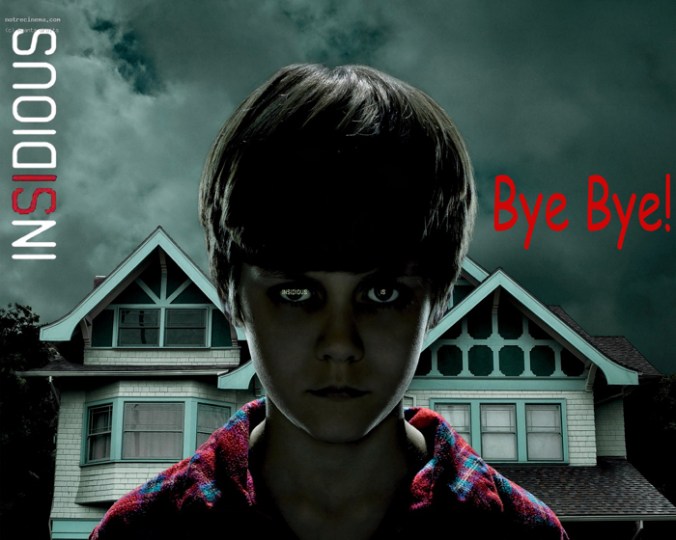
Really? Oh… well then! Since this is a haunted house blog, and because the house is not haunted, I guess this ends my review of Insidious.  Great movie – no haunted house. Goodbye now!

InsidiousBye


.

.

.

.

.


Oh. You’re still here. In that case, I guess I should say a little more about this film. The quote that leads this review is from one of the film’s characters, Elise Rainer; a specialist in the field of paranormal arts. She and her team come to the aid of the Lambert family. Young Dalton Lambert (age 7? 8?) enters a coma of sorts. Shortly thereafter, freakish things from beyond the grave begin to prance around their houses (they live in two of them consecutively, moving from one to another in a futile attempt to flee from the ghosts). Elise informs the distraught parents, Josh and Renai, that their son is not in a coma. Dalton is an astral-traveler, she tells them. When he sleeps, his soul leaves his body to go on mystic, otherworldly voyages. However, during his last trip, he strays too far and enters “The Further” – a realm populated by evil spirits. Here he is trapped. At the same time, other spirits, both evil and neutral, sense the soulless body lying there in the bed. They crave it! To inhabit such a body is to taste life once again. This is why there have been a lot of ghosts hanging around both of the Lambert’s residences. It matters not which house they live in; Josh and Renai have a haunted little boy.

Wow, I dug pretty deeply into the plot, didn’t I? I hope I haven’t unearthed too many spoilers. I’m guessing I have not, not by IMDB’s standards anyway. After all, their one-sentence summary is:

A family looks to prevent evil spirits from trapping their comatose child in a realm called The Further


Now, isn’t that sentence packed with a whole lot of plot?

Anyway, I will reveal no more plot intricacies. I will say that this is a great Insidious 2film. It is one of the better horror movies of the modern age. And though, technically, it’s not the houses that are haunted, this film has all the makings of a good haunted house flick. Before the coma tragedy and the hauntings that follow, the family goes through the normal concerns of adjusting to a new home. Isn’t this how many haunted house films begin? Insidious certainly has the haunted house props. The first house has a tall staircase and a spooky attic. The second has a long hallway with a grandfather clock at the hallway’s end that sort of stands in an eerie spotlight. There are plenty of places for ghostly beings to hide. Creating such hiding places in suburban homes seems to be one of specialties of Director James Wan. As he does for Insidious so does he do for The Conjuring. (Hint: “The hide-and-seek clap game.” Still confused? Well then, watch The Conjuring or read my review of it here.)  The styles of both films (and the sequel – Conjuring 2) are very similar, and pleasingly so. Oh, and I must not fail to mention the baby monitors!  Witness the terror a mother goes through when she hears voices inside a room this is supposed to be occupied only by her innocent baby!
There are only two things that annoy me about this film. These “things” are known as  “Specs” and “Tucker”. They are the two nerdish assistants of Elise Rainer. They constantly try to outdo each other with their skills as paranormal specialists. I get it – they are there for comedic relief. But I found their shenanigans distracting. For me their comedy went against the flow of the film.

Nerdy technicians aside, I love this film. It is creepy in its subtly and bold with its shocks. A must see for any horror fan.


Review of The House of the Seven Gables

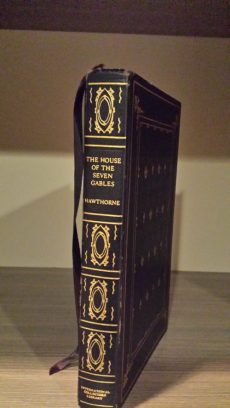
HouseGablesBefore I began reading The House of the Seven Gables,  I knew very little about it. Of course I had “heard of it.” After all, it has a memorable title. Wasn’t this some kind of early American soap opera that those post-revolutionary war people watched on their 19th century televisions? (I think it followed Days of our Lives) Or maybe it came on the scene later, post-Hollywood; as a biography of Clark Gable and his six brothers?

I’m kidding. I knew it was a classic American novel written by Nathaniel Hawthorne and that it is often acted out on the stage. But what else is it? I really didn’t know. Is it a haunted house novel that I should read and review for this blog? The short answer, I discovered, is “Yes. It is a haunted house novel.” But it is much more than that. It’s not really horror, per se. At least not in modern day terms. Hawthorne in his own preface labels his book as a “romance.” C Hugh Holman and William Harmon define “romanticism” as:

“the predominance of imagination over reason and formal rules (classicism) and over the sense of fact or the actual (realism),”

After the reading, I discovered that, not only is this a romantic novel, but it is also a significant work within the American Gothic movement in literature. So, what are some of the characteristics of this “American Gothic” haunted house (besides the seven gables)? Let me begin by explaining what’s not in this book. There are no blood-curling screams in the night, no fanciful specters roaming the halls, no undead creatures rising up from the cellar.   So what haunts this house? As a young kid, I had asked the same question about Poe’s The Fall of the House of Usher , another tale from the American Gothic movement (You can read about this experience here). From a young age I have been mystified by these dark romantic tales and intrigued with the symbolism that lurks within them. It is this symbolism to which we must turn in order to answer our question.

The House of the Seven Gables is haunted by the sins of the past. By guilt and greed. By sorrow and injustice. By an antiquated air of appearances. It is occupied by the old and scowling Hepzibah Pyncheon and her frail and wraithlike brother Clifford. Living in another section of this large house is the eccentric daguerreotypist Holgrave. The visiting niece Phoebe Pyncheon brings a much-needed shine of pleasantries to this dark setting, but will it last? For the curse upon the Pyncheon family is deep-seated.

Curses – sins of the past – family tensions; these are the things that haunt Gothic novels.To quote the website www.americangothic.narod.ru/america.htm:

The role of the Gothic is figuratively to embody an intergenerational tendency.


…demonstrates in the majority of cases that neither the personal nor cultural past is dead and that both can easily return.

A house at the center of a Gothic novel needn’t have such obvious creatures of horror as “the ghost” or “the vampire” for it to be a haunting tale. Horror icon H.P Lovecraft had a great deal of respect for Hawthorne’s works . In his essay Supernatural Horror in Literature, he opines that The House of Seven Gables is “New England’s greatest   7 nathaniel-hawthorne-0008contribution to weird literature.” In the same essay he identifies an “overshadowing malevolence of the ancient house” that he considers being “almost as alive as Poe’s House of Usher.” Any story of a shadowy past that lingers in a new age is a tale of a haunting. When these shadows of the past are cast upon a household and immersed within the current activities inside their dwelling, that house is indeed haunted.
However, The House of the Seven Gables does have some supernatural elements. It’s a tale of feuding lineages, beginning in the 17th century with Colonel Pyncheon and Matthew Maule and a land dispute that puts these two men at odds with each other. Pyncheon cheats Maul out of land, accuses him of being a witch and then poor Maule is executed, but not before cursing the colonel with the damning words , “God will give him blood to drink!” And so begins the curse. The house of seven gables is then built upon this ill-gotten land. In the many years that follow, certain members of the Pyncheon family meet with untimely deaths while inside the cursed abode. While sitting at a desk, while sitting in a leisure chair – the life is cast out of them.

Hundreds of years after the death of Maule, Hepzibah and Clifford Pyncheon, brother and sister, old and frail, live out their dismal lives inside the house. They are encased in this behemoth structure, yet they are wrought with poverty. Towards the book’s end we discover what contributes to their misfortune, but on the way we read about their miserable day-to-day lives. The journey toward their fate is enmeshed with ghostly metaphors.

The presence of the long-dead Colonel Pyncheon is continually felt via his large portrait that hangs in a sitting room.  As the book explains:

The other adornment was the portrait of old Colonel Pyncheon, at two thirds length, representing the stern features of a Puritanic-looking personage, in a skull-cap, with a laced band and a grizzly beard; holding a Bible with one hand, and in the other uplifting an iron sword-hilt

Through watchful albeit painted eyes, he inflicts his reverence from beyond the grave, perhaps due in part to an unconscious sense of infamy the current occupants feel toward him.

Then there is Clifford who, when he is introduced into the story, had me believing on first read that he himself was a ghost. Perhaps he is, but not literally. He is introduced from the perspective of young Phoebe, the visiting maiden cousin that brings cheer to a cheerless home. She hears him before she sees him.

She retired to her chamber, but did not soon fall asleep, nor then very profoundly. At some uncertain period in the depths of night, and, as it were, through the thin veil of a dream, she was conscious of a footstep mounting the stairs heavily.


Phoebe heard that strange, vague murmur, which might be likened to an indistinct shadow of human utterance.


Later she sees him at the breakfast table. Here is one of many gloomy descriptions of him:

..his mind and consciousness took their departure, leaving his wasted, gray, and melancholy figure–a substantial emptiness, a material ghost–to occupy his seat at table.

With his long white hair and garments from another age, Clifford appears rather ghostly. It can be said that he is the embodiment of ghosts of a sorrowful past, a sorrow that clings to him like the sheet of a Halloween ghost. His sister doesn’t fare very well either:

above a quarter of a century gone by, has dwelt in strict seclusion, taking no part in the business of life, and just as little in its intercourse and pleasures.

Not a participator in the most casual of modern day affairs, Hepzibah too is but a ghost, even if figuratively so.

Then there is the harpsichord of the long since deceased Alice Pyncheon. Sometimes it makes music, seemingly on its own accord. The book is vague on whether this phantom music is made by the ghost of the late Alice or whether it is a kind of collective, symbolic hallucination – a longing for those rare but charming moments that blessed the Pyncheon family in the midst of their misfortune.

There are more metaphors and hints of a haunting throughout the book. If you wish to learn of more, I recommend reading the book. But I must say it can be a tedious read. The sentences are very long and flowery. Themes and descriptions are often repeated and drawn out. Much of the vocabulary is archaic. All this and, you know what? The more I contemplate on the story, the closer I’m pulled toward its deep heart that continues to beat a century and a half after its conception.

Sometimes a bit of effort is required to unearth something of magnitude. Although I did not realize its importance to the American gothic movement when I began the novel, I treated it with respect. I didn’t settle for a free ebook. Rather, I bought a physical book with a hard cover. I patiently read it in silent environments and uttered no complaints when I had to reread certain parts for clarification. Much of the reading took place in our newly constructed den – a room designed for reading and writing. Hell, I think on one occasion I had a brandy to go with the reading. Now that’s respect with a pinch of style!

Continue reading

Review of Whisper – Whisper Trilogy Book 1

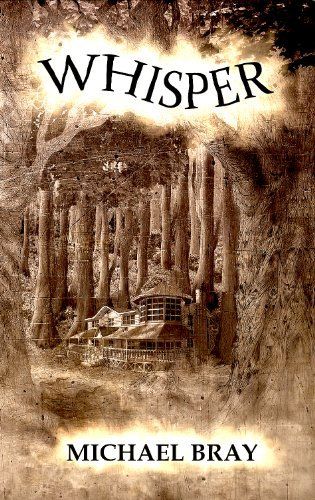
WhisperSome time ago, I posted an article titled: Ghostly Grounds: Explorations Outside of the Haunted Houses of Film and Literature  In this article, I write about the creepy environments in which authors and filmmakers “build” their haunted houses. I have a large section dedicated to “the forest;” a very popular landscape of myth and legend, often harboring fanciful and horrific things – elves, witches, werewolves, and ghosts to name a few. Then I give examples of popular haunted house stories that include haunted forests: Evil Dead, The House on the Moor, and The Haunting of Lake Manor Hotel.

I wish I had read Michael Bray’s Whisper – Whisper Trilogy Book 1  before writing this article. It is the epitome of the “mysterious forest” archetype. I certainly would have included this modern horror novel in the article. There is more than wind stirring in the trees that surround “Hope House” – the subject of Bray’s book. Hope House is an historical abode built upon cursed grounds. There are presences lurking in the neighboring forest; perhaps as many as there are trees. One can only guess at the total. Likewise, one can only make guesses about their nature. Are they evil? What do they look like? (for they go unseen – in the beginning!)

These woodland entities make their presence known to Steve and Melody Samson, the newest homeowners of Hope House, not by sight, but by alternative sensory pathways. In the rustling of the treetop leaves, Steve hears whispers; whispers that eventually call out his name. Also, a certain “feeling” continually haunts both Steve and Melody. They feel as if they are being watched by multiple sets of eyes. For me, it is always scarier when spirits are felt before there is a direct confrontation; heard before they are seen. And this is what happens here.

The story of Hope House and its surrounding grounds unfolds in three different periods of time 1) The present time: a couple buys a house in the woods 2) 150-200 years ago – the construction of Hope House, built with slave labor on cursed grounds by an opportunist blinded by his own ambition 3) thousands of year ago – a cannibalistic tribe and a supernatural tragedy. Bray effectively juxtaposes these time periods. Never was I confused. Whenever a time jump occurs, it happens in just the right place. The storyline keeps on flowing while these jumps serve to heighten the overall suspense. These trips back in time reveal exciting clues and interesting back-stories.

There are interesting side characters in Whisper. There is a slimy real-estate agent with dark secrets, a drunken crone who knows things, a seemingly inconspicuous bartender (but things are never what they seem). All of these characters know things that our main characters Steven and Melody do not. What do they know? Read the book to find out!

The book has its flaws, some of which have to do with editing. There are some grammatical errors here and there. Aside from grammar issues, too often Bray uses “a smile” as a one-size-fits-all way of describing facial expressions. Characters seem to smile on every occasion – when they are arguing and when they are in turmoil. Then there are a couple of minor issues I had with some of the plot points. There are some areas that would benefit from further development. There are noteworthy events that find their place in the story and then stay put, never to resurface again, missing out on opportunities to establish a stronger link to the larger story. Also, some of the story resolutions are bit trite for my taste.

But overall Whisper is a good book. I look forward to reading the rest of the books in this trilogy. And here they are:  Echoes and Voices


Echoes
Voices