Review of Paracosm: Bleath: The Hauntings

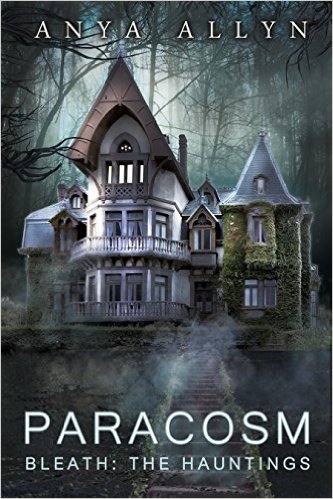
ParacosmI’ll begin this review with a disclaimer: I’m not sure Paracosm: Bleath: The Hauntings qualifies as a haunted house novel. True, the main character, Zoe, inhabits the Wilmont House while she stays in the town of Bleath. Strange things are afoot in this house. Truthfully I don’t remember all the specifics, but things within the house change. Perhaps the wall paper takes on a different design, or a vase of flowers appears to her on a table, a vase that her guest cannot see. Then there is another house where séances are conducted. In this house she sees a ghost. But the houses are merely components of a larger and more encompassing milieu of eeriness. What is truly haunted in this story it the town of Bleath itself.

Zoe Cosgrove is working on a thesis. She is studying the paracosms of children. Paracosms are “imaginary worlds created inside one’s mind” (wikipedia). It just so happens that there exists a town that has an anomalous number of children that helplessly succumb to such imaginary worlds. You guessed it – the town is Bleath. Zoe embarks upon a fieldtrip to Bleath where she sets up home visitations with the households of the children that have created Paracosms. The mayor of the town is very accommodating. He permits her to stay in the Wilmont house. Its former owner has passed on, but the house is furnished and otherwise habitable. The mayor’s son, Karstan, roughly the same age as Zoe, takes a liking to her and romance begins.

Oh, did I mention that the town is a tourist attraction for ghost seekers? Did I mention that the many people in the town, including the mayor and his family, are mediums that conduct séances? Well, I’m mentioning this now.

From the very beginning, Paracosm: Bleath: The Hauntings unloads promising premises. Does it deliver on these promises? Answer: Sort of.   The characters are interesting, the themes are creative, and the description of the town, its people, stores and culture is thorough and inviting. But –perhaps – there is too much going on? There are several strands of twisting plots. Some of these twists spin the plot in dizzying directions, leaving behind several loose ends. I believe this book is the beginning of a series. Also, it has connections to another series written by Allyn. Maybe when the entirety of the series is complete, everything will fall into place. For now, I am giving this book a lukewarm recommendation. It has its finer moments, but there are several elements of plot that are rushed and not well knitted into the whole.

I am, however, anxious to try a second book of Allyn’s. The book is called Dollhouse.

Check it out: http://anyaallyn.com/project/dollhouse/

Review of The Orphanage

orphanage Thomas 2

J.A. Bayona (Director) and Guillermo Del Toro (Executive Producer) have joined forces and the results are phenomenal. The product of this union is The Orphanage – an exceptional haunted house film.

Free of cheap scares and senseless gore – The Orphanage relies on setting, story, and artful camera work. I love it when I can praise a modern film for utilizing the time-tested techniques of classic scare films. I will continue to distinguish the traditional “goodness” from the modern “blah” again and again until the creators of lesser films get the message. This film is in good company with other modern and relatively modern greats such as The Others (Alejandro Amenábar)  and The House at the End of Time (Alejandro Hidalgo). Spanish filmmakers seem to have exactly what it takes when it comes to creating haunted house films.

Back to The Orphanage.  Let’s begin with the environment. Set in a seashore atmosphere, with thrashing waves, seaside caves and a lighthouse just few waves away, The Orphanage effectively uses this striking setting to bring forth haunts. The ghosts of children lurk in the cave, the battering waves nearly captures a mother who desperately searches for her missing child, and the lighthouse, is it a beacon of hope?   The multi-level home, a former residence for orphaned children, has hidden rooms and buried secrets. Its long dark hallways seem to be calling out for ghosts.

Here’s a brief synopsis: As a child, Laura was an orphan who lived in residence hall that is the subject of this film. She was adopted and left behind several of her orphan friends. Many years later, the orphanage has closed down and the adult Laura sets out to reopen it as a home for disabled children. She and her husband and their little boy Simon move in and before they can set out on their goal of reopening the facility, strange things happen. The strangeness begins when little Simon tells his parents about his imaginary friends.

Consider such scenarios that are common in many haunted house films: children with sensitivities toward paranormal phenomena; a house haunted by ghostly children. These can be genuinely creepy scenarios so long as the film is done right. Take for instance a little girl dressed up in zombie-like fashion that jumps out with a deafening scream – I’m sorry but this isn’t creepy (Hello Amityville Horror Remake of 2005!) Scary perhaps, but not creepy, and I prefer the creepy.

To capture the creepiness factor, the lines between reality and a child’s fantasy must be ever so subtly blurred. There must be layers of terror lurking underneath the shield of innocence, with each successive layer becoming more and more disturbing. And what’s more innocent than childhood games! The Orphanage has several scenes where a game puts a chain of creepy events into motion. There’s the game where someone faces a wall and counts while a group of children slowly advance on the counter. They freeze when the counter turns around at intervals of five. Then there’s the game where the object is to solve a riddle by following a trail of clues. Something hidden in a dresser might lead to a note on a statue, and son on. Imagine these games played inside a haunted house where ghosts decide to join in the fun. Or maybe the ghosts are the makers of such games? The point is that this film successfully builds a bridge between innocence and terror and we the viewers walk this bridge in exhilarating trepidation.

Perhaps the creepiest element of this film is the child that hides his face underneath a sack with eyeholes cut out of it. He doesn’t have to jump out in front of the camera to create a scare. His mysterious presence is frightening enough. Who is this? Is it Simon playing some kind of game or is it someone else?

All this and I haven’t delved into the plight of Laura, Simon’s mother. After Simon, she is orphanage Laurenthe next in line to be the receiver of haunts. As a former resident of the home, she is best equipped to deal with the mystery that envelops the house and ties the whole story together. Is she up to the task?

There is a whole lot more going on in this film but I will say no more. Trust me when I sat that this is a great film. It is filled with mystery and suspense. The story is well written and, did I mention that it is creepy? I guess I did. It is creepy indeed!


Review of The Old Dark House


I like to “live it up” on Saturday nights. These days, I do most of my Saturday night “living” on my sofa, watching Svengoolie on MeTV . Thankfully, he’s a lively kind of horror movie host. Anyway, regular doses of Svengoolie have helped me to appreciate many of the old Universal horror films. Of all the horror classics, I have found I like Frankenstein and The Bride of Frankenstein the best. Coming in second (I guess third) might be The Invisible Man. Even after seeing it a couple of times, I didn’t realize that James Whale directed The Invisible Man. Whale, of course, is most famous for directing Frankenstein and The Bride thereof. I then wondered, since I love The Invisible Man, maybe I’m not merely a Frankenstein fan. Maybe I am a James Whale fan?

Whale has made four classic horror films, of which I had seen three. I was delighted to learn that the horror film that I had not yet seen was a haunted house film. The other night, I finally watched The Old Dark House. It did not disappoint.

When describing films that are overly saturated with elements of a certain theme, the phase “X for X’s sake” is often used. ‘Gore for gore’s sake’ or ‘Violence for violence’s sake’, you get the idea. I am tempted to use the phase “Creepy for Creepy’s sake” when describing the film, although I don’t mean it in a negative way. The Old Dark House doesn’t grab you by the head and smash your face down inside a pie of creepiness. Rather the creepiness is all around you from beginning to end, though it may not always be subtle. It OldDarkHouseis a simple story – a violent storm forces two sets of travelers to seek shelter at and old, dark house. The inhabitants of the house are quite strange, as would be expected. There are several subplots that arise, and some of these are awkward. But never mind, the purpose of the film is not to tell a thought-provoking story with a compelling plot. Instead, it is to revel in the art of the uncanny. It succeeds in its goal with dark and chilling atmospheres, crafty camerawork, and its effective use of shadows. Some of the characters are humorously unsettling, even by today’s standards. I would like to go more in depth and describing some of them, but that would require me to tread too far into the forest of spoilers and I don’t want to do that. Oh and there’s the screeching of the wind! Gotta love that!

Some of the visuals described above are signature styles of James Whale. If you have never seen any of his films, I recommend doing so immediately. For those who are familiar with Frankenstein (and who’s not?), you may be delighted to know that James Whale once again features Boris Karloff as a hulking, mute figure in The Old Dark House. I saw this film on youtube, and the recording is quite crappy. I have yet to see it on Svengoolie. I’m sure he could get a hold of a better print. Sven, would you get this film for me? You would, aww that’s just sweet!

Review of The Haunting of Lake Manor Hotel


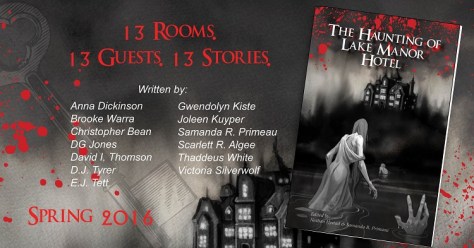
ThehauntingoflakeManorHotel-COVEROnce upon a time (more specifically, on several occasions back in the fourth and fifth grade), our teacher gave us creative writing assignments. The procedure was as follows: Mrs. Rickman would pass out copies of a drawing that had a written scenario underneath the panel. I remember a drawing of a bowl of soup that had letters rising from underneath the broth. There were question marks hovering over the bowl.

The written out scenario went something like this: “You go into a restaurant and order a bowl of alphabet soup. The waiter places the bowl before you. Suddenly, the letters in the soup form a message. What does the message say?” Our assignment was to answer such a question with a one page, handwritten story.  After all the stories were handed in, the teacher would read each of them out loud to the class. It was indeed a very rewarding experience. Among other things, we learned of the different directions to which one could lead a story.  We relished in each other’s creativity. At least I did. Some kids dreaded “Creative Writing Time.” Not me.  I loved the writing and the listening and I looked forward to hearing the stories written by my fellow peers.

Thank you Nathan Hystad and all the authors that contributed to The Haunting of Lake Manor Hotel for bringing me back to my grammar school creative writing exercise. No, I’m NOT saying that the writing in this book is juvenile.  Let me explain.  Hystad created something that triggered the creativity of others – similar to the way Mrs. Rickman gave her students the tools to expand our imaginations. For The Haunting of Lake Manor Hotel, Hystad came up with a back-story and scenario. Then he invited thirteen authors to write stories based on his depiction. The results are interesting indeed.

The back-story is as follows: through unscrupulous means, the wealthy Charles Hamblin, owner of Lake Manor, acquired farms and properties from victims of a drought, to later sell for a profit. Meanwhile, most of the swindled suffered another tragedy – they were victims of a plague. Hundreds of bodies were dumped in the nearby lake.  The ghosts of the victims began to occupy Lake Manor and haunt Hamblin’s descendents.

Here is the current scenario, set in modern times – , Lake Manor is converted into a hotel. Rumor has it that it is haunted. Is it? If so, by what? By whom?  It was the job of the authors to answer such questions. Each author was assigned a room number and instructed to write a story based on the experiences of the guests that stayed in the assigned suite.  These authors then got busy haunting this hotel, leaving none of their characters/guests unscathed. All are haunted in one way or another.

Some authors focus on the lake and the woodsy trails that surround it. They write about TheHauntingofLakeManorHote;bannercreatures that come out of the waters and prey on their victims. They tell tales of ghosts that arise from the watery depths to lure guests into the deadly lake. They speak of strange things lurking along the trails.  Other authors focus in on the ghostly goings on within the walls of the Manor. They unleash bizarre beings of their mind’s creation and let them roam the corridors. They haunt rooms with ghostly children. They install secret panels and passageways for their characters to uncover and explore.

There are several reoccurring characters and themes throughout the book. Members of the hotel staff find themselves in multiple stories. There’s Lissette the desk clerk, Clay the bartender and Hank the bellhop. If I were you (“you” the reader or soon-to-be-reader of this book), I’d watch out for this trio. They can be…suspicious…at times. There are other crossovers as well.  There’s an offhand reference to a certain guest in one story. This guest ends up being a main character in another tale. So pay attention, readers! Oh, and watch out for the strange dishware you and the guests will encounter along the wooded trails throughout several stories – they are labeled with the names of different body parts.

All the stories are well written. As an added bonus, they smack of style; each one different, each one delightfully unique. There weren’t any bad stories. Some were better than others. One in particular was both intriguing and puzzling, so I read it twice. I’m still not sure I understood everything even after a second reading. But hot damn, I love this author’s style! (The story is Jumbled-up Jack by Christopher Bean). Alas, there were a couple of stories with non-endings. Seriously, it seemed as if some authors were nearing the climax but then decided to step out and have a smoke, only to forget to finish the story. But overall, this book is an enjoyable read and wonderful exercise in creative collaboration. “Creative Writing Time” lives on at it is beautiful, man!


A Review of The Babadook

 
babadook3Who is Mister Babadook?
He is grief, he is fear
He is bitterness, he is near.

Where does he come from?

He comes from pain.
He comes from a book
He’s sneaking to the surface
Come, have a look!

A family suffering. A grieving shrew.

                                             A boy dealing with a loss he never knew.

All of this and a pop-up book; here he comes – Mister Babadook.


The poem above is my “perspective-in-a-nutshell” for the fascinating film The Babadook. I did my best to mimic the writing style of  Mister Babadook – the fictional children’s book that is the subject of the film. Don’t worry, you don’t have to like my poem!

This piece is more of analysis than a review. Therefore, it is filled with spoilers. So reader beware! The Babadook is too deep of a film for me to just offer up a simple “I like this film because of its depth, mystery and special effects. (and yes I do like the film for these things – and so much more!)” It is begging for thoughtful analysis. Or maybe it’s just my analytical mind that desires such an examination. It is a film rich with symbolism, so much so that I cannot help but dive underneath the layers to see what is lurking from within.

This fright-filled tale begins with the back-story. While taking his wife to the hospital so that she may give birth to their son, Oskar Vanek perishes in a car crash. Six years later, widow Amelia and her son Sam struggle with daily living. Sam is overly imaginative and high-strung. He is a problem child who can’t be trusted around other children.  He succumbs to tantrums. He is afraid of monsters that might be living under his bed.

Amelia suffers all the stresses of being a single mother. Her son’s behavioral problems make matters worse. She has a difficult time maintaining any kind of support network. Her own sister avoids her. Her nephew just freaks her out.

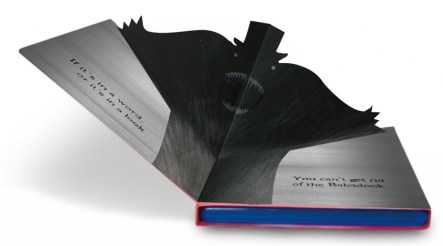
Mother and son like to read together in bed. One night, Sam chooses a book from the shelfBaBadook4 called Mister Babadook. It is a creepy pop-up book that features the cloaked shadow monster “Mister Babadook.”  On one set of pages, he pops up over the front door. He wants in.


Look at the pictures below to see some of the creepy words that fill the pages.


After the reading, Sam begins to see Mr. Babadook in various places inside their house. No one else can see him. Not Amelia, and not the viewers of the film. Not yet.  But soon.  Eventually, Amelia hears him knocking on the door. She hears him call out:

  “Baaa Baaa Dooook!”

She sees his form in the dark coat that hangs on the wall. She sees this black specter  everywhere. And when she hears him, we viewers hear him.  What she sees, we see. The film changes perspective, from the boy to the mom. When this happens, we descend with her into the pits of madness and witness Amelia’s breakdown. The Babadook possesses her. It wants her to take her son’s life.

BaBadook

So, what’s going on here? The “stuff of horror” in this film can be either literal, figurative or both. I vote for either of the latter two. Perhaps the phantom is real. Even so, there is symbolism lurking within his shadowy frame. It is undeniable.

The Babadook represents all the repressed feelings that dwell within the mother and son twosome since the death of Oskar Vanek. Up and until Amelia encounters The Babadook, Sam’s impressions of him are left to the viewer’s imagination. Perhaps this is because his fears, though no less real, are more vague. He never knew his father, but still he suffers from his absence. He lacks discipline and courage. Having a mother who is unbalanced and overstressed does not help his situation.  Sensing Amelia’s hesitations about being a mother, he feels insecure.

Amelia has never properly grieved. She has buried many emotions and they are bubbling to the surface. Sorrow and sadness are definitely part of the mix, but she possesses feelings that are much more toxic. She is bitter. Her husband died so the Sam might be brought into this world. She blames Sam for this. She even hates him at times. Through her eyes, we see the shadowy creature. We see it possess her, and this is when her bitterness is in full form. She tells her son to “Eat shit!” She even admits that she would have been happier had he died instead of her husband.

Although Amelia is behaving cruelly, Sam still loves her and comes to her aid. Together they defeat Mister Babadook.  But they don’t kill him. Rather, he flees to the basement of the house. There he stays.  Mother and son are happy at the film’s end. They love each other. Both have said some hurtful things to the other, but this is what can happen when a hodge-podge of negative feelings goes unchecked. The feelings fester and amalgamate and create a character that is foreign to the host that harbors such sentiments. People become monsters; unrecognizable abominations of their former selves.

BaBadook2 In the end, the fiend is still there. Amelia treads carefully into the basement. She feeds the monster, dispensing small portions of whatever it is that is mixed in with a bucket of worms.  The beast is hungry. It screams and threatens to attack. But Amelia succeeds in keeping it at bay. She revisits her nastiest of emotions every once in a while, but keeps them in check. According to Wikipedia, “opening a can of worms” is

 an idiom referring to a slew of subsequent problems and dilemmas arising from a decision or action

 It is risky to revisit certain emotional states. If these demons must be revisited, caution is essential. One must not overfeed them.

The Babadook is a great film. Thankfully, it lacks “high-octane” scares and gore. In its place there is good ol’ fashioned story-telling and mood development. Oh, and great artwork! Mister Babadook appears genuinely creepy.

Now, is this a haunted house film? I’d say so. Most of the terror takes place within the house. It would be a Type 2 Haunted House film – where the house is merely a stage for the ghosts to perform – rather than Type 1 –where the house itself plays a significant role in creating the things that haunt it.  (click here for a more in-depth examination of this delineation.) Plus, several lists of haunted house films include The Babadook – so there’s that!  (for instance, there’s this at flickchart.com )

If you can’t trust a list, than what can you trust?

Whether or not you think this is a haunted house film, watch it anyway – you will enjoy it. If you do watch it and disagree with my analysis, that is fine. So long as you agree that this is a very fine film! That is a must!


Review of Archie’s Haunted House (Archie & Friends All-Stars)


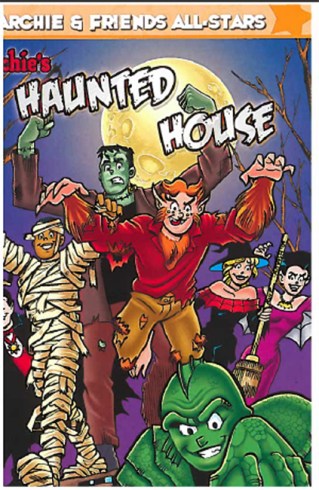
Archie Haunted House CoverThink real hard – what’s the scariest work within haunted house literature?

Think even harder – what is the funniest work of the haunted house genre?

Think harder than “even harder” – which haunted house book best captures the spirit of today’s youth?

Think so hard that your brain bleeds – which haunted house novel has the best graphic illustrations?

Tired of all this thinking? Good, because I am going to give your brain a rest by dumbing things down a bit as I get into the subject of today’s review – Archie’s Haunted House (Archie & Friends All-Stars), which, by the way, is not the crowning achievement for any of the above categories. Truth is, I don’t know which haunted house novel is the scariest, funniest, trendiest or “graphiciest” (the superlative of “graphic.” See I.. oh never mind, just read on!) But it’s not Archie’s Haunted House, but we love Archie anyway. Why? Because he is Archie! (circular reasoning notwithstanding)

Maybe some of you don’t know what an “Archie” is. Archie is the star of fictional comic book series about teenagers who do “teenage-ish” things in the small town or Riverdale. He’s been around since – My god! Really Wikipedia? Since 1941? And here I thought he was the byproduct of the late fifties and early sixties with all that soda- shop/sock hop kind of humor. The all-American teenage Archie, with red hair and all, had a side kick named Jughead, known for his laziness and addiction to junk food. Archie dated either blonde Betty ,the sweet, girl-next-door, or brunette Veronica, the snobby rich girl. Then there was Reggie the conceited one, Big Moose the dimwitted but good-hearted jock, Dilton the brainy nerd. The list goes on.

Archie has survived over the decades, has gone through various incarnations for multiple publications. As previously mentioned, there’s the “sock-hop” era Archie, there’s “Little Archie” (the teenagers as children), there was even “Christian” Archie. Archie tried (but in my opinion, failed miserably) to stay with the times. In the 1980’s he was saying no to drugs, in the 1990’s he was listening to grunge rock – you get the idea. In a parallel universe of Archie (the Life with Archie series),the Archie gang appear as superheroes, secret agents. They marry each other. In one story, poor ol’ Archie dies. But he lives in one of the other 2,343,120 Archie publications (number may be slightly exaggerated.)

As a birthday gag-gift, my friend and colleague gave me this haunted house issue of Archie from 2010. He knows I dig haunted house stuff and he also knows that I am familiar with The Archie comics. I read it and thought “why not ‘review’ it.” But the sum of the review is as follows – “It’s Archie” – more of that circular reasoning for ya!

In the first story, a costume store opens in Riverdale. The costumes are special in that the person who puts them on becomes what they are wearing. Archie is running around Riverdale as a werewolf, Reggie a vampire, etc. It takes nerdy Dilton to break the spell of these magical costumes and return the gang back to normal

The second story is about the oldest house in Riverdale. It’s supposed to be haunted, but Archie Haunted House - Forefathersthe city council sees it only as an eye sore and wants it torn down. But wait! Archie discovers the house is an important piece of history and wants it preserved. But wait again! It really does turn out to be haunted and Archie changes his mind and wants it torn down – after convincing the council to preserve it. Oh brother!

In the third tale, the girls are having a “girl-only” Halloween party and the boys come to scare them. It turn out that the boys become the ones who are scared when they mistakenly conclude that Veronica’s aunt is an axe murderer.

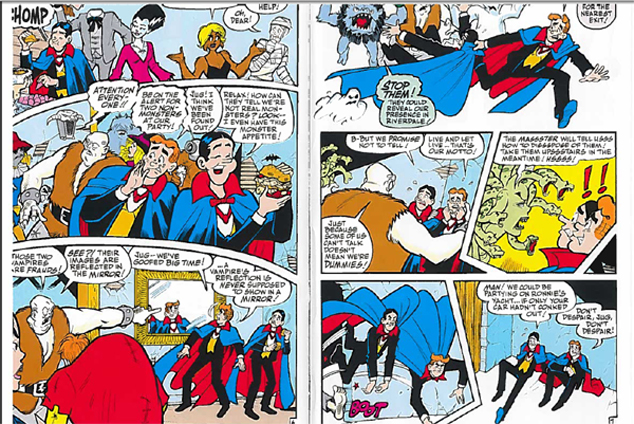
Finally, there’s my favorite story! Archie and Jughead, dressed as vampires, miss Veronica’s Halloween party, and so they are invited to another party – at a haunted house. In attendance are real monsters. There are mummy ladies and werewolf women, There are things with many eyes, there are ogres. There’s even a medusa. When these monsters discover that Archie and Jughead are not real vampires, they are in trouble!

Archie Haunted House - Monster Party

If you want to know the truth, I prefer the Archie comics of the 1960’s and 1970’s. My older sisters had a bunch of these lying around the house when I was growing up. I read em’ and dug em’. I cringe when the comics go out of the way to show how much they have moved with the times. In Archie’s Haunted House, Veronica and Betty discuss a Pearl Jam concert. In 2010 I think it would be a little late for that. Later, they succumb to a magic spell, and the writers compare the trance they fall into to the reactions the girls typically have after watching Brad Pitt on the screen. I would think B and V as teenagers of 2010 would go more for Robert Pattinson of Twilight. That would definitely fit – since these are horror-themed stories.

Ah but oh well. My colleague has told me that Archie comics have always thrown in references to real people and places aimed at referencing the “current times.” I’ll take his word for it; I just don’t remember the older issues being so obvious about it while simultaneously being a decade off track.

Anyway, this is a fun comic book. Not really scary, not “ha ha ha” funny, and I’m not sure who the target audience is. It can’t be today’s millennials, they won’t go for this. And I would guess that many middle-aged folks (like me) and beyond would prefer the older issues. The drawings are decent. That’s good, right? Despite the shortcomings, it’s an enjoyable read. I don’t know why. Oh wait, yes I do – it’s fun because it’s “Archie”

Archie Haunted House Nightview


Review of Sker House

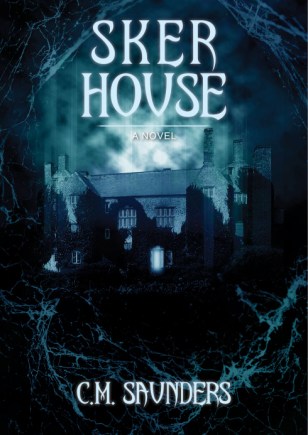
SkerHouseWhat is an epic? When I think of “epics,” I think of kingdoms, knights and warriors. I think of castles and magical caves. I think of a fictional place from a long time ago in a place far away. I think of Star Wars, Lord of the Rings, and Harry Potter. All that said; let me move on to the book under review. There’s something about C.M. Saunder’s novel Sker House  that has me classifying it as an epic and yet, it has none of the aforementioned items. I need some help. Let me consult the ever-reliable online dictionary of Merriam-Webster.


Yes!  The dictionary came through like a charm!  It gave me a definition I can use:


Extending beyond the usual or ordinary especially in size and scope.

The definition fits. Sker House is a rich tale goes beyond the ordinary.

It’s not that it’s a long book (amazon has it a 299 electronic pages). There’s just so much packed into this tale. And nothing is crammed in hastily. Saunders gives the characters the necessary space to grow. As he giveth unto the characters, so doth he giveth to the plot (how do you like my Shakespeare impression?), which thickens into a filling story capable of satisfying any reader’s hunger for intrigue. Take for instance, the house at the center of the story – Sker House, which is a seaside inn located in South Wales. The inn and its surrounding property are not content to toss a mere ghost or two at the reader. The book has multiple hauntings and ghosts, including the mysterious Maid of Sker and the creepy shadow people. Then there are the strange ghost lights from ships of another day. Readers will encounter hidden passages, secret gardens, mysterious scribblings, possessions of the body, and unexplainable power outages.

Any good house haunting tale, especially one of epic proportions, is in need of a telling backstory. Saunders explores the history of Sker House from multiple avenues, including the firsthand tales from a strange old codger, the revealing dreams that manifest in the sleep of the protagonists, and the image provoking photo of doomed seamen.

A strong sense of place is important to epics. Although this is not a story from a time long ago in a place far away, the author does take a foreign setting (foreign to me here in the U.S.) and make it relatable. By and large, this is accomplished through the richness of the characters with all their prides, prejudices and patterns of speech specific to this locality. Saunders seems confident describing the mannerisms of his characters. The same is true concerning descriptions of the terrain and geography. He uses his knowledge of local history and legends, borrowing loosely from these stories. But in the end, his tale is his own.

SkerHouseOriginal

(Read about the original Maid of Sker and the real Sker House. Picture above is the original house, taken from this site)


Here’s a little more about these colorful characters. They include Dale and Lucy, two young and adventurous journalist-wannabes who stay at the nearly abandoned inn because they wish to learn more about the ghostly legends that are associated with Sker House in the hopes of publishing an article concerning such accounts. There is the landlord/proprietor of the Inn – Machen – a suspicious curmudgeon who is both goodhearted and endearing at the same time. Then there’s Old Rolly, Sker House’s only resident. He is a quiet and mysterious man who sits at bar of the inn day after day. Even background characters such as Ruth and Izzy, the mother and daughter maid team of Sker House, are well-rounded and personable.

The only failings that I came across have to do with some of the specifics within the wide breadth of material. At times I felt the author had too much on his plate and therefore neglected to fully explain certain happenings or resolve particular issues. I don’t want to identify these exact moments for fear of giving away too many spoilers. But if you read this book (and you should!) perhaps you will notice them as well. Despite this criticism, I admire the epic quality of this work – very much so. So a few details are sacrificed in the creation of the larger picture. The point is that the larger picture fairs well. Therefore, I strongly recommend this book

Review of The Time of Their Lives

AbbottAAAAAAA-BBAHHHHHHET!!!!       Costello      

 “Cut! Actors and Actresses, take five. Uh, Mr.   Blogman, may I have a word with you?”

Blogman Dan: Sure! What’s up?

Inner Critic: You really shouldn’t have Lou Costello shouting “Abbott.” It’s not appropriate for this film.

Blogman Dan: Aw gee, Mr. Inner Critic, but when I reviewed that other Abbott and Costello haunted house movie, Hold that Ghost, I began the post with Costello’s signature “AAAA-BBAHHHHET” and the post was a success.

Inner Critic: You were wrong about that too. In Hold that Ghost, the actors do not go by the names Abbott and Costello.  Abbott’s character is Chuck Murray and Costello plays the role of Ferdie Jones. So it would not have made any sense for Ferdie to be calling out a name that was not even in the movie.

Blogman Dan: Okay, so I made one boo boo!

Inner Critic: I’m afraid this time around, you made more than one. In The Time of Their Lives , Bud Abbott plays both Cuthbert Greenway and Dr. Ralph Greenway. Lou Costello plays Horatio Prim. Once again, Abbot and Costello go by different names. In fact in most of their films they go by the names the writers of  each respective film have given them.

Secondly, the two men are not partners in this film.

Blogman Dan: They’re not?

Inner Critic: No! They’re not even friends. So it would not make any sense to have Costello call out to him! The next time you begin a blog post, I suggest you….

Pow


Every once in a while, you have to punch that inner critic right in the nose! An annoying buttinski he can be!

Hi everyone, welcome to my review of The Time of Their Lives. This is a hilarious film that is also surprisingly creepy at the same time. And yes it’s true: Abbott and Costello are not partners.  It was far from their first film and far from their last. I guess somewhere in the middle the comedy duo just wanted to experiment with a different formula. And it worked! I loved their brilliant performances as stand-alones.  Sometimes they are in cahoots and sometimes they work together. But this “togetherness” is made difficult by the fact that Costello is a ghost and Abbott is not. Abbott cannot see Costello. And there was no cellular coverage for interdimensional communication (it was the 1940’s what to you expect?), so it is rather difficult for them to talk to one another.

The movie begins during the Revolutionary War. Horatio Prim (Lou Costello) is a travelling tinker who has come to the estate of Tom Danbury to meet with his love Nora O’Leary, one of Danbury’s servants. He wishes to marry her. To win over Danbury’s approval for such a marriage, Horatio has a letter of recommendation from General George Washington. Ah but he runs into all sorts of hurdles. First, there’s Cuthbert Greenway (Bud Abbott), Danbury’s butler. He wants to be the one to marry Nora. So he ends up locking poor Horatio in a crate. Furthermore, Tom Danbury turns out to be a traitor in alliance with Benedict Arnold. He kidnaps Nora and hides Horatio’s letter in secret compartment within a clock. Later on, the Patriots arrive on horseback. They burn the house down. Horatio and Melody Allen, Danbury’s fiancé, are shot and killed. (Oh yeah, Horatio had escaped from the crate by then) THEY are accused of being traitors (they were not!).  Their bodies are discarded in a well and a curse is placed on them – as traitors, their souls are bound to the A and C Timewell and its surrounding land.

For a black and while comedy flick in 1946, it was surprising to see the bodies at the bottom of the well. Not quite a barrel of laughs, or in this case, a “well” of laughs. The scene was a bit disturbing.

Time passes. One hundred seventy odd years go by. A new house is on the property. It is built to resemble the original colonial house and includes much of the original furnishings. Somehow these pieces of furniture escape the fire. I forgot how.

Anyway, four people are spending a weekend in the home. One of the occupants is Dr. Ralph Greenway (Bud Abbott), a descendant of the mean old butler that locked poor Horatio in the case. Meanwhile, the ghosts of Horatio and Melody decide to haunt the house. Actually, they are searching the place for the long lost letter written by George Washington on behalf of Horatio. Perhaps it’s hidden inside one of the original furnishings (the clock!). This letter will prove the innocence of the ghosts, and they may then be free to leave the premises and rest in peace.

Now the house haunting begins! There are some “not so bad” special effects going on – pretty good for them there olden days! It was fun to see Horatio and his lady friend their semi-transparent states. It was even more fun to watch a car drive right through them. And I’ll never forget the “walking dress” that descended the staircase! Melody was wearing it but since she herself was invisible, the poor woman that saw this frightful scene was scared out of her wits!

The film does have a problem with continuity when dealing with the physical laws that govern how the ghosts can and cannot interact with physical objects. As mentioned before, a car passes through them. And yet, the ghosts are able to handle objects such as lighters, dresses, etc. They can sit their ghostly rumps down on tree branches. During their very first scene as ghosts, Horatio and Melody try to hug each other. They fail, for they pass right through each other! But later, Melody rests her arms on Horatio’s shoulders. Ah but this is a comedy, so I’ll let it go. Even the famous Patrick Swayze/Demi Moore movie “Ghost” had its inconsistencies. Patrick couldn’t reach out and open doors, couldn’t kiss Demi without possessing the body of Whoopie Goldberg (ewww!). But for some reason, he could sit in chairs and walk on the soles of his feet. I guess the physical laws that govern ghosts are just sooo complicated.

But you want to know what I like best about this film? I like that Costello gets revenge on Abbott. I’m not only referring to how he pranks the Dr. Ralph Greenway Abbot to get back at his ancestor Cuthbert Greenway Abbot. I’m taking in consideration the totality of Abbott and Costello’s antics across all their spooky films. In all these comedic horror movies, it’s usually Costello that is the butt of the supernatural and/or scary jokes. It’s Costello that freaks out over the moving candle in Hold that Ghost. It’s Costello that first encounters Dracula and Frankenstein in Abbott and Costello meet Frankenstein. By the time Abbott gets around to seeing what in the heck is spooking his friend, the ghostly/monstrous shenanigans have stopped, leaving Abbot to chide his companion with an “Aww you’re imagining things!”

A and C time 2The tables have turned. Costello, as a ghost, pulls tricks on Abbott and nearly drives him out of his mind. He disturbs his sleep by playing the harpsichord. He lights his cigarette, but Abbott doesn’t see Costello- he only sees a lighter hovering in the air. He gives him a good kick in the ass over a chair! You go Costello!

Mind you, Costello gets into his own fixes as well. It just wouldn’t be an Abbott and Costello movie without hearing Lou trying to catch his breath while he is freaked out by something.

Abbott and Costello meet Frankenstein is probably my favorite comedy horror film from this duo. The Time of Their Lives might be my second.  Regardless, I catch all their frightfully funny films whenever they are shown on Svengoolie on Saturday nights on MeTV.  I love my Svengoolie. And you should too!
 

Review of The House on the Moor

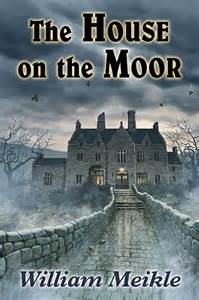
The House on the Moor CoverThere’s an accepted adage that one should ‘never judge a book by its cover.’ Sorry Mr. Adage, but that is exactly what I am going to do. Not only am I going to judge the cover, but I an going to evaluate the paper, fonts, and even the box it came in.  I am going to offer my opinion on the illustrations as well. And my opinion is this = Saul Goodman. (it’s all good, man!)  Oh and the story is all right as well.

Why all this mumbo-jumbo about the physical book? Well see, I stumbled onto Author William Meikle’s thread on Goodreads.com.  He posted a link to Dark Renaissance Press –the publisher for his book – The House on the Moor.   Unfortunately,  the Dark Renaissance website is down at the time of this post.  But Meikle describes exactly why I was attracted to his book in his blog.  I’ll leave it to the author to tell you about it:

The Deluxe Hardcover Edition is bound in smooth black leather, and the front cover stamped with a haunted house in red foil, further enhanced with solid black headbands and a red book ribbon. The book will be protected by a black slipcase and deluxe hardcover edition will be signed by the author and the artist.

The Signed and Numbered Hardcover Edition is bound with the printed front cover art. It is furthered enhanced with black headbands, and a black book ribbon. The signed and numbered hardcover edition is signed by the author.

From – https://williammeikleblog.wordpress.com/2015/11/19/the-house-on-the-moor-signed-hardcovers-in-stock/


Now how could a lover of haunted house literature such as myself not be interested in something like this! Then, after seeing the illustrations of the talented M. Wayne Miller , I was sold. See some of Mr. Miller’s work below:

In the age of digital downloads, I am impressed that authors such as Miekle take the time and effort to publish a well designed, hardcover book. Not that there is anything wrong with ebooks – I read the all the time! I publish them myself!  But the pleasure of holding a book, flipping through the paper pages and then storing it on a cherry wood shelf cannot be replaced. The House on the Moor is joy to multiple senses.  I have already expressed how attractive the book looks.  But there is more. The cover is feels smoothly sensual when an open hand glides across its surface. And it seems to have that new car smell! Ah but it is a book – so the olfactory pleasure is, perhaps, more intellectual?

As for the other senses, I wouldn’t know how it sounds; this is not an audio book. I have made no attempt to eat it so I wouldn’t know how it tastes. But what about that other sense, the one called “imagination” which yields the power to bring all the senses together inside the brain?  The plot certainly stimulates the imagination.  It is a simple yet engaging story, filled with mood-setting charm.  John and Carole visit a mysterious old man named Blacklaw in his house on the moor.  John’s grandfather Hugh was a dear friend of Blacklaw’s in the olden days. In their prime, both men, bold and dashing, were celebrated for their feats and adventures, until one final act of daring caused Hugh’s demise. This act occurred in the cellar of the house on the moor. John is ready to hear the tale. Cautiously, over the course of several sittings, Blacklaw tells the tale as his energy is slowly drained.  It is a story of the occult and magical spells.  It is a story that explains the haunting that is occurring inside the house during present time Now readers, cue in the imagination – this power that brings together all the senses inside the brain.  I could almost taste the Scotch that guests and hosts of the house drink during the tellings. I The House on the Moor Spine 2could almost feel the warmth from the fireplace and nearly hear it crackling.  Could my mind hear the eerie chanting rituals that arise from the cellar? I think so. Could it see all the way up to the top of the library tower, where hidden in the shadows of the rafters was some kind of phantom? I believe so.
This is a book to cherish, to read by the fireplace in your favorite sitting chair with a sifter of brandy at your side. When not in use it belongs on the bookshelf in its protective black case, with a spine of shiny-red etching that spells to each and every onlooker: The House on the Moor.

Review of The Haunting of Blackwood House

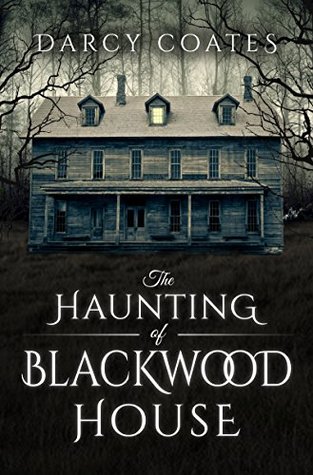
Haunting of Blackwood HouseThe Haunting of Blackwood House  is the second book of Darcy Coates that I have read and reviewed. It certainly won’t be the last. I admire her talent as a storyteller. I learned of her talents by exploring her novella The Haunting of Gillespie House. It treated me to a good old-fashioned haunting, so it was only natural that I would want to visit another of her haunted abodes. So The Blackwood House was next. This house accommodated me as well, nestling me with ghostly delights and treats of terror as I snuggled in my bed, reading only by the light of my e-reader. Thank you Darcy for taking in a late night lodger and leaving the lights off for me so that your ghosts may shine!

I foresee myself as becoming not merely a fan of her books, but a friend of her work as well. As any good friend should do, I accept the good along with the mediocre. So far I see no bad. Here is what’s good about The Haunting of Blackwood House: the haunting of Blackwood House. No, the preceding sentence is not an exercise in redundancy. What I am saying is that the haunted house itself is what makes this book. It has a rich back-story – build on grounds known to be a hotbed for supernatural energy, founded by a mysterious spiritualist many decades ago, to later be inhabited by an axe-wielding serial killer that turns victims into ghosts. The house changes ownership over the years and for each set of inhabitants, there is danger. It just so happens that the families that live in the house just can’t keep from killing each other.

Mara is the house’s latest resident. She lives there alone, but her boyfriend Neil keeps her company. Sometimes he sleeps over, but often Mara spends the night in Blackwood House alone. It is when she is by herself that the house tends to show off its ghostliness. Footsteps are heard in the attic. Voices of crying children are heard from the fireplace. There are the ghostly images of a hanging man in the foyer; of a deceased woman rocking an infant in the rocking chairs. There are some eerie moments here folks, and I love them all.

So, what is mediocre about this book? Answer – the characters. Mara was raised in a family of spiritualists. She has “the gift” but throughout the story, she is in denial of it to the point where she abhors all things religious and supernatural (later it will be revealed that her “gift” tends to feed the haunting). Her animosity can get under the skin of the reader when she constantly tries to rationalize away the ghostly phenomena. Mara is somewhat of an enigma. She is high maintenance yet independent minded. Her boyfriend Neil suffers on account of this, never knowing whether to step in to offer her assistance of back off in fear of cramping her style. In short, she is annoying and he is a doormat, and these two don’t break out of these molds too often. Their love story is a side story, that doesn’t really branch off or melt into the larger story of the haunted house. Therefore, it’s a bit distracting. Mind you, these aren’t “bad” characters; they are believable (as with Mara’s case, all of us are haunted by contradictions of character), they just lack that special something that absorbs readers into their essences.

It can be summed up as follows: Mara’s psychic abilities strengthen the haunting power of The Blackwood House. In turn, The Blackwood House, with its mysteries, history, and spooky spectacles, makes for a strong piece of haunted house fiction. The brawn of the book is enough to carry its weaker elements – the characters – to the home stretch. For at times, they are baggage for the larger story. But when the baggage becomes burdensome, have no fear, for soon the focus will return to the strengths of the story – and the reader will once again feel hauntingly at home.