Hello all! Let this post be an intro to a new section at my blog entitled “Lists”. In the Lists section, you can see all the groovy lists I made
Back in 2020, day by day throughout October, I posted a horror book/movie comparison. Each day you had to come back to see what book/movie I was comparing. Now, four years later, you can see them all in one place!
October 1 – Dracula – Book Vs. Film -Which Medium Wins? (Thirty-One Days of Halloween)
I am comparing Bram Stoker’s epic novel to my favorite Dracula movie, which is Tod Browning’s 1931 Universal classic starring the great Bela Lugosi. I saw Hammer Film’s Productions 1958 Dracula film starring Christopher Lee (it was good), sort of remembered enjoying the Francis Ford Coppola’s 1992 version of the infamous Count, and yes, I appreciated the great silent classic Nosferatu. In the end, it’s the Bela classic that does it for me! However, the novel “does me more!”
The adventurous carriage ride through the Transylvania forests, the description of the breathtaking views of Dracula’s Castle even from far away. The imprisonment of one Jonathan Harker inside this castle. And of course, the initial account of the ancient and mysterious Count Dracula as he dwells in his domain; all this was captivating on a level that none of the films could reach.
Winner: BOOK
October 2 – Frankenstein – Book Vs. Film – Which Medium Wins? (Thirty-One Days of Halloween)
Fans of classic literature will hate me for this. Inspiring feminists will want be dead. How can I go with the movie on this one? Mary Shelley’s novel was so original and vastly different from film. All that lightning and laboratory stuff – that was sooo Hollywood! Maybe so. In the book, the details concerning the creation of the monster is purposely kept vague, as is the monsters’ appearance, allowing the imagination of the reader to get some exercise. And, I appreciate this. Shelley’s novel is a great piece, no doubt about it.
It’s James Whale’s fault. He be the director of the 1931 Frankenstein film and if he wasn’t such a damn good filmmaker then Shelley would win. I have come to appreciate his style; his use of shadows, his props and settings that bring an eerie life to his films. All this and more helped make the film a masterpiece.
Winner: MOVIE
October 3 – The Invisible Man – Book Vs. Film – Which Medium Wins? (Thirty-One Days of Halloween)
I first read this H.G. Well’s classic novella in the 8th grade as a reading assignment. I thought it was sort of good, you know, the stuff of homework that wasn’t so bad. I was in my twenties the first time I paid attention to James Whale’s 1933 film The Invisible Man and I thought it was the stupidest thing ever! Years later, I watched it again and I loved it. It isn’t stupid, it’s just that some parts are intentionally funny.
Likewise, I revisited the novella in my later years. I enjoyed it more than I did as a pubescent young lad, but still, it doesn’t compare to the enjoyment of watching a pair of pants skip down the road while a disembodied voice sings “Here we go gathering nuts in May!”
I have not yet seen the highly recommended recent Invisible Man film. I am looking forward to watching that one soon.
Winner: MOVIE
October 4 – The Island of Dr. Moreau – Book Vs. Film – Which Medium Wins? (Thirty-One Days of Halloween)
H G Wells makes this list again with his novella The Island of Dr. Moreau. The doc in question is creating beast-folk on his island via vivisection surgery on animals. There were several film adaptions of this work, including a 1996 film starring Marlon Brando and Val Kilmer. But the only film version of this book that I saw is Island of Lost Souls from 1932. It is this old black and white film for which I draw the comparison.
I don’t know, the movie was okay. Nothing extraordinary. But in the book, there are things that stand out, like the inhuman shrieks of pain that are heard throughout the jungle whenever the mean ol’ doc is doing surgery on his subject. There are many more interesting beast-folk in the book than the movie, so the book wins.
Winner: BOOK
October 5 – The Legend of Sleepy Hallow – Book Vs. Film – Which Medium Wins? (Thirty-One Days of Halloween)
It was sold out. The movie theater, I mean, when I first attempted to see Tim Burton’s Sleepy Hallow. I was so disappointed. I ended up waiting until it came out on video to finally watch it. And once I did, I was disappointed again. Sure the graphics were great; the headless ghost on his black mare rising out of the tree – creepy. Ah but the premise of the story sucked. Ichabod Crane, an investigator played by the handsome Johnny Depp? No Mr. Burton, Ichabod is a homely looking school teacher.
What’s missing is the charm of the original. The picturesque description of Sleepy Hollow that Washington Irving conveys. Irving captures the spirit of autumn and sets it loose on the page.
I guess there are several film versions. I remember a made-for-TV film and that was better than the Burton bomb. As was a cartoon. But none of these compare to the original tale.
Winner: BOOK
October 6 – The Phantom of the Opera – Book Vs. Film – Which Medium Wins? (Thirty-One Days of Halloween)
Let’s see, I think I’ve seen two Phantom of the Opera films. I saw the silent film of the 1920s starring Lon Chaney Sr. and then I watched a version by Hammer Film Productions. The silent film is the better of the two.
Oh but the book! By Gaston Leroux! I read a large chunk of this book while I was in Paris, where I visited the famous Palais Garnier – The Paris Opera House, which of course is the site of the events in the story. To read the words and then take in the sites. Here is a quote from me from an article I wrote:
“There’s the grand staircase of white marble with breathtaking views over the balcony balustrade. There are towering pillars with ornate carvings. There are corridors that seem to stretch beyond infinity. Life-like statues haunt their corners. Thankfully, there is an author who succeeds in matching these wonders of the eye with the marvels of storytelling. His name is Gaston Leroux. His novel – The Phantom of the Opera.”
I was so intrigued by the story of “the Opera ghost” that haunts the singers and stagehands, only to learn he is not a ghost at all. He’s a disfigured musician who lives in the sewers of Paris and rises up once in a while inside the Opera House he once performed at. None of the films were able to capture the essence of the story as well as the book in my opinion.
Winner: BOOK
October 7 – The Turn of the Screw – Book Vs. Film – Which Medium Wins? (Thirty-One Days of Halloween)
The Henry James classic ghost story, analyzed by many over the years, praised by nearly all. Including me. Do I dare put a film of this on equal ground? I dare. And the film, from 1961, is The Innocents.
It’s the story of a Governess for two children. She is convinced that ghosts are haunting poor little Miles and Flora. Is this really happening or is all in her mind, making her an unreliable narrator?
James, of course, deserves praise for his work. But his writing is a little challenging. The film tells the same story and it flows perfectly. So – a tie. For a more detailed comparison, read my review: Turn of the Screw/The Innocents
Also be on the lookout for the Netflix series The Haunting of Bly Manor, which is inspired by The Turn of the Screw. It premieres soon. In days.
Winner: IT’S A TIE
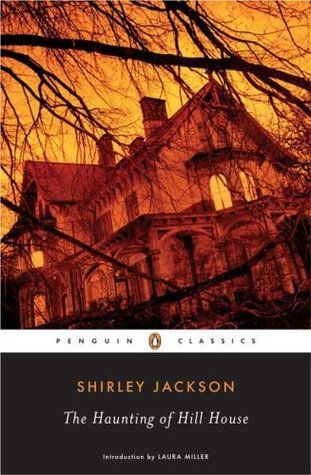
October 8 – The Haunting of Hill House – Book Vs. Film – Which Medium Wins? (Thirty-One Days of Halloween)
Shirley Jackson uses her words brilliantly, poetically, to create this terrifyingly, to create this terrifying story that set the standards for a good haunted house read. Likewise, Robert Wise brings the same terror to life on the screen. Impressive visuals, great camera work, and who can forget the phantom pounding. BOOM BOOM BOOM!
So once again, I refuse to declare which is the better. And remember, the film I am referring to is the 1963 movie titled The Haunting. Forget that terrible remake in 1999. Forget it I tell you! For a more detailed comparison, read this review – The Haunting of Hill House/The Haunting
Also, the Haunting of Hill House inspired Season 1 of Michael Flannagan’s Netflix series which is also titled The Haunting of Hill House. Season 2 is this year and it is The Haunting of Bly Manor, which I told you about in the last entry on this list.
Winner: IT’S A TIE
October 9 – The Fall of the House of Usher – Book Vs. Film – Which Medium Wins? (Thirty-One Days of Halloween)
A long-standing mansion torn apart by the widening of a central fissure. A family of long-linage down to two sole surviving members, pitted against each other in a death match. And finally, the splitting of the psyche; madness and mental decay. All this one short story from Edgar Allen Poe. Themes of totality, dualism and a whole bunch of other “isms” for literary analysts to study for years and years. This has been a favorite of mine since I was a young reader. I’ve seen one or two movie portrayal over the years. Just the other night I rented what I hoped would be the best cinematic portrayal of this extensively themed story. It was. Directed by Roger Corman , screenplay by Richard Matheson (this guy will appear on this list two more times) and starring Vincent Price, how could it go wrong? It didn’t. Unlike the story’s pitting of one thing against the other, I will not but the two mediums at odds in this case.
Winner: IT’S A TIE
October 10 – Hell House (The Legend of Hell House) – Book Vs. Film – Which Medium Wins? (Thirty-One Days of Halloween)
I saw the 1973 film The Legend of Hell House before I read Richard Matheson’s book. I liked it. It was spooky fun, a good haunted house film. But some of the finer plot points just didn’t make sense to me. It took the book (“took the book”, that rhymes!) to fill in the gaps. When a medium doesn’t do the job of making me understand the story, it obviously must take second place to the medium that does. And so, the book is better.
I enjoyed the film better after reading the book (watched it a second time), but that is only a testament to the novel’s superiority.
For a more in-depth comparison, read my review of the two (“review of the two”, rhymes again!) Hell House/Legend of Hell House
Winner: BOOK
October 11- Rosemary’s Baby – Book Vs. Film – Which Medium Wins? (Thirty-One Days of Halloween)
For years I didn’t know that there even was a book. I thought Roman Polanski’s 1968 film was the one-stop-shop for this tale of a woman who is about to give birth to Satan’s baby. Little did I know that the book came first. Little did I know that Iva Levin’s Rosemary’s Baby is one of three books credited for spawning the horror paperback novel trend (Along with William Peter Blatty’s novel The Exorcist and Thomas Tryon’s book The Other).
The book is more mysterious and suspenseful than the film. However, the film’s cast is excellent. Ruth Gordon is great. And who can forget that other old lady shouting “Hail Satan!”
I suppose if someone put a gun to my head and demanded that I state a preference, I might then go with the book. But there is no gun to my head, so I don’t have to do that.
Winner: IT’S A TIE
October 12 – The Exorcist – Book Vs. Film – Which Medium Wins? (Thirty-One Days of Halloween)
Last year I read William Peter Blatty’s novel for the first time. As one might expect, there is more detail in the book than the movie. I liked seeing things through the priest/psychiatrist’s perspective. He’s a much more interesting character in the book. What’s interesting is that even up to the very end, the priest allows for a perspective that maybe, just maybe, Satan has nothing to do with the girl’s psychosis and her condition is triggered by some kind of mental illness. Mind you, it is an illness that grants supernatural powers; super strength, telekinesis, etc., but an illness never the less.
The book is great. And yet, here I go favoring the film. It’s hard to compete with the visual of Regan’s head spinning around. Her monstrous face, her demonic voice! The fact that it freaked-out audiences when this film premiered.
But the book is good. No, It’s great. It’s just, well, I like the movie. And that is all.
Winner: FILM
October 13 – Ghost Story – Book Vs. Film – Which Medium Wins? (Thirty-One Days of Halloween)
One- two. (Um, what?) That’s how I introduced myself to both the book and movie, one right after another, hence “one-two”. Only it wasn’t quite like that, cause the book, which I took in first, is a behemoth thing, so it was more like onnnnnnnnnnnnnnnne then two. A lot is happening in Peter Straub’s meaty novel. Perhaps the title should be called “Ghost Stories” since there are several ghostly happenings varying across time and place. The film sticks to one of these stories – a female ghost returns to haunt four old men who harmed her when they were young. It was wise of the film to stick with one perspective. Film is a restrictive medium when compared to a story that is meant for a long novel, so I commend the filmmakers for not biting off more than they can chew. The plot of the book strayed several times, and because of this, I initially favored the film over the movie. You can read all about it here Ghost Story
However, as time marches on, I find myself remembering less and less of the film. But there is something about the book that is sticking with me. I’m not sure what it is. It’s sort of a vague feeling, as if part of me is still inside this snowy town when most of the hauntings take place. For this reason, I am doing a 180. I prefer the book.
Winner: BOOK
October 14 – Burnt Offerings – Book Vs. Film – Which Medium Wins? (Thirty-One Days of Halloween)
I first saw this film on television as a kid. A doomed family rents a summer home which turns out to be a vampire house – the house itself feeds off of the life force of its occupants and regenerates as its victims die. There is this phantom hearse driver with dark sunglasses and a creepy smile that shows up whenever someone is about to die. Scary stuff.
Great movie. It is based Robert Morasco’s book by the same name. The book is better. It’s a rather obscure work and yet it is very influential. Like its predecessor The Haunting of Hill House, Burnt Offerings continues the trend of “a house as an entity” theme. The book gives a very detailed account of the house’s slow-building but inevitable power it has on the occupants. The film does its best with this but the book does it better.
Winner: BOOK
October 15 – The Amityville Horror – Book Vs. Film – Which Medium Wins? (Thirty-One Days of Halloween)
Some say this is a true story. Others say it’s a bunch of bullshit. I favor the second perspective but never mind, it’s an entertaining story.
The tragedy that sparked the story is true – A young man kills his family in the Amityville house. Included in the slaying are his parents and siblings. Years later the Lutz family purchases the house. They said it was haunted, not by your average house ghost but by demonic forces. The book, written in a diary format, covers more ground than the movie does. There are so many more paranormal occurrences in the book and I wonder why the film omitted so much. Anyway, the book is better and if you want to read a more detailed comparison between the book and movie, read this article here: Amityville Horror Book and Movie
Winner: BOOK
October 16 – Jaws – Book Vs. Film – Which Medium Wins? (Thirty-One Days of Halloween)
Believe it or not, I was never a super-duper, die-hard fan of this great white shark. I saw Jaws 2 and Jaws 3D, both in the theater, long before I watched the original on TV and then via streaming. Sure, it’s entertaining. I like that the music, the “dun-dun, dun-dun, dun-dun, dun-dun” that seems to summons the shark, which throughout most of the film displays only its fin, piercing out of the ocean as its hidden body makes its way towards its victim.
The book, which came first, was a best seller. Many people forget that the book was as popular and noteworthy as the film. Some have read it and dismissed it. Too much concentration of the sheriff and his marriage, town politics, person-to-person rivalry, they say. But it is for these reasons that I prefer the book. Also, the book offers theories as to the shark’s origins that aren’t found in the film. So the book wins.
Winner: BOOK
October 17 – The Sentinel – Book Vs. Film – Which Medium Wins? (Thirty-One Days of Halloween)
I’m guessing that many have not heard of this book or its corresponding film. It’s definitely a slice of horror that remains under the radar. It’s an interesting story. An apartment complex in New York serves as a portal to Hell. A sentinel must guard the gates at all time. Who is this sentinel and how does one get this job? Ah but that is the key to the story.
The cast of this 1977 film is great. It features Burgess Meredith, Ava Gardner, John Carradine, Sylvia Miles, Beverly D’Angelo, Eli Wallach, and bit roles for such unknowns as Jeff Goldblum and Christopher Walken. This is only the supporting cast and they save the film because the main two actors kind of suck if you ask me. Some of the plot is convoluted and will only make sense if one refers to the book.
Jeffery Konitz’s novel The Sentinel is far superior to the film. Thick in plot and mystery, it puts forth a suspenseful page-turner. The movie just can’t compete. For a detailed comparison, read my article The Sentinel Book and Movie
Winner: BOOK
October 18 – Interview With the Vampire – Book Vs. Film – Which Medium Wins? (Thirty-One Days of Halloween)
It’s the first book in author Anne Rice’s vampire series, and it’s not my favorite. I’m not sure how many vampire books Rice has written, by I have read many. It’s a good book, don’t get me wrong, with the focus being on a Louis, a melancholy vampire from the 17th century, and his counterpart, the little girl vampire named Claudia who is damned to a child’s body for decades. It’s just that Rice’s vampire tales that focus on The Vampire Lestat are more interesting.
The movie has an excellent cast. Brad Pitt, Tom Cruise and a young Kristen Dunst are surprisingly impressive in their roles. So when all is said and done, I consider this contest to be a draw,
Winner: IT’S A TIE
October 19 – The Queen of the Damned – Book Vs. Film – Which Medium Wins? (Thirty-One Days of Halloween)
This is the third book in author Anne Rice’s vampire series. It’s one of my favorites. She introduces many interesting vampire characters in this book. And, she traces the origin of vampires to its source – The Queen of the Damned.
The movie combines plot points from Rice’s second vampire book (The Vampire Lestat) and the third. It does so poorly, brushing hectically though important plot points. It’s not a good movie. So the book wins.
Winner: BOOK
October 20 – Beloved – Book Vs. Film – Which Medium Wins? (Thirty-One Days of Halloween)
If I ever make a list of my top ten favorite novels, Beloved would be on it. I’m not alone in my praise. It is, after all, a Pulitzer prize winning novel, written by the renowned Toni Morrison, may she rest in peace. It’s a story of a haunting, with some of the stuff of the supernatural on the surface. Deep down, the true horror is slavery and its aftermath.
How is the movie? It received mixed reviews, much to Oprah Winfrey’s disappointment. She is the lead character alongside Danny Glover. I thought they did well. For me the movie is good, not a masterpiece, but better than alright. It is the book that is the masterpiece.
Winner: BOOK
October 21 – Carrie – Book Vs. Film – Which Medium Wins? (Thirty-One Days of Halloween)
Stephen King’s first novel. Brian De Palma’s award-winning film. The story of “Carrie”, a troubled teenager tormented by her peers. After she has her first period, she develops telekinetic powers, although in the book she was perhaps born a “sensitive”, for as a child, stones from the sky fell on her house while she was in a traumatized state of emotion. Powers went latent until the onset of puberty. By the story’s end, she will use these powers to extract revenge on her peers in a most climatic way.
Carrie is one of my favorite horror movies, if not my most favorite. It is chilling, atmospheric, sad, and heartbreaking. It leaves a viewer with a sense of unease while allowing the same viewer to appreciate the film’s style. Did King have the same effect on me with his novel. Sadly no. There are several reasons for this.
In between the regular narrative there are reports and memoirs, written after the events of the story, by a paranormal committee and one of the survivors of the “Carrie” story. For me, these interludes only distract from the narrative. Also, King ends his story with Carrie running amok, not only burning down the school with her classmates trapped inside, but destroying half the town as well. In the film, Carrie only burns the school in a sort of fit of temporary insanity. One can sympathize with her situation. It is more difficult to sympathize with the Carrie of the book, who, I do believe, even sports a malicious grin during her rampage on the town.
King might have invented the story but screen writer Lawrence D Cohen and director Brian De Palma make it so much better with the film. And you know what? I do believe King agrees.
Winner: FILM
October 22 – The Shining – Book Vs. Film – Which Medium Wins? (Thirty-One Days of Halloween)
The debate will continue until the end of time. What are we to make of Stanley Kubrick’s film version of Stephen King’s The Shining? I’m going out on a limb here, but I think it breaks down like this. Those that saw the film but have never read the book loooove the movie. Those that have read the book really don’t think much of the film. King himself didn’t like the movie although his opinion has evolved a bit and he has recently noticed the things that worked very well with the film. Still the criticism exist. In brief, the film flattens out the characters, or turns them into caricatures. Jack Torrance, played by Jack Nicholson, is pretty much a loose cannon throughout the whole film. This is not the case of the character in the book.
I, of course, have seen both the film and read the book. I’ve seen the film several times. I read the book twice. My verdict? I really, really love the film. It comes close to being just as good as the book for its visuals and brilliant camera work and use of space. But the book is better. So I guess not everyone fits into the dichotomy I described in the above paragraph.
The Shining is my favorite book by Stephen King. It is in my list of top ten books. It is my favorite haunted house novel. Yes, I like it even better than The Haunting of Hill House.
For a more thorough comparison, read my article: The Shining Book – Movie- Miniseries
Winner: BOOK
October 23 – Salem’s Lot – Book Vs. Movie – Which Medium Wins? (Thirty-One Days of Halloween)
I wish I could remember the finer details of this story. How long has it been since I read this Stephen King classic? Too long. It deserves a second read, even though, despite how others feel, it is not a King favorite of mine. Don’t get me wrong, I like it. It’s probably in his top ten. But not top five.
A vampire takes up resident at Salem’s Lot’s “haunted house”. Soon, the populace of this small town will be infected by vampirism. One by one they become the walking undead.
If you were a kid in the 1970’s, then you probably remember stumbling upon some TV vampire movie and watch young boy vampires floating in the air before a bedroom window, scratching their fingernails the window, wanting in. Pretty scary stuff. This was the Made-For-TV miniseries of Salem’s Lot, directed by Tobe Hooper. Pretty damn good for a TV movie. I watched it for the first time as an adult the other night.
When all is said and done, I favor the book for its thick yet rich plot and interesting characters. The movie attempts a thickness of the plot (over three hours long but meant to be watched over the course of two nights) but it is a bit overbearing at times. Again I must revisit the book.
Winner: BOOK
October 24 – Children of the Corn – Book Vs. Movie – Which Medium Wins (Thirty-One Days of Halloween)
Would you like to know when I first began reading Stephen King’s Children of the Corn? (To tell you the truth, Cheely, I really don’t care…) Great! I will tell you. It was two weeks ago. I read for a few minutes and then suddenly my eReader is telling me that I’m already 25% finished with the story. Read a bit more the next day and discover that I am over 80% done. So, I reread, trying to keep the experience going for as long as I can. Okay, done rereading, I’ll just progress a little further…Congratulations! I’m all done. Boo! I want more!
Okay, I went in knowing it was a short story. But this was like, really short. It was much darker and more wretched than the movie though. The two adult characters, husband and wife, that find themselves in the middle of nowhere in a small abandoned town surrounded by cornfields and killer children are obnoxiously sugar coated in the movie. The young childless couple, hero and heroine, are destined to overcome the supernatural force of “he who walks behind the rows,” escape the evil and thwart the plot of the meanie kids. They are awarded with two adorable children that they rescue from the kid cult. In the book they are flawed individuals struggling to save their rocky marriage. More relatable if you ask me.
Oh but the movie gives us memorable evil children like Malachi, the killer with long red hair and the younger Isaac with the unnerving squeaky voice who leads the pack! They are simply mentioned in the book. It takes a screen and a longer story to bring them to life.
So which do I prefer? Tough choice. I’ll go with the book (short story) for its commitment to dark storytelling. Maybe later I will flip a coin and let fate decide my preference. But not now.
Winner: BOOK
October 25 – The Funhouse – Book Vs. Movie – Which Medium Wins? (Thirty-One Days of Halloween)
Remember this movie? It’s somewhat obscure, I guess. Came out in 1981. Directed by Tobe Hooper; he’s not so obscure! (Salem’s Lot director). My Daddy took me to see this in the theater at his suggestion. It was the first time I saw teenagers hacked to death on the big screen.
It’s the story of a shady carnival. Four teenagers spend the night in The Funhouse. They witness a carnival barker’s deformed son kill the carnival’s fortune teller. As witnesses to this crime they must be destroyed. Let the “fun” of “funhouse” begin!
The book is a bit different. It’s the novelization of the film, based on the screenplay. It was written by Owen West, but that’s not the author’s real name. His real name is Dean Koontz. You might have heard of him. Anyway, the entirety of the “trapped inside the funhouse” plot of the film is just one mere chapter in the book – the final chapter. Most of the book is backstory concerning the Conrad the Carnival Barker, his deformed son, and a different story regarding the teenagers. In the book, one of the teenager’s is a daughter or an ex-wife of Conrad and he purposely lures her and her friends into the funhouse so that he may kill them, extracting revenge on his ex-wife for something he did.
The book really does have an interesting backstory. But the film is more thrilling and interesting. It focuses solely on the carnival and funhouse, but details very well the depravity and overall freakiness of this traveling band of misfits. The animatronic attractions in the funhouse are pretty awesome.
Winner: FILM
October 26 – Friday the 13th Part 3 (in 3D) – Book Vs. Film – Which Medium Wins? (Thirty-One Days of Halloween)
Yes I actually read the novelization of this film. I remember reading and then exclaiming “Wow, this character, his head got “severe + d.”” That’s how I pronounced it; severe with a “d”. My sister didn’t know what “severe + d’ meant, so she looked at he word. “Danny, that’s severed!” she said. (But it was a severe act, you have to admit.)
What do you think I thought of this book? Well, I got some Jason backstory I didn’t get elsewhere. But overall, it’s more fun to see teenagers get sliced to death than to read about such a phenomenon. Plus, the words didn’t jump out at me in 3D like the eyeballs did in the movie theater. Jason put some guy’s head in a vice (or was it a vice-like grip with his own two hands? I can’t remember), all that pressure and boing! His eyeball shot out and almost landed in my box of popcorn. That’s better than the book, doncha’ think?
Winner: FILM
October 27 – The Ruins – Book Vs. Film – Which Medium Wins? (Thirty-One Days of Halloween)
By Author Scott Smith who also wrote The Simple Plan, later made into a movie starring Bill Paxton, Billy Bob Thornton, and Bridget Fonda. Oh and directed by Sam Raimi – The Evid Dead dude. I both read and saw the film The Simple Plan. Oops I’m supposed to be writing about The Ruins. Let me redirect.
Anyway, with The Ruins, Smith writes a suspenseful, gory book about young American tourists trapped on the ruins of a Mayan temple in Mexico. Local Mayas will shoot them dead if they try to leave, and eventually, the vines that grow all along the pyramid-like structure will kill them. They are nasty things, these vines. They pry into the skin, strangle the neck, and their flowers are like mouths and they mimic the screams of its victims and replay personal conversations to pit the survivors against each other.
The book and the film (directed by Carter Smith) pretty much tell the same story with some variations. What happens to certain characters in the book happens instead to other characters in the movie, etc. The endings are different. The book goes for a hopeless conclusion while the film has an inkling of hope.
Book or movie? Hmm. When working out my decision, I kept alternating between “a tie” or “the book as the winner”. But since I reserved one option for the book as the sole winner and no option for the film as a standalone victor, then I have to go for the book.
Winner: BOOK
October 28 – Pet Sematary – Book Vs. Film – Which Medium Wins? (Thirty-One Days of Halloween)
The film I am referring to is the 1989 version, not the most recent adaption of Stephen King’s novel, which came out I believe in 2019. I didn’t see the newest version and after I read the reviews I didn’t bother to try. The movie from the 80’s didn’t fare much better. Not having read King’s book, I rented it back in the VCR days and I didn’t care too much for it either. I remember Herman Munster was in it without his Frankenstein’s monster makeup. Honestly, I don’t remember what faults I had with the film, other than I wanted the makeup back on Herman.
I was reluctant to read King’s book on account of my disliking of the movie. Eventually I did and it turned out to be one of my favorites of his. (In his top 10 somewhere). The “sematary” was creepier, and the hike to the “sematary” was creepier as well. In the film I don’t even remember that there was a woodsy trek to the graveyard. On the trek in the book, there were a lot of spooky noises.
Winner: BOOK
October 29 – Stir of Echoes – Book Vs. Film – Which Medium Wins? (Thirty-One Days of Halloween)
A 1999 horror movie starring Kevin Bacon. A 1958 sci-fi horror novel written by Richard Matheson (the third time that author makes this list.) I really liked the film. Did I love it. Um…no. But it was an interesting ghost story. Mr. Bacon gets hypnotized and suddenly a wall in his psyche breaks down and he now has certain psychic abilities. The ability the film focus’s in on the most involves the ghost of a girl who communicates with him in fragmented visions. The scope of his abilities is wider in the book and it details them more carefully. Therefore, I favor the book.
For a more detailed comparison, read my article:
Stir of Echoes Vs. A Stir of Echoes
Winner: BOOK
October 30 – The Woman in Black – Book Vs. Film – Which Film Wins? (Thirty-One Days of Halloween)
“Modern Gothic at its Best.” This was my tagline for the article I wrote about Susan Hill’s novel The Woman in Black. Written in 1983 yet capturing the writing style of a piece that might have been written one hundred years prior, Hill’s novel is a such a treat in an era that had seemed to have long forsaken the literary “ways of the Goth”. Sadly, the 2012 movie starring Daniel Radcliffe strays considerably from the tone that Hill gifted us readers. Yes, the film has the old mansion surrounded by marshes, a staple of Gothic horror. It is a visually stimulating film. But Mr. Soundman is too eager and he can’t resist sliding the volume lever on the music whenever the film is going for something suspenseful. Funny, because it’s the sounds as described in the book that chill the reader. These would be the sounds of an unseen horse and carriage that struggles in the foggy marshes, not some hyped up musical score. The film barely touches on this. What the film does show, over and over, are one second flashes of a woman in black. Jumps scares. Meh. And the film’s story is considerable different than the book, which is not necessarily a bad thing, but the story as conveyed by Hill is much better. Read my review of the book: The Woman in Black – Modern Gothic at its Best
Winner: BOOK
October 31- Doctor Sleep – Book Vs. Film – Which Medium Wins? (Thirty-One Days of Halloween)
Stephen King’s long-awaited novel – the sequel to The Shining. In a twist, the movie is not a sequel to the book. It is a sequel to the movie “The Shining”. See, the book and the movie (The Shining) have different endings. The book ends in a way that the Overlook Hotel cannot be a part of the sequel. The movie does not have this limitation, thus the Overlook returns!
I’m sorry Mr. King, but I thought your book was a bit hokey. A travelling band of senior-citizen psychic vampires in Winnebago’s with straw hats and tanks of “psychic energy” drained from victims resembling oxygen tanks? In the film, the tanks are there, but at least the roaming band of psychic vampires appear more threatening. They almost resemble a motorcycle gang in appearance. And in the film, we get to visit The Overlook Hotel again and watch in suspense as all of its ghosts reawaken. It was cool! For a more detailed comparison, read my article:
Oh and the film is done by that Michael Flanagan guy, the guy behind the Netflix series The Haunting of Hill House and The Haunting of Bly Manor.





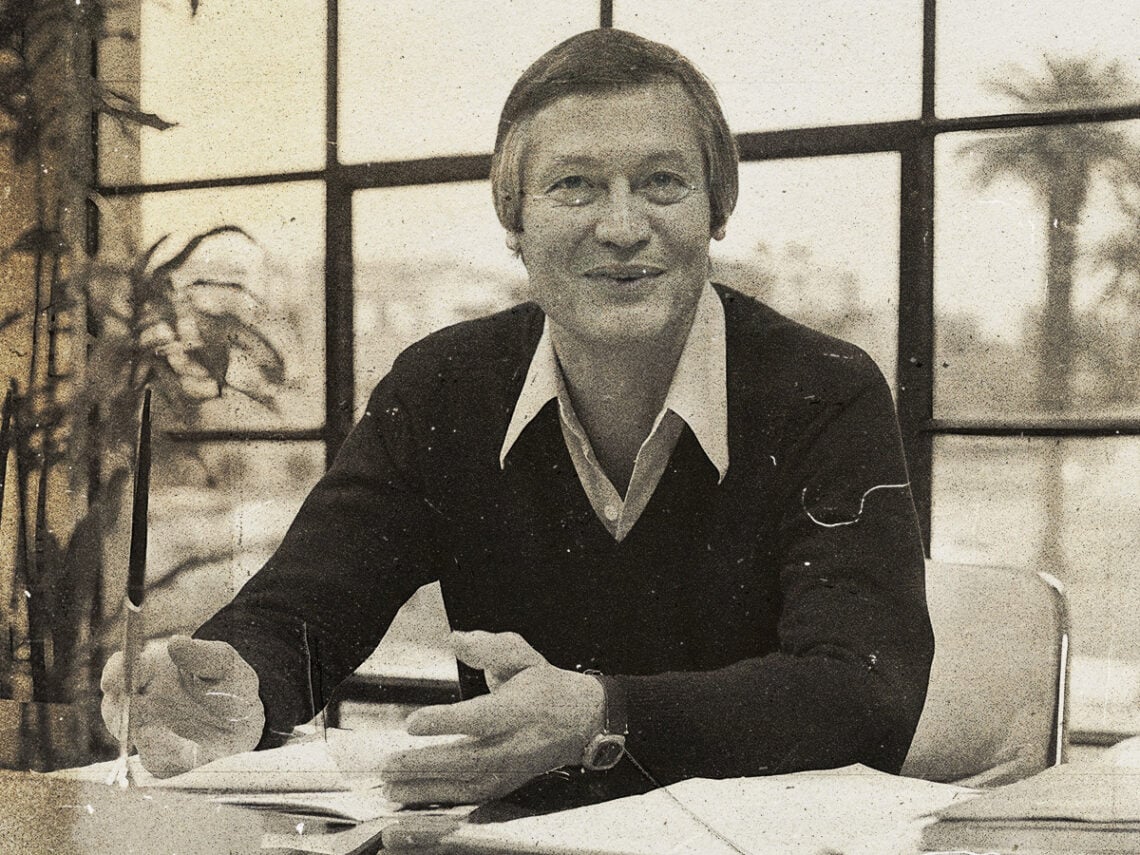 Last week we lost a legend. Roger Corman died two years shy of his 100th birthday. Known as the B-movie king, Corman’s filmography is extensive. He produced hundreds of films and contributed significantly to the horror genre. So I thought I would review one of his films as a sort of tribute.

 The Books of Daniel