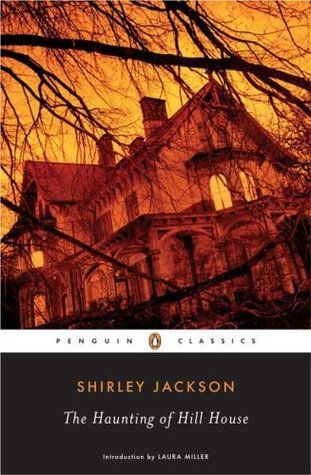
Let’s step back for a moment to recall our first experience reading Shirley Jackson’s The Haunting of Hill House. (If you haven’t read this yet, you will be sooo lost reading this article. Also, there are huge spoilers. So if you haven’t read it yet and you want to, stop being lost and get lost!) . Not only were we impressed with the style, the flow, and the hidden intricacies within the narrative, but we were delightfully creeped out. It’s an awesome book, isn’t it?
Time for some comparison. Let’s imagine a different kind of scare, one that has the same power of fright but leaves one not “delightfully creeped out” but “sickeningly agitated.” What kind of scare might this be? How about the mere idea to have a sequel to The Haunting of Hill House?
I remember a CTA bus advertisement promoting the city of Chicago. It was a quote from Chicago film critic Roger Ebert that read, “Living somewhere else makes as much sense as a sequel to Citizen Kane”. In other words, there are some works of art, whether they are sculptures, books, films, or compositions that are complete in their greatness. To add, subtract, or alter would only weaken the original.
What kind of pitfalls might there be trying to create a sequel to The Haunting of Hill House? First of all, Shirley Jackson passed away some time ago, so some other author would have to step in and fill the role of the late author. This is no easy task as Shirley is a tough act to follow. Second, we consumers of horror already suffered through film remakes of the original 1963 film The Haunting which was based on the book. If 1999’s The Haunting taught us one thing, it’s “don’t mess with the classics”
On the other hand, Michael Flannagan’s Netflix series That Haunting of Hill House 2018 is pretty damn good. It’s a reimagining, not a retelling of Jackson’s story. As such, it is allowed certain liberties regarding plot and character changes. So long as the tone and mystery of the original are not sacrificed, these changes are welcome. And wouldn’t you know it, the changes made by Flannagan are not detrimental to the quality of the original.. If anything, they enhance Hill House’s overall eerie impression
Along comes Elizabeth’s Hands novel, A Haunting on the Hill . It is marketed as a sequel to The Haunting of Hill House. Pretty damn gutsy of you, Elizabeth, to embark upon such a creation. Before writing the book, did you realize how many ways such an endeavor can easily go south?
Were you aware of the potential criticism if your work could not compare to Jackson? Scathing criticism, mind you; the yuckiest raspberry in a basket filled with the most sour pickings of the crop. Were you prepared to stand up for yourself against accusations of blasphemy?
Luckily for Elizabeth Hand, she writes a mighty fine story with A Haunting on the Hill. Seriously, it’s the best haunted house book I’ve read in a long time. Certainly it’s at the top of its genre when compared to other haunted house books written this century. Hand took a chance and it paid off. I have to “hand” it to Hand!
Why is Hand successful in her efforts? I’ll offer an opinion on that. She doesn’t try to explain the mystique of Hill House. In no way does she try to “correct” the original story. As far as I’m concerned, she doesn’t retcon. While she doesn’t duplicate Jackson’s engrossing writing style, that’s okay, and moreover it would be sinful to try. Hand effectively pens in her own style but stays true to tone and mystery upon which Jackson “built” Hill House. Hand explores her own creative ideas and does not rehash the same plot. She gives just enough homage to the original story so readers know they are in familiar territory while at the same time uncovers areas previously unexplored.
Similar to the original story (yet not duplicating it), four people set out to stay at Hill House for a significant length of time. The reasons for their stay are different from the reasons described in the original. The four from Jackson’s story do so in order to observe and document supernatural phenomena. The quartet in Hand’s novel wish to hole up in the house to rehearse for a play.
Holly Sherwin, the leader of the group and playwright of Witching Night , stumbles upon Hill House accidentally and is drawn to it. (Or is it Hill House that has found her?). She is attracted to its creepy vibe and decides Hill House would be a most inspiring place to rehearse her play, not yet realizing the haunted history of the mansion. She meets Ainsley Rowan, who is in charge of subletting the mansion. Ainsley warns her that no one ever stays long at Hill House and tells her about rumors of its dark history, including the story of a woman who killed herself by crashing into a tree on the road that leads to the house. (Of course, this is a reference to Eleanor Vance in the original novel. How about that? Eleanor, once a receiver of tales of the house’s dark past has now become part of its legend!)
It’s all set. They move in for a one month stay. Will they make it to the end?
The “they” includes:
- Nisa, Holly’s girlfriend/partner, the songstress for the play.
- Stevie, The sound engineer and voice actor
- Amanda Greer, semi-retired B movie actress
- And of course, Holly herself
There are four of what I will call “outsiders”. They are connected to the house in various ways but aren’t staying there. Certainly not after dark. They wouldn’t dare. These include:
- Ainsley Rowan (I know; I mentioned her already)
- Tru and Melissa, husband and wife, the cook and the cleaning lady
- A Mysterious old woman who lives in a nearby trailer
Tru and Melissa have a similar arrangement with the house guests as the Dudley’s had with the guests from Jackson’s novel. They do their best to provide the comforts of home for the guests, but in the end there is only so much they can do for the potentially doomed occupants. They are less hostile than the Dudleys (well…Tru is kind of a prick, come to think about it. And the old woman in the trailer is such a witch! ((literally? Hmmm, could be!)) though they certainly have their misgivings about this whole arrangement. These four; though I have labeled them “outsiders,” when it comes to the goings on of Hill House, they are, to some extent, in the know. But they aren’t telling. In that way, they are truly insiders.
So, what happens to the four guests? Hill House works on all of them, that’s what. In certain places in the house, Nisa discovers she can sing like she never before. Her voice is enchanted. At a rehearsal reading, Stevie is ravishing yet startling and his acting seems all too real. Little by little, the four clash with each other. They become mistrustful, sometimes solitary. All are scared yet they are united in their mad desire to stay at Hill House. Will this desire be their undoing?
Ghosts of the Past /Phantoms of the Future
I would like to dedicate this section to a sentence from several paragraphs ago. Here be the sentence:
She gives just enough homage to the original story so readers know they are in familiar territory while at the same time uncovers areas previously unexplored.
Examples are needed, don’t you think? I’ve got it covered. First, we’ll explore the tropes that are present in both Jackson’s and Hand’s novels, albeit within different circumstances. Then, we’ll dive into certain “hauntifying” situations that are unique to Hand’s sequel novel. (“hauntifying;” I made that word up. I think it’s quite swell!).
Let’s do this!
(PSST. Some will say these next sections contain minor spoilers. I might not think or say that, but some might)
Revisiting the classical hauntings of Hill House in new contexts
 It’s the same Hill House, tucked away among the hills somewhere outside the town of Hillsdale. It has the same winding road that links the house and the gate.
What else is the same?
The spiral stairway in the library
Clankety clank shakes this flimsy, metal staircase that leads to the top of the tower/library in Jackson’s novel.. It was not safe for Eleanor to climb but she did so anyway, putting herself and her rescuer Luke in danger, resulting in her banishment from Hill House. Why is this ladder so alluring? The library is off limits to the guests in Hand’s book, yet one makes her way to this stairway, and the result is…..wait a minute! Aha! Now I see. This relates to the end of the book when she….(she who? And what does she do? Never mind. I’ve written too much already)
Blood
Seemingly from nowhere, here comes the blood. Blood mysteriously soaks Theodora’s clothes in Jackson’s novel. In Hand’s novel, what at first seems like wine spilled from the tipsy Amanda’s glass somehow turns to what could only be blood. It ruins an antique table cloth.
Rabbits
In Jackson’s original novel, these hares, to be more precise, make brief appearances here and there. Eleanor and Theodora see such a creature outside the house. If I’m not mistaken, they try to chase it but it disappears. Luke and Dr Montague spot one in the house and they follow it and it leads them outside.
In A Haunting on the Hill, hares are more prominent. They stand on their hind legs and seem to sneer at trespassers. They are certainly more aggressive. And they’re not above dropping into the house via the fireplace (well in one sense, they are above if they get in through the roof!) . Fire itself is no obstacle as one of these creatures passes through the blaze, carrying the flames on its soon to be charred, furry, body, only to escape back to the outdoors.
The nursery
As with Jackson’s novel, the nursery room that Hand writes about is quite the enigma. In both books it is literally chilling; those entering encounter a discomforting cold spot when crossing the threshold. Two grinning decorative heads adorn the doorway and they forever look at the room’s occupants whether they are coming or going or, worse, remaining in the room. They appear to be mocking these poor folks.
Nighttime noises
Perhaps the most memorable disturbance from Jackson’s novel is the wall-pounding noise. Okay, okay – maybe this is mostly remembered from the film. But it happens in the novel as well, along with the soft whispers. Things that go pound, and things that whisper softly in the night.
In Hand’s novel, the pounding is absent, but someone hears whispers in the dark of night when trying to sleep. I think it’s good that Hand holds back on the pounding. She leaves this Hill House signature trait to Jackson so she can identify and imagine other haunting manifestations
What a great way to segue into Hand’s unique contributions to Hill House!
Discovering new hauntings of Hill House
 The Haunting of Hill House is sometimes described as a summer horror novel. The events in the story take place in the summer as the characters walk the grounds of the house, admiring the brooks and dreaming of picnics. This all happens in the 1950s.
The events in A Haunting on the Hill take place nearly seventy years later. This would be in our wonderful modern age of texting and vape pens. It is not summer. What goes down in Hand’s novel does so in the cold, dark winter.
What else is new?
Images within the woodwork
Nothing to see here. Just your average knolls, knots and swirls ingrained into the wall design. Or are they something more? Do they form images? Do these images reveal scenes of things to come?
Hidden tunnel
It’s accessible only by crawling. There are strange lights and its end.
Miscellaneous
A stray billiard ball rolling across the floor, (there is a billiard room. That’s new…I think) . Creepy shadows (are they silhouettes?) are peering in windows. Oh what has the blizzard brought to Hill House?
Conclusion
While writing this piece, I stumbled upon other books by Elizabeth Hand. Wylding Hall for instance. This caught my eye because the premise seems similar to A Haunting on the Hill: A group of young musicians take up residence in a mansion to rehearse their music. Actors vs Musicians expressing themselves artistically while living together in a haunted house. Hmm, are Hand’s stories formulaic?
Sometimes in writing, formulas are good, sometimes not. Guess it depends on how much the formula dictates the story. Too strict of an adherence to a reusable, preconceived plot kills the story.
I’ll tell ya what! I’ll read Wylding Hall and report back to you. Or, you can read and see for yourself: Wylding Hall
Or, skip it for now. But don’t skip A Haunting on the Hill. Trust me, it’s good. It’s true to the spirit of Shirley Jackson while allowing for Elizabeth Hand’s creativity to shine.
 The Books of Daniel
Great review. As I recall, in Jackson’s book, they assume the animal is a dog. (I’ve just started a reread, hoping that’s right and not just the movie.) Also, there’s a type of pounding. Remember the knocking that begins at the doors and windows then goes around the outside of the house? I took that to be Hand’s variation on the theme. I loved her explosive noises that didn’t pick up on tape — I’ve experienced that during an investigation. It’s amazing. All the regular voices are there, unaltered, yet the noises we heard (rattling, very loud — we thought it was an earthquake) was nonexistent. So those explosive sounds really worked for me!