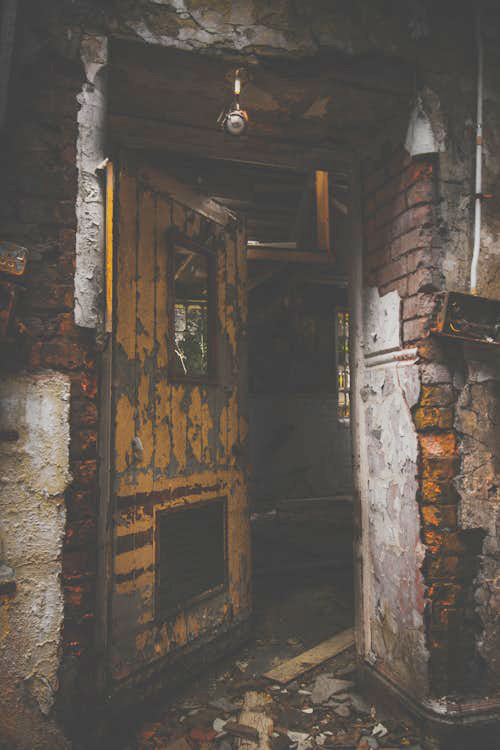
 Let’s play a game of association. Imagine you are inside a haunted house. Aside from ghosts and other spooky beings, what do you see? I’m guessing several images appear in your mind. Maybe it’s winding staircases, creepy attics, scary portraits or secret passages. We all know of these haunted house staples and perhaps even take them for granted when encountering them in a story. Are these “haunted house innards” telling us something about the story at large? Perhaps a fresh outlook is what is required. (an outlook on the innards, how about that!)
Some of the more popular posts here at this blog feature themes pertaining to a haunted house’s physical structure and external environments. I have written about the architecture, design, and furnishings of haunted houses. From gables to balusters, I focus on the terminology of common architectural components and cite quotes from literature that have used these terms. In another piece, I list and describe what might be happening on the terrain outside of a haunted house. In “Ghostly Grounds, Explorations Outside of the Haunted Houses of Film and Literature, I focus on graveyards, forests, and physical terrains that surround iconic fictional haunted houses. In a similar manner as the first article, this piece will mostly dwell upon the physical layouts. Unlike the second article, this article will explore the environment within the haunted house.
Have you ever noticed how the internal components of haunted houses symbolically represent the building blocks of a good story? I am referring to such things as suspense, backstory, climax, etc. An in-depth look at the internal components of haunted houses will reveal how they structurally represent plot devices. Citings from literature and film will back up my claims.
Perhaps it’s cruel of me to have placed you inside the haunted house, Fret not, you won’t be alone. I will be with you. Together, let’s do some venturing and traipse through the tropes found within haunted houses. As those who take a more “ho-hum” approach to nature might say, “Let’s explore The Great Indoors”
Stairways
 What great haunted house doesn’t have a stairway?
(Actually, Mr. Blogger Man, there are ranch houses that are haunted, and you’d be hard-pressed to find a stairway in these places. Furthermore…) (Me: Oh Shut up!)
Some are winding; curving around a spacious room, giving way to a balcony that offers a bat’s- eye view to the creepy rooms below. Others are straight and narrow, often inclining through seemingly impenetrable darkness. The boards may creak when a heavy foot assaults them. The railings or the whole staircase itself might shake, resulting in the climbers’ sudden fear that the stairs will not support them for long.
Staircases set the mood of escalating tension. When characters make a trek up a stairway, they usually do so with caution and trepidation. They are no longer at the relatively safe zone of the foyer. At this point, they are actively and willingly exploring a haunted house. They are unsure of where the stairs will lead them. They know not what they will find in the upstairs rooms.
The same situation is true for staircase descents. They are plunging into the bowels of the unknown.
A perfect example is found in Shirley Jackson’s The Haunting of Hill House and likewise Robert Wise’s The Haunting, the corresponding movie based on the book, There is a rickety spiral staircase in a library tower that leads to an unknown height. Eleanor Vance, already losing her grip on reality, ascends. She feels that Hill House is calling to her, and she very much wants to belong to Hill House. With each step, the staircase shakes and becomes unsettled, as does Eleanor Vance herself. She is fragile. The stairs are fragile. Her outcome and destination in regards to Hill House is unknown.
In the original Dracula movie, Renfield is visiting Count Dracula’s castle, following the vampire up a staircase. He passes through spider webs where huge anachrids crawl. Wolfs howl from somewhere in the forests outside the castle. Further up the staircase,, Dracula looks down and makes creepy comments about the situation. Viewers know that this setup will not lead to a scene of a happy birthday party with sing-songy music and smiling puppy dogs. More horrors await, and they will be more dangerous and deadly.
The most famous scene in the movie The Changeling takes place on a burning staircase. The climber moves through these flames with purpose. Or, more apropos, with a sense of inevitability. He is part of the reason the house is haunted and this happens when the tension in the movie is at its highest.
Let’s not forget Mark Z Danielewski’s novel The House of Leaves. The stairs in this novel lead down. Down to an unfathomable distance. Sometimes it seems it’s only a few flights. Other times it’s as if the stairs are seeking the center of the earth. The complexity of its depth points to the complexity of the book itself. It has hundreds, if not thousands of footnotes. To trudge these stairs is to set yourself on a course of convolutedness, which is exactly where the author intends to lead the reader.
Attics or Basements/Cellars
My dad once said this about ghosts inside a house, “Ghosts ascend to the highest level”. That statement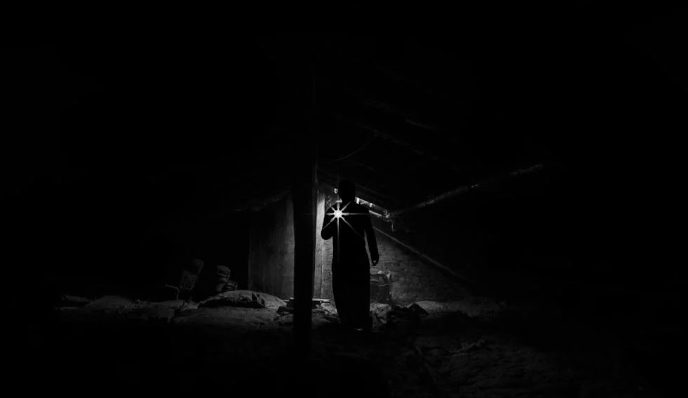 sounds just as scientific as “water seeks its own level”. If this is true, I suppose ghosts are lighter than air and just sort of float on up to the attic. Since ectoplasm is not on the periodic table and there is no listing of its atomic weight, I cannot verify this.
Based on my dad’s humorous statement, I went on to conclude that if ghosts haunt the attic, then dead, half-dead, or undead things haunt the basement. Makes sense. They came from within the earth, so it’s only logical the basement is the first place they’d find after climbing up from the underground.
The truth is, I don’t think haunted house lore follows these rules. Ghosts can be in the basement as well as the attic and dead things can roam about on the topmost floor just as well as the lowest. But here is something to think about – attics and basements/cellars represent the extremes. Visitors of a haunted house have found themselves at the final destination points. They are deeply within the haunted house. They can’t go any deeper. Likewise, if the story has not reached its climax, it will often reveal important secrets or clues in the basement or attic. Maybe the body of a ghost that haunts the house is found in the basement. Maybe an important but forgotten memoir is boxed up somewhere in the attic. Its contents explain things.
I had a Disney record called Chilling, Thrilling Sounds of the Haunted House. Before the barrage of eerie screams, creaks, and groans assault the listener’s ear, a narrator explains the situation. “In an abandoned old house, a light appears in the uppermost window. You decide to investigate. And you never return.”
What happens to yourself in the uppermost regions of the house? It will remain forever a mystery. The upper regions = finality.
In M.L. Bullocks’s The Ghost of Jeopardy Belle, teenager Jeopardy Belle hangs out in the attic. She is the black sheep of the family and her younger sisters are afraid to go up there. She harbors mysteries and secrets. The attic represents the finally mystery of the story: the unveiling of the character Jeopardy Belle.
Let’s get “down to” chilling cellars and basements (see what I did there?). In the film Evil Dead 2, the characters are at their greatest peril when they have to descend to the cellar to find important pages to the Book of the Dead. In the film We Are Still Here, much horror within the basement awaits the residents. Same with Mariko Kioke’s novel The Graveyard Apartment. The basement in this novel points to the “whys” of the story.
Secret or Special Room
 Sometimes the room is hidden. Other times it wants to be found and calls out to one or more of the occupants inside the haunted house. Maybe a secret room is meant for one person but not another.
Perhaps the room isn’t hidden at all, but there is something “special” about it. “Special” can be something good as the room satisfies a particular need. Mostly though, there is something off about it. It harbors bad vibes. It projects lunacy.
The “stuff” of special rooms often serve as a crux for the plot. They reveal turning points in the story. They are places to work the nuts and bolts of the paranormal elements of the story, elements the reader/viewer expects. Often they are the nucleus to the haunting. Similar to the attic or basement, they shelter secrets soon to be discovered and are excellent rooms for story midpoints and even climaxes.
Some examples include Room 217 of the Overlook Hotel in Stephen King’s novel The Shining (in the film it’s 237). When the characters encounter that room, readers/viewers discover that the Hotel itself , through spiritual agents, can get physical with the guests and cause bodily harm.
The nursery in The Haunting of Hill House has cold spots. A sense of unease inflicts occupants of the room. But it is Michael Flanagan’s mini-series of The Haunting of Hill House, only loosely based on the book, that offers a truly mysterious room. Known as The Red Room, its full potential is revealed only at the end of the series.
In both the book and the film Burnt Offerings, an elderly female shut-in resides in the uppermost room in the house. For the most part, it is off limits to the guests that stay at this house for the summer. But the one who is tasked with leaving trays of food at her door will eventually gain entry. In the end, this will be the major crux of the story.
Secret Passages
Here’s a scene that sticks in my memory. It’s probably a hodge-podge of various moments from different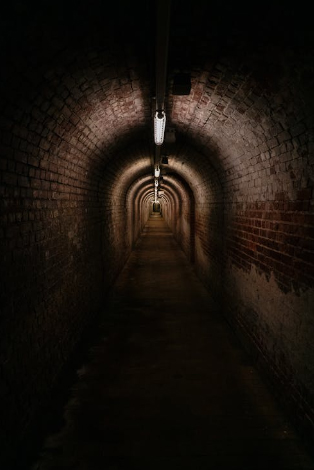 haunted house films but they amalgamate in my mind like this:
A butler is last seen in the pantry. Minutes later, he’s spotted three floors up outside the master bedroom on the other side of the mansion. How did he cover so much ground in such a short time? Most likely, he traveled via a secret passage.
I’ll be honest. The first thoughts that come to mind on the issue of secret passages are horror comedies. Abbott and Costello, The Three Stooges, Shaggy and Scooby Doo; all of these folks have encountered things like revolving bookcases that hide a secret passage, or sconces that rotate to unlock a secret door.
Secret passages are popular in young adult horror stories as well.. I’m thinking Hardy Boys, Nancy Drew, and Harry Potter. In the book/Film Harry Potter and the Sorcerer’s Stone,, three preteen heroes uncover a secret passage that leads to many trials. They must get around a three-headed beast , and pass through a deadly, giant chess game. The unveiling of a secret passage is synonymous with a plot that is thickening. Suddenly, there is a new place for characters to roam. Likewise, the story opens up to new conflicts and actions. Much like the secret rooms, both the reader/viewer and the characters in the story are at the cusp of discovery.
The Castle of Otranto by Horace Walpole, features a secret passage. Written in 1794, it is said to be the first Gothic novel and perhaps even the first haunted house novel as well. The heroine, Isabella, uses the passage to escape the castle, thereby talking the plot of the story in an entirely new direction.
Long Corridors
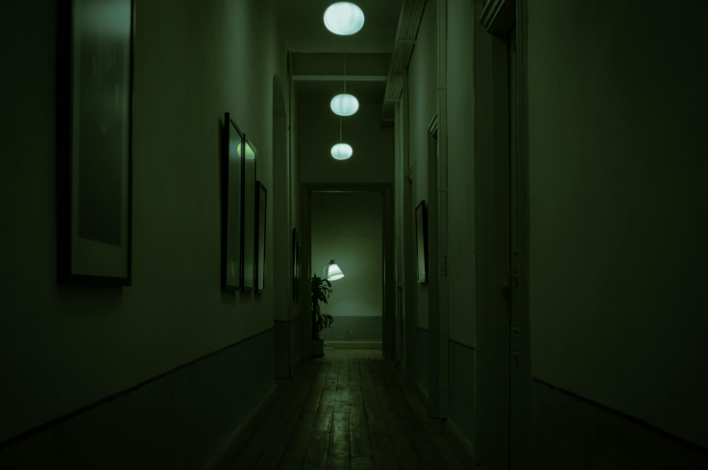 Characters in haunted houses often find themselves wandering through long, dark corridors. These halls can be mazelike, leading to several rooms or even other corridors. Traversing the halls of a haunted house equates to plot itself. Hall wanderers carry the plot on their shoulders as they are forced to make choices. Do I enter the room on the left or the right? Do I continue along and pass into another corridor? It’s the rising action of the story. Readers/viewers know that a plot-turning situation is behind one of those closed doors or connecting corridors .
In Stephen King’s The Shining, the child rides his big wheel down the halls of the hotel, passing many suites. He is drawn to one – Room 217 (or 237). Also, he encounters ghosts standing in one hallway, blocking his passage (from the movie). Searching and discovering, even if doing so reluctantly, are major actions that create a plot.
Consider also the many haunted house video games. Key clues to the gamers’ escape are often to be found in one of the rooms their character passes as they roam halls. But which one?
That is the point of the game, and if it turned into a movie, the rising action of the plot.
Bedrooms
Rooms to escape the anxiety of the world. Comfy bed clothing. Warm, hugging covers. This room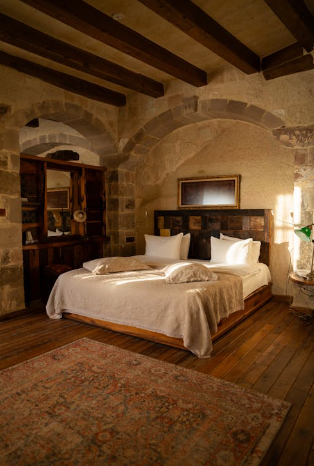 represents one’s personal space. A place to reflect and have sweet dreams. A safety zone. Right? NOT! Remember kids, a monster is hiding under the bed.
Or maybe, just maybe, yes; bedrooms are a place of refuge after a long and tiring night of being haunted. At least for a little while.
I’ve stumbled upon several haunted house stories where characters do in fact reset while in their designated comfort zone, which is their assigned bedrooms. This is a part in the story I’ll call “suspense-relief”, meaning a relief from the suspense. The characters aren’t being chased by some phantom. They aren’t arguing with other guests of the haunted house. They are alone, reflecting on the day’s events, and we the readers/viewers can catch up with the inner workings of these characters. However, we know these moments of tranquility are short-lived.
Haunted houses tend to sense vulnerable guests isolated in their rooms with their guards let down. They play cat-and-mouse with their victims. After allowing them false reassurances, they scare them here and there with noises, or by sending a shadow across the wall, letting these bedroom-bound folks think these are tricks of their imagination. They are not. Finally – BOOM! The House releases some kind of unforgettable scare.
Bedroom scenes help the readers/viewers unwind as well. The tone changes when a character enters the bedroom. Indulgers of the medium need a break from the bustling dialogue and scenes of action. They take a brief-breather, a teaser breather, because while collecting their calming breaths, they know they will soon be gasping in fright along with the soon-to-be-terrorized character.
In the sequel to The Haunting of Hill House, Elizabeth Hand’s novel A Haunting on the Hill, main character Holly Sherwin holes up in her bedroom, reflecting on her housemates and the play she is working on. As she sleeps, the bumps in the night take over.
Speaking of bumps in the night, I would be remiss in omitting the most famous haunted house bedroom scene. In the original story, The Haunting of Hill House (Book)/The Haunting(Movie), Eleanor Vance is trying her best to collect herself as she lies in bed. She is comforted that her friend is holding her hand. But wait! Her friend is on the other side of the room! Who is holding her hand? No time to reflect on that anymore because here comes, not little bumps in the night but some serious wall pounding. BOOM! BOOM!
The Legend of Hell House has a scary bedroom scene. The demon takes possession of the woman in Paranormal Activity right in her bedroom. The camera catches her doing rather strange things
And who can forget the poor children in the Poltergeist film! The parents reassure the boy and girl that nothing can harm them when they sleep in their shared bedroom. Even during a loud, scary thunderstorm, the father teaches them ways to cope. And it works. For one night. The next night of thunderstorms are disastrous. A tree reaches in and grabs the boy. Phantom forces suck the girl into the closet. In the words of George Takei – “Oh my!”
Examples of frightful bedroom scenes are endless. Three of the most famous Universal monsters have bedroom scenes. Dracula as a bat invades a woman’s room through an open window. Larry Talbot turns into the Wolfman at the sight of the full moon beaming in through his bedroom window. Frankenstein’s monster breaks into Dr. Frankenstein’s bride’s room to kidnap her.
Portraits and Servants

Why, you may ask, am I lumping these two seemingly unrelated categories into one heading?
The reason is – they both have to do with backstory.
Portraits –
Sometimes they hang on the wall beside the stairwell. Other times, they hang over the fireplace, especially if it’s one large painting. That way a long-dead patriarch or matriarch, painted into eternity, can watch over successive generations. Perhaps there are so many portraits that a house has its own gallery.
As mentioned in the previous paragraph, the people depicted in the paintings lived a long time ago. Often the events that occurred in their lives have meaning for the current occupants of the haunted house. Perhaps while they lived, they were cursed and the curse continues on to the present day. If the house has ghosts, they might be the phantoms. Maybe one of them was a murderer and another was a victim. In short, they are key to solving whatever modern day mysteries are plaguing the current household. This is problematic because, unless they return as talking ghosts, the adage “dead men tell no tales” applies here.
For the reader/viewer, the answers can be found in the backstory. Sometimes we the indulgers in the medium are privy to answers the story characters are not. This is true when a story contains two timelines. We can read or see what was happening to the old man that hangs in the frame over the fireplace when he was a young boy but the present day characters cannot. But they will find clues another way. Perhaps it’s through found letters written by the “portrait people” back in the day. Often a peer of the long-since deceased is still living and their testaments to what happened long ago provide the seekers the answers they need. Or, as I said, in some way, the ghost communicates to them.
Portraits provide a visual representation of the backstory. Whether it’s the age of the person in the portrait,which may represent youthful innocence or the weariness of the final stages of life, or a rendering of facial muscles to portray a specific emotional countenance, a picture, or a description of such a picture, speaks volumes.
In Nathaniel Hawthorne’s The House of Seven Gables, portraits of past ancestors reveal truths about the living while at the same time hiding, serve as secret hiding places:
Throughout the novel, portraits and daguerreotypes (a primitive form of photography) symbolize the essence of individual’s characters—especially characters, like Judge Pyncheon, whose public personas are a false front. The hardness evident in the Judge’s daguerreotype indicates that, despite his smiling exterior, he’s actually a cold-hearted person, resembling the portrait of his ancestor Colonel Pyncheon. By extension, Holgrave’s role as a daguerreotypist suggests that he sees through things to their internal reality. Additionally, Colonel Pyncheon’s portrait has been concealing the family’s long-sought land deed for 200 years—a literal example of a portrait containing the truth (in this case, the truth of the Pyncheons’ empty aspirations).
https://www.litcharts.com/lit/the-house-of-the-seven-gables/symbols
In Algernon Blackwood’s The Damned, a large portrait of the late M Franklin hangs gloomily in a large room of the house. The sternness of the man, captured in the painting, leaves a feeling of intimidation. The backstory shows M Franklin to be a religious bigot who had forbidden his wife any pleasure. The stern, walking-on-eggshells feeling is what haunts the house. This feeling is symbolized by the portrait.
Backstory is very important to Roger Corman’s film The Haunted Palace. Vincent Price plays a man who has inherited a castle. Inside the castle, the portrait of his ancestor hangs on the wall. When Vincent gazes into the portrait’s eyes, the spirit of his ancestor possesses him. His ancestor was an evil necromancer.
Servants –
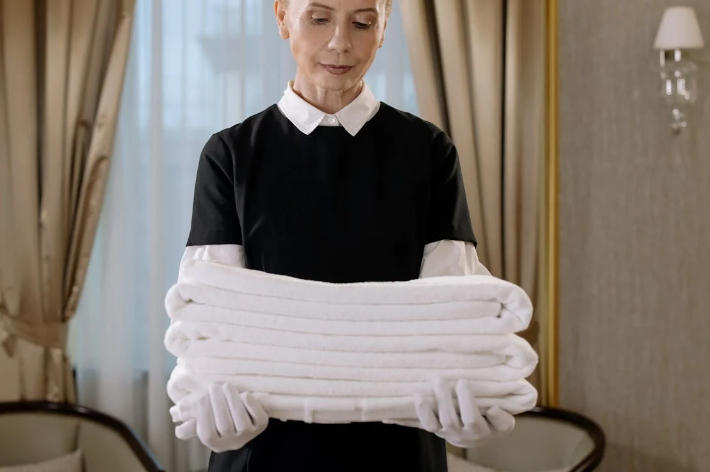
Whether it’s the funereal butler or the tight-lipped maid, servants with a penchant for the peculiar often inhabit haunted houses, especially stories written about large estates from previous centuries. They tend to pop out of nowhere and frighten guests and visitors. Their speech and mannerisms are uncanny. There’s an old, humorous adage based on murder-mystery stories that reads “the butler did it.” This goes to show that butlers and servants in general are often portrayed as mysterious and suspect characters in such stories.
A haunted house blog is not the place to speak of politics. However, in the realm of political discourse, there’s a term that comes up often that applies to this situation. This would be “the deep-state”. While many people toss that term around while not knowing what the hell they’re talking about, from my understanding “the deep-state” refers to the mechanics of government that go on behind the scenes. The people that perform the roles and duties of these mechanics continue on in their jobs despite who is president or who is in congress. They are not voted in or out. Many have served under several administrations.
I like to think of the household staff as the “deep-state” of haunted house fiction. Sometimes the haunted property changes owners but the staff stays in place. They know more about the ins- and-outs of the building than the current owner. Also, mansions are inherited by younger family members from their deceased parents or grandparents. Older servants may have worked at the same mansion through three generations of ownership. They tend to know more about the original owners than the new breed of masters, even if the newest owners are related to the first house masters. In the same manner (or in the same “manor; see what I did there 🙂 ), the descendants of the servants might also work as household staff. They learn from their parents and grandparents about the old ways of the house.
What I’m getting at is this: servants know secrets but they aren’t always telling. They know the “sins” committed by the original proprietors of the estate. Also, from the corners of the rooms, they hear the whispers of the house occupants. They are the silent observers. Thus, in haunted house stories, they help build the backstory, if not directly then indirectly.
The servants that from The Haunting of Hill House/The Haunting know something is up with Hill House. They severely limit their duties when catering to Hill House’s guests, refusing to stay after dark.
But perhaps the best example of servants keeping secrets related to the backstory comes from the movie The Others (which, by the way, features portraits that play a key role in the backstory as well). They know something the owners don’t know. And they are quite the creepy bunch.
In Henry James’s The Turn of the Screw, the maid knows scandalous secrets about the former butler and au pair but is very hesitant to relay the detail to the current au pair. These secrets may be key to a haunting that is threatening the sanity of the current au pair.
Conclusion
I am now releasing you from the haunted house. As for me, I will remain. I like it here. Since I’m still here, I will think about things, such as the fact that there are many more internal components of haunted houses that are not covered in this article. Do sconces or chandeliers shed light on characters? Will characters sitting around a lit fireplace ignite conflict? (I’m giving in to some self-deprecation here.) Towers, are they symbols of plot hierarchies? How about mirrors as a means for story reflection?
Mirrors seem more fitting for a psychological perspective of characters in relation to their environments within a haunted house. That is an entirely separate treasure trove of analysis, fitting for another article: Haunted House Artifacts and Psychological Symbolism. Maybe I should get busy and start working on this now?
Ah, no. Please. Later perhaps. Not now. I’m tired. I need to isolate myself and rest and reflect in the grand, haunted bedroom. Maybe in the morning, if I’m not haunted to death in the night.
 The Books of Daniel